


Support CleanTechnica’s work through a Substack subscription or on Stripe.
When I landed in Guangzhou on my recent trip to China and was heading to my hotel, one of the first things I noticed was significantly more electric trucks on the road than just a few months prior. Sometimes there were older boxes on the back of new truck chassis, but the green plates gave it away. Seeing a noticeable change since November, I wondered what was driving this change. The answer becomes clear when looking at new product offerings from companies like LANDKING and the economics of electric trucks overall in China.
While the focus of the Beijing Auto Show was primarily passenger vehicles, several commercial vehicles were also on display. As the show is massive and overwhelming, I didn’t get a chance to study them all in detail. However, I was able to explore the vehicles and ask a number of questions of the friendly, English-speaking representatives at the LANDKING exhibit, a division of Weichai. On display were the large EH Pro series and smaller ES series.
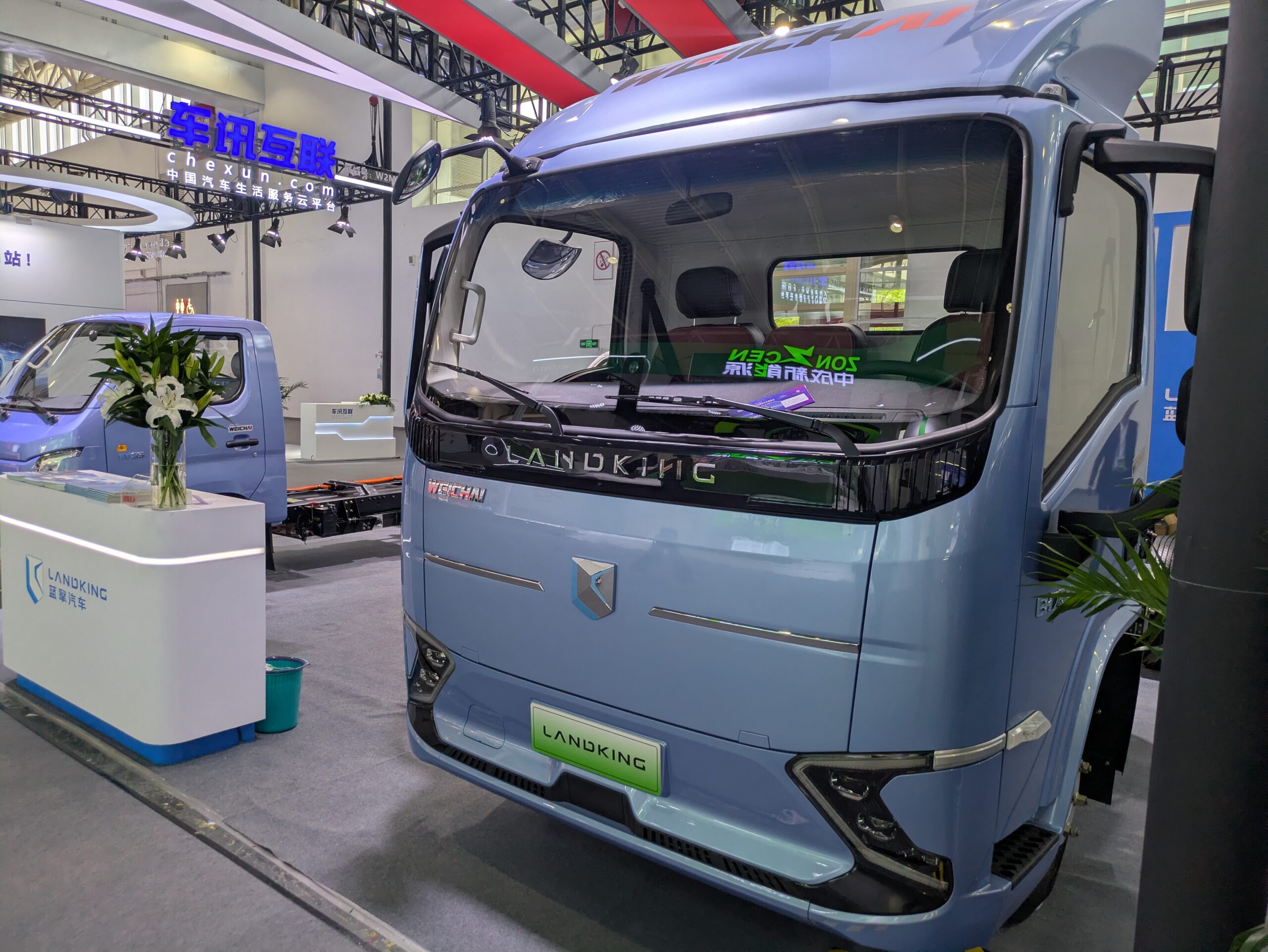
The EH Pro 90 offers a 9000 kg GVWR and a payload up to 5650 kg (12,456 lb), with a length of up to 8320 mm. It was equipped with fast-charging LFP batteries from FinDreams (BYD) with a capacity of 132 kWh. Up to 200 kW (268 hp) and 450 nm of torque come from a single motor on the rear axle. An emphasis on lightweighting removes hundreds of kg from the chassis, contributing to the efficiency. Speed is electronically limited to 90 km/h (56 mph), in line with the lower speed limits for trucks in China.
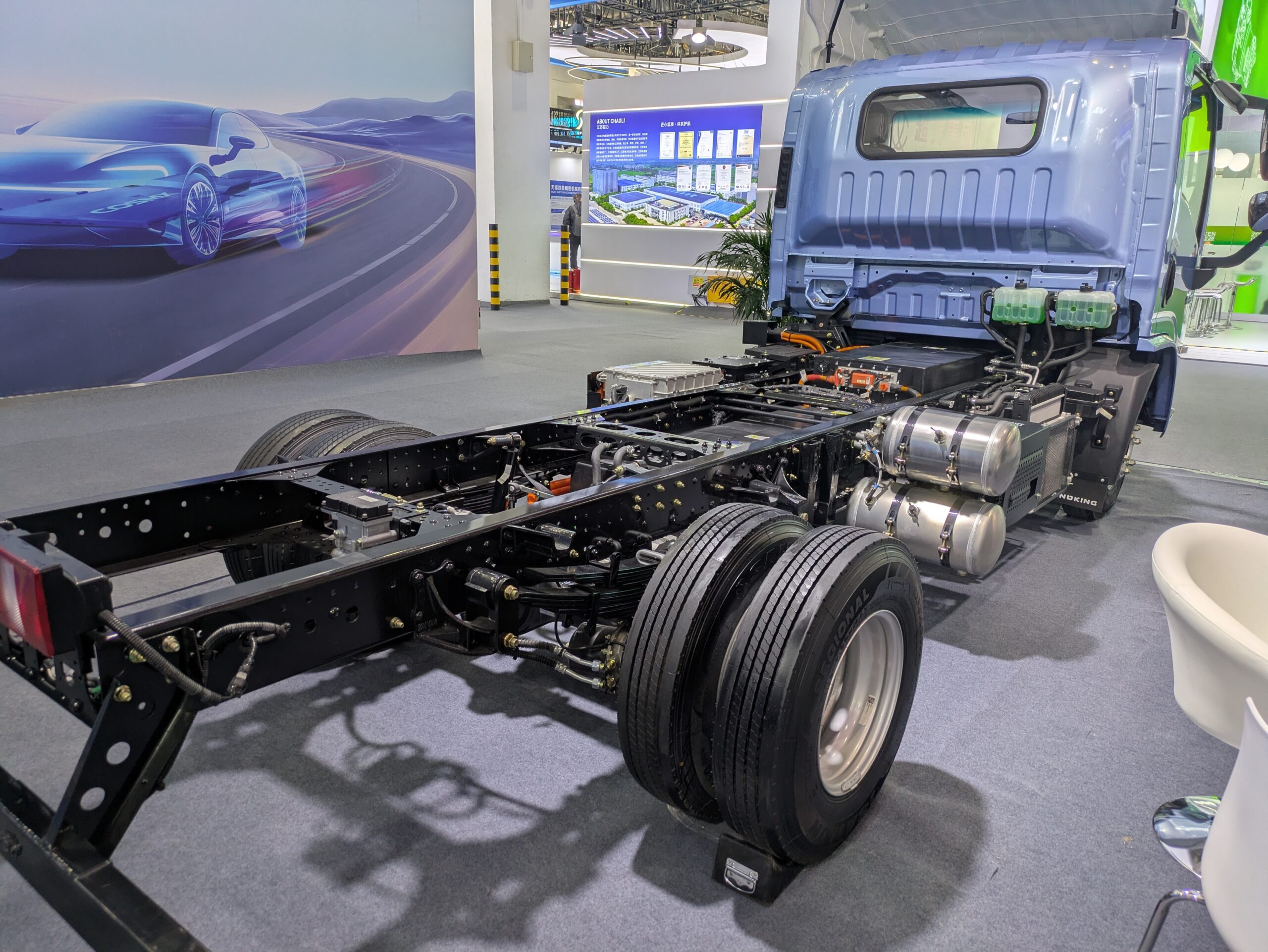
The truck has a range rating of up to a 330 km. Although, that can change significantly based on load and configuration. That makes the truck more useful for urban and short-distance transport than it would be for long-haul trucking. However, that perfectly suits the needs of many customers and is a great application for rapid electrification. That is especially the case in a country like China, where rail is used heavily to transport freight long distances. The exterior, with LED lighting, looks futuristic but not weird, not that exterior styling is a major consideration in this segment. There are also a number of features to ensure ease of maintenance, and the position of the cooling fan is moved away from the cab to further reduce noise.
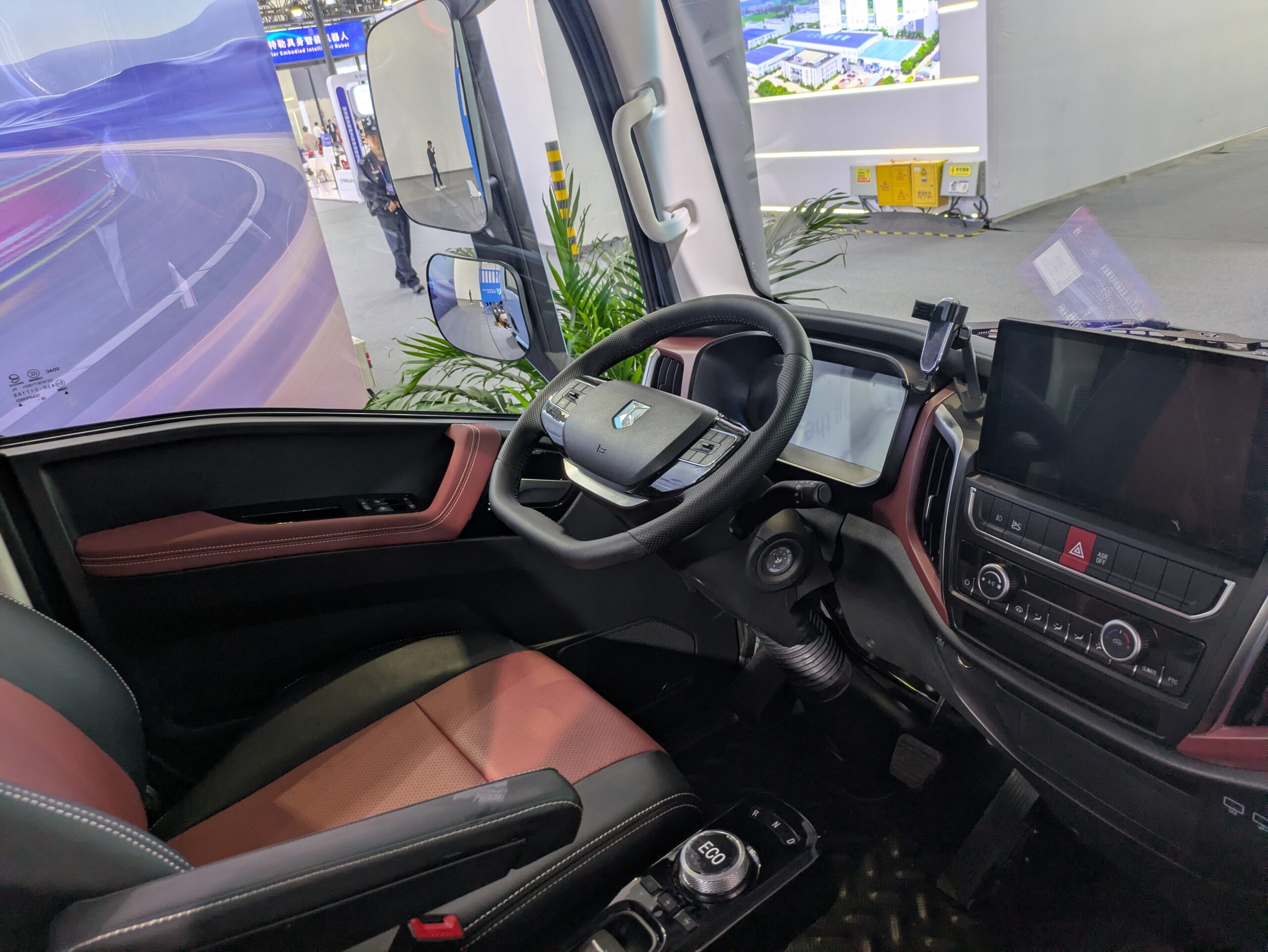
Getting inside, it has an attractive, modern design with a central touchscreen, multi-function steering wheel, electronic parking brake, and an air suspension seat with heating and ventilation. Hard plastics were more prevalent than on many of the cars on the show floor, but that is fitting for the durability focus of the truck. Overall, it feels more premium than the work truck trim levels of several US pickup trucks. The air brakes have ABS and APB. The truck also offers L2 ADAS, including AEB and lane departure warning. For such a large vehicle, visibility is impressive and it does not seem like it would be intimidating to drive.

Moving to the ES series, lengths range from roughly 5 to 6 m — although, most of that length is dedicated to cargo. More cargo can be moved in a smaller footprint. A 56 kWh LFP FinDreams battery offers a range of 200–300 km, depending on the configuration. The truck is intended largely for last mile delivery. Inside, it felt comfortable and modern, with many of the features that you would expect in a passenger car.

Looking at it made me think about another potential application. I have family in the Philippines that drive Jeepney. These vehicles form the foundation of public transportation in the Philippines and tend to have pre-emissions diesel engines. While the days driving tend to be long, speeds are slow and total distances are relatively short. The Philippines is trying to move to electrified versions of these vehicles, but the transition has been a challenge. Raymond Tribdino has excellent coverage of Jeepney electrification efforts and many of the challenges. One of the biggest challenges is cost.
Which gets to perhaps the most impressive aspect of the trucks. While the representatives emphasized that the price would depend heavily on order quantity and configuration, they were able to give me a ballpark. For the larger EH Pro, prices are roughly $22,500 USD. This is significantly less than the least expensive pickup in the US, and only slightly more than the least expensive new car. For the smaller ES Series, the price comes in at roughly $12,500, or about the price of a Piaggio MP3 scooter. While I assume those numbers are for base models and will vary by market, the price level changes the purchase conversation.
With those prices, the financial business case becomes obvious. Several people are coming up with cost calculations for the Tesla Semi that could show potential savings over time depending on use, electricity prices, fuel prices, etc. In the LANDKING trucks, the savings are immediate and obvious. Especially in China, were the difference between the price of electricity and the price of diesel is significantly higher than it is in the US. The current situation in Iran is amplifying that difference in China, which relies heavily on oil transported through the Strait of Hormuz. The reduced maintenance and downtime of electric vehicles add to the savings. The reduced noise and pollution also likely would reduce driver fatigue and improve their health.
While you can make a business case for EV trucks in the US, it is becoming undeniable in China. You do not need to include the environmental benefit for it to make business sense. Many businesses can be risk averse with their investments in new technology, but the technology is increasingly proven. The financial benefit is obvious. Electric trucks may be facing challenges in the EU and US, but they seem inevitable in China
LANDKING was not the only truck maker at the show, and there were far more who were not there. Several were offering semi trucks, as we saw with GAC. As with many things in China, competition is fierce and the technology is advancing rapidly. I have no doubt that there are a number of compelling truck offerings from a range of manufacturers competing with LANDKING . In addition, there were electric cargo transportation options that are not trucks in the traditional sense, but that is for another article.
Sign up for CleanTechnica’s Weekly Substack for Zach and Scott’s in-depth analyses and high level summaries, sign up for our daily newsletter, and follow us on Google News!
Have a tip for CleanTechnica? Want to advertise? Want to suggest a guest for our CleanTech Talk podcast? Contact us here.
Sign up for our daily newsletter for 15 new cleantech stories a day. Or sign up for our weekly one on top stories of the week if daily is too frequent.
CleanTechnica uses affiliate links. See our policy here.
CleanTechnica’s Comment Policy
cleantechnica.com
#LANDKING #Electric #Trucks #Inevitable #Auto #China


