Tesla’s sales growth in the third quarter was significantly more than just a pull forward triggered by the cancellation of the federal EV tax credit.
The company is expected to face a few challenging quarters of sales in the U.S., but its introduction of new models will help.
The real catalyst for the company will come from the arrival of fully autonomous robotaxis and publicly available fully autonomous full self-driving software.
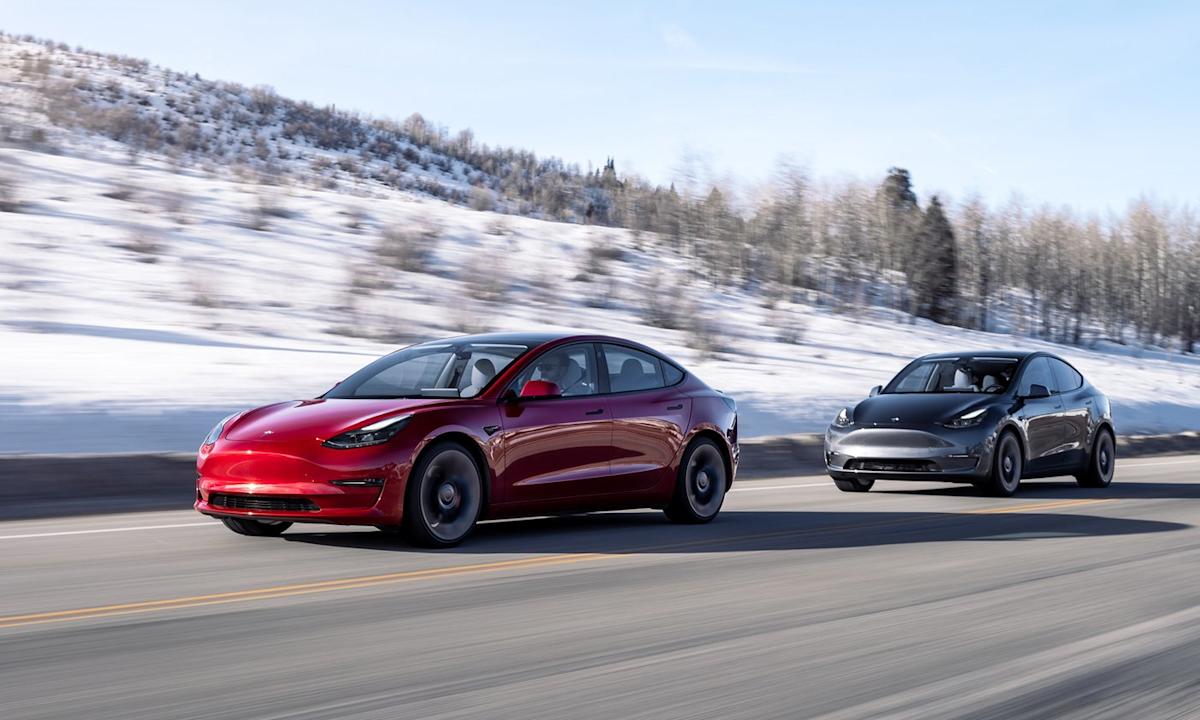
Tesla’s(NASDAQ: TSLA) latest move — releasing lower-priced versions of its Model Y and Model 3 — looks more like a reactionary action than a game-changing effort to make electric vehicles (EVs) more accessible to the mass market. It makes perfect sense in the context of where the business is right now, but it won’t appease investors who are looking at Tesla purely as an EV company. Here’s the lowdown.
One thing is clear: Tesla’s 2025 hasn’t panned out quite the way management expected it would. Back in October of last year, CEO Elon Musk made a rough estimate that the company would achieve 20% to 30% EV sales growth in 2025, backed by lower-cost vehicles “starting in the first half of 2025,” and “the advent of autonomy.”
However, despite robust sales in the third quarter (partly due to a pull forward in sales as customers rushed to take advantage of the federal EV tax credit, which the Big Beautiful Bill ended as of Sept. 30), Tesla’s vehicle deliveries were still down 6.4% year over year for the first nine months of 2025. Its new, lower-priced variants only became available in the fourth quarter, and if by “advent of autonomy” Musk means fully autonomous robotaxis and/or a fully autonomous full self-driving (FSD) option for the cars it sells, it hasn’t achieved that yet either.
That said, the lower-cost trims (a Model Y standard selling for just under $40,000 and a Model 3 standard selling for just under $37,000) will likely help its sales efforts. Moreover, they align with management’s statements to investors this year, not least when Musk “let the cat out of the bag” on the earnings call in July, saying the affordable model would be “just a Model Y.” In other words, he did not promise to release the company’s long-awaited, brand-new, lower-cost model in 2025.
The strategy makes sense, particularly in light of Washington’s removal of the EV tax credit. The Model Y and Model 3 have been selling well in the U.S. in 2025, and the arrival of versions with meaningfully lower base prices will inevitably help sales. Moreover, the new trims are unlikely to cannibalize sales of the higher-end Model Y and Model 3 trims, as the price differentials between the new models and the next-cheapest models are $5,000 and $5,500, respectively.
Instead of the much-anticipated launch of a low-cost model, this move appears to be a response to the removal of the tax credit in the U.S. and the persistence of relatively high interest rates worldwide.
While these cheaper EVs aren’t game-changers in themselves, they do build on some improving sales trends for the company. Indeed, there’s evidence to suggest that Tesla’s sales are already building momentum after a disappointing first half.
For example, interpolating from Tesla’s third-quarter delivery data and industry analysis of Tesla’s sales in the U.S., it’s possible to argue that its strength in the third quarter was broad-based and possibly related to the Model Y refresh gaining traction. Remember that the looming removal of the federal EV tax credit only impacted U.S. sales, so Tesla’s strength in international sales was particularly welcome.
Metric
Q3 2025
Q3 2024
% Growth
Tesla worldwide deliveries (units)
497,099
462,890
7.4%
Tesla estimated U.S. vehicle sales (units)*
179,525
166,923
7.5%
Tesla estimated international vehicle sales (units)**
317,574
295,967
7.3%
Data source: Tesla presentations, *Kelley Blue Book EV sales report, **author’s analysis
Moreover, the fact that the new models are unlikely to cannibalize sales of existing Model Y and Model 3 vehicles means the road is still clear for Tesla to launch its much-talked-about $25,000 car, which some refer to as the “Model 2.” If that vehicle comes to market, it’s highly likely to be a wholly new and differentiated product that won’t impact sales of other Tesla models.
These models should build on the momentum the company gained in the third quarter and help it navigate a challenging period in the U.S., particularly due to the loss of the EV tax credit. They will also add to the fleet of vehicles on the road whose values could be significantly raised by the “advent of autonomy.”
Image source: Tesla.
While uncertainty remains when it comes to the timeline of these events — specifically, the company’s deployment of fully autonomous robotaxis and the later public availability of fully autonomous FSD (which would be a game-changer) — the stock will remain an option for speculative investors, albeit an excellent one.
Ever feel like you missed the boat in buying the most successful stocks? Then you’ll want to hear this.
On rare occasions, our expert team of analysts issues a “Double Down” stock recommendation for companies that they think are about to pop. If you’re worried you’ve already missed your chance to invest, now is the best time to buy before it’s too late. And the numbers speak for themselves:
Nvidia:if you invested $1,000 when we doubled down in 2009,you’d have $475,196!*
Apple: if you invested $1,000 when we doubled down in 2008, you’d have $47,949!*
Netflix: if you invested $1,000 when we doubled down in 2004, you’d have $646,805!*
Right now, we’re issuing “Double Down” alerts for three incredible companies, available when you joinStock Advisor, and there may not be another chance like this anytime soon.
Lee Samaha has no position in any of the stocks mentioned. The Motley Fool has positions in and recommends Tesla. The Motley Fool has a disclosure policy.
Earnings per share revisions breadth continues to reinforce Morgan Stanley’s medium-term conviction in stock markets. www.marketwatch.com #Morgan #Stanleys #Mike #Wilson…