


Support CleanTechnica’s work through a Substack subscription or on Stripe.
Auto China 2026, also known as the Beijing Auto Show, begins next week. However, as this time of year is packed with new product announcements in China, many vehicles are released prior to the show starting. This year, the announcements have tended to focus on large, luxurious electrified SUVs. XPENG’s new GX represents one of the most significant announcements, illustrating where the segment is heading.
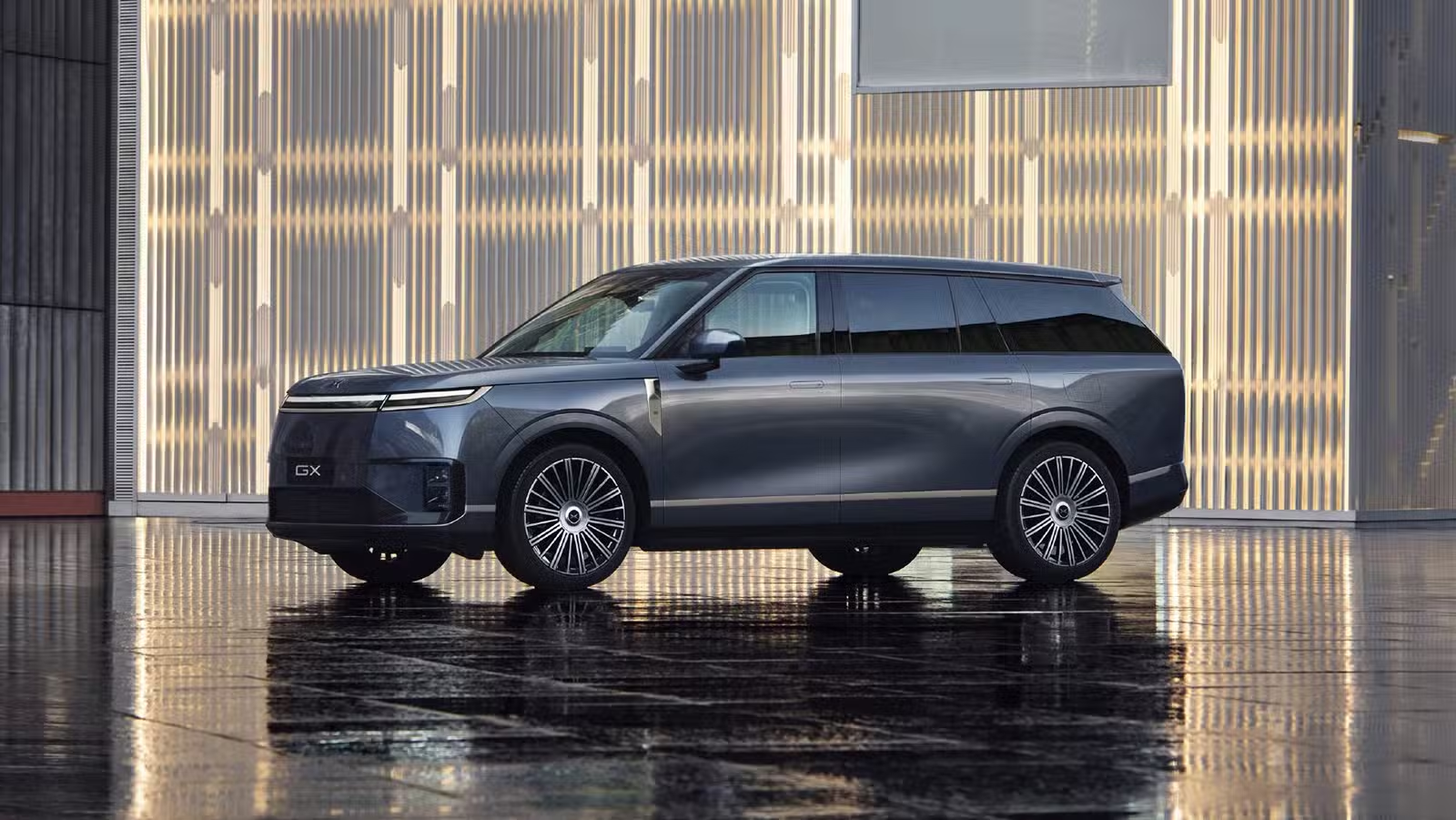
The GX is not a small vehicle, at 5,265 mm (207”) long, 1,999 mm (79”) wide, and 1,800 mm (71”) high on a 3,115 mm (123”) wheelbase, riding on 22” wheels. Overall, that is a little longer than a Range Rover and slightly smaller than a Chevy Tahoe. However, the design is more space efficient than the legacy SUVs and promises more room inside.
The overall look is squared off and imposing, and it clearly has significant frontal area. However, with a 0.255 coefficient of drag, the shape is more aerodynamic than a current Prius (0.27), original LEAF (0.28), and many other aerodynamic-looking EVs. It is a perfect illustration of why the average person should not look at a vehicle and make assumptions about how aerodynamic it is.
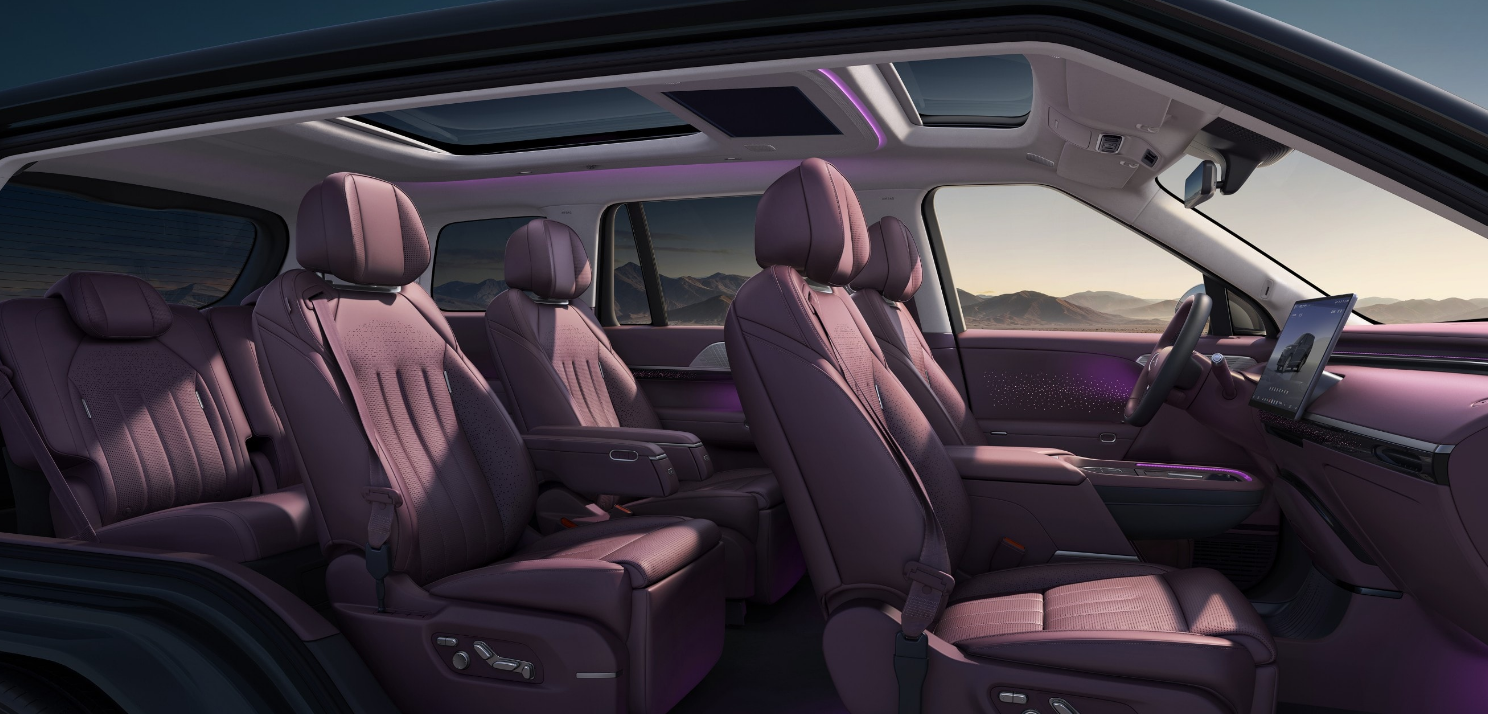
Everything is powered. On the outside, front and rear powered hatches are joined by powered passenger doors and running boards. Seats offer 16 adjustments, 16 massage points, heating and ventilation, while reclining to a zero-gravity position or lying completely flat. The widescreen TV for rear passengers is powered. Even the onboard multi-zone refrigerator has a powered opening.
XPENG emphasized that their experience in aviation is helping to develop their intelligent driving system. Aerospace has much lower tolerance for failures and tends to feature redundancy in systems. The Level 4-capable ADAS system also practices redundancy. 3+1 Turing processors offer 3000 TOPS of computer power, and full functioning is still available if one processor goes out. Steer by wire on both axles comes with 4 levels of redundancy. The brake by wire system has hydraulic and electronic redundancy. The low-voltage system has redundant power supply. The door handles have electrical and mechanical opening mechanisms.
The EREV engine works as a generator to recharge a 63 kWh battery, while 210 kW (282 hp) motors sit on the front and rear axles. The battery-only range reaches 430 km (267 mi), while combined range extends to a total of 1,585 km (985 mi). Meanwhile, each front and rear motor on the BEV (110 kWh) increase power to 270 kW (362 hp) with a CLTC range of 750 km (466 mi). Each motor can operate independently, so if one motor has an issue, the other motor also offers a level of redundancy for the powertrain.
From a safety perspective, having 5 stars across international crash standards has become table stakes in China. To differentiate on safety, automakers have been creating even more extreme tests. In XPENG’s case, they subjected the same GX to multiple consecutive crash tests. Seeing the tests made me wonder if they can also equip it with ballistic protection, as it seems like the perfect vehicle for applications like transporting dignitaries from the UN to the airport.
Both the EREV and BEV models are being initially offered in flagship level at 399,800 RMB (~$58,500 USD). In the top tier, Chinese vehicles tend to have two wide chairs in the second row and 6 seats total. I feel safe to assume that there will also likely be a 7-seat version at a slightly less expensive price point.
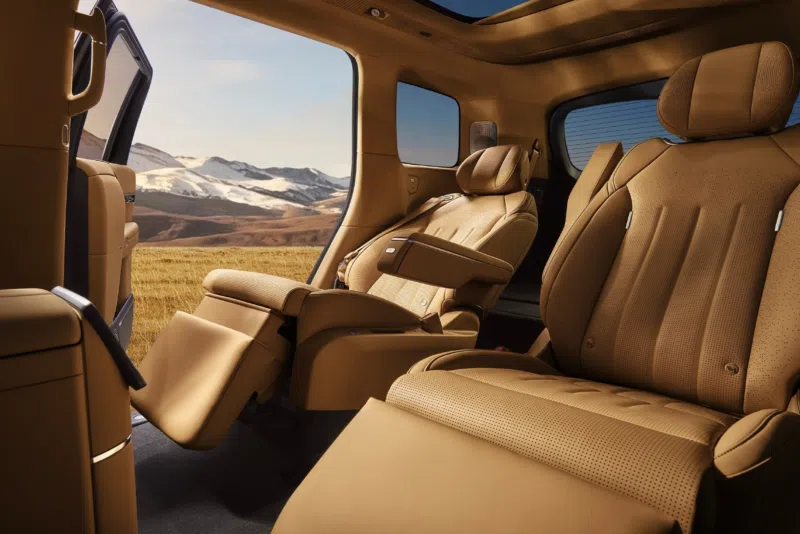
The GX will also be offered as a robotaxi. I imagine that having one pull up on Didi or Uber would feel like getting a first class upgrade, while some other robotaxis are decidedly more economy class. It might be more than would be absolutely necessary for many trips, but this vehicle is not about offering the bare minimum.
While I have yet to sample this vehicle in person, I hope to get back to you soon on that.
Part of an Electrified Premium SUV Product Wave
In the Chinese market, numbers in car names tend to have significance. If you see a 5 in a product name, it tends to be a compact. 6 and 7 tend to be midsized. 8 and 9 tend to be full sized, with the 9 tending to be the flagship for the brand at over 5 m long with three rows of seats in SUVs. With the GX (“X” is the Roman numeral for 10), XPENG is indicating a level above their previous G9 flagship.
However, the GX is not the only full-sized, premium BEV/PHEV SUV getting a new model or significant updates. For example, the Denza N9 & N8L, BYD Datang & Sealion 08, IM LS8, Wey V9X, Zeekr 8X, Leapmotor D19, Chery Tiggo 9, Nio ES9, Onvo L90…. While US EV announcements have dried up, they are overflowing in China, even if you only look at the premium SUV segment.
While some of the new models may not live up to the level of the GX, all of them offer a level of technology that would dazzle the typical US consumer. All are offering some level of ADAS. PHEV/EREV ranges are becoming what BEV ranges used to be, and BEV ranges are becoming more than enough. Charging keeps getting faster, making the new BEVs often more convenient than ICE between home charging and prolific fast charging. All offer capacious interiors and more than sufficient power. I haven’t seen them in person yet, but I assume that they will have excellent fit and finish, considering what I saw in Guangzhou.
It is interesting to see this class of vehicles get so much attention and some companies pushing it to the next level. I could see American families loving these EVs if they had access to them. But will we see large SUVs gain significant share in China? Executive transportation in China has often focused on luxury MPVs, like the Denza D9 and XPENG X9, but SUVs could take that role.
Could we also see these models lead to more partner vehicles, like the VW ID. ERA 9X? Could those vehicles make their way into Western markets? Are these vehicles going to form a major Chinese export push? I could see them working especially well in MEA.
Of course, large, premium SUVs will not be the only EV announcements, but they make up a surprising share of the announcements that have been released ahead of the Beijing Auto Show. It will be exciting to see what else is announced and what other trends emerge.
Sign up for CleanTechnica’s Weekly Substack for Zach and Scott’s in-depth analyses and high level summaries, sign up for our daily newsletter, and follow us on Google News!
Have a tip for CleanTechnica? Want to advertise? Want to suggest a guest for our CleanTech Talk podcast? Contact us here.
Sign up for our daily newsletter for 15 new cleantech stories a day. Or sign up for our weekly one on top stories of the week if daily is too frequent.
CleanTechnica uses affiliate links. See our policy here.
CleanTechnica’s Comment Policy
cleantechnica.com
#XPENG #Exemplifies #Large #Premium #SUVs #Launching #Ahead #Auto #China


