When entering the crypto market, you’ll soon learn that it’s split into two camps: bitcoin and everything else. This “everything else” is bundled under the term altcoins.
If you’re looking to diversify your cryptocurrency portfolio, understanding altcoins is essential. It shifts your perspective from seeing crypto as just digital money to seeing it as a diverse ecosystem. This guide is your starting point to understanding how altcoins fit into that ecosystem.
What is an altcoin?
An altcoin is any cryptocurrency other than bitcoin (BTC). The name is shorthand for “alternative coin.” When bitcoin launched in 2009, it introduced the world to blockchain technology — a decentralized network of computers that enables and records all crypto transactions. Since then, millions of other digital assets have launched.
These alternatives were created to improve upon bitcoin’s limitations. For example, some altcoins aim to provide faster transaction speeds or lower energy consumption. Others serve an entirely different purpose, like powering financial services without the need for a middleman.
How do altcoins work?
At their core, altcoins are designed to solve a fundamental problem: How can two parties, who don’t know each other, trade value online without a centralized bank, a government, or other middleman overseeing the deal?
To solve this challenge, altcoins use different procedures called protocols. These protocols ensure everyone follows the rules of a blockchain without needing a central authority.
Here’s how altcoins create this “decentralized” trust:
Proof of work (PoW)
Some older altcoins use proof of work, which is the mechanism bitcoin uses. The idea behind PoW is to make it too expensive and difficult to cheat the system.
In PoW, “miners” use real-world effort, including powerful computers and a significant amount of electricity, to solve cryptographic puzzles. Once a crypto miner solves a puzzle, they broadcast their solution to the entire network. Other computers on the network then verify that the solution is correct without having to redo the work themselves.
Only after the network confirms the solution is valid is the transaction permanently added to the blockchain. The miner then receives new crypto as a reward for their work. While secure, this process is very energy-intensive.
Proof of stake (PoS)
Many modern altcoins use proof of stake. Instead of using miners, this energy-efficient system relies on “validators”. A validator is a person who stakes (locks up) a portion of their own coins as collateral.
The network’s protocol uses an algorithm to choose a validator to check the next set of transactions. The more coins a person has staked, the higher their chance of being chosen, but the selection is often randomized to keep the system fair.
The chosen validator checks the transactions and vouches for their accuracy. If the rest of the network agrees the work is correct, the transactions are added to the blockchain, and the validator earns a reward. If a validator tries to cheat, they lose some or all of their locked-up altcoins.
Smart contracts
While PoW and PoS are methods for securing a network, many altcoins use smart contracts to expand what that network can actually do. A smart contract is a digital agreement written directly into computer code. These contracts execute automatically when certain conditions are met and effectively eliminate the need for third parties, paperwork, and other verification processes.
This allows altcoins to power more complex systems, e.g., decentralized lending, where a computer manages your loan and the interest.
Altcoin types and examples
To better understand what altcoins are, it helps to look at how they’re categorized. These are some of the most recognized types of altcoins, but there may be others.
Payment coins
Payment coins are designed primarily as a digital currency for buying goods or services. While bitcoin was the first payment coin, alternatives like Litecoin (LTC) were later created to provide faster transaction times and lower fees.
Stablecoins
Stablecoins, notably Tether (USDT) and USD Coin (USDC), are cryptocurrencies intended to maintain a consistent value. The majority are “pegged” to a conventional currency, like the US dollar, at a 1:1 ratio. This implies that one unit of a dollar-backed stablecoin is designed to consistently equal $1.
Some investors use stablecoins to stay within the crypto ecosystem while avoiding the price swings associated with digital assets.
Platform tokens
Platform tokens provide the digital foundation for developers to build decentralized applications. You can think of these coins as the digital gas required to run programs on a global, decentralized computer.
For example, the Ethereum network uses its native currency, ether (ETH), to power and execute transactions. Without these tokens, the network would have no way to pay for the computing power it uses.
Utility tokens
Utility tokens give users access to a specific service or product on a blockchain platform, such as decentralized storage or a specific video game. For example, Solana (SOL) is often categorized here as it’s used to pay for the execution of programs and the storage of data on the Solana network.
Governance tokens
Governance tokens give holders a “seat at the table”. By holding these tokens, you can vote on decisions that affect the future of a specific blockchain project, much like a shareholder might vote on company policies. Uniswap (UNI) is a prominent example of a token that allows users to vote on the development of a decentralized trading platform.
Security tokens
Security tokens are altcoins that represent an investment in a real-world asset (RWA), e.g., company stock or real estate. Because these tokens imply a potential financial return based on the efforts of others, they’re regulated by government bodies such as the Securities and Exchange Commission (SEC). Polymesh (POLYX) is an example of a security token.
Privacy coins
Privacy coins like Monero (XMR) focus on keeping transaction details anonymous. While blockchains are public ledgers where anyone can see the flow of funds, privacy coins use advanced math to obscure the sender, receiver, and amount of a transaction.
Meme coins
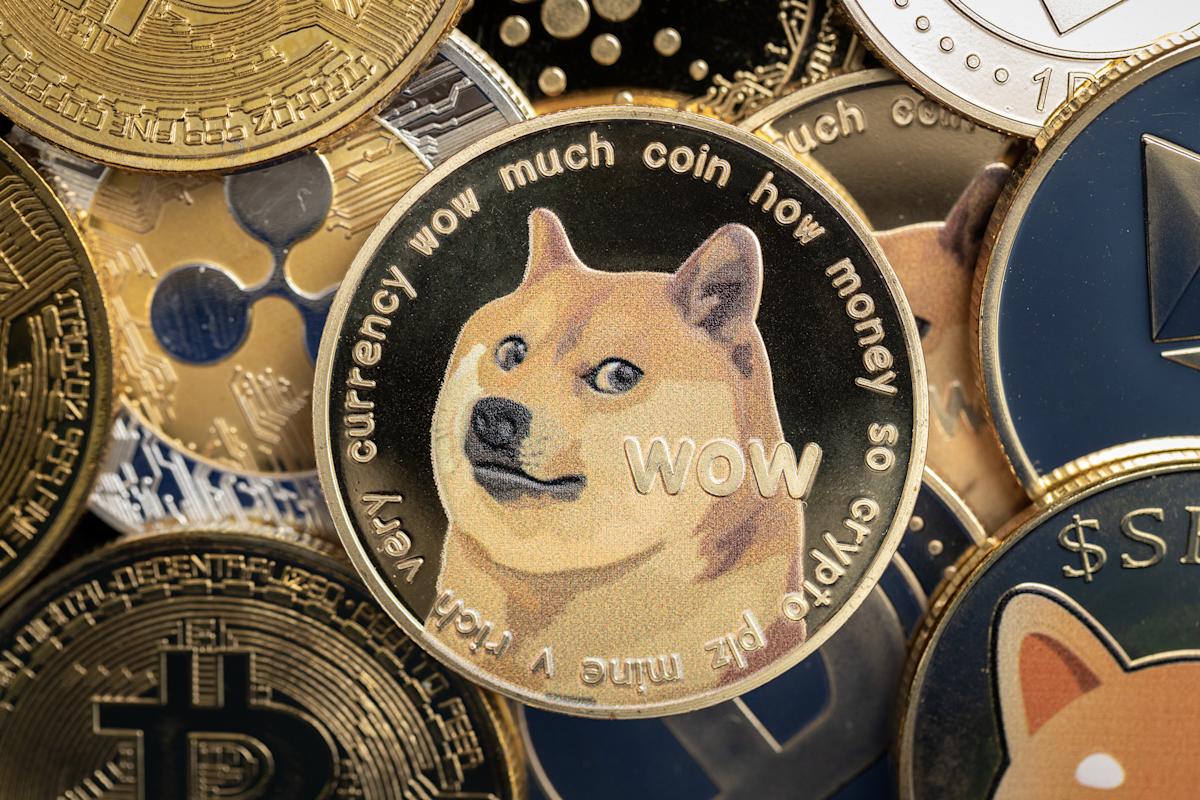
Meme coins are typically inspired by internet jokes or social media trends. An example is Dogecoin (DOGE), which was created as a joke based on a popular “Doge” meme. While these assets can see massive price jumps based on social media hype, they often lack the long-term technological goals of other major altcoins.
Top five altcoins by market capitalization
An altcoin’s market capitalization is the total value of all the coins that are currently in circulation. It’s calculated by multiplying the current price of a single coin by the total number of coins in existence.
Below are the top altcoins by market cap as of April 29, 2026.
ETH: Widely considered the pioneer of smart contract technology. In recent years, Ethereum, the network that supports ETH, completed a major technical transition from PoW to PoS, which reduced its energy consumption by over 99%.
USDT: The most widely used stablecoin in the world. It’s designed to maintain a one-to-one value with the U.S. dollar. It’s often viewed as a safe haven for traders, enabling them to hold value in a digital currency that mirrors a traditional government-issued currency.
XRP: The native token of the XRP Ledger, specifically built with the aim of moving money across borders faster and more efficiently than traditional banking systems.
BNB: Originally launched to provide discounted trading fees on the Binance exchange, it now fuels the BNB Chain. This is a massive ecosystem that supports thousands of decentralized applications, games, and financial services.
USDC: Another stablecoin pegged to the U.S. dollar. It’s well regarded for its transparency and compliance, because it’s backed by fully reserved assets (primarily cash and short-term U.S. Treasurys) held in regulated financial institutions.
Important: While these assets generally maintain a significant lead compared to other cryptocurrencies, these rankings can change at any time. Crypto prices are highly volatile. An altcoin that sits in the top five today may move lower in the rankings quickly if market conditions shift.
Benefits and risks of altcoins
Potential benefits of investing in altcoins
Technological innovation: Many altcoins drive crypto-related technology forward by solving specific problems. For example, some offer faster transaction processing speeds. Others provide more privacy than bitcoin. These improvements can make the underlying technology more useful for businesses and consumers.
Portfolio diversification: Adding different types of assets to your portfolio can help spread risk. Because altcoins serve different industries, they may not always move in the same direction as the stock market or bitcoin.
Growth potential: Altcoins have smaller market caps than bitcoin, so they can sometimes see higher percentage gains in the short- to medium-term. However, this potential for growth also comes with a much higher level of risk.
Passive income opportunities: Some altcoins enable you to earn rewards — such as additional coins, or a portion of transaction fees — through staking.
Risks of investing in altcoins
High market volatility: The prices of altcoins can swing sharply in a single day. It’s common for all cryptocurrencies to lose a large portion of their value in a very short time. You should only invest money that you can afford to lose.
Liquidity issues: Liquidity refers to how easily you can turn an asset into cash without affecting its price. Many smaller altcoins have low liquidity. This means that, if you want to sell your coins quickly, you might have to accept a much lower price than you expected.
Project scams and fraud: The ease of creating new tokens means that crypto scams are a real threat. For example, creators hype a project to attract investors and then suddenly abandon it, taking all the funds with them.
Cybersecurity threats: All cryptocurrencies can be targets for hackers. If an exchange or a digital wallet is compromised, you could lose your entire investment with no way to recover it.
Altcoin FAQs
Is a crypto coin the same thing as a crypto token?
While people often use the terms interchangeably, there’s a technical difference. A crypto coin is the native asset of its own independent blockchain, e.g., ether (ETH) on the Ethereum network. A crypto token is a digital asset built on top of an existing blockchain.
How can I tell if an altcoin project is a scam?
Many crypto scams involve creators abandoning a project after taking investor funds. Red flags include (but aren’t limited to) anonymous founders with no verifiable history, a website full of technical errors, or not being able to sell your coins.
Always check whether the project has a white paper and an active developer community.
Why do some altcoins have a max supply?
Many altcoins, following the example of bitcoin, set a hard limit on the total number of coins that will ever exist. This is intended to create scarcity, which can protect the value of the coin.
Other altcoins have no limit, and new units are created indefinitely, which may decrease the value of each coin over time.
Can I store all my different altcoins in one place?
Most modern crypto wallets are multi-currency. This means they can hold hundreds of different types of altcoins and tokens in one location. However, you should always verify that your crypto wallet supports the altcoin you’re buying before you send any funds.
What is decentralized finance?
Decentralized finance (DeFi) aims to recreate traditional financial systems — like banks — using smart contracts on a blockchain. In a DeFi system, you can lend, borrow, or trade assets directly with other users without a middleman. Many altcoins are specifically designed to serve as the “fuel” for decentralized apps.
finance.yahoo.com
#altcoins #complete #guide