


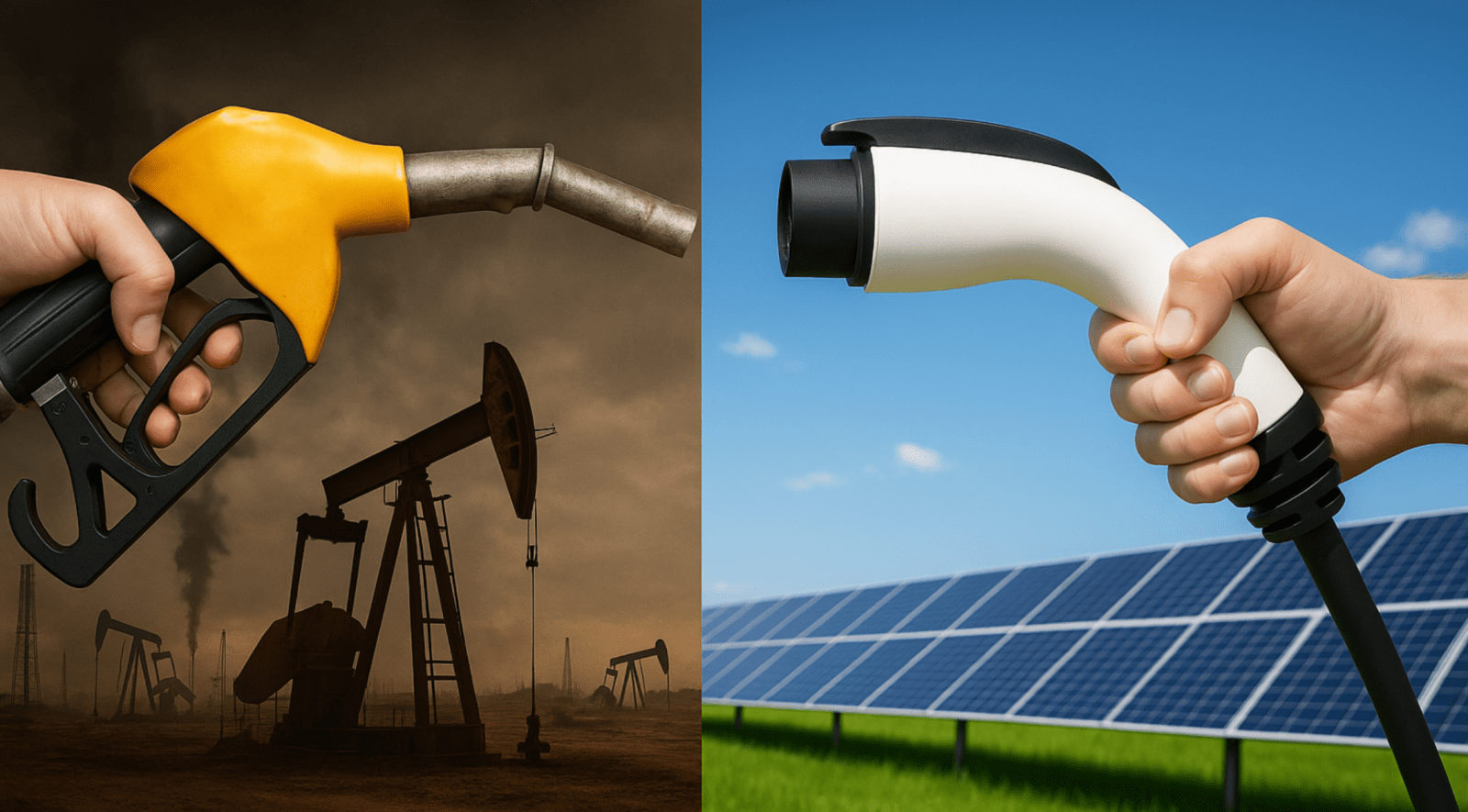
Gas car sales have collapsed in the world’s largest auto market, dropping 37% year-over-year in April. As a result, 9 of the top 10 vehicles in China last month were plug-ins, with only a single one on the list sporting an ICE-only configuration.
The Chinese Passenger Car Association’s sales numbers are out for April, showing a decline in auto sales countrywide, including EVs – but a huge collapse specifically in gas car sales.
NEV (BEV + PHEV) sales have been somewhat down in China so far this year, mostly due to a change in incentive structures that led to more sales last year and fewer this year. Many have suggested this to be a problem for EV sales globally, as China had previously been the main driver in global EV sales growth in the last few years.
Global EV sales growth is instead happening in Europe and the “Rest of the World” in 2026 so far, though much of this growth has been driven by Chinese EV exports (which are up 111.8% year-over-year, and NEVs now represent a majority of Chinese auto exports).
In China’s domestic market, the numbers show a 6.8% year-over-year drop for NEV (battery EV + plug-in hybrid) sales in April. But that’s just a tiny part of the story, and the story looks really bad for oil-burners – and for non-Chinese automakers.
The numbers are dismal for gas cars
Looking deeper into the numbers BEV-only sales were in fact up 2.4% in April, whereas PHEV sales were down 25.2% YoY. This is despite the fact that EV sales are still affected by recent subsidy reductions at the end of last year, which caused a pull-forward in demand and therefore likely lower sales than if those subsidies hadn’t been changed.
But beyond the middling NEV performance, overall auto sales were down 21.5% YoY in April, and ICE sales were down a whopping 37% YoY.
This led to a “top 10” list that looks very different from the previous month. As recently as January, seven of the top ten cars in China were ICE-powered, in April only one of them is, with one PHEV added in as well:
- Geely EX2: 34,727 units
- Xiaomi SU7: 26,826 units
- Tesla Model Y: 22,990 units
- Li Auto i6: 21,024 units
- Changan Nevo Q05: 15,814 units (PHEV)
- BYD Sealion 06 EV: 15,659 units
- BYD Yuan Up: 15,658 units
- Geely Coolray: 14,923 units (ICE)
- Leapmotor A10: 14,372 units
- BYD Dolphin: 14,218 units
Market share of NEVs was a whopping 61.4% in April, up from 47.3% in March and 51.7% last April. It’s the first time NEV share has been over 60%.
China actually saw a 33% drop in ICE car sales just since the previous month. Month-over-month numbers aren’t usually a great indicator for auto sales, since auto sales are seasonal- particularly in China due to the Chinese New Year – but a drastic drop like this in a single month after the February New Year holiday is over is still notable, particularly if there’s a reason for it.
It looks like the bottom has fallen out – at least for anything with an engine in it.
Oil price shock probably contributed
The timing of the drop in gas car sales coincides with a global spike in oil prices brought on by an idiotic US war against Iran started by a former reality TV host who cannot legally hold US office.
China has been one of the less-affected countries by this spike, due to its heavy investments in renewable energy supply, high EV market penetration, and large domestic oil stockpiles (which have been allowed to grow due to lower domestic oil use from the aforementioned high EV share).
However, Asia as a whole has been more affected by this crisis than elsewhere. As a simple fact of geography, much of Asia gets its oil from tankers that go through the Strait of Hormuz, and transit through the Strait has been close to zero for the last two months.
This has led many countries in Asia to rethink their dependence on this resource that we have all known for decades that it’s a bad idea to be dependent on, and nations are now scrambling to find solutions to their energy problems.
While China can weather this shock better than most, the spiking oil prices have caused global concern and interest in EVs, and it seems to have affected the Chinese domestic market drastically in April, the first full month after the world really started to feel the effects of the conflict.
This should be a wake up call
While this precipitous drop is so far reflected in just one month worth of results, we’ve seen other rapid changes in Chinese consumer interests before – and they’ve stuck.
The Chinese EV sales rocket was first lit during global COVID lockdowns, where China’s domestic market rapidly turned not just to electric cars, but to domestically-built cars. This led to a drastic drop in the values of ICE cars, leaving Western and Japanese automakers holding the bag on millions of unsold vehicles.
EV sales have continued to rise, and Chinese manufacturers have continued to dominate them, both home and abroad.
Despite that wake-up call, automakers outside of China have still been slow to electrify, and have in fact been spending the last year shooting themselves in the foot by pulling back on EV programs, even as it becomes clearer and clearer that EV sales will continue to rise and gas car sales will never again reach their 2017 peak.
Many of these automakers have had to pull out of the world’s largest auto market or taken large hits to profitability as a result – like Toyota’s recently-announced 21.5% decline in operating income in Q1, partially due to being uncompetitive in China as a result of their underinvestment in BEVs.
Now, we may only be one month into this drastic drop in ICE car sales, but as we have seen, Chinese consumer tastes can change quite quickly. While China used to prefer foreign brands, it now recognizes the benefits of EVs and the dangers of oil reliance, and seems to be shifting rapidly away from low-tech gas guzzlers from overseas.
The difference can be seen in the numbers, and is profound: 80.1% of the vehicles sold by Chinese brands were NEVs, while only 14.1% of the vehicles sold by the Chinese joint ventures of non-Chinese brands were NEVs. Chinese consumers know where to go to get EVs, and as the Chinese market shifts more towards EVs, sales will shift more domestic, as foreign brands simply have nothing to offer.
Meanwhile despite years of warnings, overseas manufacturers stubbornly refuse to adapt, leading China to look inward for its automotive needs – and the rest of the world is catching on, too, with China now the largest auto exporter in the world, a title that had been held by Japan or Germany for the last five decades.
It seems quite unlikely that a one-third collapse in auto sales is just a blip and that it will go away any time soon. And if it can happen in the world’s largest car market, guess where else it can happen.
Charge your electric vehicle at home using rooftop solar panels. Find a reliable and competitively priced solar installer near you on EnergySage, for free. They have pre-vetted installers competing for your business, ensuring high-quality solutions and 20-30% savings. It’s free, with no sales calls until you choose an installer. Compare personalized solar quotes online and receive guidance from unbiased Energy Advisers. Get started here. – ad*


FTC: We use income earning auto affiliate links. More.

electrek.co
#ICE #age #gas #car #sales #drop #worlds #biggest #market


