


Everyone wants attention. But few understand how to capitalize on it.
For example: We live in an attention economy, where one viral video can in theory change your life. Virality sells products. It launches brands. It creates celebrities. As a result, every founder is supposed to act like a creator, and every brand must produce content. We’ve optimized our lives and goals around the pursuit of eyeballs and numbers. But say you actually do manage to create a viral video. What then? Do you just…make more viral videos? Produce more content? Join the world’s largest hamster wheel, just running and running, contorting yourself into whatever the internet seems to respond to?
Megan Pete has thought a lot about this, because she’s a product of that attention economy — and evidence of its transformative power. Back in 2013, while attending Prairie View A&M University, she was an aspiring rapper known for her freestyling talents. A few of her videos went viral on Instagram. She started racking up followers under the name Megan Thee Stallion. Then she scored a record deal. Her song “Hot Girl Summer” became the anthem of the season in 2019, followed by collabs with Beyoncé and Cardi B, followed by massive fame, fortune, three Grammys, nearly 75 million social media followers, a documentary, a swimsuit brand at Walmart, a tequila brand, a Popeyes franchise, fancy clothes, fancy cars, fancy friends…
But wait. This could have gone another way, and she knows it.
People could have seen her on social media. They could have clicked “like,” and maybe even followed her. And then they’d have moved on to the next video, the next personality, the next thing to forget. She could have chased that high, producing more of the exact same thing, video after video, desperate for attention. After all, this is what befalls most people who blow up on social, or who have a momentarily hot song, or who score their 15 minutes of fame: they get the attention they crave, then ride it straight into obscurity.
Why? Because most people don’t understand something extremely important, Megan believes.
“People share things for the sake of being seen — versus being understood,” she says. “I never was trying to just be seen. I wanted you to feel something. When you see me, I want you to feel like, ‘Oh my gosh, I know her. Or I want to know her.’”
Being seen versus being understood. That is what made her a success. As Megan became famous for her music and swagger, she also unfurled a more complex personality: She loves anime. She talks openly about therapy. Her father was incarcerated for the first eight years of her life, and both of her parents died before she was 25. (She’s 31 now.) “I was forced to be independent,” she says. “Nobody’s going to help me. Nobody’s going to give me anything.” Her fans know this well. She calls them hotties, and she loves her hotties. She essentially tells them: We’re all out here striving, just trying to do our best.
This, she believes, is why the hotties love her so much. Yes, she is talented, and she makes really good music. But there’s a lot of talent out there in the world, and songs only last a few minutes. So if you want longevity, no matter what industry you’re in, then you must optimize for the thing that lasts longer. It isn’t about being seen, or (if you’re building a brand) silly stunts or performance marketing. It’s about translating that visibility into a deeper, ongoing relationship. People must feel invested in you, not just the thing you make.
To make that happen, you must open up to them.
“Being real is not about being seen the most,” she says. “It is not about being the loudest. It’s about how much you can share being your true self, saying what you believe, no matter what it is. It’s authenticity over approval.”
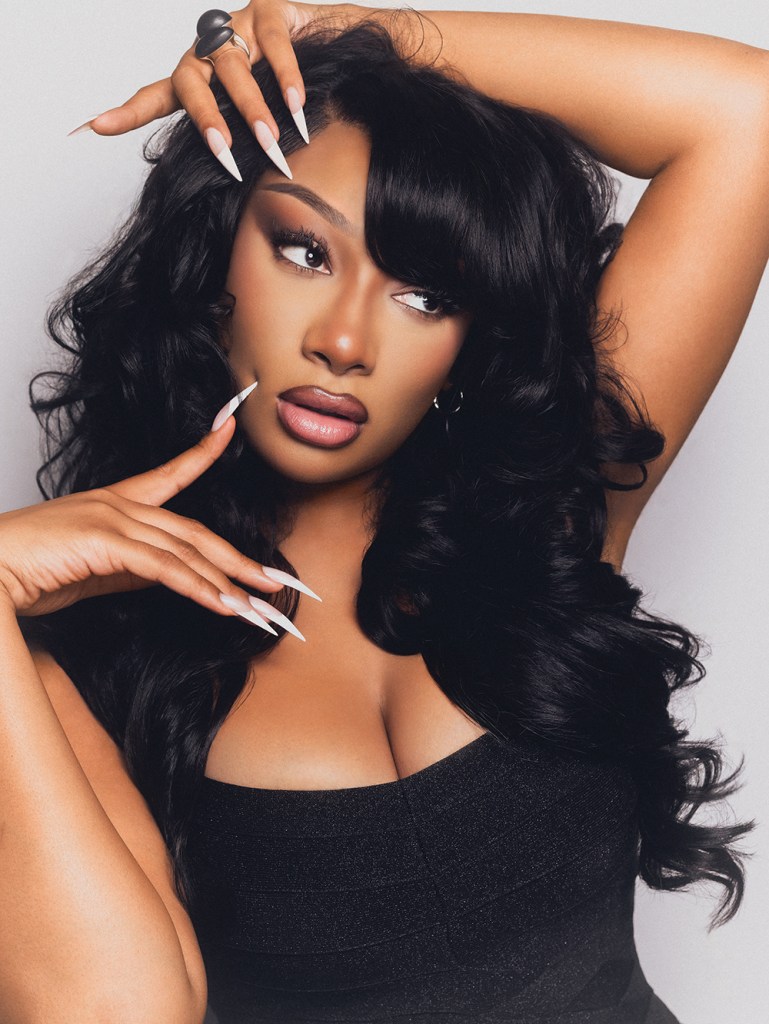
Image Credit: Kanya Iwana
Ok, but let’s say you’re not Megan Thee Stallion. Does anyone want to understand you?
You’d be surprised.
People connect with people, not with brands. So if you’ve built a business, then you are a valuable marketing asset. You are a key way that people discover your brand, and a core part of why they’ll trust it. But this requires being comfortable enough to put yourself out there. You must be the person on social media, and on camera, and on podcasts, and in DMs interacting with your customers.
In other words, you must be open to being understood.
Founders often hesitate to do this. They worry that they’re not good on camera, or that nobody will care what they have to say.
So here’s the magic trick: Don’t think of it as putting yourself out there, and then feeling exposed and vulnerable. Instead, think of it like playing a character. You’re inhabiting a role. This character is a version of you, but it’s not all of you. It’s just the parts of you that are most relevant to your audience — the parts that deeply understand your consumer’s problem, can relate to their pain points, and are eager to articulate and deliver solutions.
Once you start thinking this way, you can craft and control this character. How does the character act? What does the character talk about? Is the character cheery and optimistic, or more serious and straightforward? If you’re a mom that makes a snack bar for kids, then your character might be: “I’m a mom like you, and I know how hard it is to find good food for your kids. So I talk about parenting and nutrition and picky eating. I’ll do it with knowledge and some humor — because that’s what us moms do.”
Now it’s clear. You are a distinct character speaking to a distinct audience. Once you establish this, never stray from it. Your audience should get the same version of you every time — a person whom they can trust and relate to, who has information that’ll be helpful to them, and whom they want to buy from.
You know who went through a process like this? Megan.
“I feel like I had to learn how to separate Megan Pete and Megan Thee Stallion,” she says.
I ask her to break down the differences. First, who is the real Megan?
She was born Megan Jovon Ruth Pete. She attended a historically Black college near Houston while chasing her dreams of being a musician, and then, once successful, finished her degree in health administration. “I’m the first person in my family to be a millionaire,” she tells me. “I come from a lot of teachers. My uncle was in the military. These are real, necessary jobs. I think I’m the first person in my family to say, ‘I want to be a musician. I’m going to go for it, guys.’ And I know what it feels like to struggle. I know what it feels like to not be so sure about what’s going to happen tomorrow. I know what it feels like to want something so bad and you’re not sure if you’re going to get it, but you keep working for it.”
Megan didn’t create the name “Megan Thee Stallion” for the stage. It’s just a nickname she got in high school, and she started using it on social media then. Then, when she became famous, she had to think long and hard about the difference between this character and herself. You can hear it in the way she speaks now, often referring to Megan Thee Stallion in the third person. She’ll say things like: “When people meet Megan Thee Stallion…” or “When people see Megan Thee Stallion on TV…”
And who, in her telling, is Megan Thee Stallion?
This began with a question of necessity. Megan Pete wondered: Who does her audience need Megan Thee Stallion to be? First, she realized, they need this character to be consistent. Her hotties will travel the country to follow her shows; she says she’s touched to see many of the same faces in the crowd every night. And if a fan meets her, she always wants it to be a good experience for them. “When I’m interacting with my people and my hotties, I want them to feel like — when they had that experience with Megan — it don’t matter if they were having a bad day, because once they met me, their day was better,” she says. “They might have felt some type of relief.”
But Megan is a human being. She also has bad days. It’s not always easy to provide consistent, unshakeable, reliable good feelings — which is why it’s helpful to define the difference between Megan Thee Stallion (reliably fan-oriented) and Megan Pete (a human who’s permitted a fuller range of emotions).
So how do you turn your full, complex self into a simplified, predictable character?
Here’s a shortcut: Think of your character as a brand, and start by defining its brand attributes. If you’ve built an actual brand, then you’ve already gone through this process — shaping your brand’s attitude and voice, and how your brand speaks and engages with people. These become the guidelines for your brand, so that everything you produce can be consistent.
Now do something similar for your character: Start by picking three attributes for your character. Maybe it’s optimistic, helpful, and funny. Or maybe it’s kind, generous, and trustworthy. Then filter every decision, and every interaction, through those words.
Megan wanted her brand to deliver consistently good feelings to others. “I want Megan Thee Stallion to be based off of the type of person I am,” she says. “It’s not me all the time, but it is the gist of what my values are.” So she asked herself: Who delivered those good feelings for her? Who could she conjure when she needs to be consistent? The answer: Her grandmother and her great-grandmother, whom she called her “big mama.”
“Everybody in the neighborhood knew my big mama,” Megan says. Big mama was an anchor in her Houston community — the woman always handing out snacks and cookies, or giving someone a little cash if they were in need. “Everybody could walk by my big mama’s house and they know they can talk for however long, and she’d always be nice,” Megan says. “She’d tell me, ‘It doesn’t matter where anybody comes from, or what they look like, or who they are. You should always be kind, you should always be nice.’”
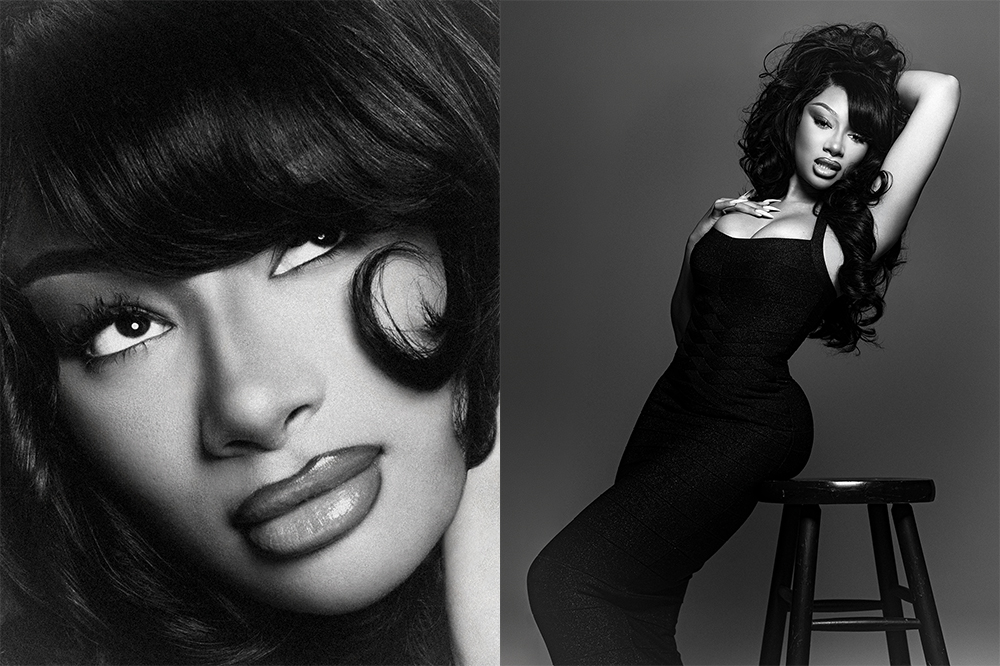
Image Credit: Kanya Iwana
So Megan decided: That would define the Megan Thee Stallion brand. The core of the character is her big mama.
But of course, Megan Thee Stallion isn’t just nice. She’s not out there being Mister Rogers. This character has swagger. She’s saucy and raunchy and the life of the party. The hit song she collaborated with Cardi B on, “WAP,” stands for…well, if you don’t know, go look it up. And for a while, as Megan started to become famous, she realized that she was blurring the lines between herself and her character.
“I was Megan Thee Stallion all the time. I was on all the time. And people treated me that way,” she says. “Like, even people that had known me for so long in my life, they no longer treated me like the Megan that they grew up with. They started treating me like Megan Thee Stallion. And I didn’t like that. I’m like, This is so crazy. You know me, so why are we sitting here and you’re recording everything I do? Or why are we talking about other famous people all the time? It was hard for me to experience.”
This forced her to be more intentional about who she is, and with whom. Megan Thee Stallion’s life is frequently transactional; she might meet dozens or hundreds of people a day, and then never see them again. Meanwhile, like many celebrities, Megan Pete’s life has become increasingly private, and is rooted in deep and trusting relationships. “I had to learn who’s going to be long-term, and who’s just the reason in the season,” she says.
Can this get confusing? Sure. But it can also be clarifying.
Megan is talking about a kind of detachment — where her character is a part of her, but not all of her. Which means that her work is also a part of her, but not all of her. We can all benefit from this separation, as we pour so much of ourselves into the things we make. “I had to learn that, when I go home, I can’t take my whole day with me inside of my personal life,” she says. “Like, whatever happened to Megan Thee Stallion today, I should not take that home to my real friends and my real relationships and my family. This is two different lives I’m living.”
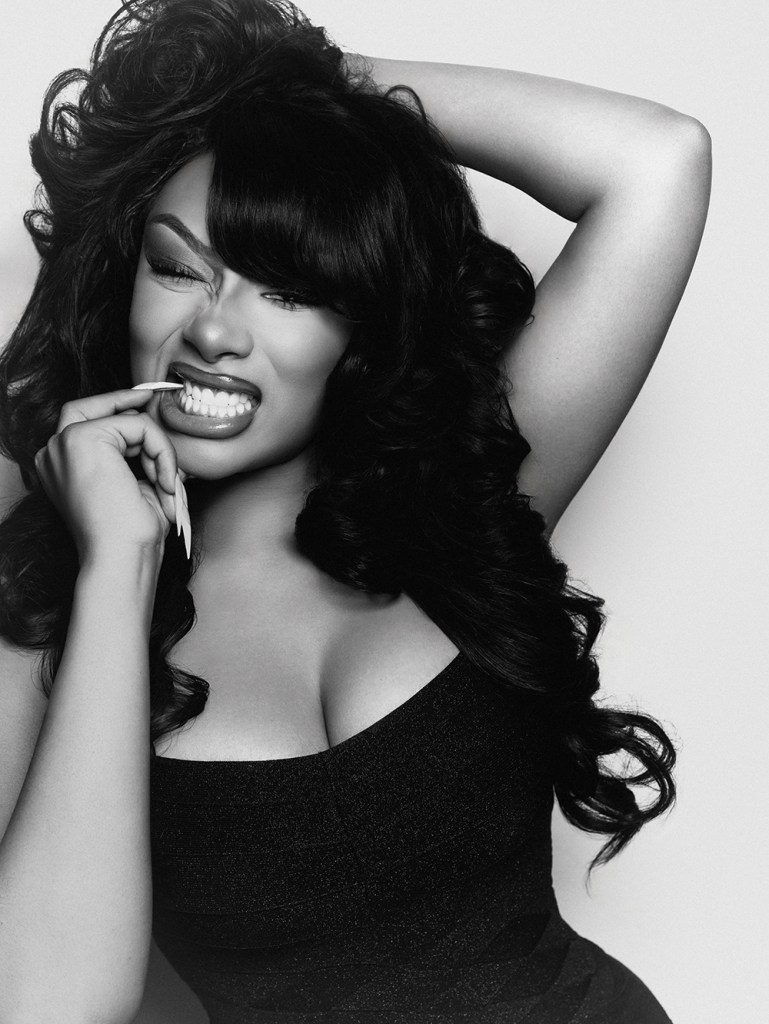
Image Credit: Kanya Iwana
I meet Megan in late March in New York City. And here is how I find her: I go into the side entrance of the Al Hirschfeld Theatre on Broadway, which is currently home to Moulin Rouge!, which Megan would perform in for eight weeks. I go past security. Walk up seven narrow flights of stairs as theater staffers make jokes about it being a cardio workout, and then arrive at a row of tiny dressing rooms. Megan’s is one of them, just as tiny as anyone else’s. She sits on a small, cushioned bench, and I sit in a swivel chair maybe two feet away, and that’s as comfortable as it gets in here. Above her, the words “grit” and “determination” have been taped to the wall; she didn’t put them there, but they suit her well.
When we meet, she admits to some nerves. Moulin Rouge! was days away from opening at the time. But also, she doesn’t do many interviews; she tends to speak directly to her fans instead. So just before I arrive, she’d jotted down a bunch of notes on her phone — things she wants to tell me and didn’t want to forget. As we talk, she holds her phone, which is wrapped in a brown case sprouting what look like bunny ears, in case she wants to reference her notes.
It’s clear: She knows her words carry weight. And she wants to be understood.
In the beginning, she didn’t set out to be an entrepreneur. She set out to be a musician — because that’s her passion, and it also seemed like the path to a financially stable life. She was watching famous musicians from afar, who seemed to have everything they wanted.
“Then I started performing, and I’m like, ‘Oh, this doesn’t translate into money as well as I thought,’” she says.
Why? Ask any musician! Recording contracts are often predatory, and music rights are complicated. A musician can write a song but not own the song, which means usage and royalties are limited. Meanwhile, a music stream earns next to nothing — and even if you get billions of them (as Megan has), it takes a long time for that money to show up. Musicians can also make money with brand partnerships, but those are transactional — here today, gone tomorrow, with no long-term benefits.
“As artists, we give so much to the culture. Our image and sound is used for so many things — movies, sports, radio, everything that influences the culture,” Megan says. “But a lot of times you realize that you’re helping so many brands grow and expand with your image and likeness and all the cool things that you do and say — but you look around one day and you’re like, Dang, I don’t have anything. Like, I don’t have anything to my own name. Nothing is mine.”
By 2019, as Megan’s career was blowing up, she also felt like it was unsteady. She was surviving on fleeting things — the popularity of a song, today’s ability to sell out an arena. She craved more stability, but didn’t know how to find it.
Then she signed with Roc Nation, the talent agency and entertainment company cofounded by Jay-Z. Megan became close with the CEO, Desiree Perez, and they had a mind-opening conversation.
“She taught me that I need to own something,” Megan says. “She said, ‘You are not going to survive by making money for everybody else. You need to figure out a way to be your own boss.’ And I was like, ‘Damn, you’re right. I’m really out here by myself. What am I going to do?’”
Consider the irony. As Megan said earlier, she understood the difference between being seen and being understood. She knew that visibility by itself was fleeting, and that her career would only be built on deeper relationships with fans. But at the beginning, she only applied that idea to social media. Now she was discovering the much larger version of that truth: Being a famous musician, which had been her dream, was just another version of “being seen.” It was fleeting and fragile. True success would come from shifting perspective: She needed to see her goal of being a musician as simply the starting point for an entirely different set of opportunities.
Every entrepreneur should think similarly. The thing you build is not the endpoint. It’s just the opening salvo, the beginning of a conversation. If you build a product and find a market fit, then you can’t just sit around selling that product. Competitors will join you. Consumers might lose interest. So you instead must ask yourself: What has this product taught me about what else my consumer wants? You build to own people’s loyalty. Then you build to own your category.
“Ownership really matters,” Megan says. So she became dedicated to the concept. In 2024, at age 28, Megan became one of the youngest artists to have full ownership of any masters and publishing going forward — meaning she now controls the full rights of her new music’s usage, and fully benefits from its earnings. In 2025, she launched a tequila brand called Chicas Divertidas, as well as a swimwear brand called Hot Girl Summer sold in Walmart stores nationwide. She’s now expanded it into swimwear for men (Hot Boy Summer) and dogs (Hot Dog Summer). In January 2026, she opened a Popeyes franchise in Miami Beach with an exclusive combo called the Thee Megan Meal. And she has more projects and products to come, including a fragrance, an anime series, and more.
I ask her: How does she decide what opportunities feel right? She surely has endless business possibilities in front of her; she could, in theory, launch anything she wants.
Megan says that she’s guided by two questions. The first is: Would this make her mom proud? Her mom was her first manager and her first great champion, and this thought remains Megan’s guiding sense of purpose. And the second question is: Would her fans think this makes sense?
“ I feel like everything I do is already familiar. It just makes sense, because my audience knows me. They know my personal interests,” she says. “So when I’m doing something, they’re like, ‘Yes, this is Hot Girl Summer, she has been Hot Girl Summer — this is her brand, this is her thing — so, Hell yeah, I want a swimsuit from Megan Thee Stallion. Megan Thee Stallion is the life of the party, she likes to turn it up, so, Hell yeah, I want to taste the tequila she likes to drink. I went to Prairie View University, and everyone on campus knows we were tearing up two-piece Tuesdays at Popeyes, so it’s like, Hell yeah, it makes sense that Megan Thee Stallion has her own Popeyes.”
In other words: By opening herself up to her audience, she also primed them to feel invested in whatever she’s invested in. She never has to sell to them, because her products just feel like an extension of their relationship.
Because when you are seen, you have a chance to be understood. And when you are understood, you can become larger than whatever made you seen in the first place. You can blaze a path, and people will follow you, as your goals and ambitions grow, and your staying power becomes stronger. “You have a free voice,” Megan says. “As long as you stand on that, that is your brand.”
The rest sells itself.
www.entrepreneur.com
#Success


