


Lohri arrives every winter like that one extrovert relative who doesn’t knock—just barges in with a dhol, a bonfire, and unsolicited life advice: “Maagh majan sang saadhūā dhūṛī kar ishnān.” Yes, warm your hands at the fire on Lohri night—but as Gurbani reminds us, the deeper “bath” of Magh is humility, sangat and Naam.
At its heart, Lohri is a thank-you note to the sun and the soil—especially to the grand celebrity of the month: sugarcane. The crop is ready, tall, and sweet, flooding markets—and is soon converted into jaggery, and then into the winter holy trinity of gur, gajak, and revdi, all smothered in sesame seeds: small things, shared generously, while elders insist you eat “just one more.”
And yes, Lohri carries a flicker of ancient storytelling too. The bonfire isn’t just for Instagram reels and warming hands—it echoes a deeper legend: Prahlad and Holika, where fire becomes a test of truth. Holika, immune to flames, tries to take Prahlad into the fire, but the blessing shifts, and goodness survives while arrogance burns away. It’s dramatic, moral, and exactly the kind of plot twist that makes a festival memorable. “Be good,” the story whispers, “and also keep your shawl close.”
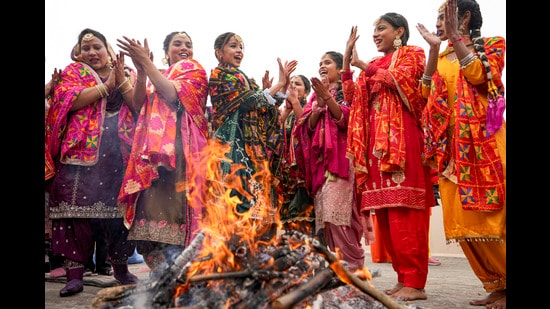
In the past, Lohri was village-centred, and wonderfully communal. Courtyards would glow with bonfires; children would go door-to-door like tiny tax collectors—singing, clapping, demanding peanuts and sweets like seasoned negotiators “De mai Lohri, jive teri jodi!”. And honestly, that’s Lohri in one line—cheeky, warm, and overflowing with blessings. Families would gather in thick quilts, elders would tell stories, and the night would thrum with folk songs that sounded like the land itself was singing. The classic chorus would rise—“Sunder mundriye ho!”—and even the most reserved uncle, would mysteriously develop dance moves around the fire.
Traditions especially shine when it’s the first Lohri: for babies, for newlyweds, and for new beginnings of any kind. Families make it big—gifts, sweets, blessings, and photos. The songs remain the glue: playful, teasing, affectionate. Because Lohri has always been about community theatre—everyone has a role, and the fire is centre stage. As they circle the bonfire, someone inevitably sings the old line—“Isharr aaye, dalidar jaaye; dalidar di jad chulhe paaye” (a folk prayer that the fire should eat up the negativity) because why just chase misfortune away when you can toss its roots into the bonfire for good measure ?
In the present, Lohri has moved into cities, apartments, and society lawns with “Bonfire Area” signboards and fire extinguishers standing by like anxious chaperones. The dhol comes with a playlist. The bonfire may be smaller, but the spirit is stubbornly the same: people circling warmth, tossing in offerings, and the chorus still carries the same wish: may your home stay bright, your hearts stay lighter, and your life keep glowing—like the bonfire—through all the winters to come.
The writer is a Chandigarh-based former Indian Revenue Service officer
www.hindustantimes.com
#Spice #Life #Joys #Lohri #Bonfires #blessings #beats #bites


