


Key Takeaways
- Skims chief product officer, Emma Grede, calls working from home “career suicide.”
- She links widespread remote work to social problems like loneliness, declining marriage rates and falling birth rates.
- She believes close, in-person relationships are key to a long and happy life.
Emma Grede says employees are overlooking the hidden cost of working from home. The serial entrepreneur, worth a reported $405 million, is the co-founder and CEO of denim company Good American, which did $200 million in sales in 2022, and the chief product officer and founding partner of Skims, a $4 billion shapewear brand.
In a newly released episode of the Leaders with Francine Lacqua podcast, 43-year-old Grede warned that remote work may carry broader social consequences that are largely going unnoticed.
“Working from home is career suicide,” Grede told the podcast. “And we only talk about the upside of working from home.”
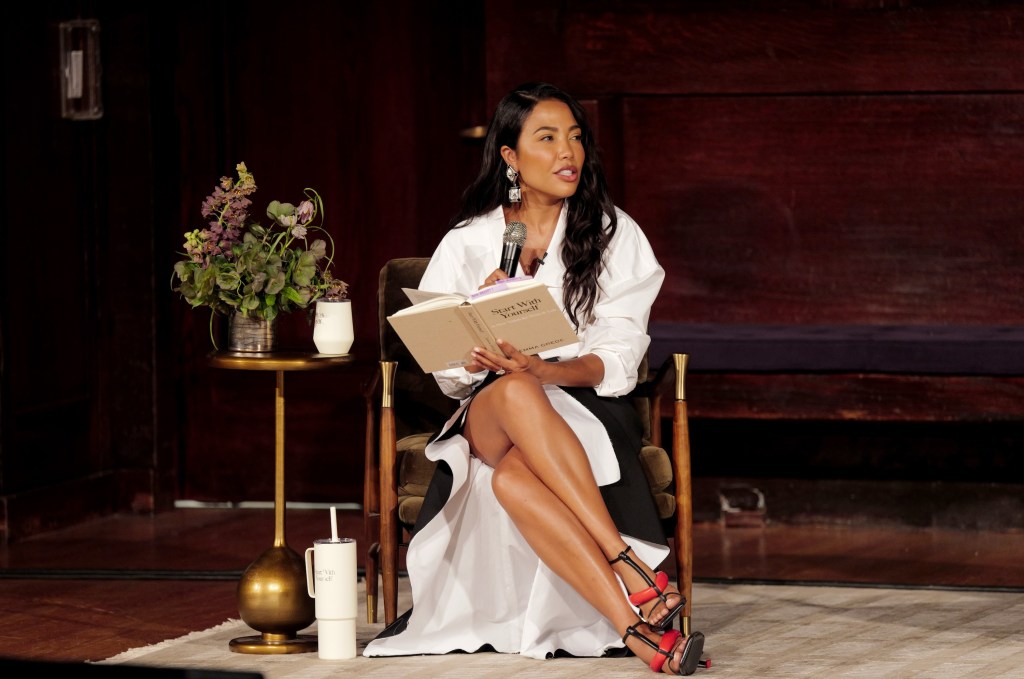
Grede said that the dark side of remote work is both uncomfortable to confront and already materializing.
“Think about what’s happening in the world,” Grede said. “Declining birth rates, declining marriage rates, and the loneliness epidemic. And we think that none of that is linked to the number of people that don’t see people because they’re doing Zoom calls from the living room?”
Grede, who also runs apparel company Good American as CEO, said it’s “so crazy” not to see a connection between those trends and the rise of remote work.
“The key to a long and happy life is your close relationships,” Grede said.
What the research has to say
Several recent studies have found that frequent remote work is associated with more loneliness. A January U.S. study using 2024 Census Household Pulse Survey data (87,317 employed adults) found that people working remotely three to four days per week had higher odds of reporting loneliness than those who never worked remotely.
Gallup’s State of the Global Workplace data, released May 2025, showed that fully remote employees are more likely than hybrid and on‑site workers to report daily loneliness, anger and sadness, even though they often reported higher engagement.
However, remote work is associated with higher fertility and more marriage intentions, not declining birth or marriage rates. A January study from researchers at Stanford and Princeton used data from 38 countries and found that when both partners work from home at least one day a week, estimated lifetime fertility is about 0.32 children higher per woman than when neither partner works from home.
Being in the room matters to Grede
For Grede, physically showing up has been essential from day one of her career. She recalls grinding through multiple unpaid internships despite having very little money, describing that period as a genuine hardship that required sacrifice and constant worry about how she would make ends meet.
“That was a real struggle for me,” she told the podcast.
Grede frames those tough, uncompensated roles as the price of admission to the rooms containing real opportunities and relationships. She insists that proximity early on can change the entire trajectory of a young person’s career.
“It was a huge unlock for me, the ability to go into an organization and get under the hood without having any qualifications or right to really be there,” Grede said. “I think that there have to be certain protections on it, but I’d like to lift the lid because there’s so much to be learned.”
Grede’s other workplace philosophies
Grede has a history of taking a tough stance on what she expects from employees. Back in May 2025, she sparked debate by saying that when job candidates bring up work-life balance in interviews, she sees it as a red flag. Asking a question about work-life balance is a signal that their priorities may not align with the hustle and intensity her company demands, Grede told The Diary of a CEO podcast.
“Work-life balance is your problem,” Grede told the podcast. “It isn’t your employer’s responsibility.”
In an interview with The Wall Street Journal earlier this month, Grede sparked online debate after describing herself as a “max three-hour mum” on weekends. She explained that she deliberately caps the amount of time she spends with her four children, prioritizing short, intentional windows over all-day time together.
Grede’s goal, she said, is to engineer “high-impact, core memories” with her kids. Her ability to structure motherhood this way depends on significant help at home, including multiple nannies, cleaners, a chef and a chief of staff.
“Cutting sandwiches into star shapes? That was never it for me,” Grede told the Journal.
Key Takeaways
- Skims chief product officer, Emma Grede, calls working from home “career suicide.”
- She links widespread remote work to social problems like loneliness, declining marriage rates and falling birth rates.
- She believes close, in-person relationships are key to a long and happy life.
Emma Grede says employees are overlooking the hidden cost of working from home. The serial entrepreneur, worth a reported $405 million, is the co-founder and CEO of denim company Good American, which did $200 million in sales in 2022, and the chief product officer and founding partner of Skims, a $4 billion shapewear brand.
In a newly released episode of the Leaders with Francine Lacqua podcast, 43-year-old Grede warned that remote work may carry broader social consequences that are largely going unnoticed.
“Working from home is career suicide,” Grede told the podcast. “And we only talk about the upside of working from home.”
www.entrepreneur.com
#Skims #Chief #Emma #Grede #Remote #Work #Career #Suicide


