Key Takeaways
- Hulken, a rolling tote startup, started as an “accidental” side project while founder Alex Schinasi was building her second software company.
- However, organic demand and word of mouth quickly made Hulken a full-time, high-growth business.
- Schinasi built the company using a “Silent Build” strategy; she spent the first two years perfecting product and manufacturing before turning on marketing or chasing press.
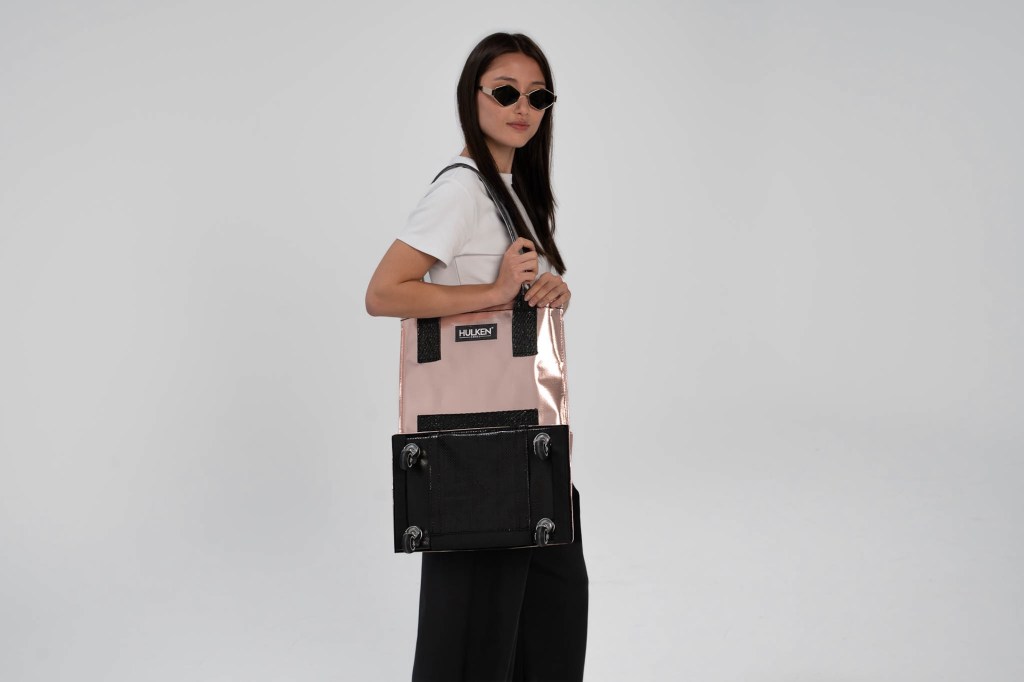
Picture a tote bag with wheels that fits every essential you can imagine. It combines the rolling power of a suitcase with the everyday functionality of a bag.

Alex Schinasi, a serial entrepreneur, is working to get this tote bag in everyone’s hands. In the past, Schinasi built Ivy, a software platform for home remodeling professionals, and sold it to Houzz in 2018. She also co-founded Clay, a childcare software company, which was acquired by Kangarootime in 2024.
Schinasi is known for creating practical, easy-to-use products that combine smart technology with thoughtful design. Her latest company, Hulken, reflects that approach. The rolling tote brand has been profitable from day one without outside funding. Hulken surpassed $50 million in annual revenue last year with just seven employees and is on track to reach $100 million this year.
Schinasi launched Hulken in 2020 from her New York City apartment. When Covid hit, she decided to go all in — packing orders herself and growing a loyal customer base. The bags cost between $99 and $130, depending on the size.
The following responses have been lightly edited for clarity and concision.

Tell me more about yourself. How old are you? How did you get here?
I’m 40. My 20s were my launchpad. After a short career in film production, I made the leap into entrepreneurship with my first company, Ivy.
My 30s were defined by building and exiting two software companies — the first at 32, the second at 39. While building my second company, Clay, I started a scrappy side project called Hulken.
Hulken began as a product we used as a family. My father made an early version at his factory. As we schlepped it around New York City, it became a magnet for attention. Strangers would stop us on the street to ask about it. During COVID, my husband and I decided to test the idea and launched a simple website.
At the time, I was still fully focused on scaling Clay. Hulken was nights and weekends — an experiment, not a plan.
But it kept growing.
When Clay was acquired, the decision was obvious. Hulken had already reached $30M in revenue, built purely on product, word of mouth, and a passionate customer base. No marketing team. No internal hires. Just a great product and a brand people couldn’t stop talking about.
That’s when I went all in.
What’s your educational background and early work history?
I was born and raised in Switzerland, and later moved to New York to attend NYU.
After graduating, I relocated to London to work at an Oscar-winning production studio. That experience shaped the way I approach building companies today. Film is, at its core, about bringing ambitious ideas to life – raising capital, telling a compelling story, and executing under pressure.
In 2014, I moved back to New York, which is where my companies came to life. It’s where I really learned how to scale.
Today, I live in Lisbon with my husband and our three kids.
What is Hulken?
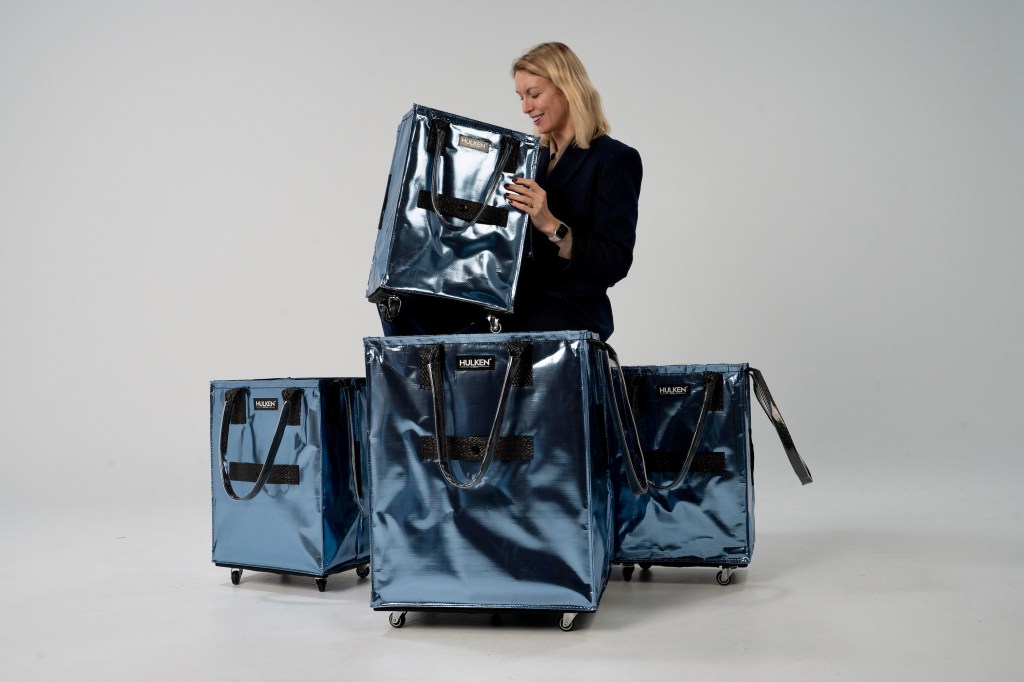
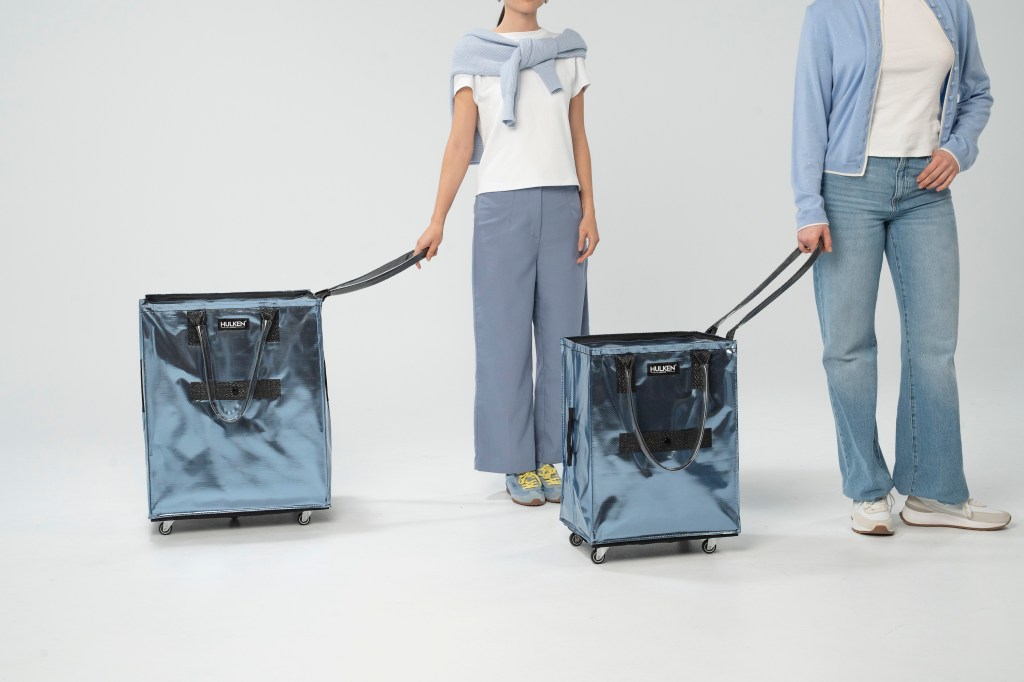
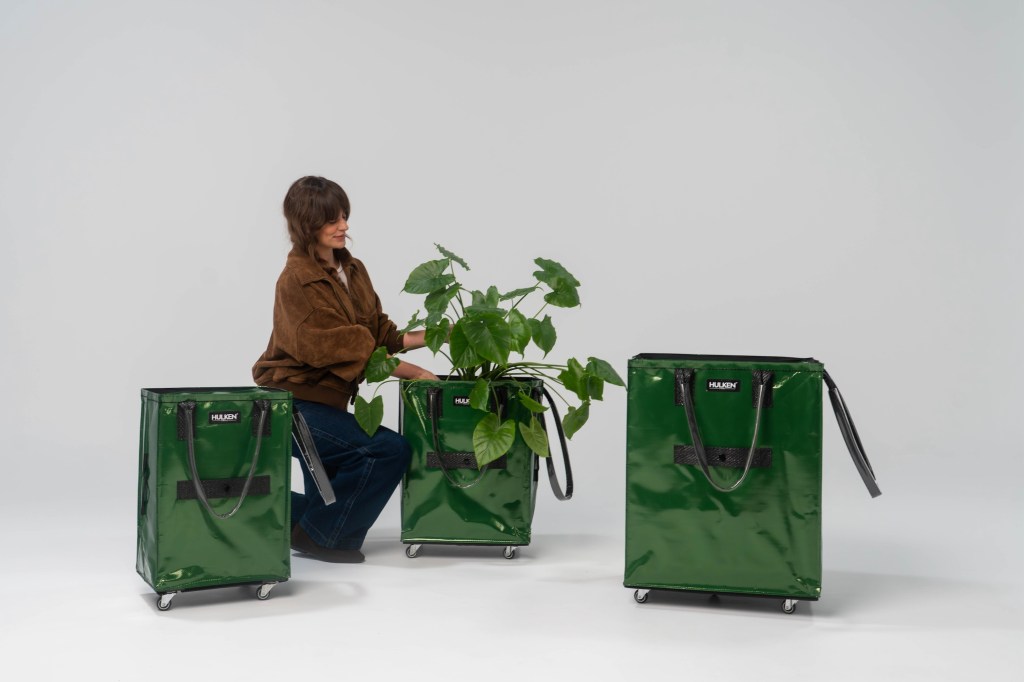
Hulken is a rolling tote made from durable, industrial-grade materials – designed to make schlepping effortless.
The idea came from my father, who sketched it on a trip to Paris after a full day of shopping, looking for a more elegant way to carry everything. What started as a simple solution turned into something much bigger.
With Hulken, we created an entirely new category. It’s not a suitcase, not a duffel, not a shopping cart. It’s something in between. You fill it, you pull it, and it makes whatever you’re carrying feel light.
We launched as a purely D2C brand, and today Hulken is sold nationwide through partners like Target, The Container Store, QVC, and Amazon.
At its core, Hulken exists because nothing else on the market actually solved the problem.
What is Hulken’s team like?
I’m the co-founder and President, and my husband, Joni, is my co-founder and CEO.
Before Hulken, Joni was a professional drummer for over 25 years. True to form, he prefers to stay behind the scenes, but his impact is anything but quiet. With no formal business background, he scaled Hulken from zero to $50M in just a few years.
Our team is small by design. We currently have seven full-time employees, and my goal is to reach $100M in annual revenue with fewer than ten.
We operate what I call a “Minimum Viable Company” – a senior, highly experienced core team at the center, supported by world-class agencies and powered by AI as foundational infrastructure.
This isn’t a phase we’re trying to outgrow. It’s the model.
How much did it cost to start?
We were lucky to have a manufacturing partner from day one, which gave us the flexibility to produce inventory with favorable payment terms.
For most CPG brands, upfront inventory is one of the biggest barriers to entry. That structure allowed us to grow steadily and responsibly, without the pressure of heavy production costs.
When COVID hit, my husband suddenly had no stages to play on, so he shifted his full focus to Hulken. At the same time, I was in the middle of fundraising for Clay, so Hulken remained very much a nights-and-weekends side project in those early years.
What were some of the first steps you took to get the business off the ground?
We spent the first two years building the product. No paid media, no press push, no launch event. I call it the Silent Build. Most founders raise, launch, and then figure out if they have product-market fit. We did it the other way around. We got the product right, we got manufacturing right, and we got the unit economics right before any big marketing push. When we finally turned on marketing, we had something that actually worked and the growth followed.
What are some tactics you used to grow?
Product first, always. Hulken is the kind of product that sells itself the moment you see it in use.
That shaped our entire growth strategy. We focused on getting it into the hands of people who move visibly through the world — in cities, at airports, at events, and on social media.
We also embedded ourselves in professional niches where Hulken became a tool of the trade – thrifters, makeup artists, stylists. These communities were highly active online, and once they adopted the product, it created a powerful viral flywheel that drove awareness organically.
Retail came next, but very intentionally. Every partnership had to earn its place. The real inflection point was combining the magic of DTC with the reach of offline retail – using both to amplify each other and unlock the next phase of growth.
What are some of your specific business strategies?
Three things. One, own the category. Hulken isn’t a better version of something that exists. It’s the first version of something new. We protect that positioning in every piece of comms. Two, keep the team small. Every hire adds time and erodes speed. Three, build for durability. We make decisions on a ten-year horizon, not a quarter.
Can you recall a specific instance when something went very wrong? How did you fix it?
We’ve been chronically out of stock — for years.
For a long time, we simply couldn’t produce enough to make it through Q4 with full inventory. In fact, 2024 was the first holiday season where we were fully in stock across the line.
We’ve improved it with better forecasting and planning, but the reality is that nothing truly prepares you for scaling at this speed. When demand accelerates this quickly, production becomes your biggest constraint.
We’re still feeling those growing pains in 2026. It’s a good problem to have, but it’s forced us to get much sharper about how we plan, produce, and scale ahead of demand.
What’s been particularly surprising about this specific business?
The surprise was how different CPG operates from SaaS at the tempo level. In software you ship on Tuesday and iterate on Thursday. In physical goods you’re making decisions in January about what ships in November. The challenge has been building a team and an operating system that can hold both timescales at once: the long cycle of manufacturing and the short cycle of brand and commerce.
As copycats and competitors showed up, how did you protect Hulken’s distinct identity?
Copycats copy the object. They can’t copy the category or the brand. We’ve spent years building Hulken as a noun, not a product. The bag is the expression of something larger: a point of view about how you move through your day. That’s not something a factory in China can reverse engineer. We also own our manufacturing, which means we can move on quality and design at a pace copycats can’t match.
How much in sales did the company do last year, and how much is it projected to do this year? How long until consistent monthly revenue? Is it six, seven, or eight figures? What do growth and revenue look like now?
We closed 2025 with just past $50M in yearly revenue. In 2026, we are aiming for $75M but may end closer to $100M depending on how Q4 goes.
What’s some hard, concrete advice you have for founders?
Stop hiring. Most founders hire to feel productive. A small team forces you to make real decisions about what matters. Second, stop overthinking launches. Build the thing first. Make sure it solves a problem. Third, stop raising money you don’t need. Every round changes the shape of the company, and many of those changes are not improvements.
Many physical products go viral and then disappear. What did you do differently?
Virality is a spike. A brand is a floor. We didn’t chase the spike. When the product had its moments, we let them happen and stayed focused on the floor: repeat customers, retail relationships, brand collabs. The companies that disappear after going viral are usually companies that confused the spike for the business. We never did.
www.entrepreneur.com
#Built #50M #Brand #Years #Growth #Secrets