


Key Takeaways:
- Iran reportedly fired on at least one tanker and turned back 20+ vessels on April 18, pushing Polymarket’s April 30 normalization odds down 41% to 28%.
- The Strait of Hormuz May normalization market holds at 69% Yes, backed by $1.3 million in volume, after peaking near 82% on April 17.
- A full “Yes” resolution requires IMF Portwatch to log a 7-day moving average of 60+ ship arrivals before May 31, 2026.
Iran Reimposed Hormuz Restrictions Hours After Reopening; Polymarket Contracts Shift Sharply
Iran’s Foreign Minister had declared the Strait “completely open” to commercial vessels on April 17, citing a Pakistan-brokered ceasefire. Oil prices fell around 10% on the news, equity markets rallied, and the May normalization contract on Polymarket briefly touched intraday highs near 82%.
The reversal came within 24 hours. Iranian officials said the U.S. continuing its naval blockade on Iranian ports constituted a “breach of trust” and a violation of ceasefire terms. The April 30 Polymarket contract dropped 41% from its recent peak. The May contract, which had spiked to 73% on April 17, settled back to approximately 69% Yes as of April 18.
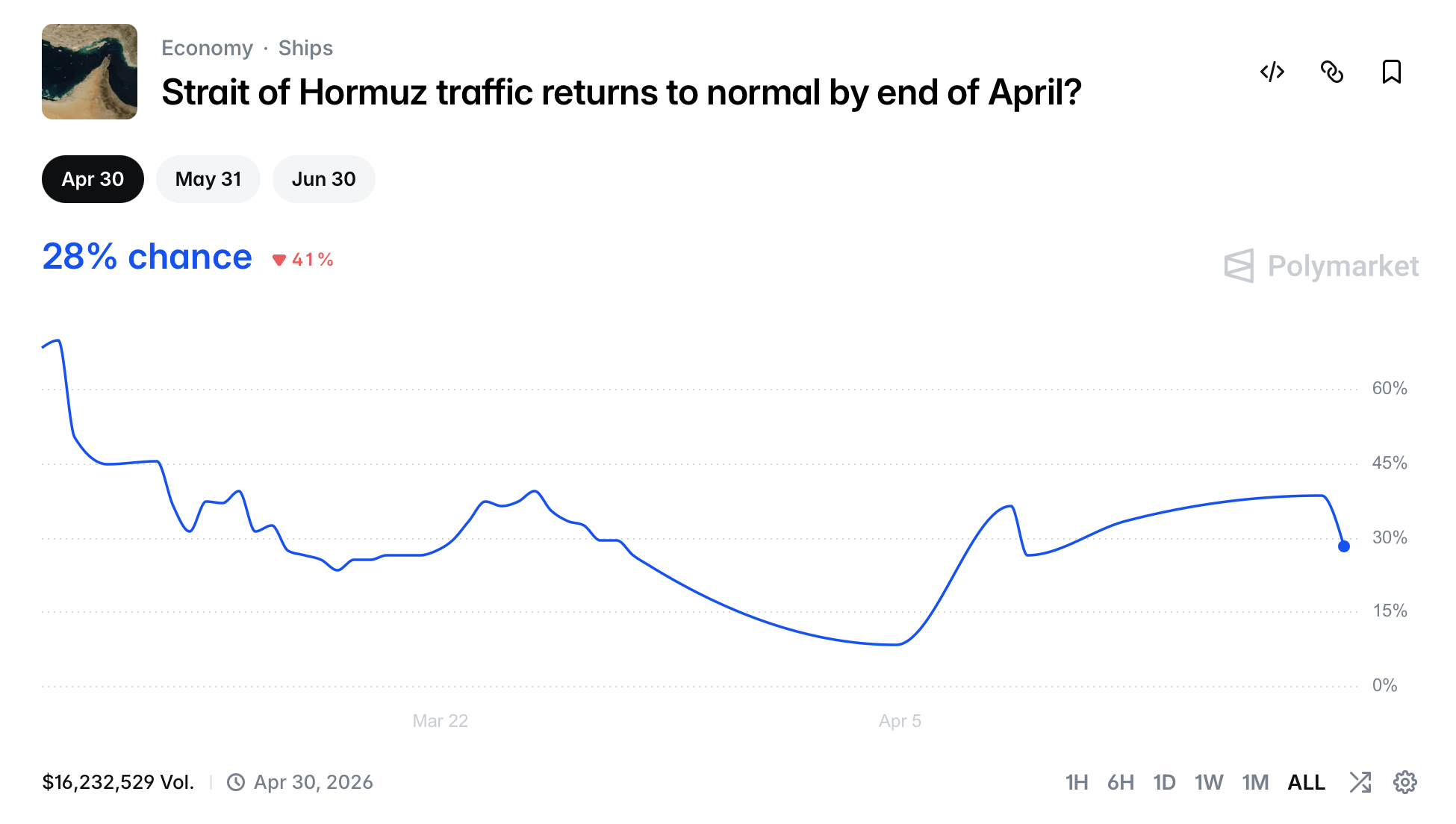
The April 30 market carries over $16 million in total volume, with nearly $4 million changing hands during a single session on April 7 following an earlier Iranian pledge to reopen the waterway.
Resolution for both contracts depends on IMF Portwatch reporting a 7-day moving average of at least 60 ship arrivals covering container, dry bulk, Ro-Ro, general cargo, and tanker vessels. Before the crisis began in early March 2026, daily transit calls routinely exceeded 60 on that measure. Current vessel counts run between 5 and 16 ships daily.
Kpler data showed 8 tankers transited early Saturday before the crackdown resumed. MarineTraffic recorded multiple vessels executing U-turns near Larak Island after Iranian enforcement resumed.
The math on the April 30 contract presents an obstacle beyond the political situation. The seven-day moving average has sat near zero for weeks. Even with an immediate, full resumption of commercial traffic, hitting a 60-vessel average within the remaining 12-day window would require a level of throughput that traders appear unwilling to price as likely.
The Strait of Hormuz carries roughly one-fifth of global seaborne oil and substantial LNG volumes. Iranian forces declared it effectively closed around March 4, 2026, following U.S. and Israeli military operations against Iran that began in late February. At least 10 vessel attack incidents were reported by early March.
President Trump publicly welcomed the April 17 announcement but said the U.S. blockade would remain until a comprehensive deal was completed. On Saturday, the White House maintained that position.
A companion Polymarket market on normalization by the end of June sits at approximately 81% Yes, suggesting traders see longer-term resolution as more probable than near-term stabilization. Insurance premiums for vessels attempting Hormuz transit remain sharply elevated. Shipping firms have broadly suspended sailings pending clearer security guarantees.
Pakistan has been acting as an intermediary between Washington and Tehran. No formal talks are currently scheduled, and no timeline for a broader deal on Iran’s nuclear program has been announced.
The April 30 contract resolves as soon as IMF Portwatch publishes qualifying data, or at the deadline if no qualifying data appears. With 12 days remaining and daily vessel counts in the single digits, the 72% No side reflects where most capital has settled.
news.bitcoin.com
#Polymarket #Strait #Hormuz #Odds #Crash #Iran #Fires #Tankers #Bitcoin #News


