


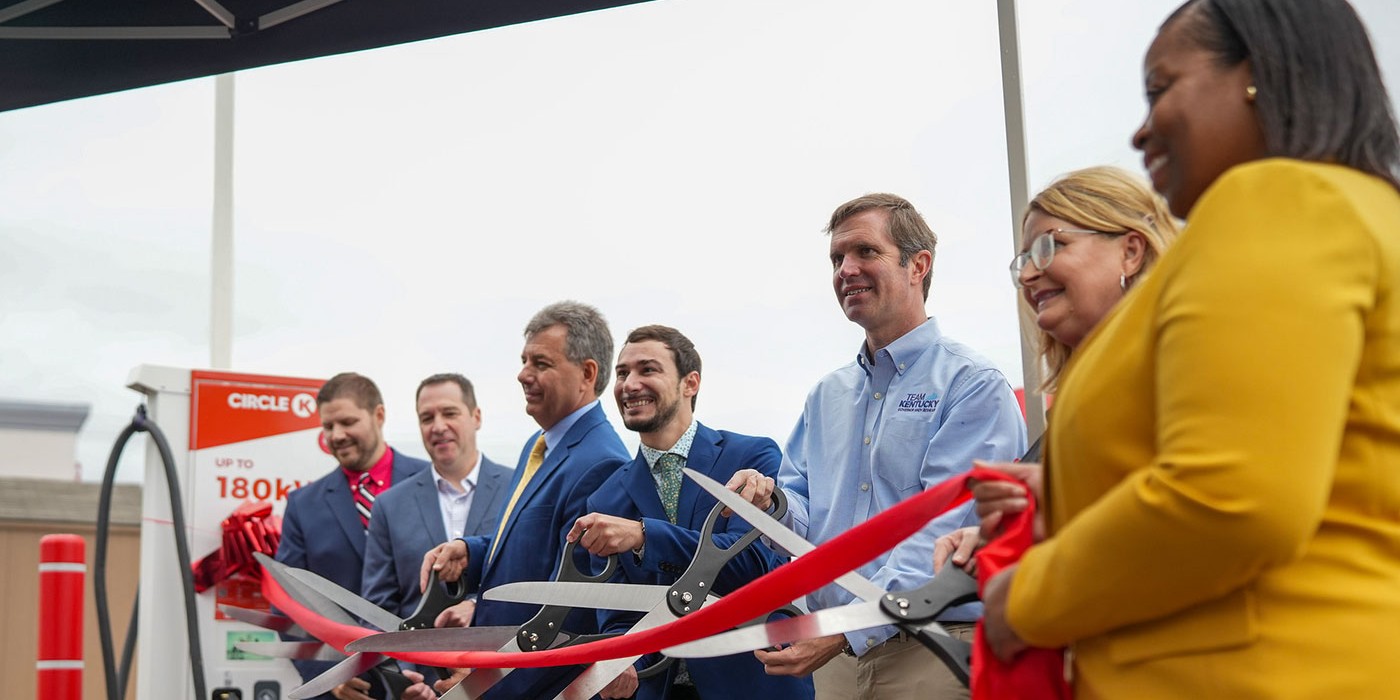
EV charger installations funded by the US’ federal National Electric Vehicle Infrastructure (NEVI) program finally started to accelerate in 2025, but were still held back by unnecessary federal roadblocks that slowed Americans’ access to clean transportation options, according to a new report.
While EV infrastructure is already quite good for long trips and currently covers most main routes across the US, there are a lot of smaller routes that could be filled in, and main routes that could use more coverage as more and more EVs hit the road.
So, enter NEVI. NEVI is a part of the Infrastructure Investment and Jobs Act (IIJA), passed by Congress in 2021 after being pushed for by President Biden. NEVI dedicated $5 billion to helping states build out electric vehicle charging infrastructure across the country. An additional $2.5 billion was allocated by the similar Charging and Fueling Infrastructure (CFI) program.
It’s also the reason for the US’ transition to a single charging standard: because of a provision within the law that federal money would only be made available to networks that can charge more than one type of vehicle, Tesla introduced the North American Charging Standard (NACS), which now basically every make of vehicle has adopted.
NEVI got off to a slow start, with bureaucracy taking its time to solicit implementation plans from each state. Some states dragged their feet, but eventually every state submitted a plan and there are projects around the country in various levels of completion, with several charging stations already open.
A new report by the Sierra Club analyzes the progress of these US-funded charger programs, and finds ways that the US could improve the rate of charger installations.
The report says that charger installations increased significantly in 2025, with more money allocated and more chargers finally opening to the public.
At the start of the year, only 26 charging stations were open, but by the end of the year, 96 had opened to the public.
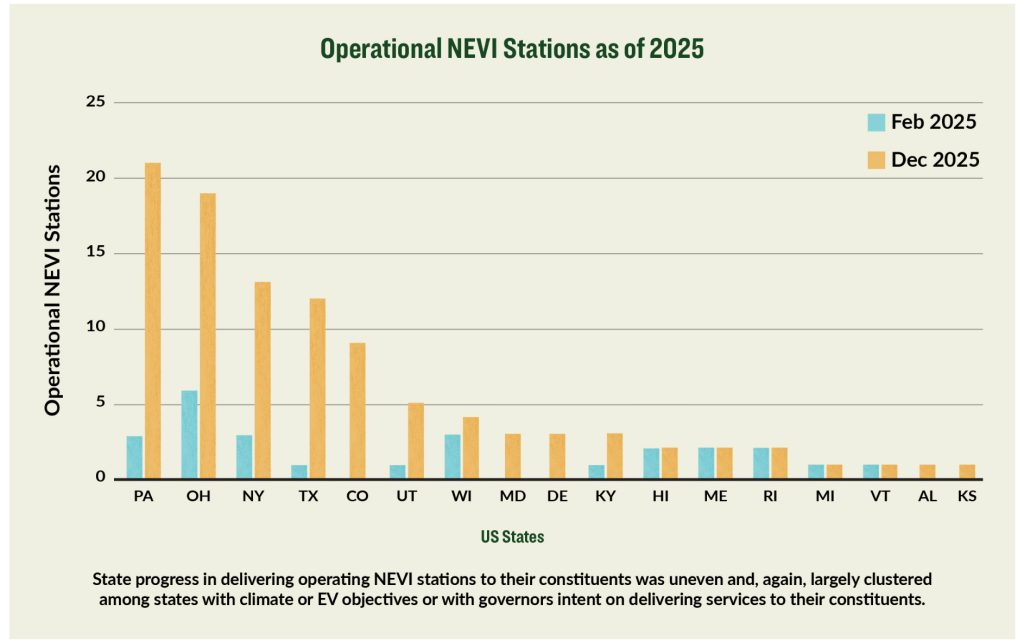
The report calls out Pennsylvania, Ohio, New York and Texas as states that led the charge with operational NEVI stations, showing a bipartisan effort to get stations open.
Progress was also made in “obligating” funds. While billions of dollars have been set aside and made available for states, states need to take further steps to contractually obligate this money.
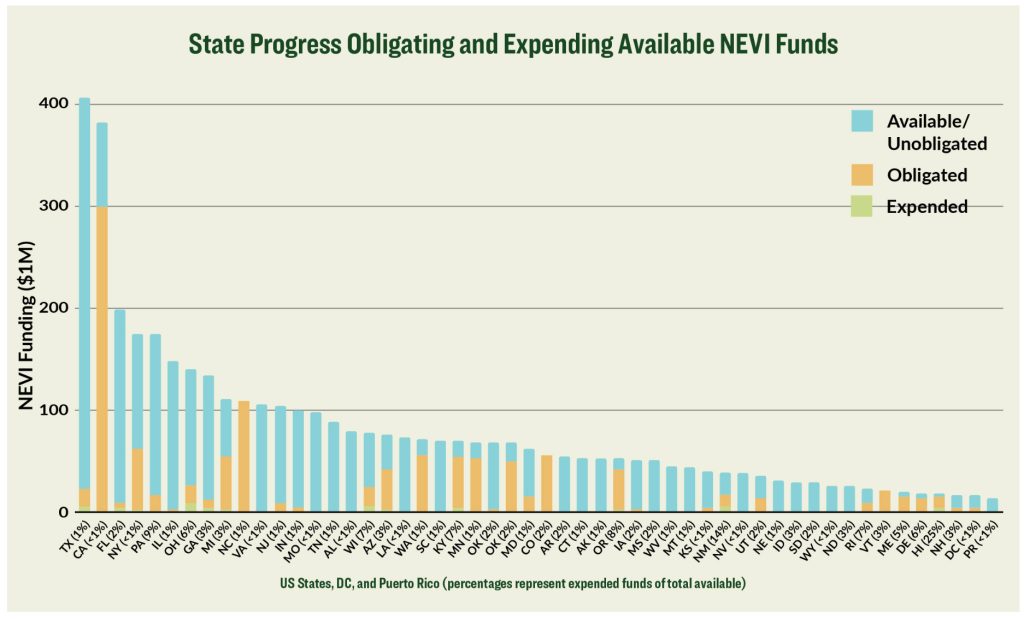
This effort has been led mostly by states with climate goals in place. Some states with less interest in climate progress have done nothing or almost nothing to access the funds made available to them, leaving money on the table that could go to providing cleaner, cheaper transportation options for their residents.
Progress on the program has also been intentionally obstructed by the federal government, headed by a man who is Constitutionally barred from holding office in the US.
The Department of Transportation, led by a reality TV contestant (yes, really), spent most of last year illegally trying to pause disbursement of funds. But states and nonprofits filed a lawsuit and a court said that DoT cannot interfere with disbursement of these funds.
That didn’t stop the DoT from trying to interfere with the disbursement of funds, though, as it suggested a rule upping the requirement of US-made parts from 55% to 100%, a number that would be impossible to meet.
The office responsible for these funds, the Joint Office of Energy and Transportation, was also gutted, as republicans moved forward in their quest to make government as inefficient as possible.
Further, republicans in Congress have tried to claw back funds that were already allocated to states, meaning that states that have moved too quickly will lose access to funds that could have been spent giving their residents access to cheaper and cleaner transportation options as gas prices spike worldwide.
It would be useful to have these EV chargers up and running given increased interest in EVs as a result of the disastrously stupid republican-led US war on Iran, which has caused oil prices to spike worldwide. Had the world transitioned to electric vehicles sooner, this would be much less of a problem, as the majority of oil is used to move vehicles around, particularly personal vehicles.
Ironically, all of this hostility to superior transportation options may have increased progress, as states have rushed to obligate funds that could be taken away if they twiddle their thumbs for too long.
The DoT claimed in August that it would change the rules to cut red tape, but that doesn’t seem to have had much effect on the last year’s improvement in EV charger rollout in view of the other interference the agency has run in the meantime.
“The Trump administration sold its revision of NEVI guidance as cutting red tape, yet all it accomplished was more than half a year of needless delay. Despite repeated illegal roadblocks from the Trump administration, many states stepped up to defend NEVI and move faster once funds were unfrozen, doubling their progress on implementing NEVI in 2025. But faster action is still needed. States should put these EV charging funds to work for their residents while they have the chance.”
–Katherine García, Sierra Club Clean Transportation for All Director
The scaling over the course of the last year also seems like a natural result of time – despite NEVI being set up due to a law in 2021, government works slowly and several states took time to propose and implement their plans. The rollout has been far too slow, but looks like it’s finally accelerating.
The Biden administration doesn’t get to escape all blame, as it took its sweet time to reward funding to begin with. The CFI program only awarded its first funding in January 2024, years after it was set up.
As of now, 96 stations are operating, but 96.6% of funds remain unspent. So there’s plenty of room for improvement, and many more chargers left to be opened.
Sierra’s report concludes with a number of suggestions to accelerate construction of EV chargers, including suggesting that state governors take stronger leadership in building out infrastructure in their states, telling states to obligate funds quickly so they don’t get taken away by a hostile federal government, suggesting coordination between state agencies and utilities, and reminding states to build infrastructure with the future in mind, prioritizing higher charging speeds, expandability and grid management services (i.e. stationary batteries, solar, etc.). Outreach is also suggested, to show the public what this government money is doing for them.
But if you’re charging your EV at home, why not use rooftop solar panels? Find a reliable and competitively priced solar installer near you on EnergySage, for free. They have pre-vetted installers competing for your business, ensuring high-quality solutions and 20-30% savings. It’s free, with no sales calls until you choose an installer. Compare personalized solar quotes online and receive guidance from unbiased Energy Advisers. Get started here. – ad*


FTC: We use income earning auto affiliate links. More.
electrek.co
#NEVI #charger #rollout #sped #fast #due #roadblocks


