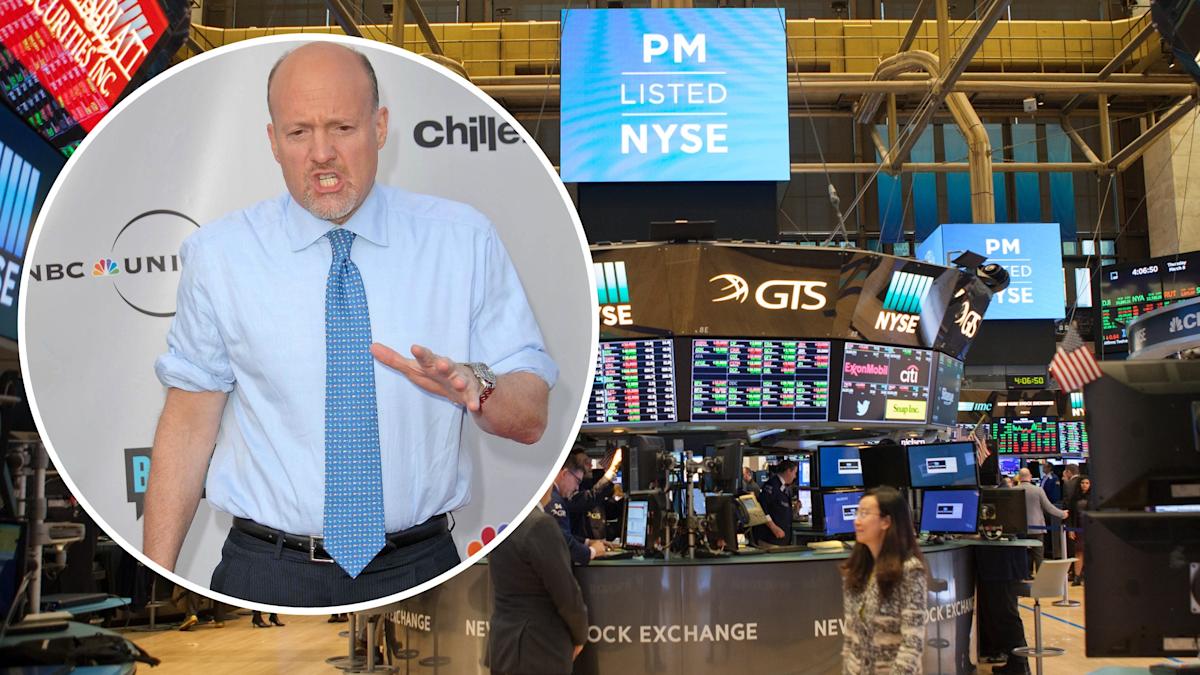
Investors are increasingly drawing comparisons between today’s AI-fueled stock market rally and the dot-com bubble of 1999. But Jim Cramer says Wall Street’s current obsession with artificial intelligence may actually be creating an even more punishing environment for investors.
The CNBC host warned this week that today’s market has become increasingly unforgiving, with investors pouring money into a narrow group of artificial intelligence winners while aggressively dumping companies that disappoint on earnings or guidance.
ç
“We keep hearing this drumbeat that 2026 is 1999 all over again,” Cramer said Monday on CNBC’s “Mad Money.” (1) “But the difference between now and 1999 is that this market does not stop punishing the companies that disappointed … You are unsafe at any level.”
The warning comes even as the S&P 500 and Nasdaq continue hitting record highs, powered largely by enthusiasm around AI, semiconductor companies and data center spending. But beneath those headline gains, many well-known companies outside the AI trade have struggled badly.
Cramer pointed to companies like Abbott Laboratories and Danaher, which have fallen sharply this year after disappointing investors. Abbott is down 34% year-to-date after narrowly missing expectations, while Danaher has dropped 27% following what Cramer described as a “savage string of not-so-great quarters.” (1)
“This is Abbott Labs for heaven’s sake,” Cramer said. “A market that punishes Abbott Labs is a market that despises anything not connected to tech and the data center.”
Why Wall Street is becoming increasingly concentrated
Part of the concern is just how dependent the broader market has become on a relatively small group of AI-linked stocks. According to Reuters, semiconductor stocks alone have contributed roughly 70% of the S&P 500’s $5.1 trillion increase in market value this year. The Philadelphia Semiconductor Index has surged 64% since late March, far outpacing the broader market (2).
Meanwhile, the so-called “Magnificent Seven” tech giants — Apple, Microsoft, Nvidia, Amazon, Alphabet, Meta and Tesla — now account for roughly one-third of the S&P 500’s total market value, according to The Motley Fool (3).
That kind of concentration can create a fragile market environment, where a small number of companies drive most index gains while the rest of the market lags behind. Reuters recently reported that investors have become increasingly quick to abandon companies viewed as vulnerable to AI disruption, particularly in software and health care (4).
At the same time, Wall Street firms continue raising their S&P 500 targets on optimism surrounding AI-related earnings growth. RBC recently lifted its year-end target for the index, citing continued enthusiasm around AI infrastructure spending and strong technology earnings (5).
The result is a market that appears strong on the surface but increasingly divided underneath. Reuters noted this week that only about half of S&P 500 companies are currently trading above their 50-day moving averages, a sign that market leadership has become unusually narrow despite record highs (2).
@placement
What it could mean for ordinary investors
Cramer stopped short of calling today’s market another dot-com bubble. Unlike many internet companies during the late 1990s, today’s AI giants are enormously profitable businesses generating billions in revenue and cash flow.
Still, markets driven by a small number of “must-own” stocks can become fragile if sentiment suddenly changes.
The Financial Times recently reported that Wall Street’s rebound since late March has been driven by the narrowest group of stocks on record, with just five companies — Alphabet, Nvidia, Amazon, Broadcom and Apple — responsible for more than half of the S&P 500’s gains during the rally. UBS analysts told the outlet the number of stocks meaningfully driving the market had fallen to just 42, compared to a more typical level closer to 100 (6).
That kind of narrow leadership can create what strategists call “fragility risk,” where the broader market becomes increasingly dependent on continued gains from a small group of companies. For everyday investors, the environment may serve as a reminder about the risks of chasing momentum.
Vanguard recently warned that stretched valuations in parts of the tech sector have left some stocks with “little valuation cushion when narratives turned,” noting that diversification across sectors and market segments may matter more if leadership begins to broaden beyond mega-cap AI names (7).
Financial advisors generally recommend maintaining diversified portfolios rather than concentrating too heavily in one hot sector or trend. Markets driven by narrow leadership can continue climbing for long periods, but they can also reverse quickly when enthusiasm fades or earnings fail to meet expectations.
As Cramer put it, today’s market has created “some hated stocks and some loved stocks.” Right now, he argued, “the hated are over hated and the loved are over loved.”
Must Read
Article Sources
We rely only on vetted sources and credible third-party reporting. For details, see our ethics and guidelines.
CNBC (1); Reuters (2),(4),(5); The Motley Fool (3); Financial Times (6); Vanguard (7)
This article originally appeared on Moneywise.com under the title: ‘You are unsafe at any level’: Jim Cramer says 2026 isn’t 1999 — it’s worse. Why it’s so much more ‘punishing’ now
This article provides information only and should not be construed as advice. It is provided without warranty of any kind.