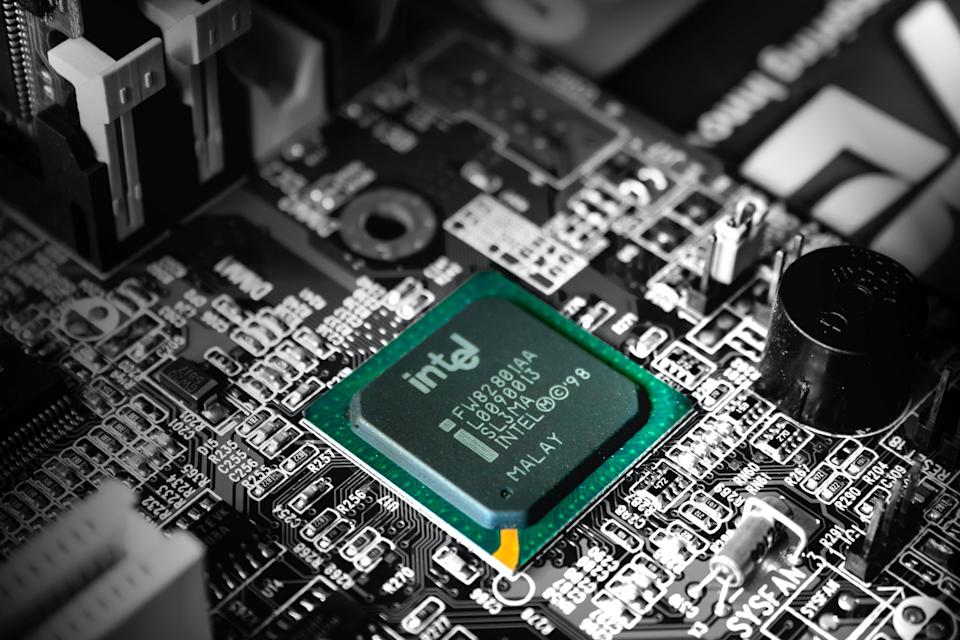
As AI continues to carry the markets, advisors are trying really hard not to burst anyone’s bubble.
Sure, the S&P 500 Index is up a respectable 14% so far this year, but nearly half of all US stocks are in negative territory, and 70% of those stocks are lagging the index, which is leaving some advisors increasingly concerned about a pullback. Such gloomy data is being overshadowed and offset by the strength of a tight group of AI infrastructure and related semiconductor stocks that are fueling a market run. It’s all drawing debate on whether it should be described as a bubble.
For example, Nvidia, which is often viewed as the poster child of the AI rally, has surged nearly 40% this year. But even that performance lags such AI infrastructure names as Broadcom, up 54%; Palantir Technologies, up 123%; and Micron Technologies, up 177%. Then there are the data storage pure plays, such as Seagate Technology, up 203%; and Western Digital, up 243%.
“If it looks like a bubble, barks like a bubble, sounds like a bubble, it is a bubble, and you have to be naive not to think that this whole AI thing is in its euphoria phase,” said Kashif Ahmed, president of American Private Wealth. “This is the dotcom of 2025, and I have been warning people for the better part of a year, and positioning portfolios. This is not going to end well for those who are succumbing to FOMO.”
SUBSCRIBE: Receive more of our free Advisor Upside newsletter. READ ALSO: SEC Halts Filings of Highly Leveraged ETFs and Tree Hugging or Greenwashing? BlackRock’s in ESG Hot Seat Either Way
One way of showcasing the lopsided nature of the current stock market is by comparing the makeup of the S&P 500 to that of the Nasdaq Composite Index.
According to Nick Kalivas, head of factor and equity ETF strategy at Invesco, the market-cap-weighted S&P and Nasdaq are currently standing at a 53% overlap, which compares to an overlap of just 18.5% in 2010. “This shows you that the S&P 500 has become very growthy and very concentrated,” he said.
In terms of valuation risk, Kalivas compares the relative price of the Russell 1000 Growth Index with that of the Russell 1000 Value Index: The ratio between the two is now at 1.65. That compares to a historical spread average dating back to January 1987 of 0.92. That spread fell to 0.57 in 2006 as the market adjusted in the wake of the dotcom bubble, which pushed it up to 1.54. “Right now, the spread between growth and value is historically large,” Kalivas said.
But, when it comes to investing, identifying a bubble is often the easy part, according to Rick Wedell, chief investment officer at RFG Advisory. “The hard part about trying to play a bubble is timing,” he said. “You can be right about something being over-valued, but if you aren’t right on the timing of when that value comes back to reality, you’re still wrong.”
Wedell drives home his point by referencing the famous “irrational exuberance” comment in a December 1996 speech by Alan Greenspan, who served as chairman of the Federal Reserve for almost two decades. “If you had sold the market and gotten defensive on the day he made the speech, and then bought back in at the absolute bottom of the ensuing crash when it came, you would have been 15% worse off than if you had simply done nothing,” Wedell said. “Said differently, just because something looks stupid doesn’t mean it can’t get stupider.”
Tom Graff, chief investment officer at Facet, is less comfortable using the term “bubble” because it implies the potential for catastrophic losses. “We don’t think it is likely that stocks like Nvidia, Microsoft, etc., are in bubble territory, where 60% or 70% losses could occur,” he said. “AI is too powerful of a tailwind for that.” However, based on current valuation levels, Graff does believe “there is risk of a significant correction in tech stocks.”
Will Rocket, senior director of investment strategy at Mercer Advisors, sees the growth behind the performance and believes the AI foundation is structurally sound.
“AI-related stocks have contributed most of the earnings growth and market returns of the S&P 500 over the last five years, but you have to also consider the intrinsic value of the emerging AI sector,” he said.
Regarding comparisons to the dotcom bubble that drove valuations of virtually any internet-related enterprise, Rocket said the AI model is much more established for future cash flows. “What is similar is the exciting new technology, market buzz and rising stock prices,” he said. “What is different is that the search engines of 25 years ago were dependent on the growth of online advertising, which was a very new business itself at the time.”
Pop the Hood. One of the biggest problems for advisors is managing clients’ fear of missing out on the upside. Thomas Van Spankeren, wealth advisor at RISE Investments, said the best thing to do is stress the importance of disciplined portfolio diversification. “My concern is investors have too much of their portfolio in the technology or technology-related sectors,” he said. “Neglecting to re-balance out of highly valued and concentrated sectors can be detrimental to long-term achievement of financial goals.”
The good news, according to Kalivas of Invesco, is that financial advisors don’t have to make wholesale moves out of the market or AI investment exposure in order to navigate the rising and risky valuations. He recommends transitioning out of traditional cap-weighted index allocations and into equal-weighted indexes that reduce exposure to the most expensive stocks and increase exposure to the least expensive names in the indexes.
Traditionally, cap-weighted and equal-weighted indexes have traded at near equal valuations. “You need to know what’s in your portfolio and you need to be comfortable with the exposure levels you have,” Kalivas said. “Right now, investors might have more exposure to the AI trade than they think they have.”
This post first appeared on The Daily Upside. To receive financial advisor news, market insights, and practice management essentials, subscribe to our free Advisor Upside newsletter.