


FIA President Mohammed Ben Sulayem‘s bombshell announcement ahead of the Miami Formula 1 Grand Prix that high-revving V8 engines will return to the sport as soon as 2030, officially ending the hybrid V6 era, raised a ton of questions over the long weekend. Today, we have some early answers. Immediately following the race, Ben Sulayem sat down with The Drive to share specific details on the biggest technical shakeup F1 has seen in a long time: how it’ll happen, what the targets are, and why he believes it’s vital for F1’s future.
Throughout the nearly 30-minute chat, Ben Sulayem explained the switch back to V8s is driven by three main factors: cost, weight, and purity for drivers and fans alike. But at its core, Ben Sulayem pointed out that even following the updates to the 2026 regulations, F1’s current hybrid V6 powertrain is still a vision of the future that was conceived all the way back in 2013. Technology has changed, the pressures on the sport’s manufacturers have changed, and so have the ways F1 can feasibly reach its goals for financial security, environmental sustainability, and heart-pounding racing.
“We now have this engine, which is a 1.6-liter, and it did what it had to do, in a way, but think it’s the 14th year and we still have it, you know?” he said.
“I believe that for the sake of the sustainability of the business—the cost, the efficiency, the lighter weight, the sound for the fans—I think [the V8] ticks many boxes,” he said. “The MGUH was, at the time, the future, but now it’s not. Now we’re using the MGUK, with the battery with a turbo and 1.6-liter, but it is such a complicated engine, and a very expensive engine for R&D, and also for the sale of an engine [to a customer team]. But if you make it simple, others can afford it.”
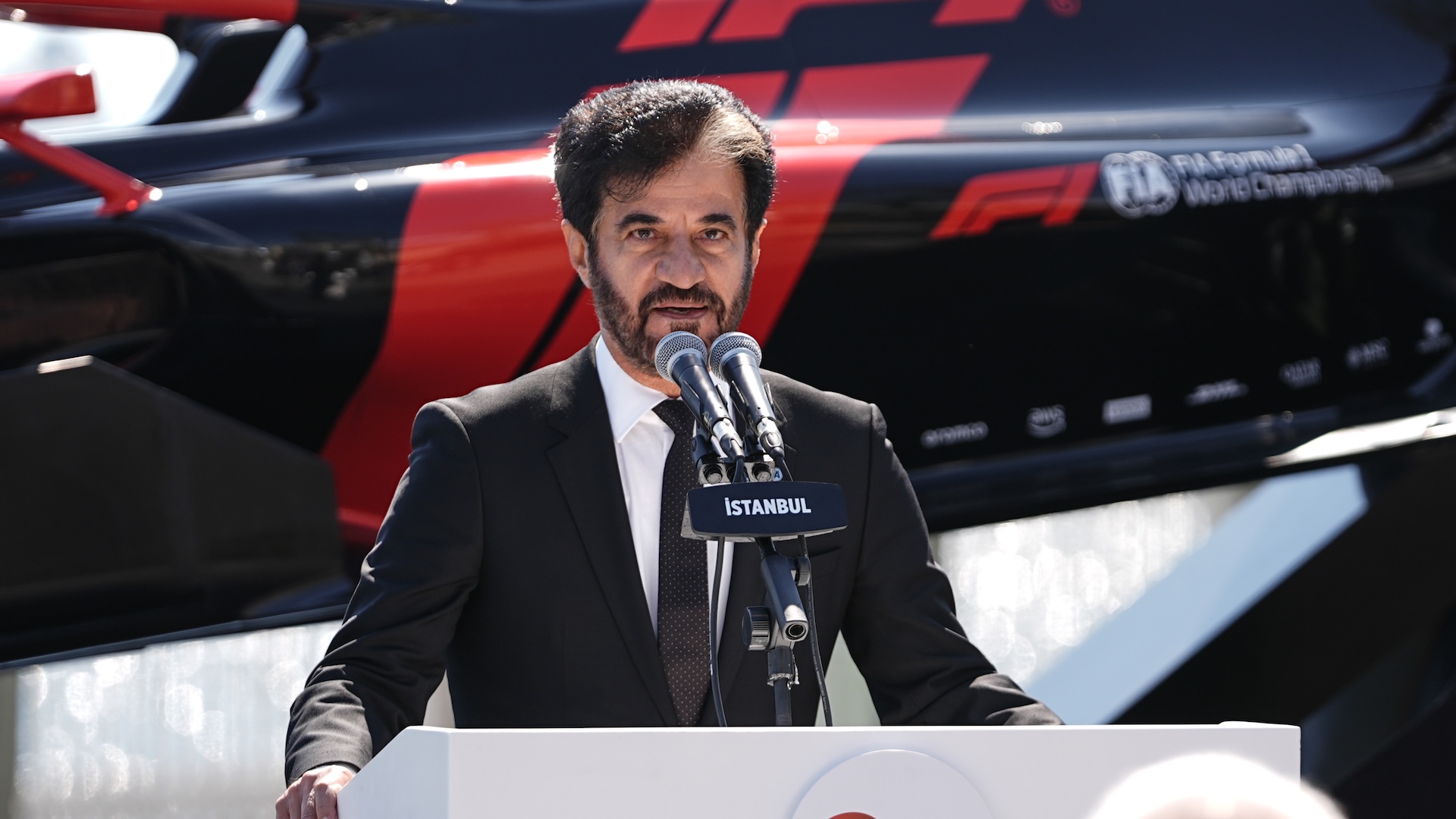
The new V8 will certainly be “a bit” of a hybrid, as Ben Sulayem put it, but the advent of sustainable fuels has opened the door to bigger, cheaper engines more in line with what fans what to hear from the pinnacle of motorsport. “With all due respect, electrification is not the only solution,” he said.
Ben Sulayem went on to share some early technical specs for the V8, as if to emphasize that this isn’t the FIA’s “idea of the month” whipped up in response to complaints about how the current regulations and their 50/50 split between gas and electric power have altered the on-track action. These included potential displacement, horsepower rating, and the target energy split. Spoiler alert: It’s not 50/50.
“First of all, you have to get the power,” he said. “You can’t get the power with less than a 2.5- or 2.6-liter, so you’re talking about between 2.6- to 3.0 liters. Then, having a 10% [energy split], you will get to 880 horsepower, but then the car [gas engine] will be about 650 hp, I think. Because, one thing we have to be also careful about is, where do you get the power from if you have small displacement? That’d be the heads, and revs, so if you’re a bit high, it will be annoying to young kids.
“You don’t want it to be over 15,500 to 16,000 rpm,” he added. “Once you go there, the frequency is really annoying, so we have to be responsible. But even if you allow them to reach higher rpm, it’s not about the noise adaptation of the sound. It’s more than that, it’s the price [of development] will just jump, because then you are after that refinement, which is very expensive.
“It will be that [a 10% to 20% electric power split], it’s not more than that. Not at all,” he concluded.
Despite Ben Sulayem’s past comments about the viability of V8s being met with skepticism by teams, he said it’s only a question of when, not if this will happen. The new V8 could arrive in 2030 if four of F1’s six power unit manufacturers—Mercedes-AMG, Ferrari, Honda, Audi, Red Bull Ford, and Alpine Racing—vote to approve it. If they don’t, Ben Sulayem said the FIA will use its power to unilaterally force the change for 2031. But he’s equally confident the manufacturers are getting on board following a number of previously undisclosed meetings between the governing body and technical teams.
“Oh, of course they are. It will happen in 2031, but I want to bring it one year earlier. In 2031, the FIA… can put any engine it sees is the right one—you know, not just benefiting one team. We have the big picture, we look from a high level and oversee all of the F1 teams. Would it be good for everyone? Yes, [and it will deliver] fair results.”
Bigger picture, Ben Sulayem said switching to a less-complicated V8 will encourage other teams to begin building their own engines—”We’re talking about easier to build, cheaper, and reliable units… really, it is a no-brainer.”—swelling the manufacturer ranks, further reducing the number of teams who depend on their competitors’ technology to participate in the sport. He then pointed to McLaren as a prime example.
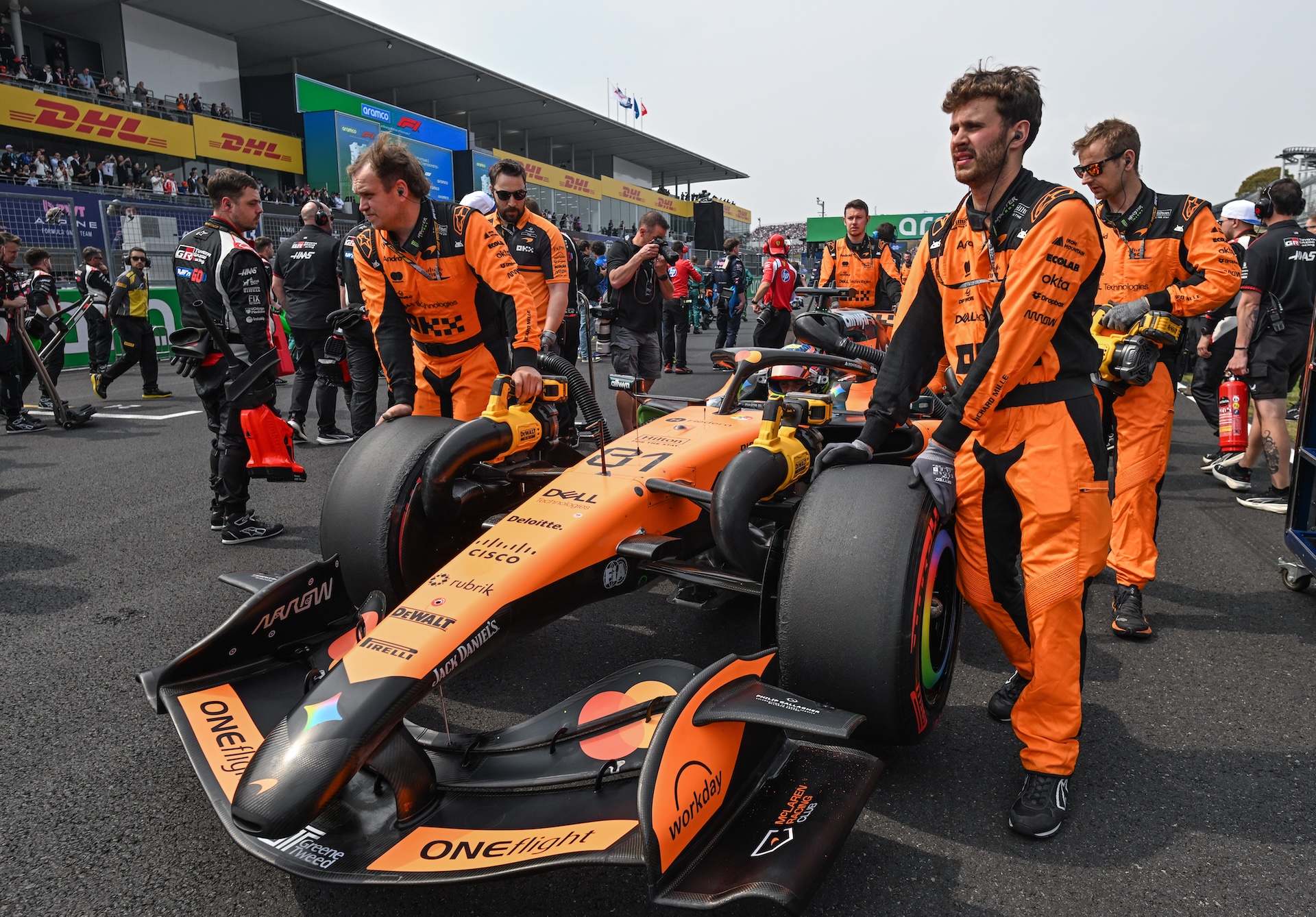
“I believe that when we introduce it, I feel that even McLaren will do their own engine. They wouldn’t be going to others, because [the reason] why they are going to others is because it is a complicated power unit. They say, ‘We better go and buy what is available, than introduce [our] new engine.’ We [the FIA] says, these are the rules; we just put a ceiling for them, and make sure the teams don’t exceed in the R&D, except what is allocated to them with the cost cap,” he added.
This makes a lot of sense in theory, but whether McLaren Racing has any desire or capacity to build its own F1 power unit remains to be seen. Sure, McLaren Automotive already has some of the world’s best high-performance V8s, all of them turbocharged. And McLaren hasn’t exactly been happy with how Mercedes has been treating them as a customer, feeling they were left with unanswered questions about the power unit’s performance while Mercedes dominated the first few races of the season.
Regardless, this is shaping up to be a massive departure for F1 powertrains—so massive, you might think that Ben Sulayem is just off on another wild tangent, like when he made headlines last year by saying he wanted to bring V10 engines back to F1. This time, however, there’s a lot more evidence that the FIA is dead serious. According to The Detroit News, GM Performance Power Units LLC, the branch dedicated to building the F1 PU before the end of the decade, isn’t just working on the current regulations’ electrified V6; it’s also apparently working on “a V8 engine powered by sustainable fuels.”
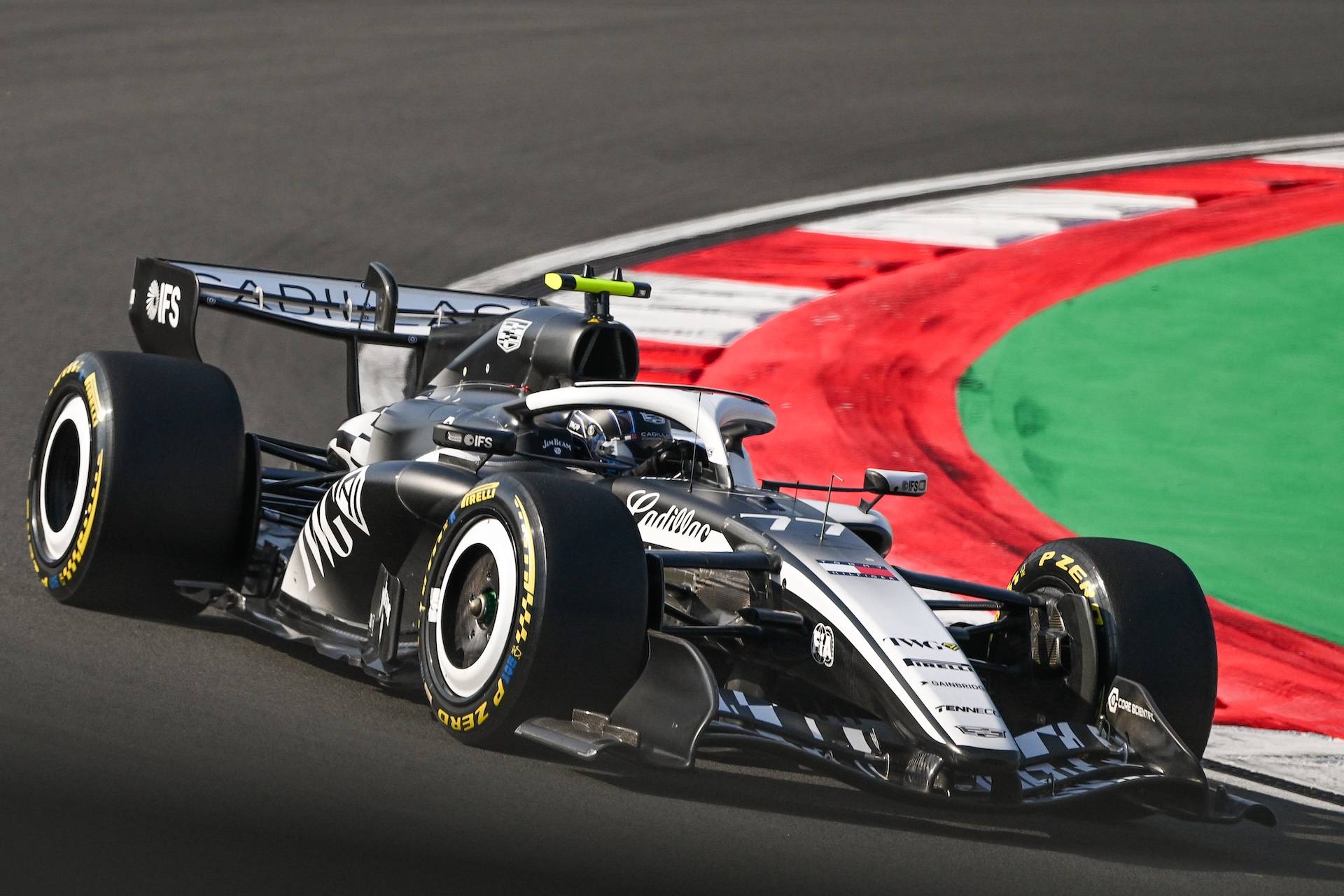
However it plays out, Ben Sulayem kept going back to two key points in our conversation: while F1 has a responsibility to figure out what environmentally responsible racing looks like deep into the 21st century, it has to walk that path without alienating its fans, many of whom have made no secret of their complaints about the sound and look of the cars.
“Let’s talk about it in a very simple terms and language: clean air. Let’s not talk about net zero, you know, the normal public doesn’t understand what you mean by net zero. I’m saying safe and cleaner air—that’s a responsibility of the FIA… as a solution, a [V8 hybrid] that is not complicated [would work],” he said.
And what about the drivers? From Lance Stroll, who said on Friday that the current regulations are “destroying” the sport, to Max Verstappen, who’s threatened to retire if things don’t change, the sentiment on the grid has been alarmingly negative. But Ben Sulayem is positive they’ll love the V8s.
“[If] you shrink the car, [have] a lighter car with all of the add-ons that we did for safety, for a driver there’s nothing better than a secure and a lighter car,” he said.
Email the author at jerry@thedrive.com
www.thedrive.com
#FIA #President #Shares #Tech #Details #F1s #Engines #NoBrainer


