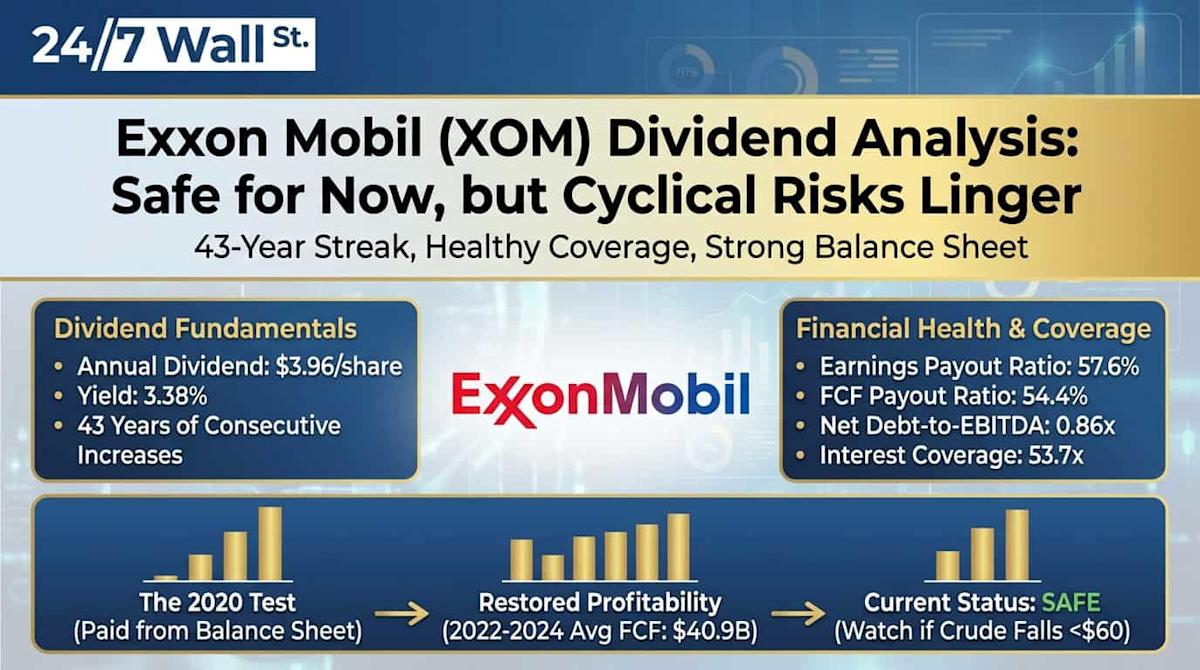

Exxon Mobil (XOM) pays $3.96 annually per share with a 3.38% yield. Exxon has raised its dividend for 43 consecutive years.
Exxon’s payout ratios stand at 57.6% on earnings and 54.4% on free cash flow. Both metrics provide comfortable coverage.
Net income fell from $55.7B in 2022 to $33.7B in 2024. The dividend remains secure due to strong balance sheet strength.
If you’re thinking about retiring or know someone who is, there are three quick questions causing many Americans to realize they can retire earlier than expected. take 5 minutes to learn more here
Exxon Mobil (NYSE: XOM) pays an annual dividend of $3.96 per share, yielding 3.38%. The company has raised its dividend for 43 consecutive years, maintaining that streak through the 2020 oil price collapse. The question is whether this dividend remains sustainable as earnings decline from recent peaks.
Metric | Value |
|---|---|
Annual Dividend | $3.96 per share |
Dividend Yield | 3.38% |
Consecutive Years of Increases | 43 years |
Most Recent Payment | December 10, 2025 |
Dividend Aristocrat Status | Yes |
XOM’s earnings payout ratio stands at 57.6%, calculated from TTM diluted EPS of $6.88 against the $3.96 annual dividend. This leaves substantial room even if earnings soften further.
The free cash flow picture is tighter but healthy. In 2024, XOM generated $30.7 billion in free cash flow (operating cash flow of $55.0 billion minus capex of $24.3 billion) and paid $16.7 billion in dividends. That produces an FCF payout ratio of 54.4%.
Metric | TTM Value | Assessment |
|---|---|---|
Earnings Payout Ratio | 57.6% | Healthy |
FCF Payout Ratio | 54.4% | Healthy |
Operating Cash Flow Coverage | 3.3x | Strong |
The concern is the trend. Net income fell from $55.7 billion in 2022 to $33.7 billion in 2024. Q3 2025 earnings dropped 12.3% year over year. If this decline continues, payout ratios will rise.
XOM’s balance sheet is exceptionally strong. Net debt of $53.3 billion against EBITDA of $61.7 billion produces a net debt-to-EBITDA ratio of 0.86x. Interest coverage stands at 53.7x, meaning debt service barely registers against operating income.
Metric | Value | Assessment |
|---|---|---|
Debt-to-Equity | 0.26 | Conservative |
Net Debt-to-EBITDA | 0.86x | Low |
Interest Coverage | 53.7x | Strong |
Cash on Hand | $13.9B | Solid Buffer |
This financial strength proved critical in 2020, when XOM posted a $22.4 billion loss but maintained the $14.9 billion dividend by drawing on its balance sheet.
XOM’s 43-year dividend growth streak survived the 2020 pandemic, but required paying dividends from the balance sheet when free cash flow turned negative. The company paid $14.9 billion in dividends against negative $2.6 billion in FCF that year.
finance.yahoo.com
#Exxon #Mobils #Year #Dividend #Streak #Secure #Falling #Earnings