


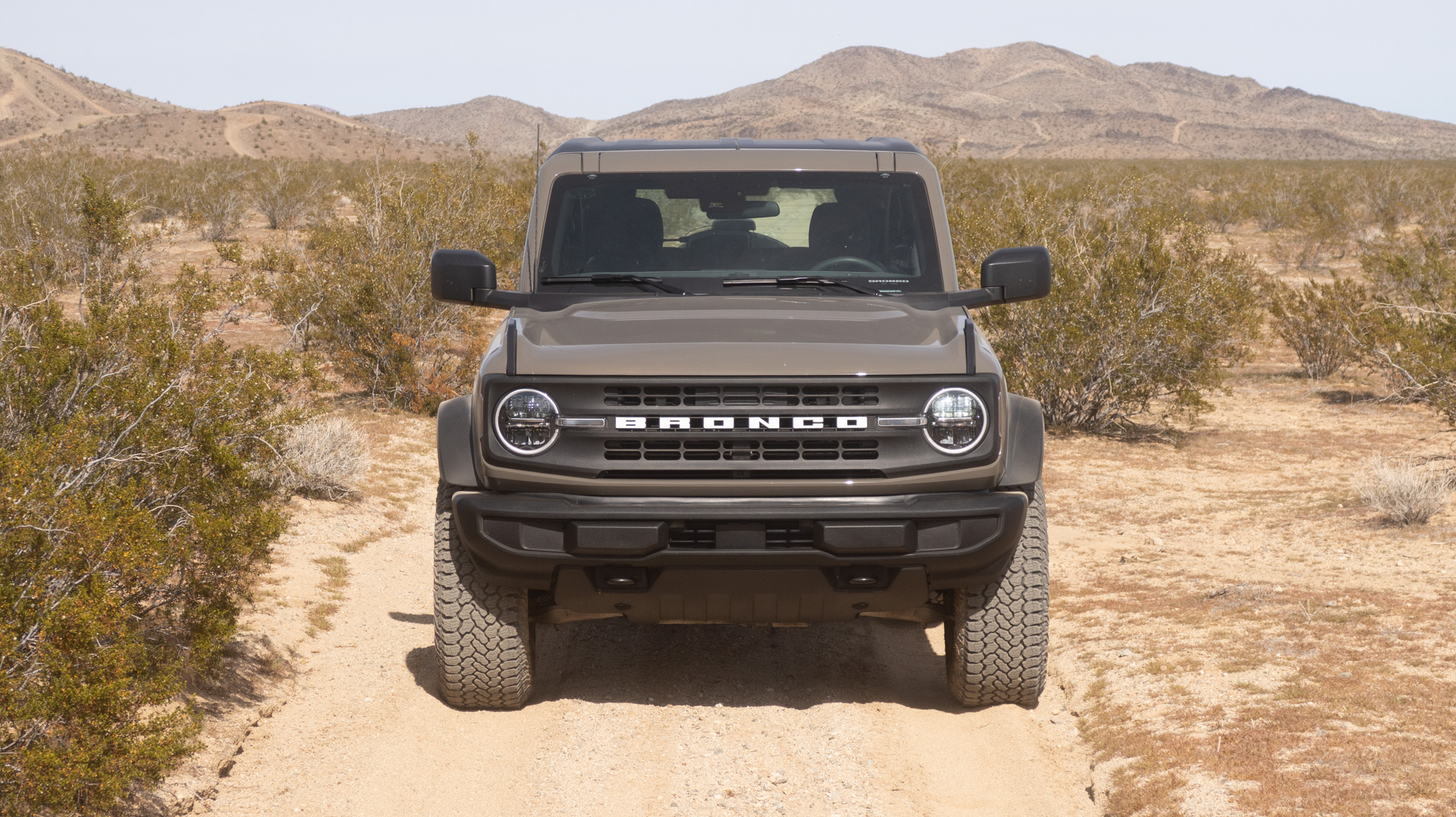
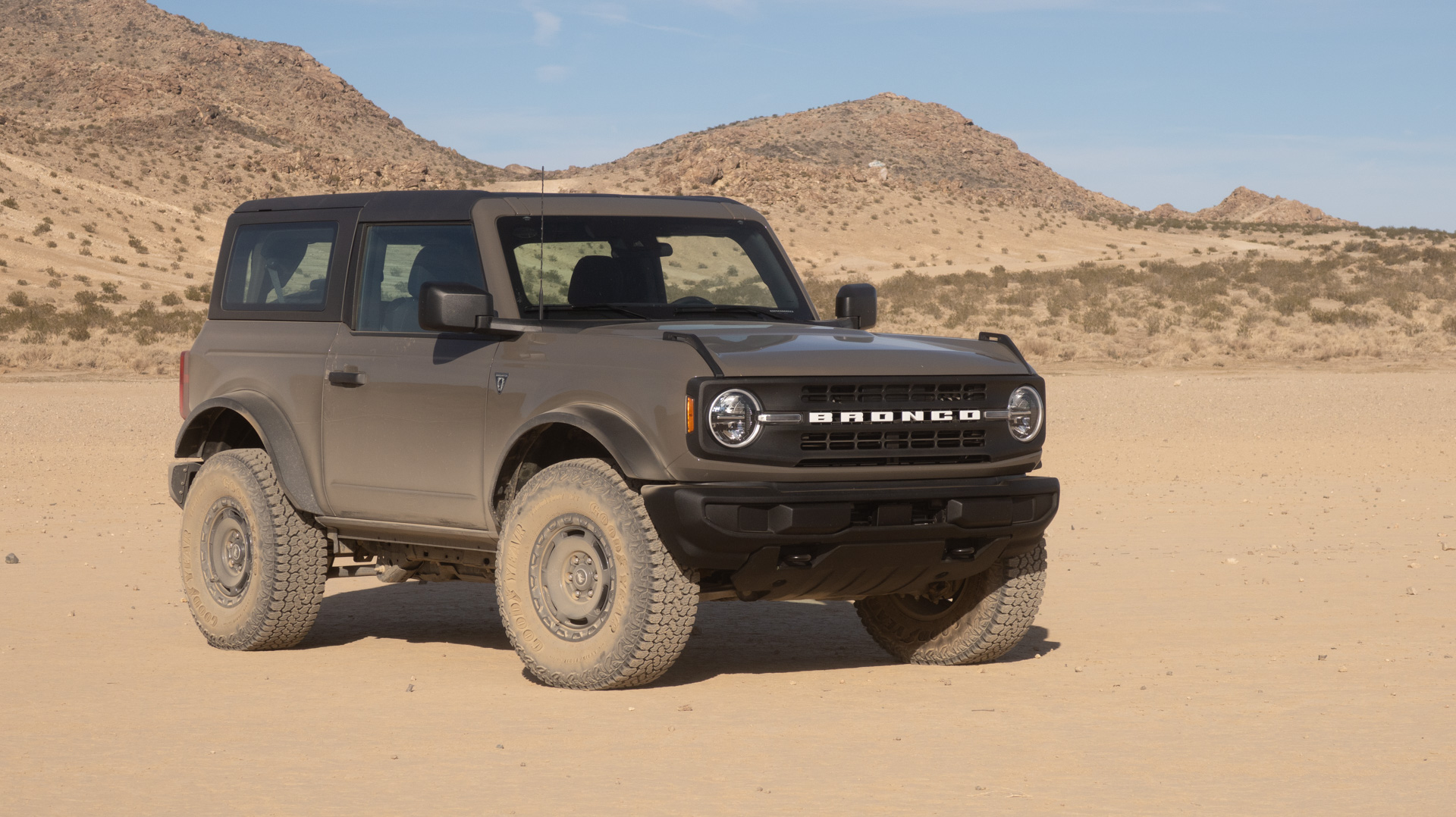
There are so many vehicles trying to cash in on the American dream of owning a truck with a classic vibe but a modern feel. I’ve driven them all, and finally I’ve driven the best one: the two-door Ford Bronco. Specifically, the manual base model with the Sasquatch package. It’s the perfect balance of rough and refined, practical and powerful. It’s one of my favorite new vehicles I’ve driven in a long time.
The sixth-gen Bronco has now been out for almost six years; general impressions are well documented. I’m going to skip the standard car-review contextualization and focus on this unique sub-model and my experience with it on a light overland excursion around Southern California.
What makes this particular Bronco interesting is that it’s ostensibly the ultimate enthusiast spec: Minimum-possible MSRP with just one factory option: Ford’s max-capability off-road kit.
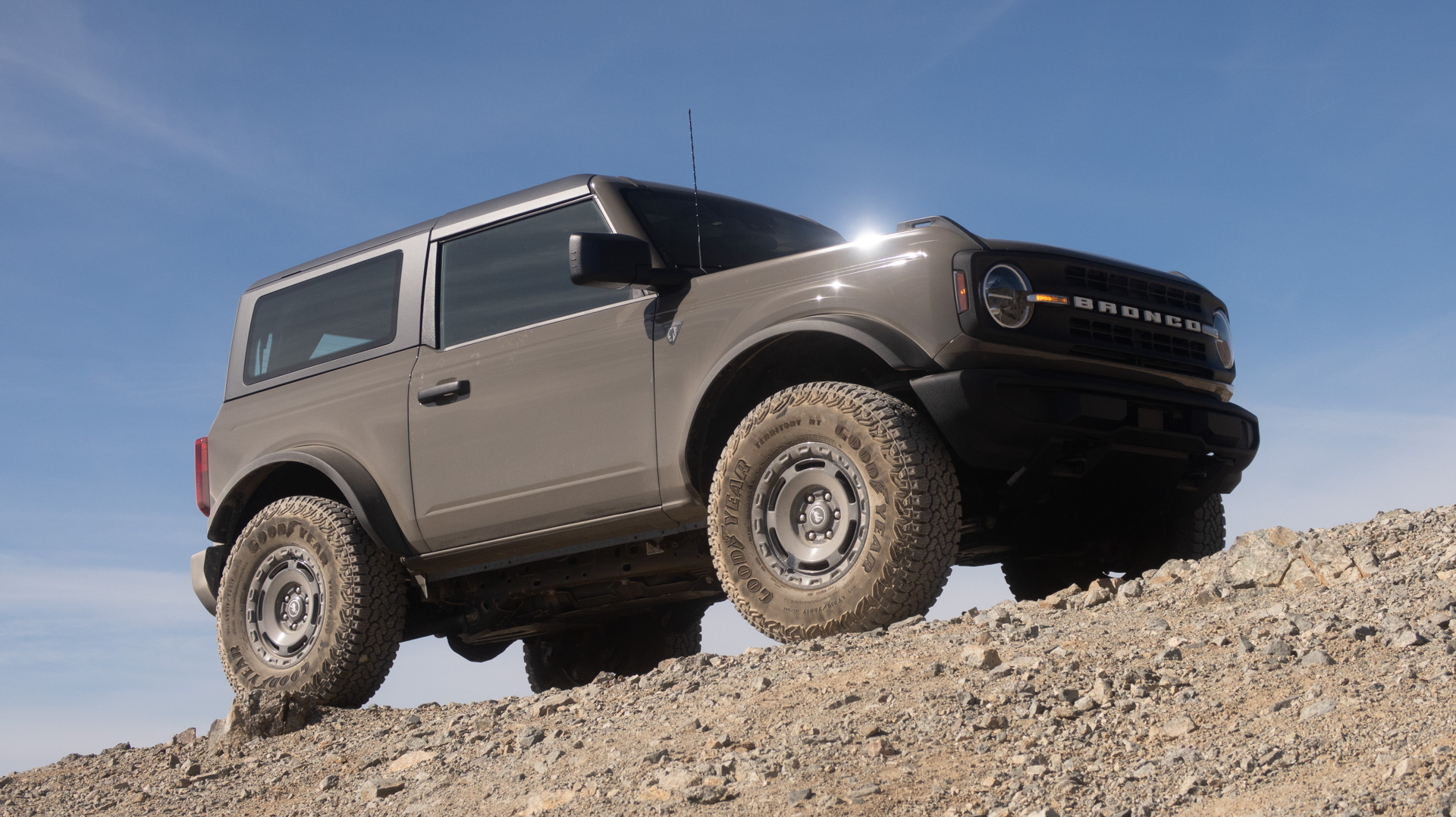
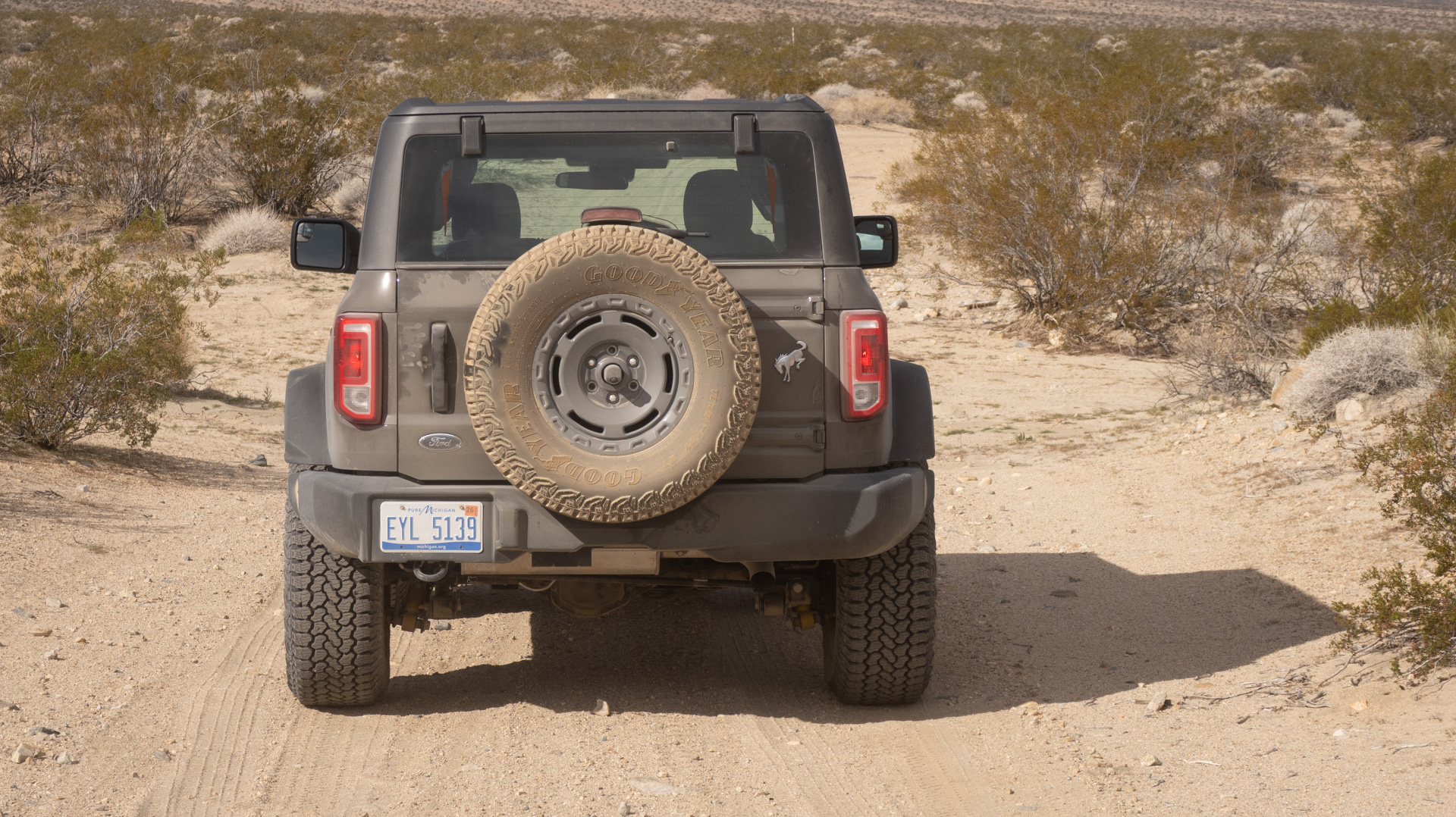
The “Basequatch”
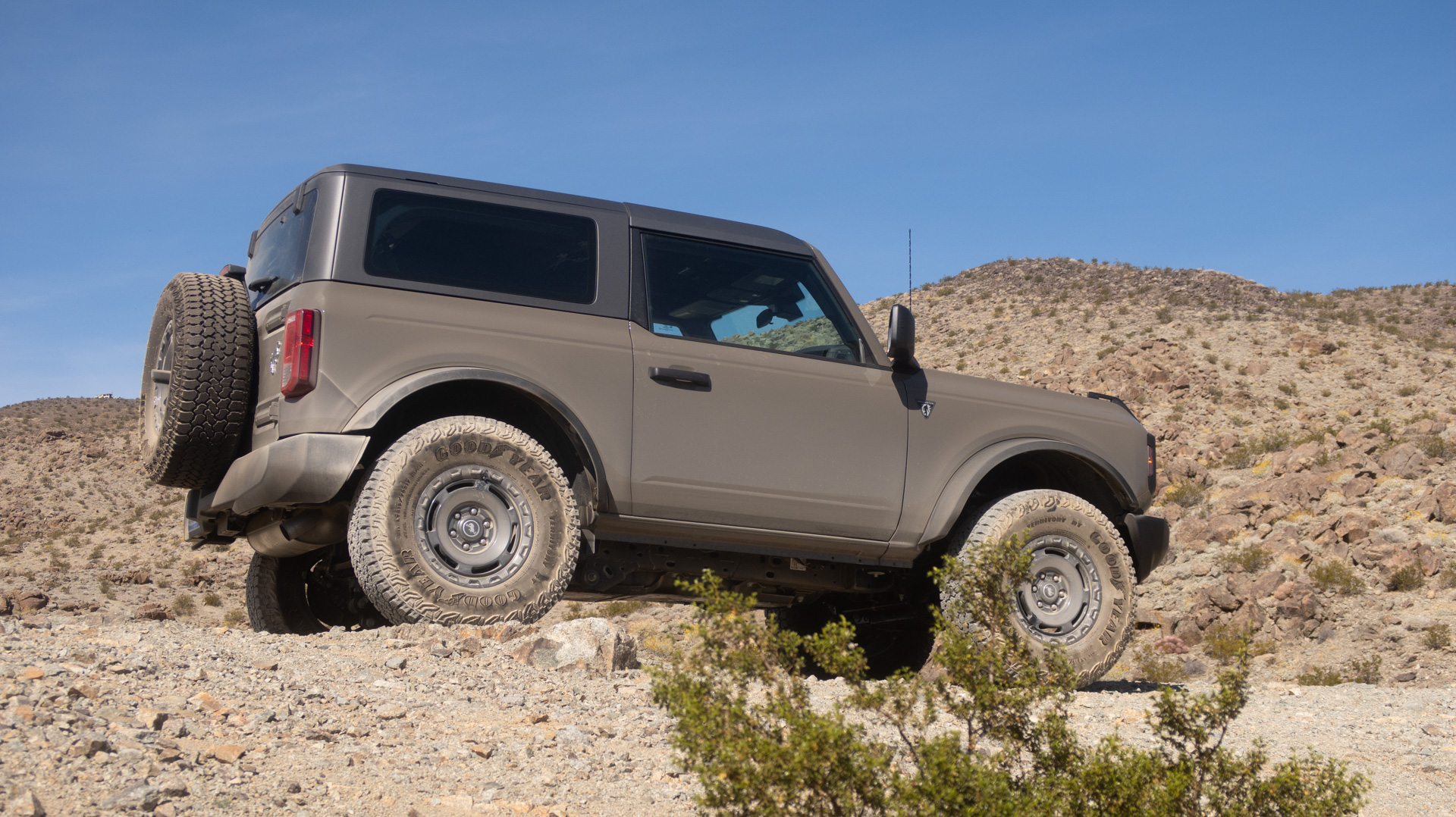
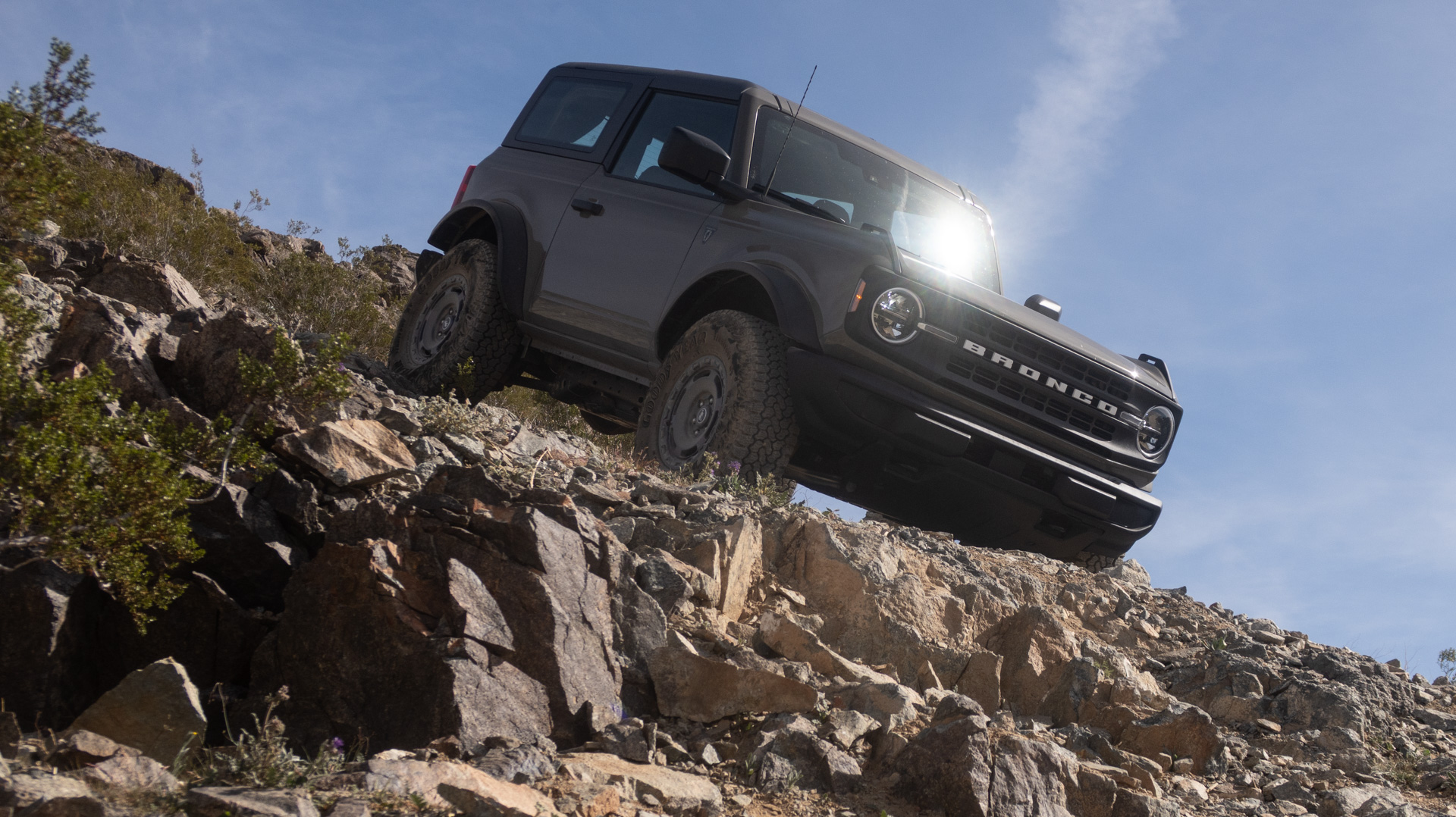
Every Bronco has decent off-road capability by virtue of its architecture, but some models are more optimized for rough terrain than others. The $80,000 Bronco Raptor is a high-speed desert-running beast. The $50,000 Badlands model has a well-rounded essentials loadout: big tires, rear locker, performance suspension. But the $43,000 base model with the $8,500 Sasquatch kit is effectively the best-value extreme-capability combo.
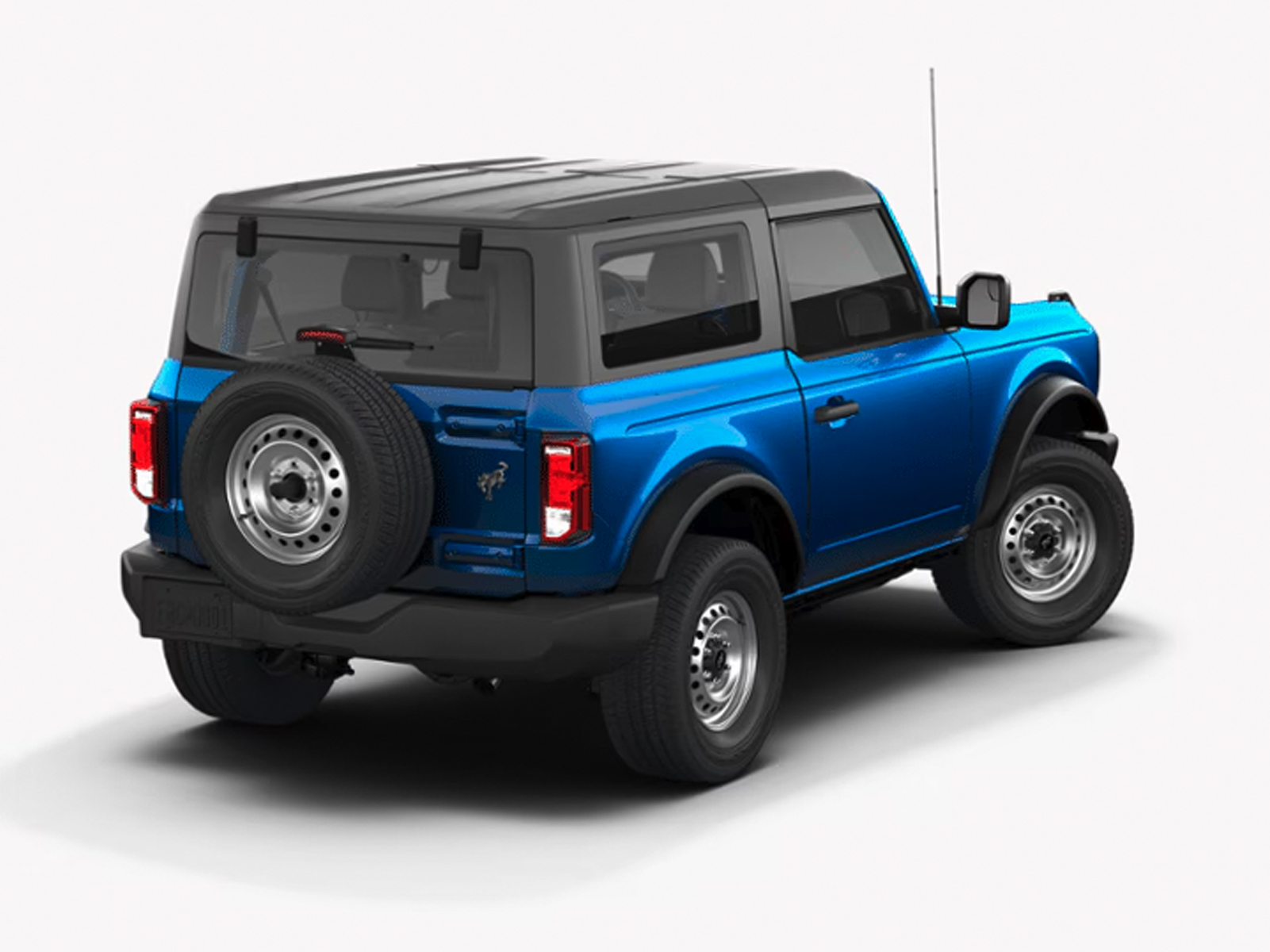
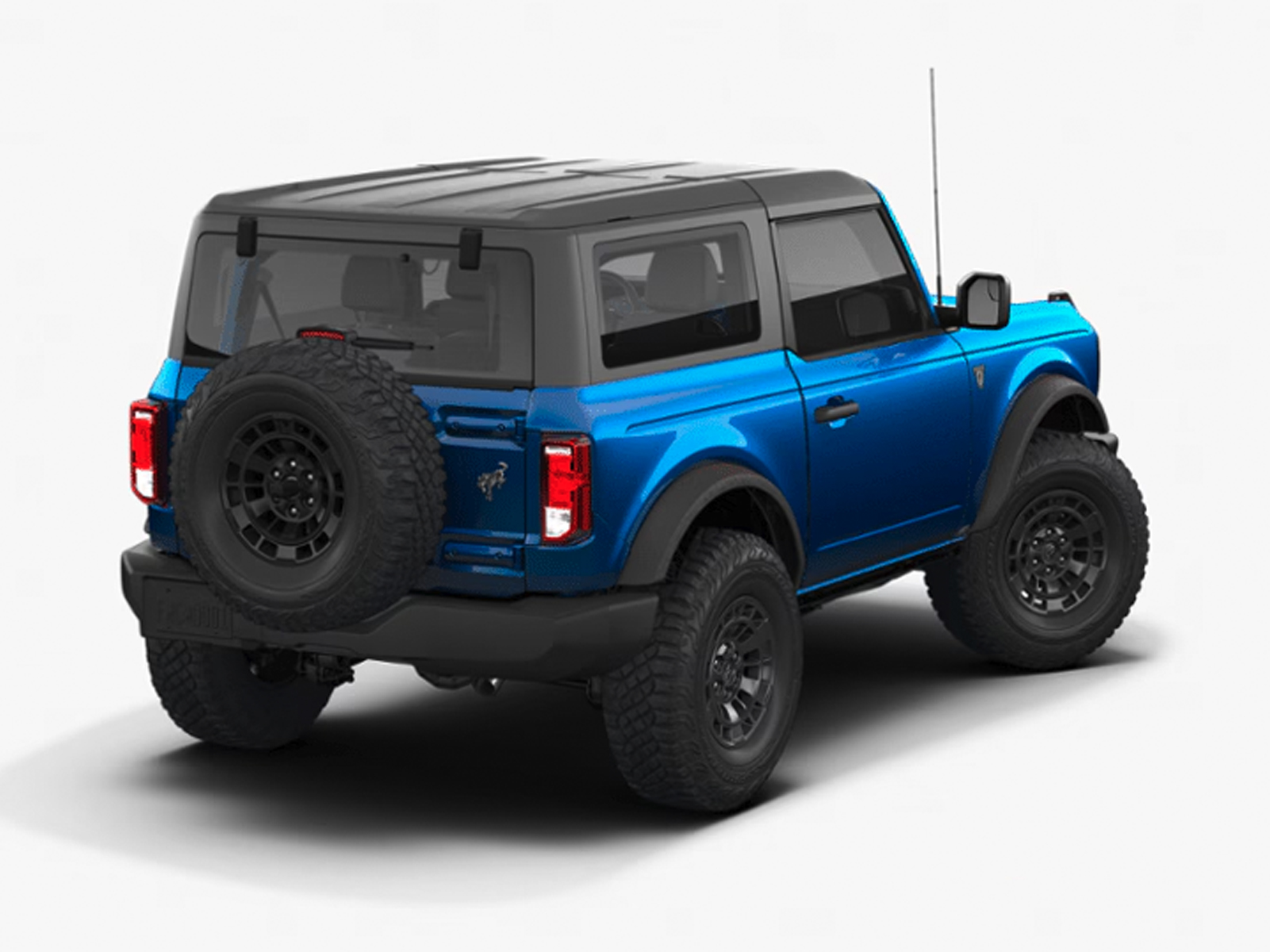
This setup is unofficially known as the “Basequatch,” and if you’re really planning to wheel, it’s an incredibly good deal. The ‘squatch package adds front and rear lockers, 35-inch tires on cool 17-inch wheels, big fender flares, tall Bilstein dampers with high clearance and good multi-surface damping, and a 4.7 final drive ratio to provide snappier low-speed power and help the four-cylinder engine cope with those tall tires.
Eight and a half grand is a lot of money for an options package. But I promise that if you rocked up to an off-road shop and asked for all that installed on whatever you’re currently driving, the bill would be higher. Whether you’re a lifetime Ford fan or have a sticker of Calvin peeing on a blue oval on your back window, you have to admit—being able to bundle that all up as a factory-approved and warrantied setup right off the showroom floor is pretty darn cool.
That said, you don’t need the Sasquatch pack to enjoy driving a Bronco off-road. Just like you don’t need a Porsche to have fun in the canyons, or even on a track. But the Basequatch really is an all-around awesome set-and-forget setup you could buy and wheel for years without needing any further mods. If you’re hitting the limits of what you can conquer with 35s and two lockers, you probably need a full-on rock crawling rig.
Swipe through these images below to take a look around the Bronco’s underside. Ford did a pretty good job tucking things up high and protecting sensitive areas. The two-door Basequatch’s clearance, approach, and departure specs are absolutely incredible—you’ll find the numbers at the bottom of this story.
If you want the manual transmission (you do), the only Bronco engine option is a 2.3-liter turbocharged four-cylinder. The specs are really solid (300 hp and even more torque, with tunes readily available for more). In practice, it’s… fine. It’s not fast, but thanks to this model’s gearing, it’s got grunt where you need it. It cruises at 75 mph without wheezing too much. Most importantly, it’s been around long enough that it should be easy to keep running if you break something out in the bush.
The Right Amount of Rough
I love my 1975 International Scout, but I can’t kid myself, it objectively sucks to drive. It’s slow, and stinky, and keeping it in a lane is like trying to walk a hungry dog through a deli. I love my ’98 Montero, too, but every time I have to make a panic stop, I remember there are only two ancient airbags protecting me from the outside world. Those SUVs feel like trucks, which is great, but driving them every day in fast-moving modern traffic would be arduous. A new Bronco with a manual transmission and huge tires feels like a truck, too. There’s a lot of wind noise, body roll, and aggressive acceleration isn’t particularly rewarding. But the Bronco is less punishing overall, while still capturing enough of the classic vibe that makes my old rigs so endearing. And critically, the aesthetic is excellent. The two-door sixth-gen Bronco just looks right.
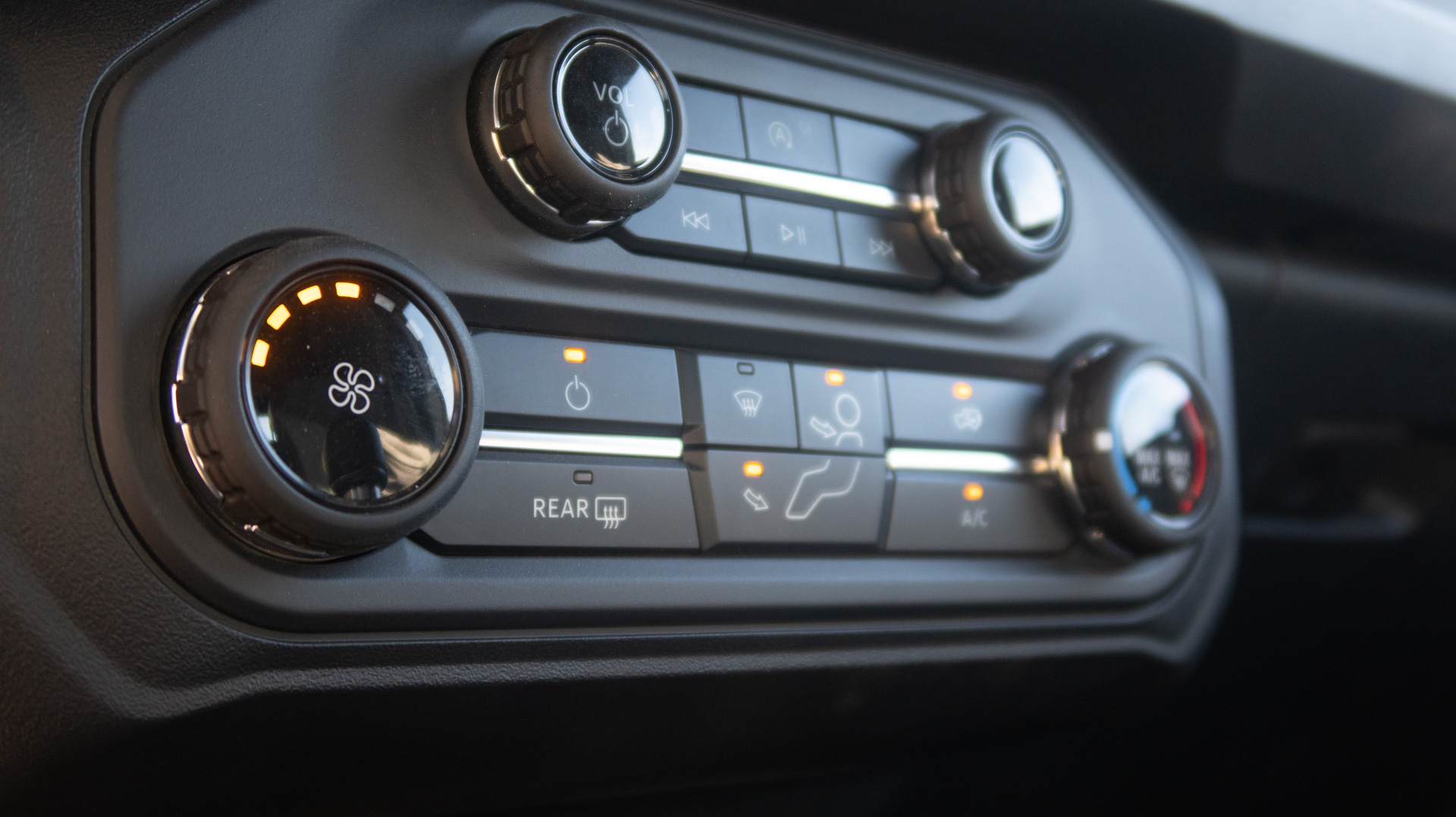
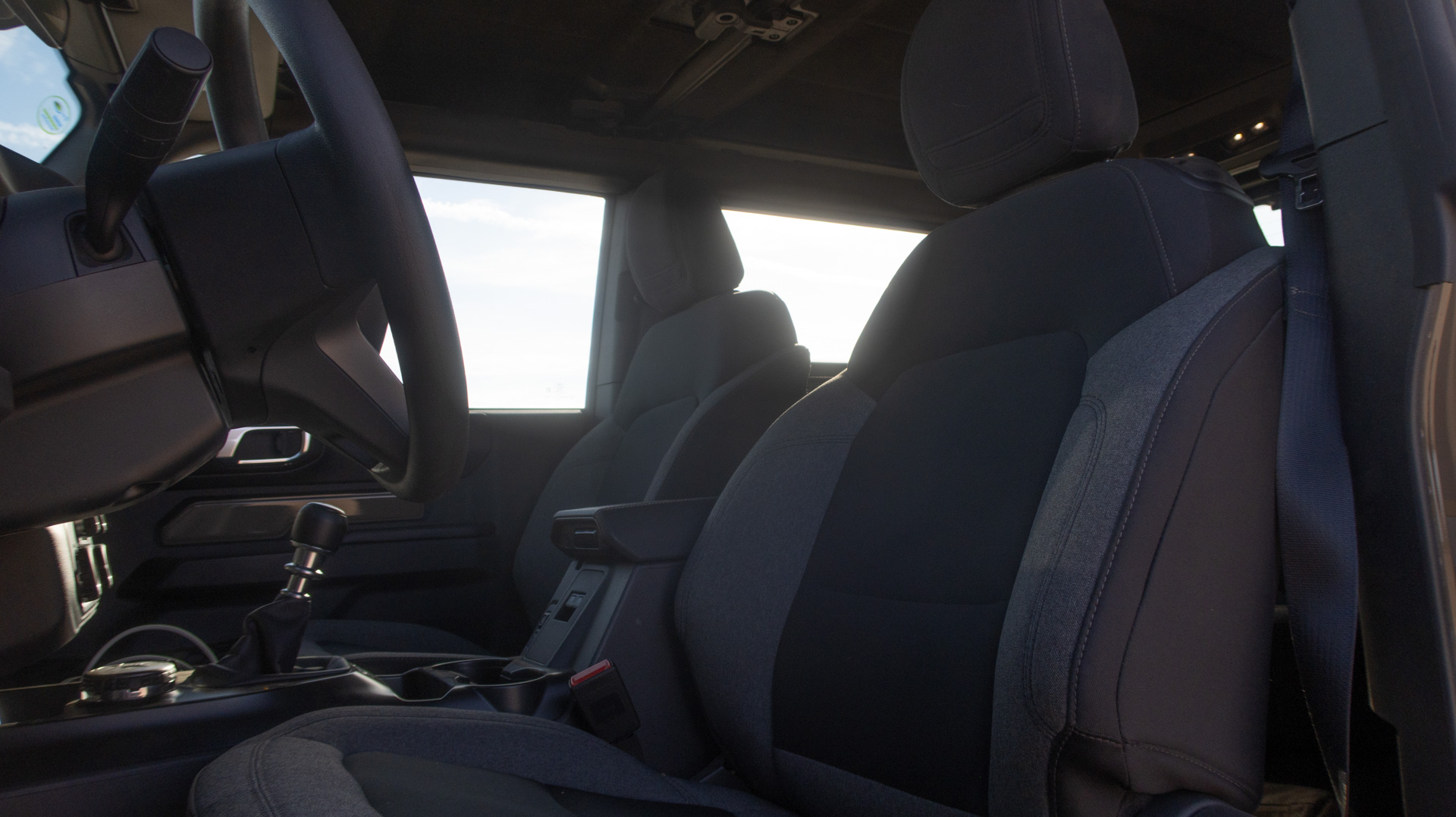
It’s got more airbags, auto emergency braking, good headlights, and visibility. The only real bummer in terms of refinement with the Basequatch is that it doesn’t have heated seats—that’s locked to higher trim levels.
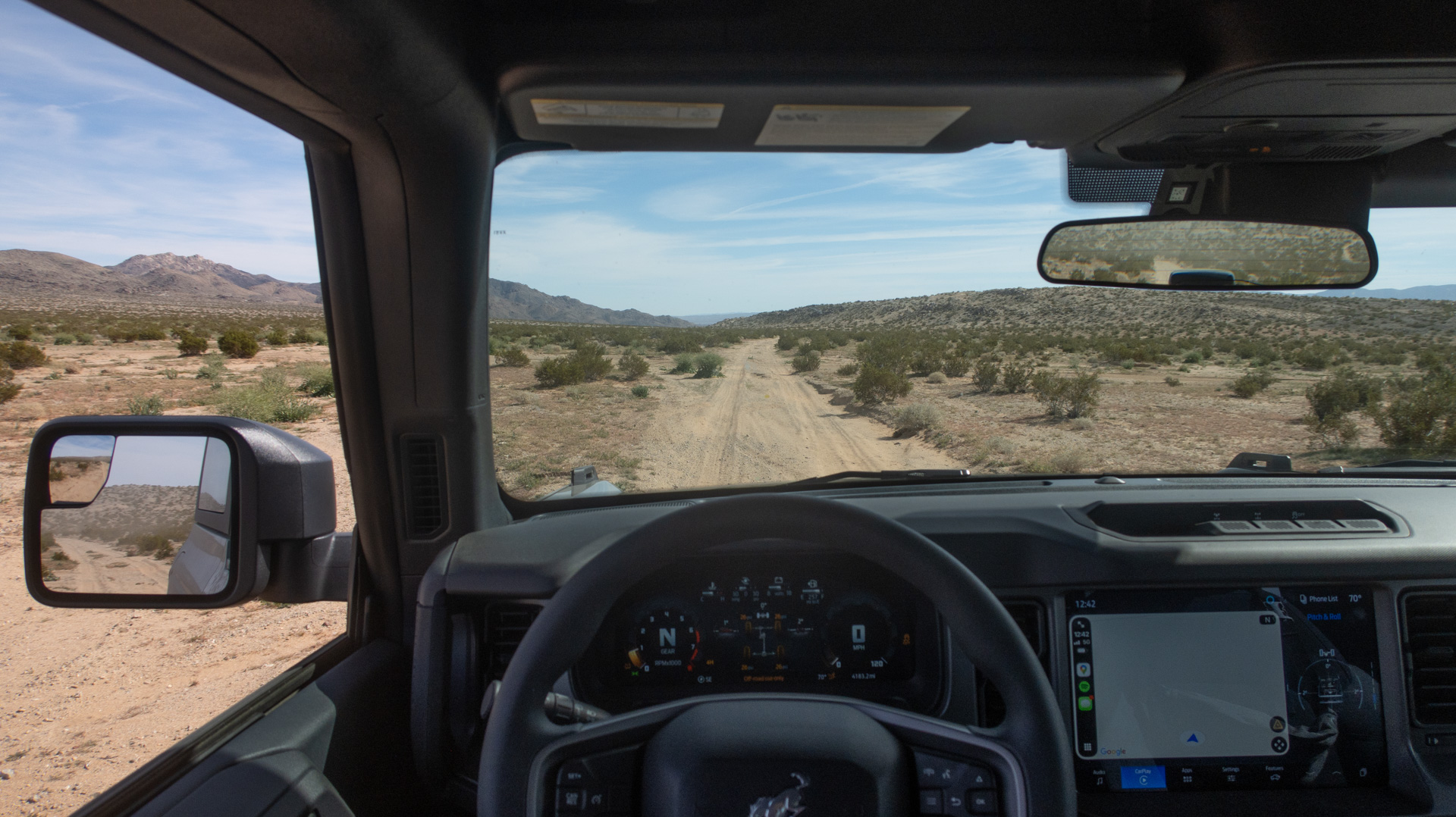
The Bronco’s dashboard screens are pretty big, but integrated well enough to be largely inoffensive. I would still much rather have three-dimensional analog gauges, but the central infotainment screen is low enough that I don’t feel I’m peering over it as I do in some other new trucks. I also like how the Apple CarPlay interface is contained to a corner, while I still have vehicle-control access on the screen (you can see what I mean in the image above).
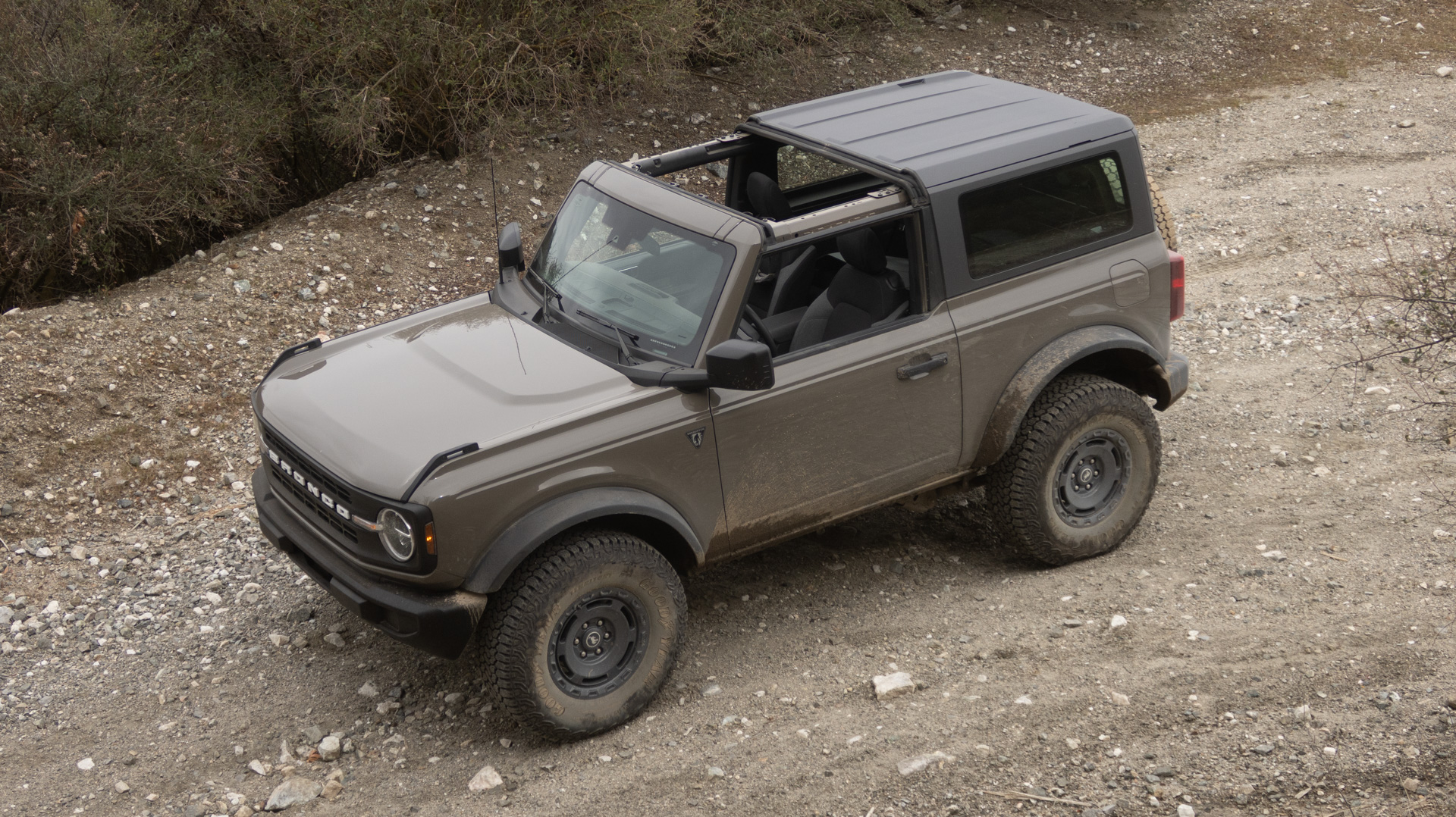
I also loved how easily I could pop off the front section of the hardtop. Just a couple of lever throws, and I turned my borrowed Bronco into a little targa. Would have loved to have pulled the whole roof, but there was nowhere to leave it at the highway-side Motel 6 I was based out of while playing around in Johnson Valley, Joshua Tree, and the hilly highlands between the Mojave and Venice Beach.
Bronco vs. Wrangler and 4Runner
Ultimately, I think the Bronco really speaks to me because it splits the difference between the Jeep Wrangler and the Toyota 4Runner. It’s got some goofy golden retriever energy thanks to its removable roof, stocky design, and short wheelbase. But it’s also got more Australian shepherdish intelligence, with surprisingly decent on-road driving dynamics and a decent execution of interior fit-and-finish.
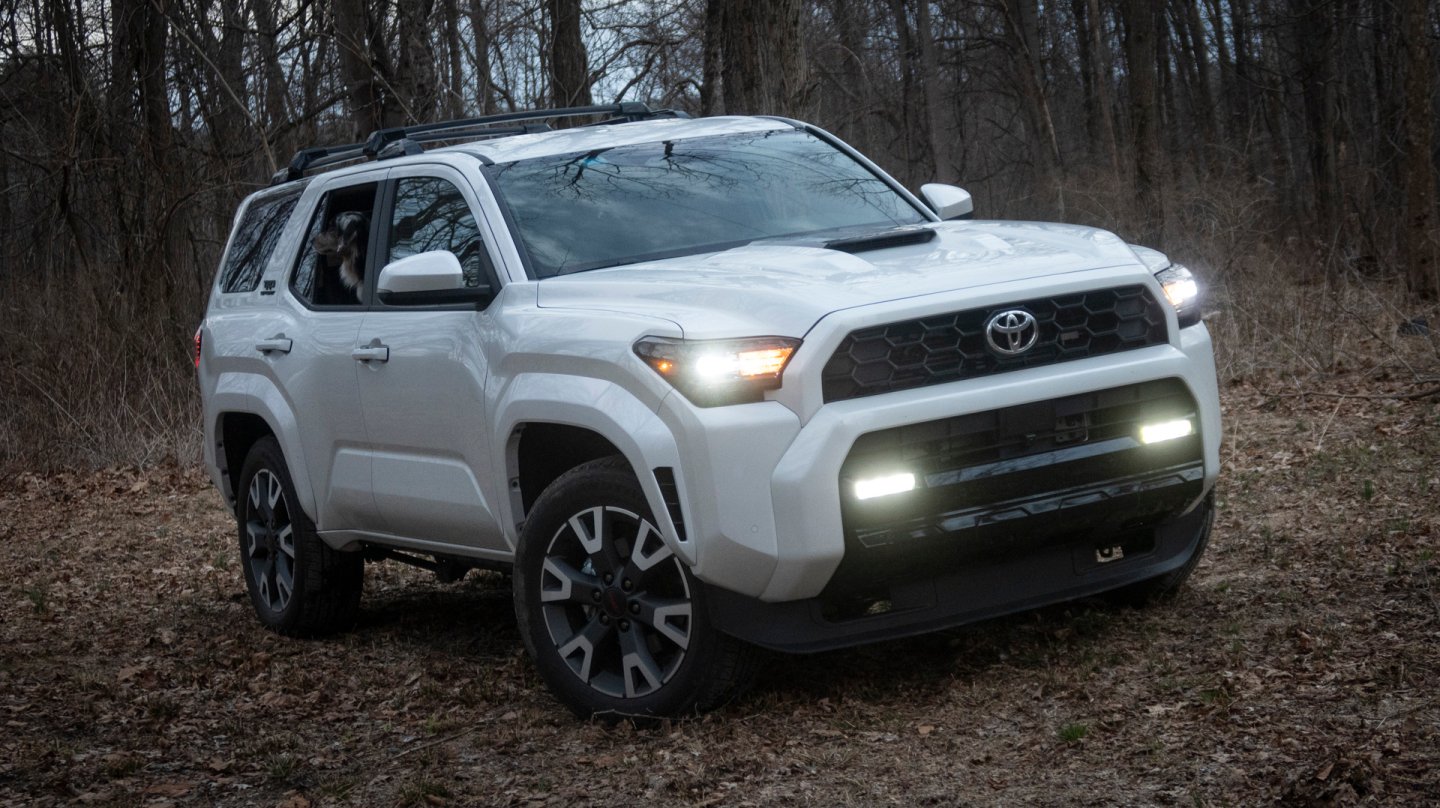
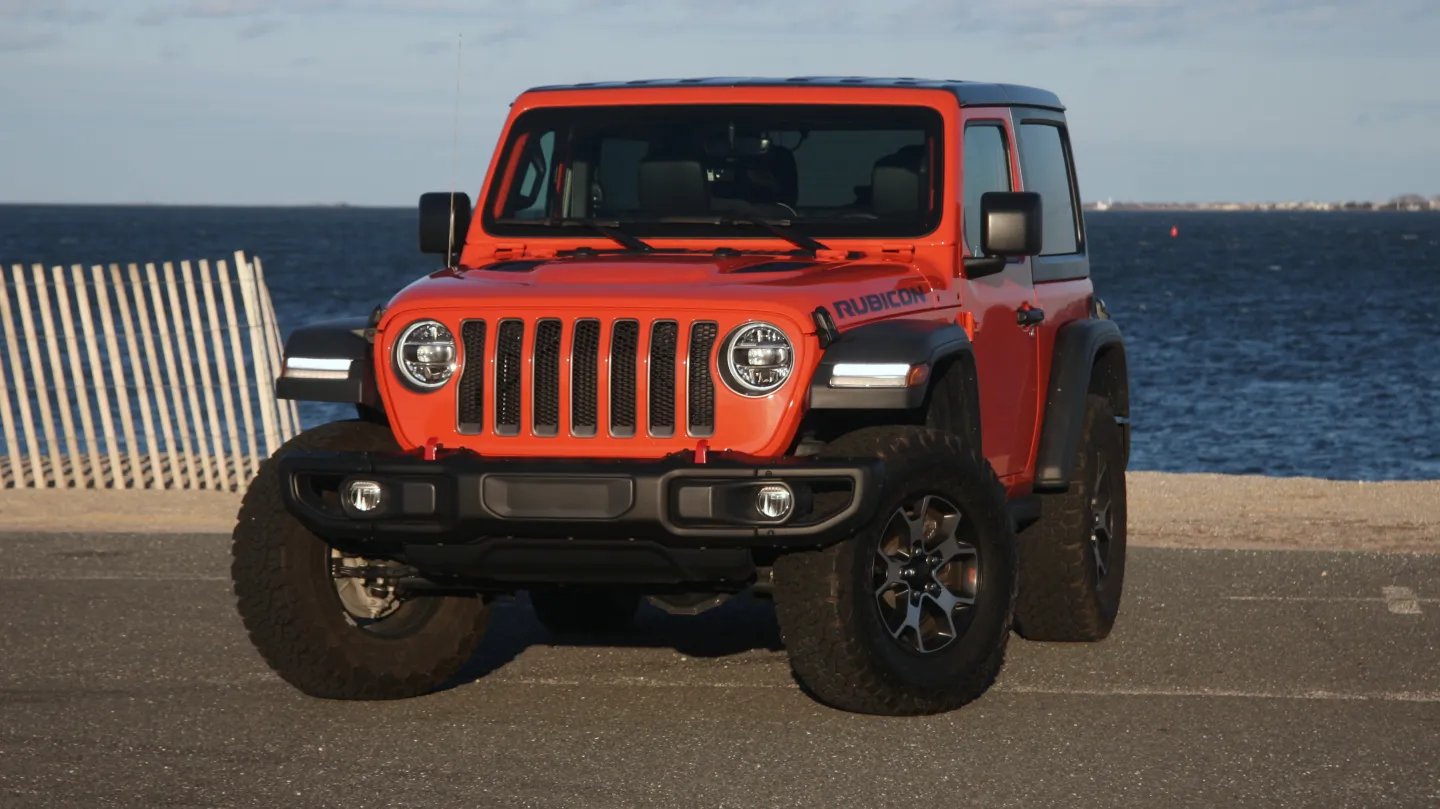
People like to say that a Wrangler’s solid front axle lets it take more abuse, and it does, but the payoff in better handling and daily driving dynamics that the Bronco gets with independent front suspension is worth it. Even on these 35s, this Bronco rode around town more comfortably than any Wrangler I’ve ever been in. Now I will say, Jeep does a much better job with dashboard design. The Wrangler and Gladiator’s cockpits are cooler than the Bronco’s. A 4Runner offers better fuel economy, a nicer ride, and has a tiny advantage in practicality. But driving a new Toyota also feels like hiding inside a plastic play fort.
Not Just a Manual Transmission—a Good Manual Transmission
I will admit—I am one of those manual über-alles car dorks. I will always pick a stick if the option exists. But I also concede that not all manual trucks are actually enjoyable. I drove a manual-shift Land Rover Discovery 1 in college, and while I loved how surprised people were by that thing’s very existence, it was pretty sloppy and unsatisfying to operate. Sadly, I can say the same about most manual Jeeps I’ve driven. I want to like them, but they’re not good.
The Bronco’s seven-speed is sweet on two distinctly important levels. For daily street driving, it’s reasonably snappy and responsive. You won’t be able to imagine you’re in Civic Type R, but the lever feels good to throw and row. Driving with a manual off-road is interesting—it’s not as hard as automatic apologists like to tell me, but it’s definitely not easy. The Bronco’s crawler gear addresses that brilliantly.
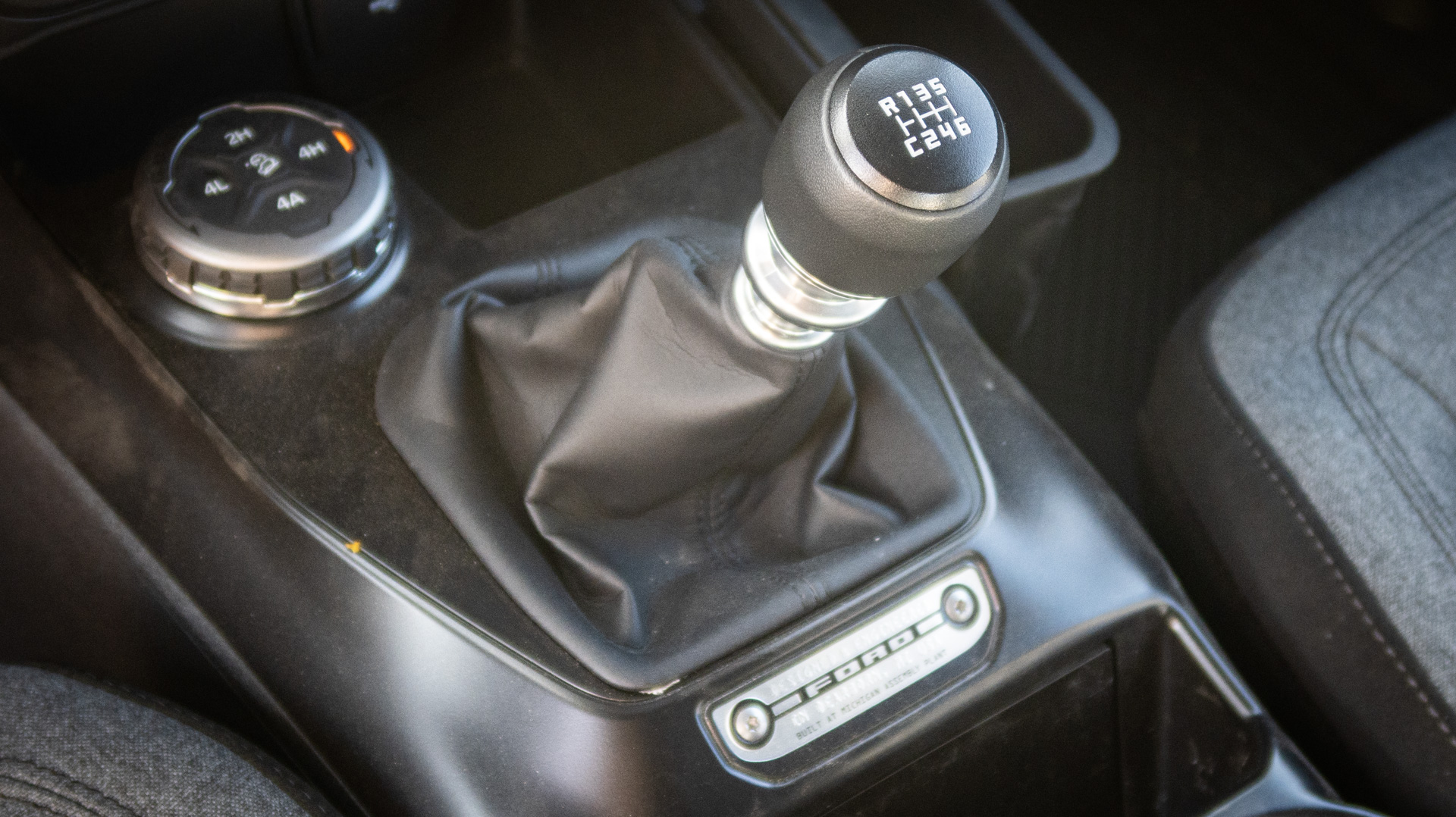
The shift knob doesn’t have “1” through “7,” it has “C” and “1” through “6.” Practically speaking, it’s a six-speed manual. When you want to creep super slowly, like in a loose climb or rock-crawl scenario, you put it in C and get remarkably precise throttle control. When you put the transfer case into low and then drive in C, you have extreme sensitivity to throttle input, allowing you to consistently move the vehicle at a snail’s pace. This is very useful in super-hairy technical driving or extracting yourself from loose terrain. It’s a real thing of beauty in this context, and the fact that it’s decent and forgiving in daily road driving makes this manual transmission one of my favorites among modern machines.
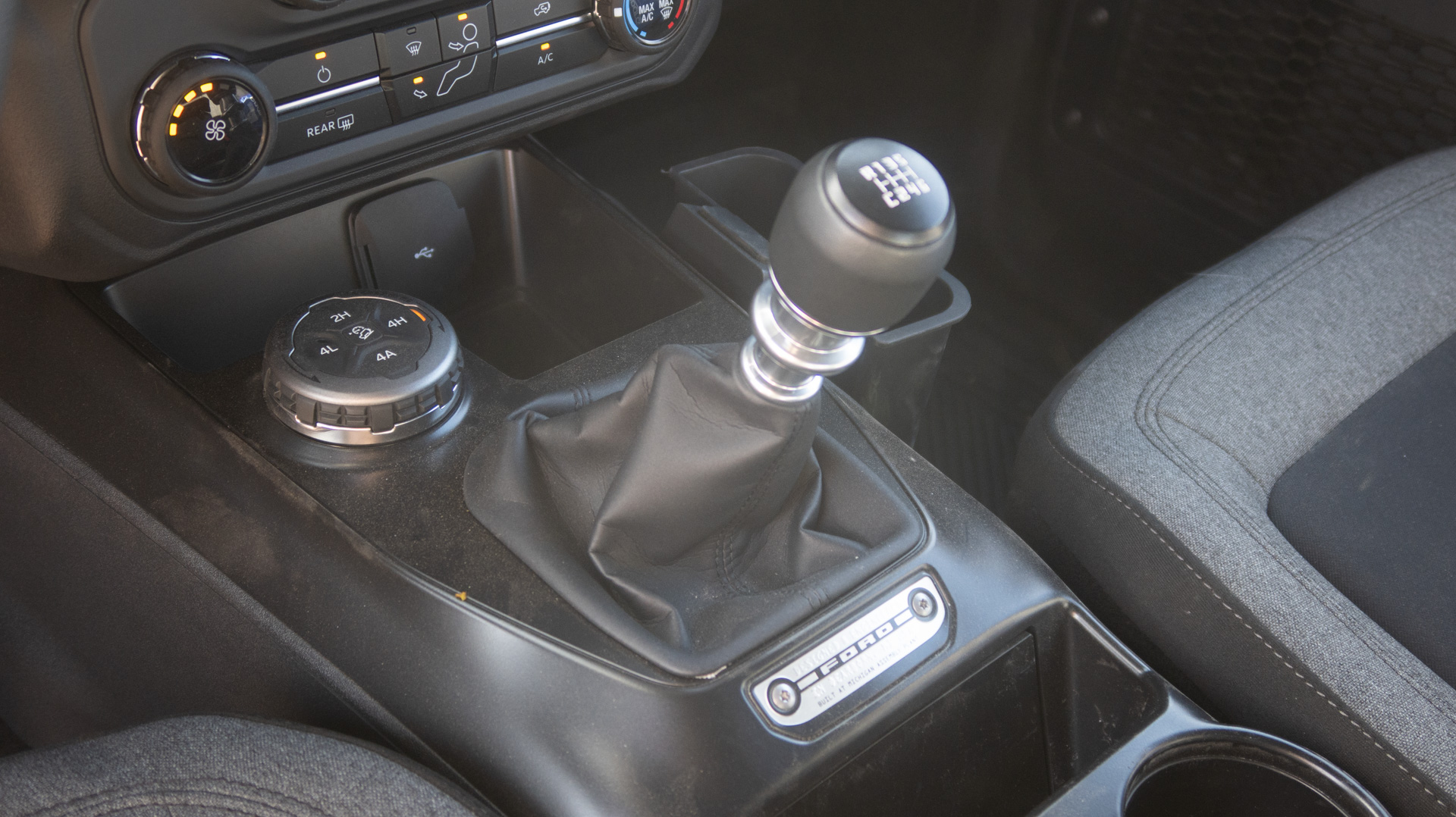
The transfer case shifter, to put the machine in four-wheel drive or low range, is surrounded by a ring you spin to select between terrain modes (what Ford calls “G.O.A.T.” modes). They do all the same things you get in the automatic transmission Bronco (tweak traction control and throttle response), except, of course, alter shift points. You’re still on your own for that one.
To be totally honest, I found it easier to just leave the truck in the same mode and adjust my driving for conditions as they change. But I think if I spent even more time with this system, I might be able to optimize my driving even more by learning the nuances between settings.
Weak Spots
A two-door base-model Bronco Sasquatch is pretty much perfect for what it is and how it’s priced, but I’ll list off my complaints. The backseat is really hard to climb into and uncomfortable; think of it like the back of a 2+2 sports car, just right for kids or dogs. I hate that the parking brake is a tiny electronic switch in the driver’s left knee area. It really feels annoying to use in conjunction with a manual shifter. A lot of the plastic bits and pieces look cheap, but look around the dash of a Bronco from the ’70s or ’80s—it’s bargain basement switchgear there, too. This ain’t a luxury car.
I also hate how low-effort Ford’s Bronco trim decals are. The “Sasquatch” emblem on the fender looks like a die-cut promotional decal from Sticker Mule. It’s too flat and overly detailed—and the same can be said for any trim decal on every Bronco and Bronco Sport. They look awful. Apologies to anyone who worked on them, but they should either be much aesthetically simpler or have more physical depth.
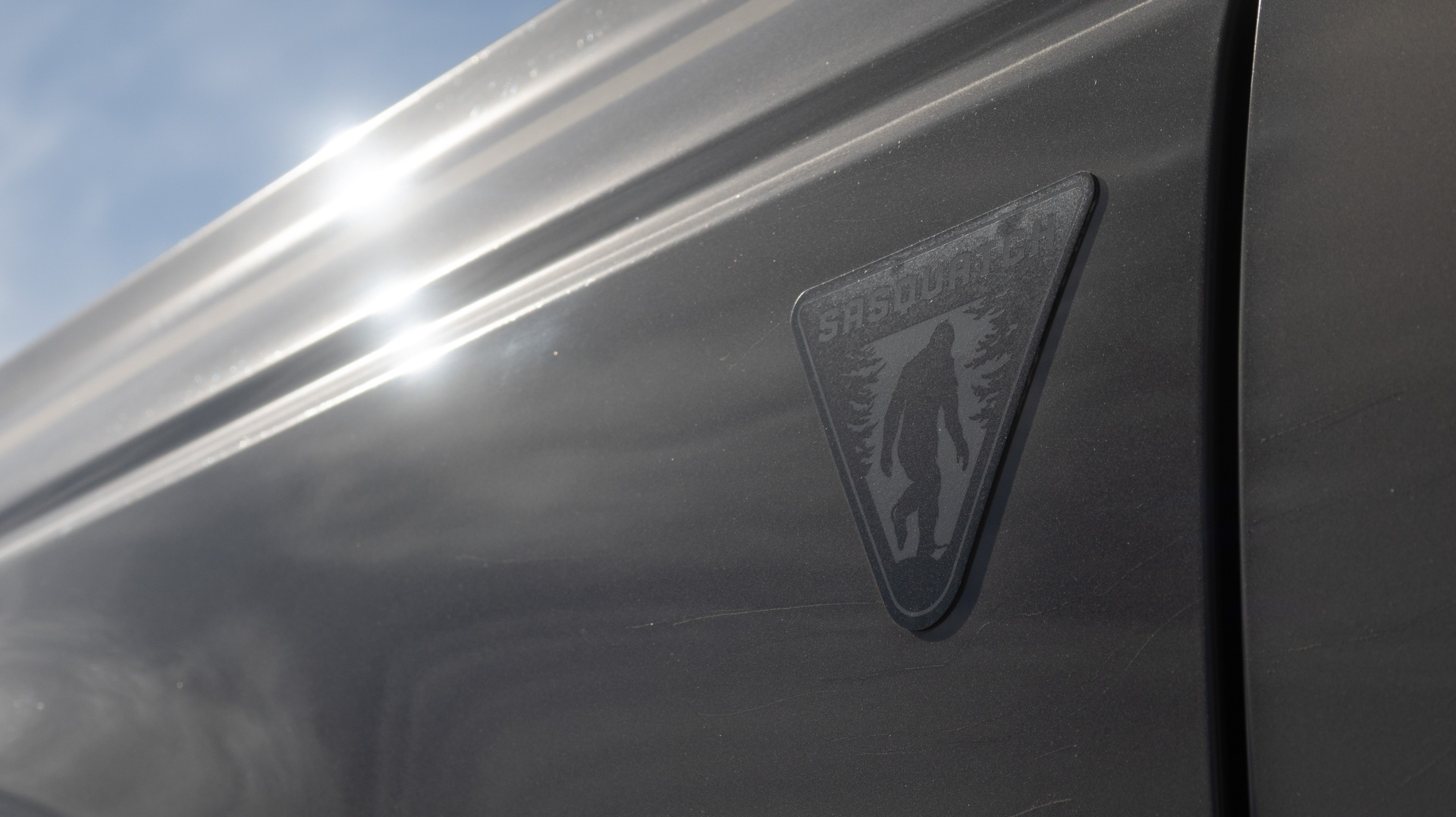
I mean, I also wish the vehicle had fewer (zero) screens and less plastic, but that’s not how cars work in 2026. It would be really cool if it had a naturally aspirated V8, but I was pretty satisfied with the power and fuel economy in the turbo four, even if it didn’t blow my hair back.
It’d be nice if you could pick options a little more piecemeal. I’d love to spec a base manual with just a rear locker and 31-inch tires instead of the 35s and lift, but I can still take that path thanks to the aftermarket.
Verdict
The sixth-gen Bronco is an awesome platform, and a manual transmission with the Sasquatch package is pretty much the ultimate old-school adventure truck setup with the ideal level of modern refinement. For most people, just pairing the two-door body with the excellent stick shift option is all they need to have a really capable and rewarding off-road driving experience.
I would encourage most people dreaming about “restomodding an old truck” to just get one of these. Leave old trucks alone if you want modern power and interfaces.
If you’re on the fence about the manual, get it. If you’re on the fence about Sasquatch, you can skip it. But if you have the coin to go bigger, the locking diffs and numerically high rear axle ratio make this machine almost unstoppable off-road. If you’re trying to decide between two and four doors, it just comes down to your passenger’s needs. You will want the longer Bronco if you frequently have more than one passenger, but the “coupe” looks way cooler.
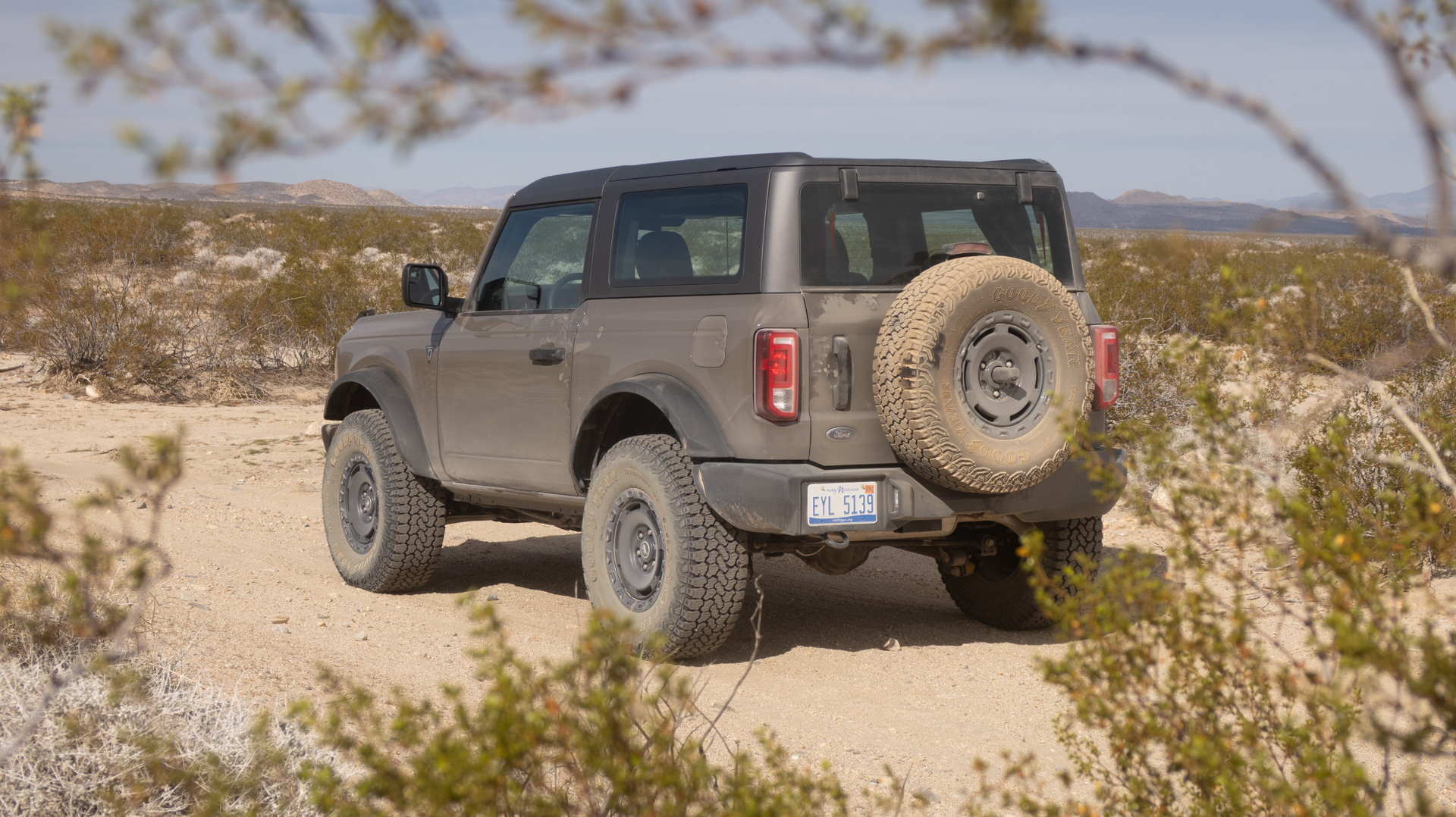
I would pick a Bronco over a 2026 Jeep or Toyota as my overlander of choice, and it’s not even close. Personally, since I’m screen-averse (mostly because I don’t need a daily driver), I’m going to stick with my funky fleet of old trucks. But if I had to count on one vehicle to get me to an office, school, run errands, and also go wheeling in, a Bronco would be the top contender.
Ford provided The Drive with a four-day loan of this vehicle for the purpose of writing this review.
2025 Ford Bronco 7MT Base 2-Door Sasquatch Specs
| Price with Sasquatch Package | $50,145 (add $395 for “Marsh Gray” paint as shown) |
| Powertrain | 2.3 I4 Turbo | 7-Speed Manual | 4WD |
| Horsepower | 300 |
| Torque | 325 |
| Ground Clearance | 11.6″ |
| Approach, Departure, Breakover Angles | 43.3° | 37.0° | 28.9° |
| Max Water Fording Depth | 33.5″ |
| Cargo Capacity | 52.0 cu. ft. behind first row | 20.6 cu. ft. behind second row |
| Max Towing | 3,500 lbs. (Class II Trailer Tow Package) |
| Curb Weight | 4,332 lbs. |
| EPA Fuel Economy | 19 mpg combined | 18 mpg city | 21 mpg highway |
| Score | 9.5/10 |

Quick Take
Old-school off-road energy with modern execution—your prayers have been answered.
Bronco Sasquatch California Adventure Bonus Gallery
I ended up with too many pictures for a review—but they’re too nice to let languish on a hard drive until the end of time. So, enjoy, or just scroll on down to the comment section.
Ford Bronco Accessory Mounting: Closer Look
The Bronco has a lot of accessory-mounting provisions. Like, a lot. They’d be great for mounting cameras, pouches, whatever.
Ford Bronco Roof: Closer Look
Removing the front pieces of the Bronco’s roof was easy. Build quality on the rear section seemed OK, but not amazing. The plastic where the roof meets the metal body could have been straighter. Also, the roof panels take up a lot of cargo space, so you might want to swap them for the optional soft ones if you want to be able to do some spontaneous open-air riding with any passengers aboard.
Ford Bronco Doors: Closer Look
I was not able to take the truck’s doors off (just had nowhere to stash them), but here’s a closer look at the door area to give you a sense of how hard it might be to unbolt and remove them.
www.thedrive.com
#Hoped


