


Support CleanTechnica’s work through a Substack subscription or on Stripe.
Question: Can I still make a long cross-country trip with my Tesla Model 3 that is getting long in tooth? Short answer: Yes!
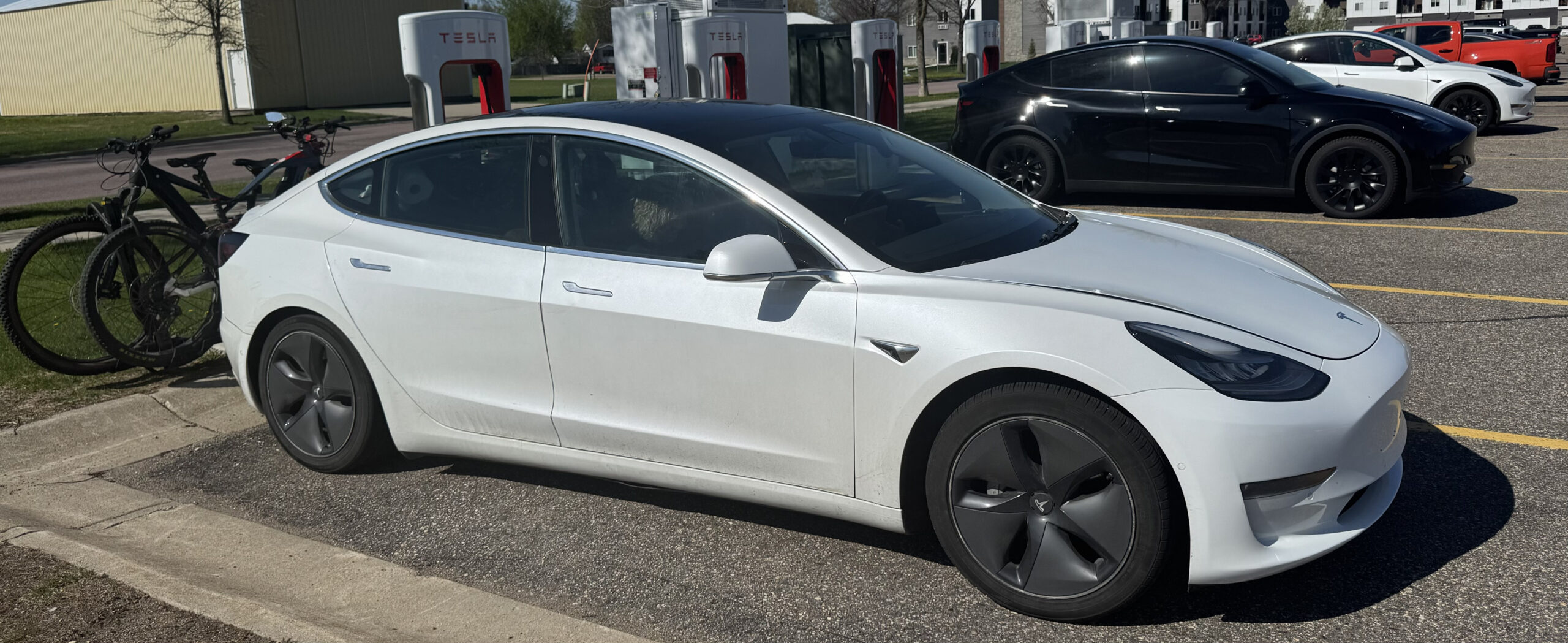
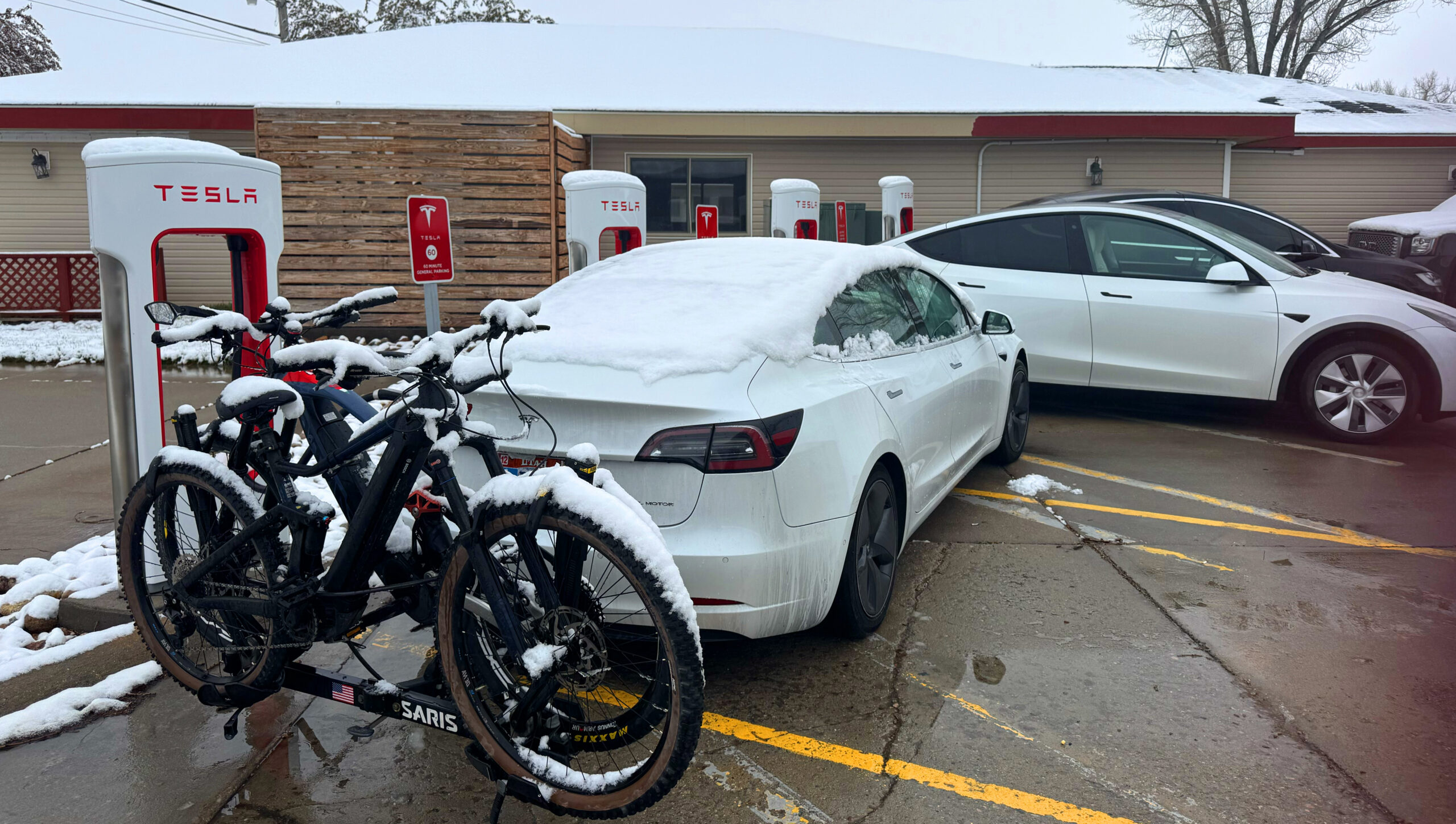
My dual-motor Tesla Model 3 is going on 7 years old with 175,359 miles on the odometer. The initial EPA range when new was 310 miles, but just now a 100% charge only went to 98% with a calculated range of 243 miles. 310 to 243 is a loss of 67 miles or ~22% over that period and those miles (67/310 = .216). We just made our 7th trip of 1,535 miles from our winter home in Lindon in Northern Utah to our summer home in Three Lakes in Northern Wisconsin. As usual, we are hauling two big ebikes on the back as you see in the photo below. The ebikes destroy the smooth aerodynamic shape that Tesla worked so hard to obtain. With the battery loss, our easily achieved range is now closer to 100 miles.
However, the 12 Superchargers that we used on the trip are usually 100 miles apart or less. The Superchargers we used were at Evanston, Rock Springs, Rawlins, Evansville (Casper) and Lusk, Wyoming; Custer, Wall, Oacoma (Chamberlin) and Michel, South Dakota; Worthington, Saint Peter and Minnetonka, Minnesota; Minomonie and Wausau, Wisconsin. The longest run of 126 miles was from Mitchel, South Dakota to Worthington, Minnesota. The Sioux Falls Supercharger falls in between, but it’s a 12-mile round trip from I-90, so we are better off charging to 85% and slowing down if needed to skip Sioux Falls. It’s one of a couple Superchargers we would like to see added on our route from Utah to Wisconsin.
There are a number of other 100+ mile distances where we could avoid the slow 60% to 85% charging if Tesla would add chargers. Electrify America has also built high-speed chargers on I-80 in Wyoming, but they are at the same locations, so they wouldn’t help us. Also, I would need a ~$300 hardware upgrade to my car to take advantage of non-Tesla chargers.
To determine the length of our charging stop: We touch the charging icon on the Tesla screen, touch the map, and all the nearby Superchargers come up. We pick the next one on our route, which we know because we take this route every year, then we begin charging. If the distance to the next charger is about 100 miles, we charge to about 80%. We also watch the calculated arrival charge state, looking for a value of about 20%. On the longest distances, we charge up to 90%. On the shortest distances, we may only charge to ~55%. We don’t charge more than necessary to reach the next charger because the charging rate becomes very slow over a charge state of 70% to protect the battery.
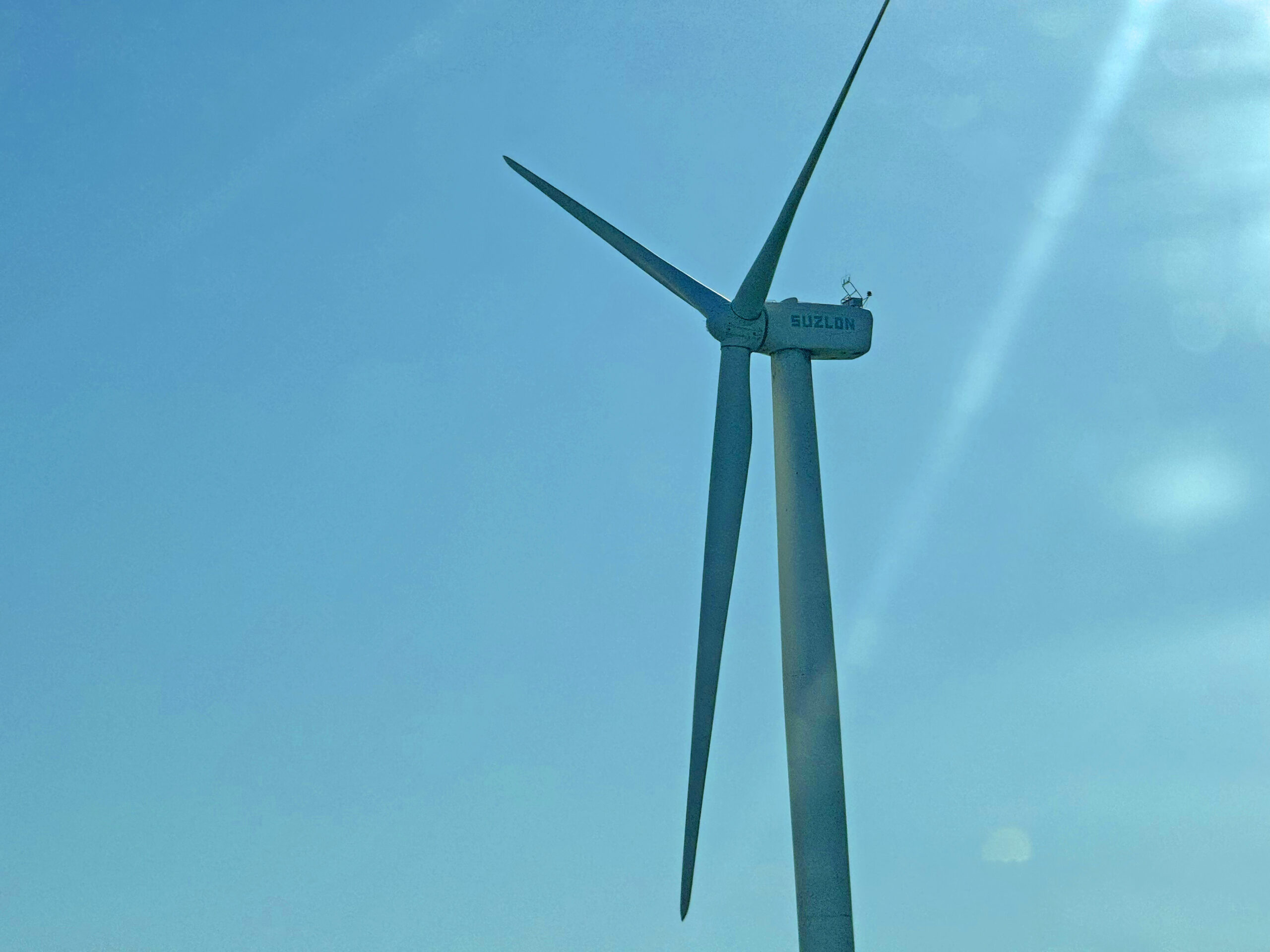
We also push the weather button on the top of the Tesla screen, which gives the current wind direction and speed. On this trip, the headwind was never more than 3 mph and tailwind was up to 5 mph, so we had little worry about the wind. We saw numerous wind turbines on our trip and most were stopped or turning very slowly, as was the one you see below. On the shorter distances between Superchargers, we start off at 75 mph on the freeways. We watch the estimated charge state on arrival at the next Supercharger. If it holds steady, we maintain our speed. If our estimated charge state on arrival at the next Supercharger drops below 15%, we reduce our speed. Sometimes on the longer runs we dropped our speed to as low as 65 mph. The calculated speed on arrival at the next Supercharger doesn’t take into account the extra drag from the ebikes, so usually the estimated arrival charge drops for us as we travel. Sometimes the estimated arrival charge dropped as low as 8% or 9% on the longer distances.
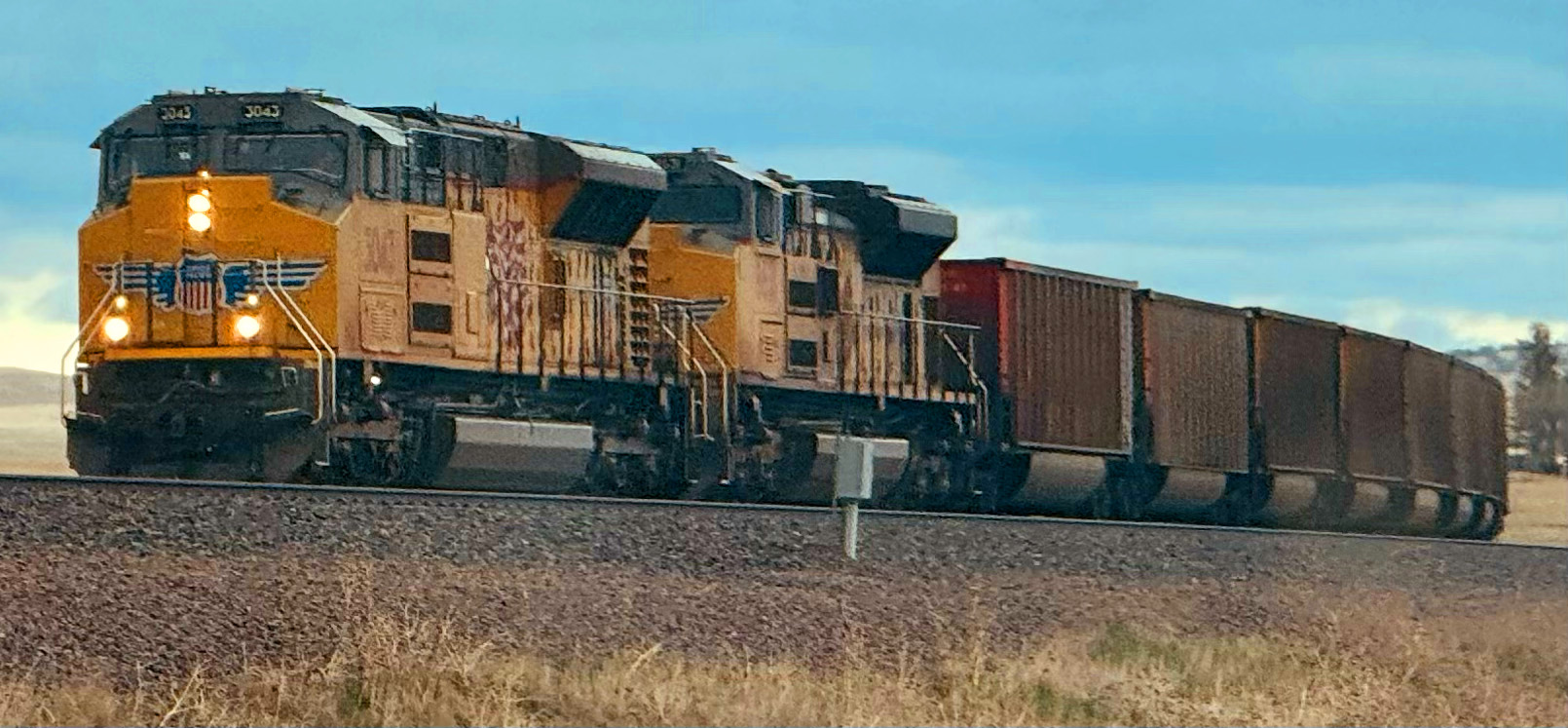
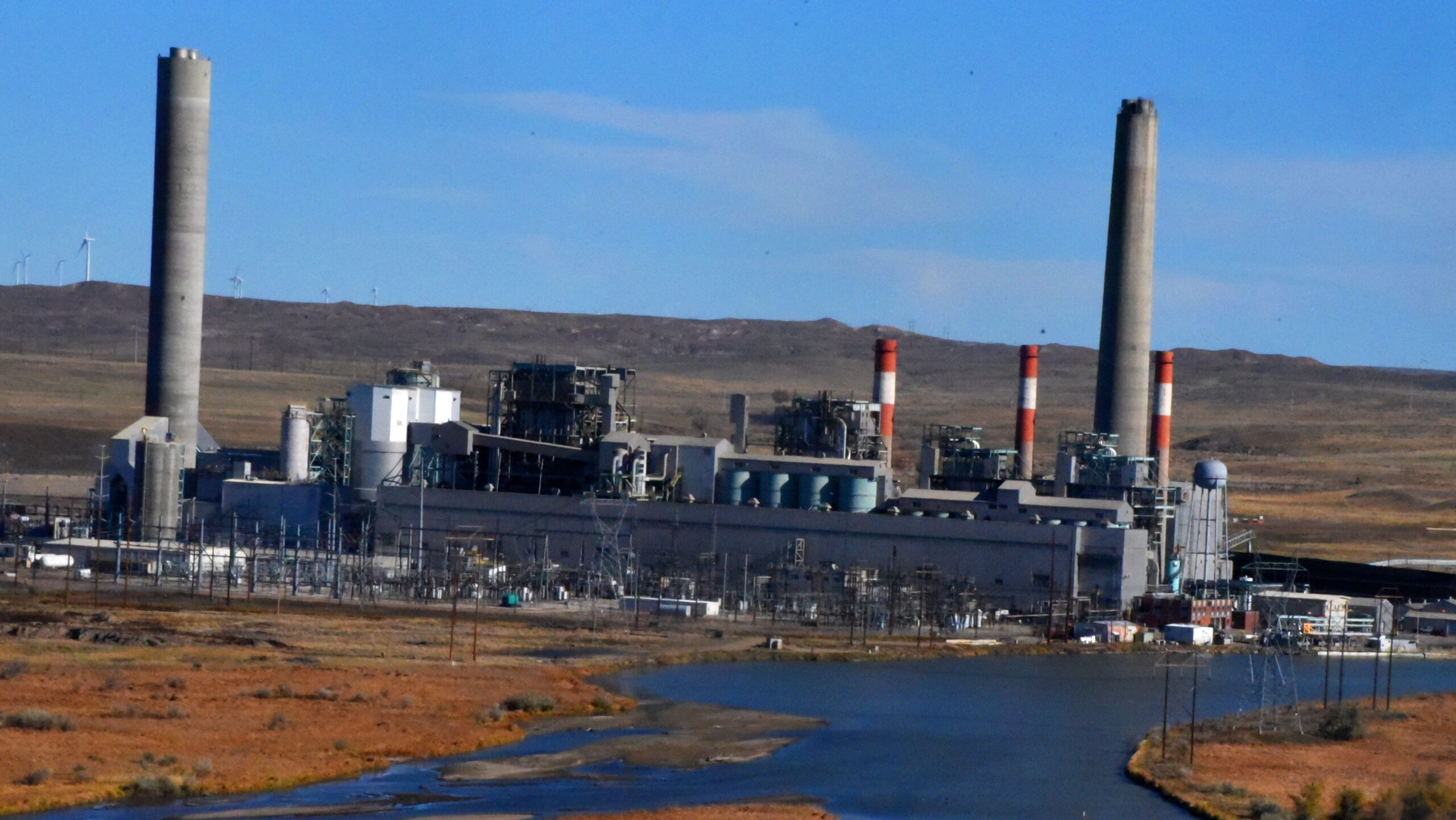
We see hundreds of wind turbines cranking out clean energy in Wyoming, South Dakota, and Minnesota. However, Wyoming has one of the largest deposits in the world of high-quality “dirty” coal with a thin over burden. The coal is extracted with the largest shovel machines on the planet. On our cross-country trip, we often see unit trains (all the same kind of cars) transporting the coal as we see in the photo above. I think much of the coal is exported to Asia, as coal-powered electric plants in the US are being gradually shut down. However, copious amounts of Wyoming coal are burned at the Glenrock Wyoming Johnston power plant near Casper Wyoming that we see on our route. The huge Dave Johnston plant we see below produces 450 megawatts of power. It was originally planned for shutdown in 2027, but with the Trump administration in power, rather than fully retiring two of four coal-burning units at the plant in 2028, the utility now plans to convert those units to natural gas in 2029 and continue their operation. A third coal unit at Dave Johnston will be shut down in 2027, as previously planned, and the fourth unit, which had no retirement date, will now be converted to natural gas in 2030.
Our first stop was the Covered Wagon Motel, which has 4 Supercharger stalls right on the property in the tiny town of Lusk, Wyoming. You can see our Tesla covered in two inches of snow from the previous night in the photo below. You see us often parked sideways at nearly empty Superchargers because it is difficult to back up exactly the right distance with bikes on the back.
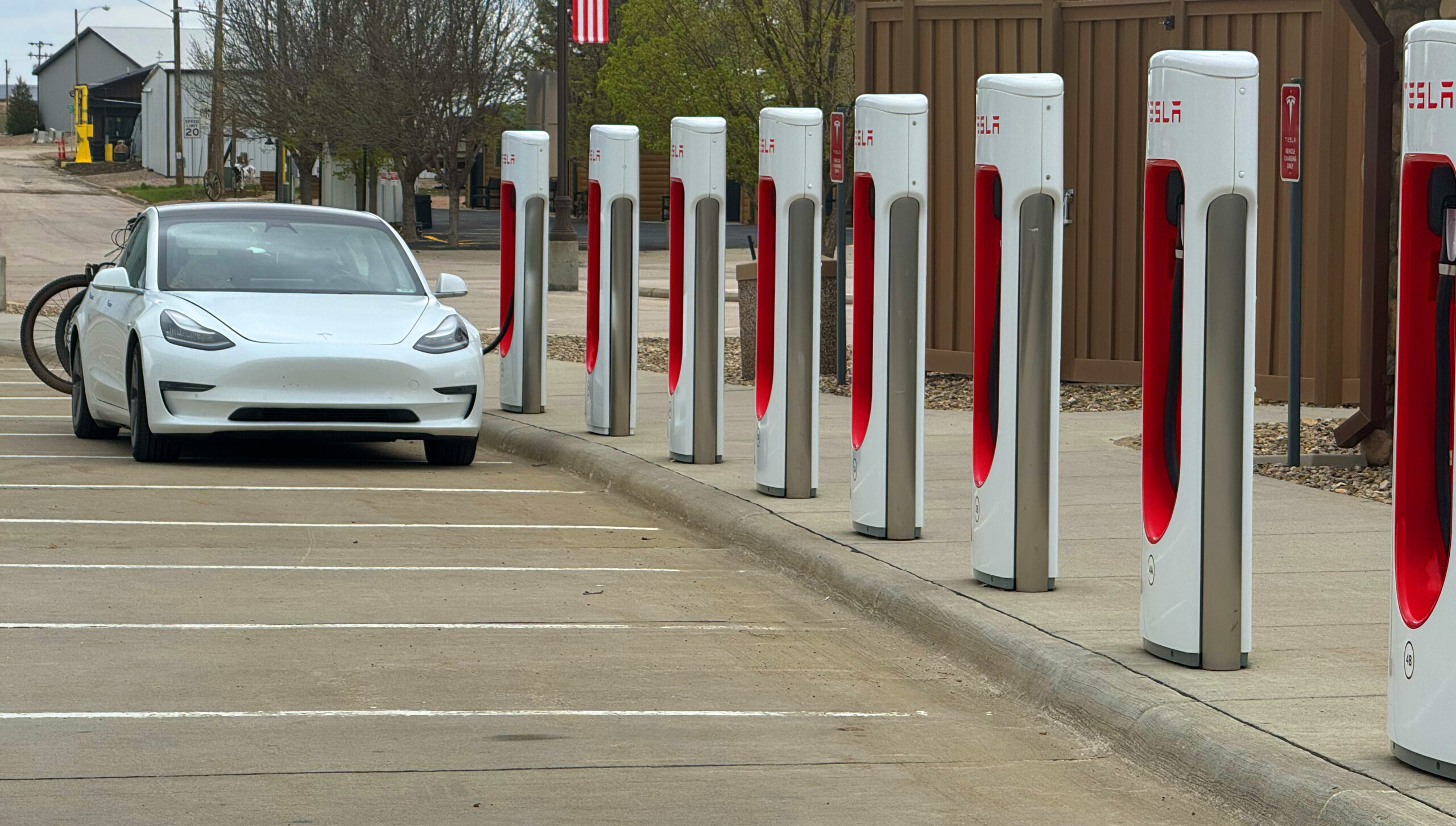
We were driving in late April, long before the busy summer travel period, and we were the only car charging at most of the Superchargers, as you see us in Wall, South Dakota, on April 26 in the photo below. With such low utilization, it was not too surprising to see only one new Supercharger on our route this year. That was the new V3 Supercharger only a half mile from our AmericInn hotel in Worthington, Minnesota. Since we started doing this trip in 2020, there have been new Superchargers installed in Casper, Wyoming; Saint Peter, Minnesota; and Minomonie, Wisconsin that eliminated tight charging windows or detours. However, most of the Superchargers were installed 10 years ago — in particular, the 4 Superchargers on I-80 in Wyoming that are so old that non-Tesla cars can’t use them. On the other hand, our often-taken route from Salt Lake City to Saint George in Southern Utah has gone from 16 Supercharger stalls to over 100 stalls over the same period of time.
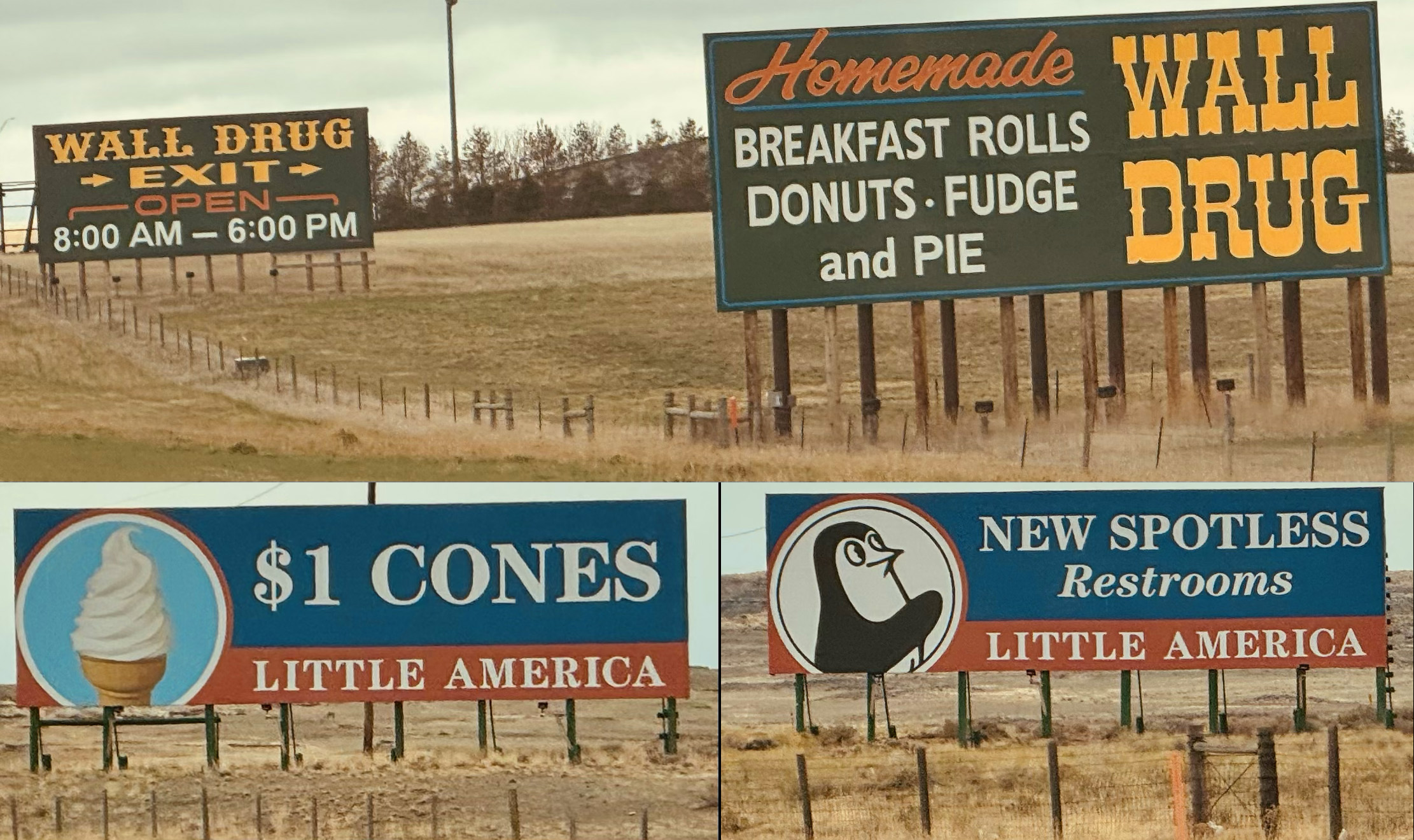
One of the unique things about driving in Wyoming and South Dakota are the classic signs for Little America and Wall Drug that appear already hundreds of miles before their location.
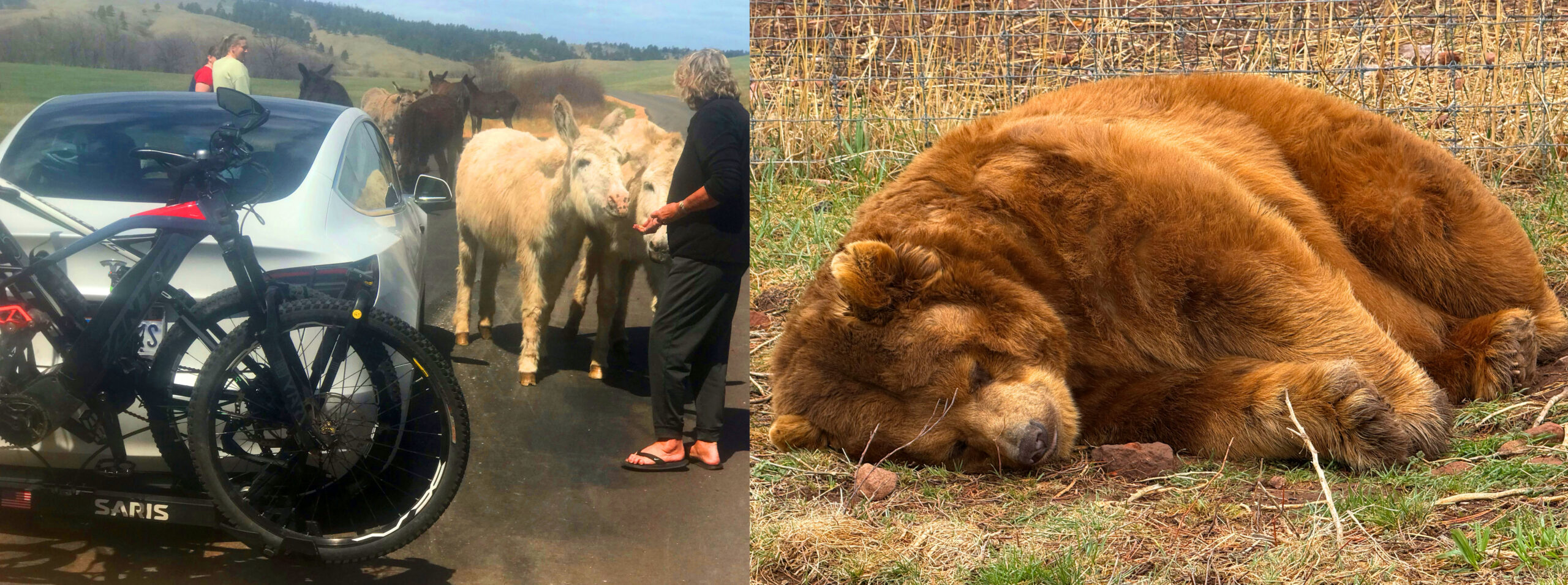
Our trip is focused on making the 1,536 miles in 3 days, so we stop for little more than charging, food, and two overnight hotel stays. However, there are two stops in the Black Hills of South Dakota that we seldom pass up. First is for the bison and wild donkeys on the wildlife loop at Custer State Park, and second is for the gorgeous grizzly bears at Bear Country USA. Both, which you can see below, are near Rapid City, South Dakota.
Referral Program
I think Tesla has eliminated both its referral program and Loot Box. However, they may need to resurrect them to dispose of 50,000 unsold cars from last quarter. If they do and you find any of my articles helpful to you, please use my referral link when buying a new Tesla: https://ts.la/arthur73734 (be sure to use it when you make your order). If you are buying a new Tesla and use my link, you would previously receive $1,000 off your purchase price for a Cybertruck or $500 off for a Model 3 and Y. You would also get 3 months of Full Self-Driving. It is technically “FSD Supervised” and it will drive you automatically to any address you enter into the navigation. You would be getting the new Hardware 4 computer and upgraded cameras, which enable FSD V14. I’m getting multiple reports from family and others with newer Teslas that it’s amazing.
Sign up for CleanTechnica’s Weekly Substack for Zach and Scott’s in-depth analyses and high level summaries, sign up for our daily newsletter, and follow us on Google News!
Have a tip for CleanTechnica? Want to advertise? Want to suggest a guest for our CleanTech Talk podcast? Contact us here.
Sign up for our daily newsletter for 15 new cleantech stories a day. Or sign up for our weekly one on top stories of the week if daily is too frequent.
CleanTechnica uses affiliate links. See our policy here.
CleanTechnica’s Comment Policy
cleantechnica.com
#Cross #Country #Road #Trip #Tesla #Model


