


Support CleanTechnica’s work through a Substack subscription or on Stripe.
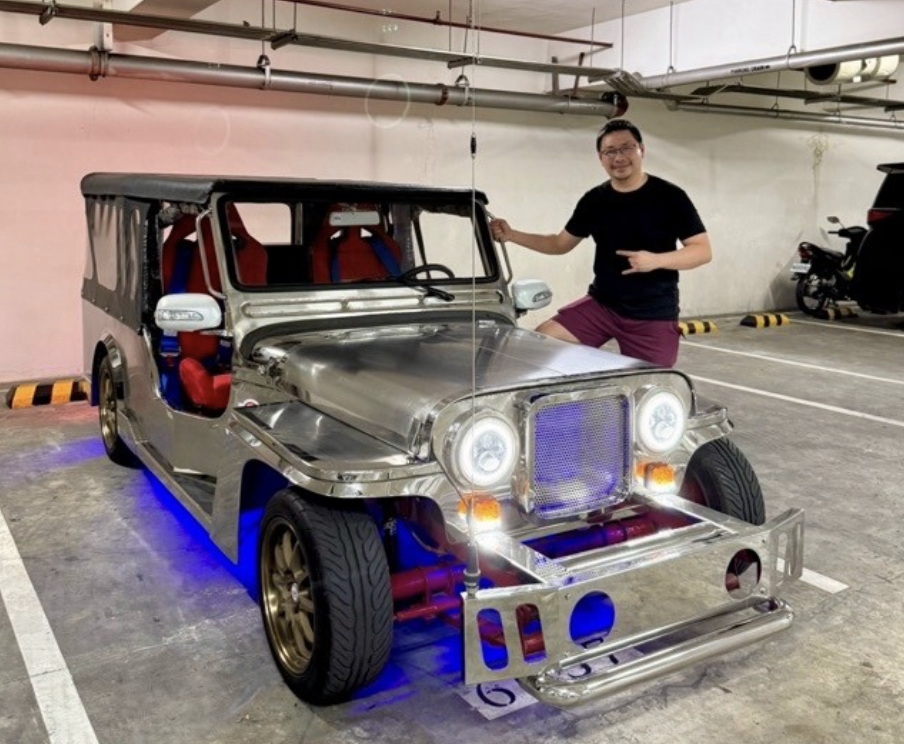
Francisco Motors, best known for its iconic jeepneys, is now at the center of a serious effort by the State of California to attract a major zero-emission vehicle manufacturing investment.
Is the shift unfolding in the global electric vehicle landscape caused by the Iran-prompted oil crisis why Francisco Motors plans to manufacture outside the Philippines? Or is it just unsavory local conditions back home that make the case palatable? What elements are in play that many not yet fully appreciate? What makes this story compelling is not just the scale of the opportunity, but the context behind it.
At the heart of this development is Elmer Francisco, a long-time automotive innovator who has spent decades pushing for electric mobility long before it became mainstream.
According to official documents obtained by CleanTechnica, California’s Governor’s Office of Business and Economic Development has formally expressed support for a proposed expansion of Francisco Motors in Southern California, offering a comprehensive package of incentives and institutional backing. The language used is unambiguous.
A formal letter dated March 12, 2026 from the California Governor’s Office of Business and Economic Development confirms that the state is directly supporting the company’s expansion. The agency states that “the proposed expansion of Francisco Motors in Southern California would strongly contribute” to the state’s clean transportation strategy and its target of carbon neutrality by 2045. It further states that California “very much welcome[s] the opportunity to support this project.”
“As soon as we agree to the invitation, the next step is immediate execution – finalizing site control, activating state and local incentives, and locking in our initial production footprint. In parallel, we begin detailed engineering, workforce ramp-up, and supplier onboarding so we can move from commitment to production as quickly as possible,” Francisco told CleanTechnica.
The same document outlines the policy environment being offered. California highlights that it accounts for 35% of U.S. zero-emission vehicle registrations and hosts 60 ZEV manufacturers. It references a mandate requiring all new passenger vehicles sold in the state to be zero-emission by 2035 and notes a $10 billion commitment toward clean transportation infrastructure. The state also points to parallel investments in hydrogen, including more than $1.2 billion allocated to a regional clean hydrogen hub.
The incentive structure is extensive and specific. It includes access to the California Competes Tax Credit, which provides income tax credits over a five-year period, and an R&D tax credit equal to 15% of qualified expenses above a base threshold plus 24% of basic research payments. Manufacturing equipment can qualify for both partial and full sales and use tax exemptions, with full exclusions reaching up to $20 million depending on project scale. Property tax abatements are also available through the Capital Investment Incentive Program, which allows rebates on assessed value above $25 million for up to 15 years.
Beyond tax incentives, the state is offering workforce and operational support. Programs such as UpSkill California and the Employment Training Panel are designed to build a dedicated labor pipeline, with funding support that can reach up to $850,000 for training. Additional support includes utility rate discounts, tax-exempt industrial development bonds, and direct assistance with permitting, site selection, and regulatory coordination. The letter explicitly commits to “high-level, cross agency coordination” to accelerate execution.
Parallel to the state-level engagement, a separate document titled Project Mesa provides detailed insight into the proposed development itself. The project outlines a multi-phase automotive manufacturing facility anchored in the Santa Clarita Valley in Los Angeles County. It begins with a combined R&D and pilot manufacturing operation, followed by full-scale electric vehicle production and global distribution.
The scale is significant. Project Mesa specifies approximately $5 billion in total capital expenditure covering research, manufacturing, and supporting infrastructure. At full buildout, the facility is expected to employ between 1,800 and 2,200 workers, with an additional 500 to 700 contractors during construction. The site requirements include 70 to 90 acres of land and a total facility footprint of roughly 1.12 million square feet, consisting of 120,000 square feet of office space, 800,000 square feet of production area, and 200,000 square feet of warehouse capacity.
But why the U.S. when Francisco Motors was already sizing up its own manufacturing facility in the Philippines?
“From a production standpoint, the United States — particularly California — is a highly strategic base. It gives us access to one of the most advanced EV ecosystems in the world, a deep talent pool, and strong institutional support. For the Philippines, local manufacturing remains the long-term goal, but for immediate large-scale deployment, exporting from the U.S. allows us to move faster while navigating current tariff and supply chain realities,” Francisco explained.
Operational requirements for Project Mesa are also well defined. The facility is expected to draw 25 to 30 megawatts of power per month and integrate a hybrid renewable hydrogen fuel cell microgrid. Daily water usage is projected at 40,000 gallons, with wastewater treatment and recycling systems built into the design.
The phased rollout is structured to reduce risk while accelerating entry. Phase 1 establishes an interim campus of approximately 420,000 square feet within the Santa Clarita Commerce Center. This phase is intended for advanced vehicle R&D, prototyping, validation, low-volume pilot production, and workforce training. It is described as a “bridge solution” while land assembly and permitting for the larger facility proceed. Phase 2 transitions to a consolidated, build-to-suit manufacturing campus.
The Santa Clarita Valley is being positioned as a strategic location for the project. The site is approximately 30 miles from downtown Los Angeles, with access to major transportation corridors including Interstate 5 and State Route 14. It is within 45 minutes of Los Angeles International Airport and near the ports of Los Angeles and Long Beach, both critical for export logistics. The region also offers proximity to universities and an existing industrial base that includes aerospace, advanced manufacturing, and technology companies.
Local incentives further strengthen the location. The city of Santa Clarita imposes no business licensing tax, utility user tax, gross receipts tax, or payroll tax, making it comparatively lower cost than surrounding jurisdictions. Additional benefits include access to a foreign trade zone that allows duty deferral and exemption for re-exported goods, as well as use tax rebate programs and subsidized workforce training partnerships.
The California proposal stands in direct contrast to the experience described by Francisco. He told CleanTechnica that Francisco Motors has been developing electric jeepneys since 1988, long before current battery technologies became widespread. He said the Philippines “could have been the first mover” in electric mobility but failed to act in time. The Electric Vehicle Industry Development Act also known as EVIDA, passed in 2022, came “34 years late,” and he maintains that policy execution remains inconsistent.
He also pointed to a history of national service, recalling that Francisco Motors built the bulletproof Popemobile used during Pope John Paul II’s 1995 visit to Manila at no cost to the government. “Whenever our government needs us, we answer,” he told CleanTechnica, adding that in return the company has faced “empty promises” when seeking support for industrial development.
As for the market for the EVs to be produced in California once the project pulls through?
“Our export strategy is global by design. The Philippines is the natural first market, followed by Southeast Asia and Africa where demand for durable, cost-efficient transport is massive. Europe represents a more regulated but high-value market where our zero-emission platforms can compete. So yes, this is not speculative – this is a deliberate, phased global expansion strategy,” Francisco commented.
Taken together, the documents and statements show a clear alignment between a company seeking to scale and a government prepared to facilitate that expansion. California is offering a coordinated package that integrates incentives, infrastructure, workforce, and policy. Francisco Motors is responding with a defined, capital-intensive project that can be executed within that framework.
The result is a potential transfer of industrial capacity and innovation from one geography to another, driven not by technology constraints but by the availability of policy support and execution speed.
“What we are building is not just a vehicle company — it is an infrastructure platform for mobility, energy, and finance. The demand is already there, the technology is ready, and the institutional support is aligning. We are inviting long-term partners who understand scale, who think in decades, and who want to participate in transforming transport systems across emerging and developed markets alike. This is a rare opportunity to invest at the intersection of sustainability, infrastructure, and global mobility – and to do it with a company that has both heritage and a clear path to the future,” Francisco concluded.
Sign up for CleanTechnica’s Weekly Substack for Zach and Scott’s in-depth analyses and high level summaries, sign up for our daily newsletter, and follow us on Google News!
Have a tip for CleanTechnica? Want to advertise? Want to suggest a guest for our CleanTech Talk podcast? Contact us here.
Sign up for our daily newsletter for 15 new cleantech stories a day. Or sign up for our weekly one on top stories of the week if daily is too frequent.
CleanTechnica uses affiliate links. See our policy here.
CleanTechnica’s Comment Policy
cleantechnica.com
#California #Offers #Incentives #Philippine #Automaker #Set #Electric #Jeepney #Factory

