


Support CleanTechnica’s work through a Substack subscription or on Stripe.
Yesterday, I wrote about the ongoing debate on whether to include PHEVs (plugin hybrid electric vehicles) in EV (electric vehicle) sales reports, or if we should only focus on BEVs (full battery electric vehicles). It’s been a hotly debated topic for more than a decade. Incidentally, we got a couple of reader comments on both sides of the issue in the past week, so I wrote that article discussing the matter and said at the end: “I’m curious to hear more people’s opinions on whether [PHEVs] should remain in the discussion or not.” Reader Mike Shurtleff responded at length with his opinion on the matter, backed up with a series of arguments and charts. It seemed like the effort alone meant that it deserved a full article, and I also found his arguments to be convincing (and new/novel), so here’s his full post:
By Mike Shurtleff
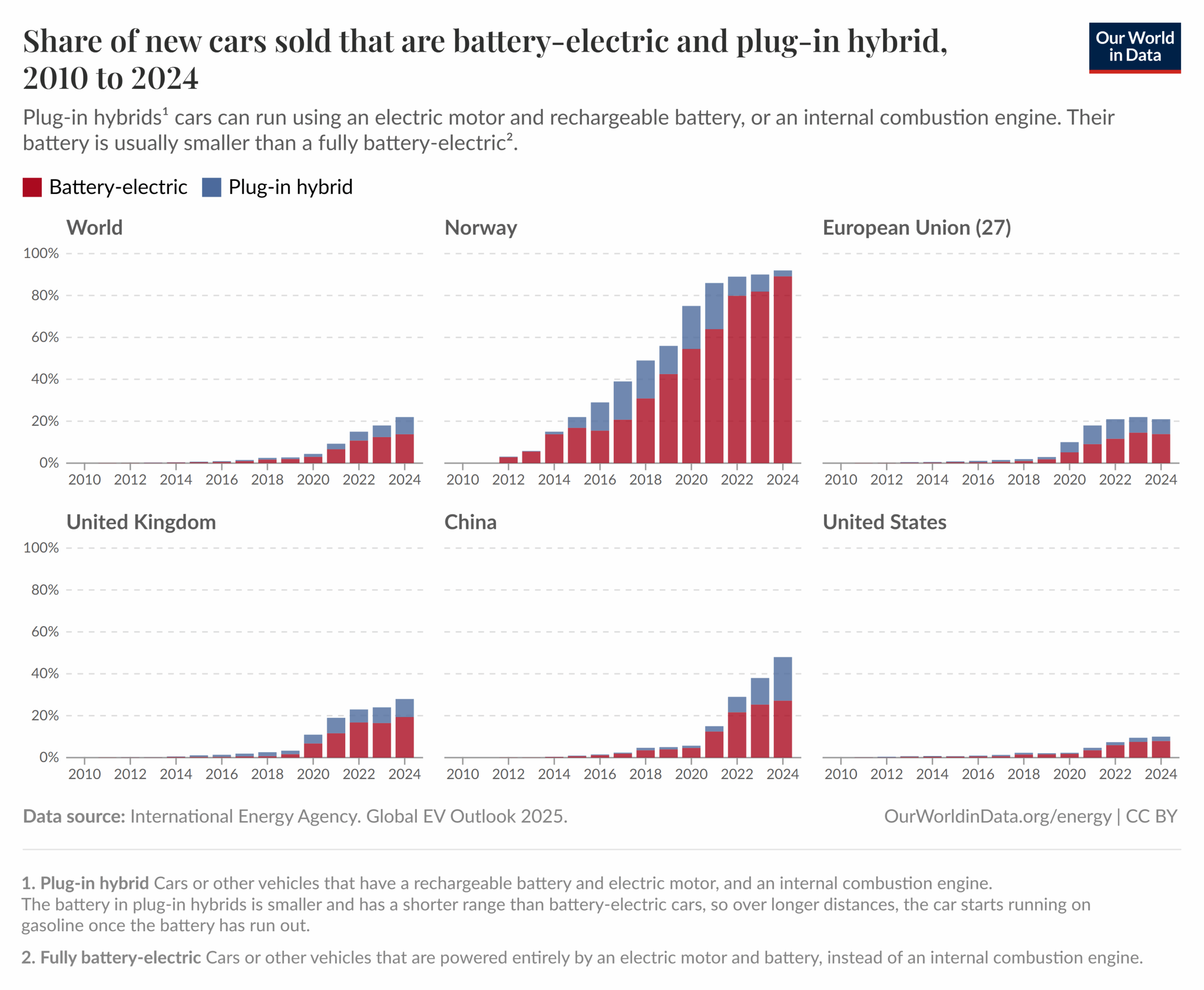
I consider PHEVs to be part of the transition to BEVs, so I’m very comfortable with the term “EVs” including both PHEVs and BEVs. Reasons:
1. Norway is the only country to have achieved near 100% EV sales. As BEV sales reached 80%, PHEV sales faded. There were probably more public charging sites and there was almost certainly much wider acceptance of fully electric BEVs.
2. Norway again. In 2016 the percent of BEV sales actually dropped in Norway, but if you include PHEVs it was still growing. Look at the bar charts for China, the UK, and the world. It looks like BEV sales are stalling out, but including PHEVs shows that the transition to BEVs is still happening rapidly. IMO, including PHEVs shows what was really happening in the transition to BEVs. [The USA and EU are stalling out, because they are trying to protect their previously reluctant auto companies … and in the USA’s case, trying to protect our greedy beggar oil companies.]
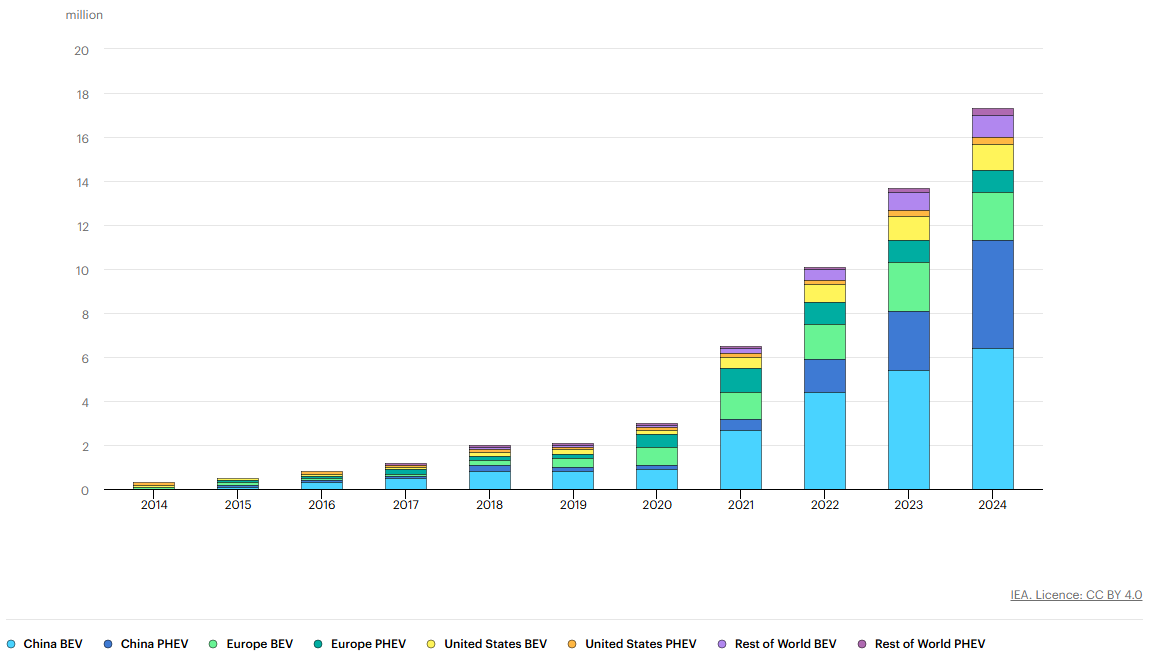
3. In most countries adopting EVs, the majority are BEVs, not PHEVs, and it stays that way. Not all countries, somebody pointed out Brazil with more PHEVs being sold than BEVs. That is by far the exception. My bet is even Brazil switches to majority BEVs as their charging infrastructure gets built out more.
4. At the beginning of the last century we started the transition from horses to automobiles. This was delayed in rural areas because there were no gas stations and the roads “were no better than muddy trails in many places.” This:
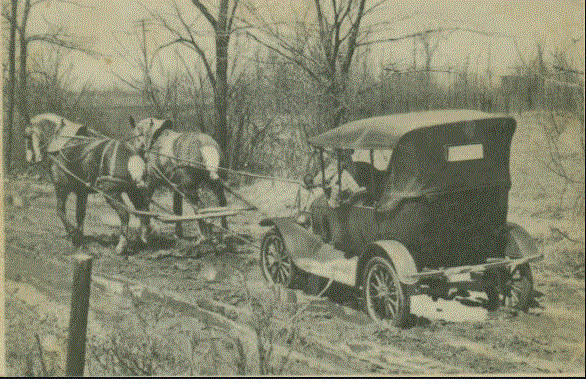
That is not the case in this transition from ICEVs to BEVs. It is not the case because PHEVs can fill the rural gap … and just as in Norway, PHEVs will become unneeded as charging stations become more common and as the populace becomes more comfortable with 100% electric BEVs.
My answer: PHEVs + BEVs = EVs. Keep it that way. Show amounts of each on bar charts if you want, but I want to know total EVs, including both. Your ball. Thank you, mike
Sign up for CleanTechnica’s Weekly Substack for Zach and Scott’s in-depth analyses and high level summaries, sign up for our daily newsletter, and follow us on Google News!
Have a tip for CleanTechnica? Want to advertise? Want to suggest a guest for our CleanTech Talk podcast? Contact us here.
Sign up for our daily newsletter for 15 new cleantech stories a day. Or sign up for our weekly one on top stories of the week if daily is too frequent.
CleanTechnica uses affiliate links. See our policy here.
CleanTechnica’s Comment Policy
cleantechnica.com
#Case #Include #PHEVs #Sales #Reports


