The jokingly titled “Woodstock for Capitalists” occurred on May 2, the day Berkshire Hathaway‘s (NYSE: BRKA)(NYSE: BRKB) annual meeting was held in Omaha. It was vastly different from past annual meetings because the CEO on stage wasn’t Warren Buffett. Greg Abel, Buffett’s successor, ran the show. Here are three of the most important takeaways for investors.
1. Buffett was there, but Abel is in charge
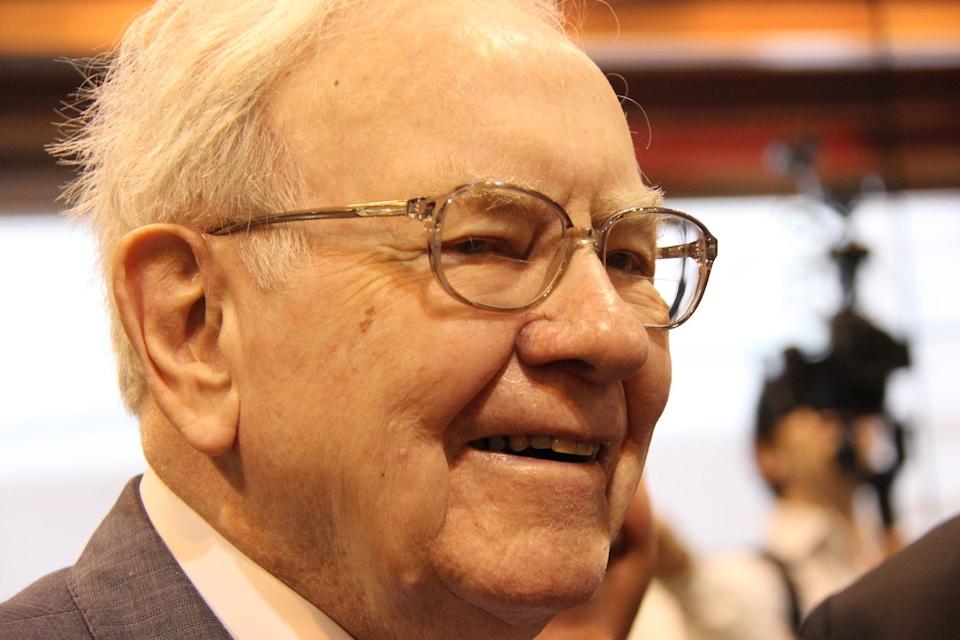
One of the biggest takeaways from Berkshire Hathaway’s annual meeting was the ongoing involvement of Warren Buffett. He sat in the front row as Greg Abel led the meeting from the stage. This is an important statement and a testament to Buffett’s management skill. He is there to help, if needed, but he is letting Abel do his job as CEO.
Will AI create the world’s first trillionaire? Our team just released a report on the one little-known company, called an “Indispensable Monopoly” providing the critical technology Nvidia and Intel both need. Continue »
Image source: The Motley Fool.
Abel said as much, noting that he collaborates with Buffett when making investment decisions for Berkshire Hathaway’s portfolio. That’s not the least bit shocking, since Buffett went from CEO to Chairman of the Board. That was a purposeful move, likely to ensure that Abel could still consult the Oracle of Omaha. However, it is good to see that Buffett isn’t attempting to be the shadow CEO. If you own Berkshire Hathaway, it should now be very clear to you that Abel is the man in charge of the company’s day-to-day operations.
2. Abel isn’t going to make big changes
Abel made clear that he has no plans to break Berkshire Hathaway up into smaller companies. He is happy with the conglomerate’s structure, which he believes is very efficient because the company doesn’t have the same levels of bureaucracy as other conglomerates. So the company will continue to have assets spread across industries such as utilities, transportation, energy, retail, chemicals, manufacturing, and housing, to name just a few.
That said, Abel did not entirely rule out selling businesses. The CEO stated that the goal is to buy a business and hold it forever, but that the relationship has to be mutually beneficial. If it gets to a point where that isn’t the case, he will be willing to consider alternatives. Clearly, one alternative would be to sell the business. Such decisions, however, appear likely to lead to changes at the edges of the portfolio, not a massive change in how the company is operated.
In other words, Berkshire Hathaway investors can expect more of the same. Given the company’s long-term success, that’s a very good thing.
3. Berkshire Hathaway still has a lot of cash
At the end of the first quarter of 2026, Berkshire Hathaway had $58 billion in cash and $339 billion in Treasury Bills. That’s a total of $397 billion in assets that it could quickly draw upon to make acquisitions or investments in publicly traded companies. That’s up from $373 billion at the end of 2025. Abel was very clear that this cash provides Berkshire Hathaway with flexibility during what is a very uncertain time in the market. The increase signals he isn’t any more willing than Buffett was to invest the company’s cash just to use it.
Buffett, in a separate interview with CNBC, highlighted that he believes many on Wall Street are speculating or even gambling rather than investing. Abel is clearly positioning Berkshire Hathaway to survive this period, given that the cash will act as a cushion in a bear market or recession. And, perhaps more importantly, it will allow Berkshire Hathaway to step in and invest when others are too fearful to do so. Such troubled periods have, historically, been when Buffett made some of his largest and best investment decisions.
Berkshire Hathaway’s annual meeting was “uneventful”
When you step back and look at the big picture, the biggest change in Berkshire Hathaway’s recent history was the changing of the CEO. It has only been a few months since Abel took over from Buffett, but it is clear the company isn’t going to change dramatically. In fact, the annual meeting was relatively uneventful, which could be the best outcome of all for longtime shareholders and the biggest takeaway.
Should you buy stock in Berkshire Hathaway right now?
Before you buy stock in Berkshire Hathaway, consider this:
The Motley Fool Stock Advisor analyst team just identified what they believe are the 10 best stocks for investors to buy now… and Berkshire Hathaway wasn’t one of them. The 10 stocks that made the cut could produce monster returns in the coming years.
Consider when Netflix made this list on December 17, 2004… if you invested $1,000 at the time of our recommendation, you’d have $496,473!* Or when Nvidia made this list on April 15, 2005… if you invested $1,000 at the time of our recommendation, you’d have $1,216,605!*
Now, it’s worth noting Stock Advisor’s total average return is 968% — a market-crushing outperformance compared to 202% for the S&P 500. Don’t miss the latest top 10 list, available with Stock Advisor, and join an investing community built by individual investors for individual investors.
Reuben Gregg Brewer has no position in any of the stocks mentioned. The Motley Fool has positions in and recommends Berkshire Hathaway. The Motley Fool has a disclosure policy.