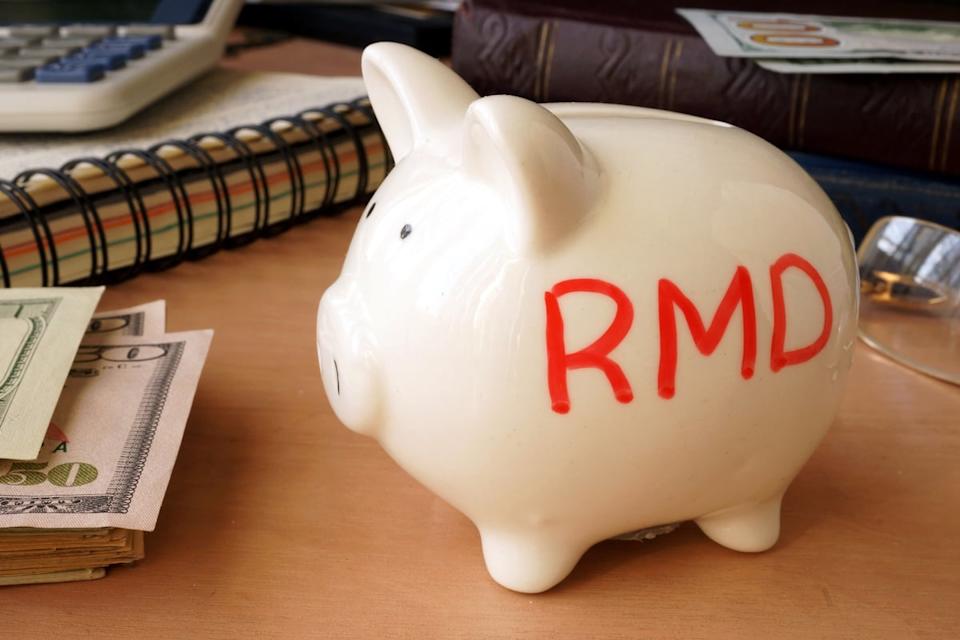
You must take out a required minimum distribution (RMD) when you turn 73, but you can wait until 75 if you turn 74 in 2033 or later. This distribution applies only to traditional retirement accounts, but not everyone wants cash sitting around doing nothing. You can invest your RMD, as long as you know a few rules before getting started.

Will AI create the world’s first trillionaire? Our team just released a report on the one little-known company, called an “Indispensable Monopoly” providing the critical technology Nvidia and Intel both need. Continue »
Any RMDs you take out from a traditional retirement account cannot go back into a tax-deferred account. Traditional IRAs and traditional 401(k) plans are out of the picture for your RMDs. You can still contribute to these plans if you have sufficient income and your contribution does not exceed the maximum amount.
However, you can still invest an RMD into a Roth IRA or a Roth 401(k) plan, up to the limit. You will first have to withdraw the RMD and then put those funds into a Roth account. Retirees cannot automatically transfer the RMD to a Roth account.
There are no limits to how much you can invest in a taxable brokerage account each year. These are the best spots for RMDs, as they give you access to the same assets you can buy in a traditional retirement plan.
You can decide to receive an RMD as cash or move enough assets out of your retirement plans into your taxable brokerage accounts.
You will still pay income taxes on any assets that you move from a retirement plan to a brokerage account. The stocks and funds you move over will have a new cost basis that reflects the fair market value on the date of the transfer.
When you take out an RMD, you aren’t required to hold the same stocks and funds. Investments that made sense 20 years ago may not reflect your current risk tolerance. For instance, young investors often gravitate toward growth stocks, while older investors usually benefit from blue chip dividend stocks that offer stability.
You should assess your nest egg, Social Security, and other resources before deciding how to reinvest the RMD. You also need enough cash to cover taxes. The risk with putting all of your RMD into the stock market is that you may have to sell equities during a correction to cover taxes.
Any money you are leaving aside for taxes can go into a high-yield savings account or a CD. That way, you can generate some additional cash from the funds that you have set aside for taxes.
finance.yahoo.com
#Reinvesting #RMD #Retiree