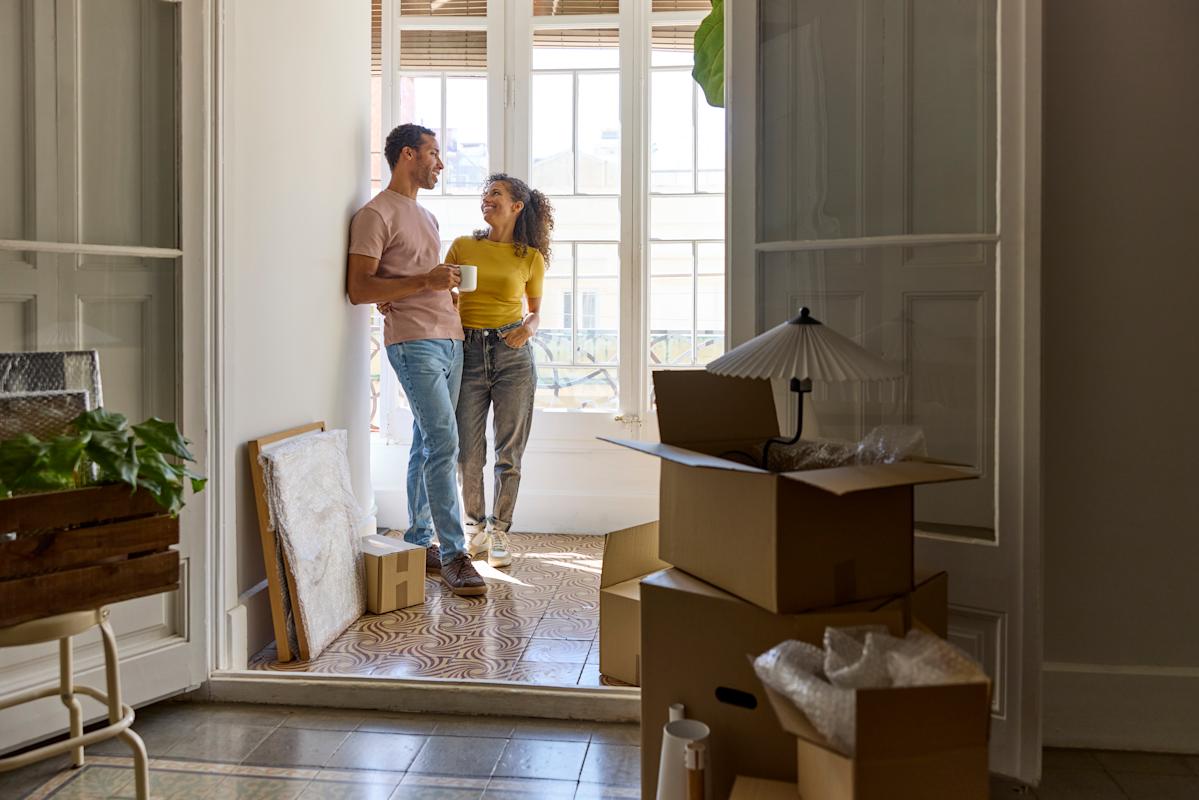
Did you know that less than 10% of homebuyers are unmarried couples? While it’s not very common for unmarried couples to buy together, it can be a great way to make homeownership more affordable.
However, unmarried couples face a few challenges that married couples don’t have when it comes to homeownership. For example, your state might not grant you the same property rights as a married couple would have.
As a former HUD-certified housing counselor and homebuyer educator, I highly recommend taking a few extra steps before buying a home with your partner. That includes discussing some key financial questions with one another, and consulting with a real estate lawyer to ensure you’ll both have the rights you deserve.
As an unmarried couple, you can apply for a mortgage together as co-borrowers, which means both of your names will be on the loan.
Similar to married homebuyers, unmarried couples have to qualify for a mortgage based on their combined information. Here are a few things to know about qualifying for a mortgage with your partner:
Income: Your combined income must be enough to cover the mortgage payments.
Credit: The lender will use the lowest credit scores between the two of you to determine what loan terms you qualify for.
Payments: You’ll both be held 100% responsible for the loan payments. If one fails to pay their portion, both will experience the same negative consequences, which can include late fees, credit damage, and potential foreclosure.
It’s natural to assume that having a mortgage gives you full ownership of a property. But that’s actually not the case. While the mortgage establishes who is responsible for paying the loan, the title establishes who is the legal owner.
So if you’re just on the mortgage and not the title, you could end up facing some big problems down the line. For example, your partner may be able to sell the home without your permission and without paying you back for your contribution.
Here are a few ways you can approach the title as a couple:
Sole ownership: One person has full ownership and responsibility.
Joint tenancy: Both of you have equal ownership and survivorship rights, meaning that one becomes the sole owner if the other passes away.
Tenancy in common: You own unequal shares. If one of you passes away, the other won’t inherit full ownership unless it’s specified in a will.
To avoid negative outcomes for one or both of you, I typically recommend choosing joint tenancy. However, each couple is unique when it comes to how they want to split the financial responsibilities and ownership of their property.
Buying a home will likely be the largest financial commitment you make together — don’t assume that the details will naturally work themselves out. Instead, take some time to discuss what you both want.
Here are some key questions to discuss with your partner before buying a home:
What are your credit scores? If one of you has bad credit, the other may want to apply alone.
Do you have any unpaid debt? If so, it could potentially result in a lien against the home.
How will you split the up-front costs, including the down payment, closing costs, moving expenses, and home furnishings?
How much will each of you contribute to the mortgage payment? What will you do if one of you can’t pay?
How will you split home maintenance and repairs costs? Who will do the labor?
What are your long-term plans for the property? Do they include renovations, selling at a later date, or other specifics?
What will you do with the property if you break up?
In addition to your preferences, you also need to consider the laws in your state regarding property rights for unmarried couples. Consulting with a lawyer can help you understand and protect your rights. But I recommend going one step further and having a lawyer write up your agreements in a contract.
A cohabitation agreement is a legal agreement that lets unmarried couples define how they’ll share the responsibilities and benefits involved with living together. You might think of it as similar to a prenuptial agreement.
Here’s what cohabitation agreements generally include when it comes to home ownership:
Costs: How you’ll split mortgage payments, utilities, home repairs, and other household expenses.
Benefits: Your rights to home equity and shared property, such as furniture, and if/when you need to reimburse each other for purchases.
Dissolution: What will happen to the home and other shared property if you break up or one of you passes away.
These agreements are essential because they guide your decisions as owners, help prevent disagreements, and they can reduce your chances of having a costly, drawn-out legal battle if you split up.
Note: Cohabitation agreements may not be enforceable in certain states, such as Mississippi, where cohabitation is technically against the law.
| PROS | CONS |
|---|---|
| Buying a home on your own might not be affordable | Your partner’s poor credit can negatively impact loan approval |
| Buying can be better for a couple’s long-term financial stability than renting | One of you may qualify for a better mortgage if you apply alone |
| Your marital status doesn’t impact your ability to qualify for a mortgage | You can be fully liable for the mortgage if your partner fails to pay |
| State laws may not give you the same legal protections as married couples |
It can be wise for an unmarried couple to buy a house together, as long as they agree up front on how they’ll split their financial responsibilities and take the time to have a lawyer outline the details of their arrangement.
Read more: Should unmarried couples have joint bank accounts?
Can an unmarried couple buy a house together and both be approved?
Yes. Just like a married couple, an unmarried couple can be approved for a mortgage together and purchase property as a couple.
It is not harder for an unmarried couple to buy a house, but the couple should take extra steps that married couples don’t have to take. This includes researching the relevant property laws in your state and having a lawyer draft a cohabitation agreement.
finance.yahoo.com
#unmarried #couples #buying #house