


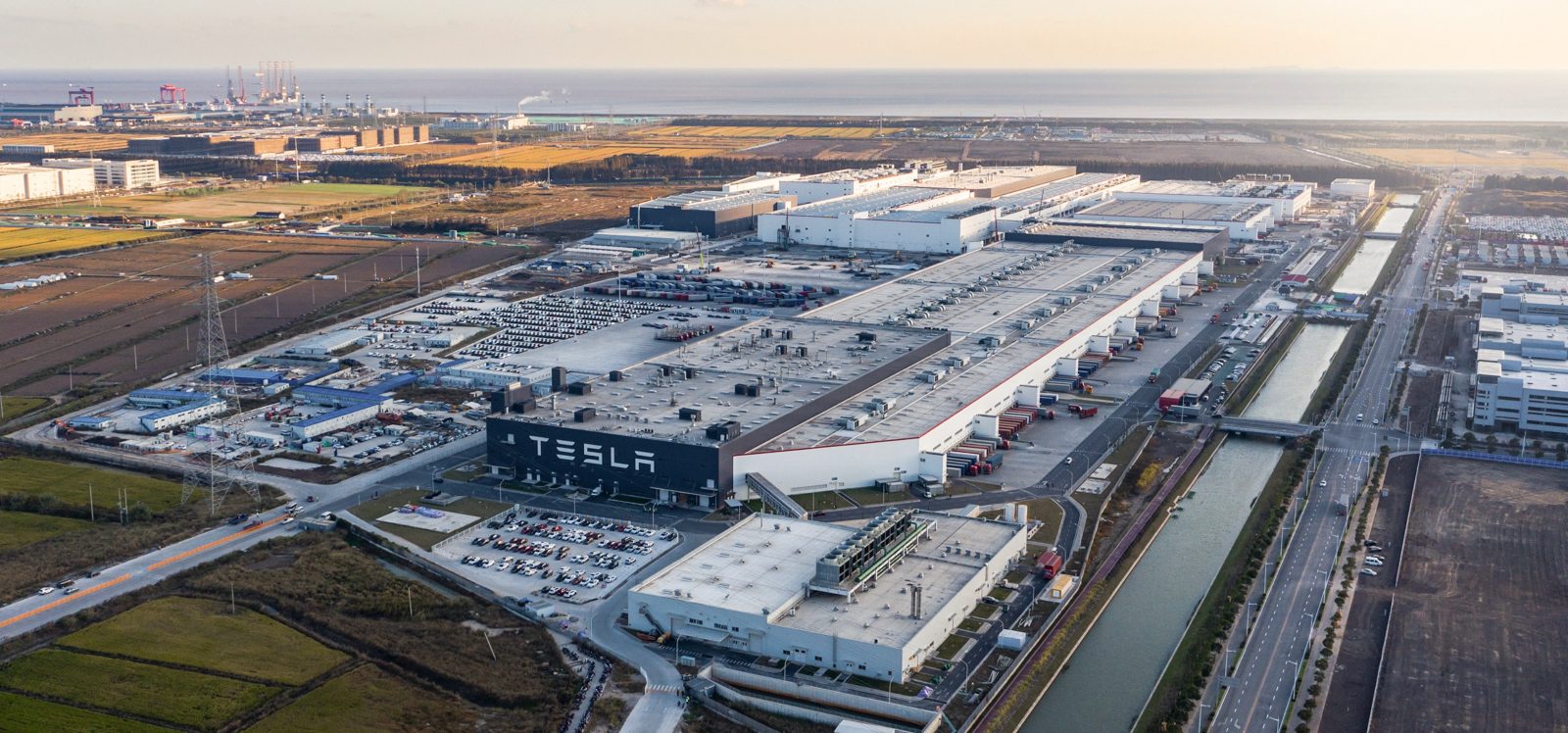
Tesla’s domestic sales in China collapsed 45% year-over-year in January, falling to just 18,485 units — the automaker’s lowest monthly retail figure in the country since November 2022. The data, released today by the China Passenger Car Association (CPCA), paints a grim picture of Tesla’s demand in the world’s largest EV market.
The figure represents an 80% plunge from December’s record-high 93,843 domestic deliveries. While seasonal declines between December and January are normal in China, a 45% year-over-year drop is not.
The wholesale number hides the problem
Tesla and its supporters will point to the wholesale number, 69,129 units out of Giga Shanghai in January, up 9.3% year-over-year. That figure includes both domestic deliveries and exports. On the surface, it looks fine.
But the breakdown tells the real story. Of those 69,129 vehicles, 50,644 were shipped to export markets, the second-highest export month on record behind October 2022’s 54,504 units. Exports surged 71% year-over-year. Only 18,485 units actually went to Chinese customers.
In other words, 73% of Giga Shanghai’s January output left the country. For context, in January 2024, about 44% of production was exported. In January 2025, it was 47%. Tesla is increasingly using its Shanghai factory as an export hub rather than a vehicle for Chinese demand.
Here’s how the January figures have trended:
| Jan 2023 | Jan 2024 | Jan 2025 | Jan 2026 | |
|---|---|---|---|---|
| Wholesale | 66,051 | 71,447 | 63,238 | 69,129 |
| Domestic retail | 26,843 | 39,891 | 33,703 | 18,485 |
| Exports | 39,208 | 31,556 | 29,535 | 50,644 |
| Export share | 59% | 44% | 47% | 73% |
The domestic retail trend line is ugly: from nearly 40,000 in January 2024 to under 19,000 two years later. That’s a 54% decline over two Januarys.
Model Y drops to 20th in China’s retail rankings
The competitive picture is equally concerning. According to retail sales data, the Tesla Model Y fell to 20th place among all passenger vehicles sold in China in January. The Xiaomi YU7, which we’ve covered extensively as a direct Model Y competitor, claimed the number one spot with 37,869 units sold, more than double Tesla’s entire domestic retail volume for the month.
On the Model 3 side, things are no better. Xiaomi’s SU7 already outsold the Model 3 in China for the first time in its full year of production, and in January, Xiaomi delivered over 22,000 SU7 units compared to roughly 8,000 Model 3s for Tesla.
Wholesale data shows Model Y accounted for 38,916 units (up 21% YoY) and Model 3 for 30,213 units (down 2.5% YoY), but those figures include exports and don’t reflect actual Chinese consumer demand.
Why so weak?
Several factors contributed to the January collapse, though none of them fully excuse the scale of the decline.
First, there’s the pull-forward effect. December 2025 was Tesla’s best-ever retail month in China at 93,843 units, as buyers rushed to purchase before the reinstatement of a 5% purchase tax on NEVs starting January 1, 2026. That tax had been fully exempted for over a decade. Some of January’s weakness is borrowed December strength.
Second, China’s vehicle trade-in subsidies expired in most cities in mid-November and remain in a transitional phase, dampening demand broadly.
Third, the broader NEV market was weak. China’s total passenger NEV retail sales fell 20% year-over-year in January to 596,000 units, according to CPCA estimates. Even BYD saw its NEV sales drop 30% year-over-year and 50% month-over-month.
But here’s the thing: even BYD’s weak month produced 210,051 units. Tesla’s 18,485 is a different universe.
The bigger trend
This isn’t a one-month anomaly. As we reported in January, 2025 was the first year Tesla experienced a year-over-year decline in domestic retail sales in China. Full-year retail sales fell 4.78% to 625,698 units, while wholesale deliveries from Giga Shanghai dropped 7.08% to 851,732 units.
The decline is accelerating. From 2024 to 2025, it was down 7%. Tesla’s share of China’s NEV market fell to 8% in 2025 from 10% in 2024.
And that’s despite Tesla responding with aggressive promotions, 0% financing offers, a first-of-its-kind 7-year ultra-low interest financing program at 0.5%, and RMB 8,000 insurance subsidies on the Model 3. These measures helped slow down the decline in demand, but it clearly can’t stop it.
The structural problem remains: Tesla is selling two aging models in the most competitive auto market on the planet, against domestic rivals that release fresh products every few months and undercut on price while matching or exceeding Tesla on technology.
Electrek’s Take
We’ve been tracking Tesla’s decline in China for over a year now, and the January numbers confirm the trend is getting worse, not better. Domestic retail sales of 18,485 units, in a market where Tesla once regularly delivered 70,000-90,000 vehicles per month, is devastating.
The wholesale number of 69,129 is being used to spin this as a positive story, and some outlets have done exactly that with headlines about “9.3% year-over-year growth.” But that growth came entirely from exports, not from Chinese consumers choosing Tesla vehicles, and it doesn’t mean that these cars are sold.
They could only be to fill the lots in Tesla’s foreign markets.
The competitive threat is real and accelerating. Xiaomi went from zero to over 400,000 vehicles in less than two years. The YU7 is now the best-selling passenger vehicle in all of China, and Xiaomi’s SU7 has already surpassed the Model 3. Tesla’s response, financing incentives and insurance subsidies, is the playbook of a brand losing market share, not pushing innovation.
Tesla will likely see a domestic rebound in February and March as it redirects Shanghai production toward local deliveries later in the quarter. But the year-over-year trajectory is clear. Unless Tesla brings something genuinely new to China, not just financing terms, this decline has no bottom in sight.


FTC: We use income earning auto affiliate links. More.
electrek.co
#Tesla #TSLA #sales #China #crash #lowest #level #years


