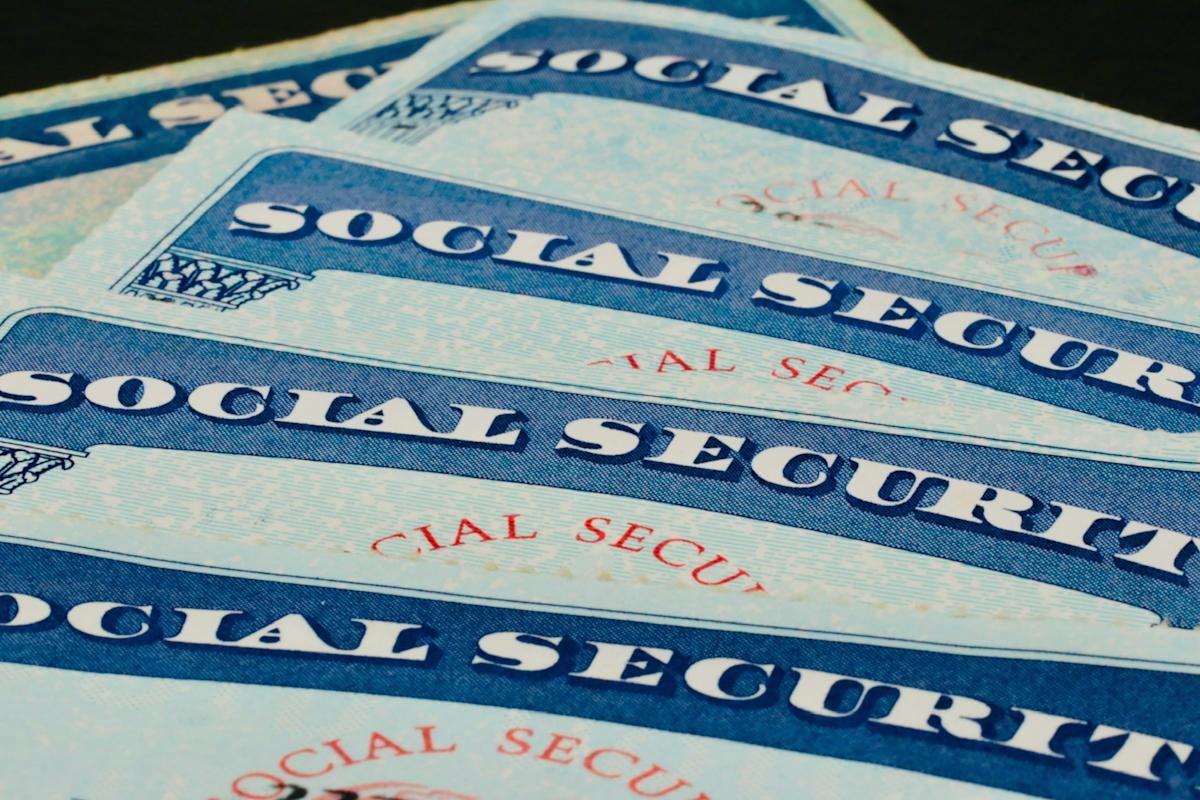
Take your Social Security at 62.
That’s the buzzy advice blowing up on TikTok and YouTube.
Droves of “finfluencers,” as these social media personalities doling out financial tips are called, have been posting videos and memes to justify starting Social Security retirement benefits at age 62 — the earliest age allowed — and then investing the money each month in stocks.
That argument is in stark contrast to what most financial advisers and retirement experts have been urging people to do for years, which is to delay tapping your benefit until age 70 if you can afford to, thereby reaping a larger monthly check for the rest of your life.
Delaying your Social Security benefits almost always makes total sense, Laurence Kotlikoff, a Boston University economics professor and Social Security expert, told Yahoo Finance.
“The biggest mistake people make when it comes to Social Security is taking Social Security too early at a much lower benefit,” he said. “For the vast majority of workers, delaying Social Security through age 70 is the optimal strategy.”
Setting aside that longstanding advice — for a moment — let’s take a closer look at the case for claiming benefits early.
Read more: What is the retirement age for Social Security, 401(k), and IRA withdrawals?
Lofty stock prices in recent months have created an atmosphere of possibility for investment returns that exceed the bump in your Social Security you get by waiting to claim benefits.
You can take Social Security as early as age 62, but your benefit can be slashed as much as 30% from what it would have been at your Full Retirement Age (FRA). For anyone born in 1960 or later, your FRA is 67.
If you delay benefits from your FRA until age 70, you earn delayed retirement credits. Those come to roughly an 8% increase for each year until you hit 70, when the credits stop accruing.
The S&P 500 has returned about 14% so far this year, and over the past decade, the average annual return with dividends is just over 12%.
So the argument goes that by investing your benefits in the market, you can easily make up for a smaller check with big investment returns.
While that could happen, no one has a crystal ball for future returns. The beauty of Social Security is that the larger benefit you get by delaying is guaranteed, risk-free, and it comes with an automatic annual inflation adjustment.
“The annual cost-of-living adjustments are most retirees’ only source of retirement income not subject to inflation risk,” Kathleen Romig, director of Social Security and disability policy at the Center on Budget and Policy Priorities, told Yahoo Finance. “That inflation protection is really important, because Social Security is the biggest source of income for most retirees.”
The stock market is a different animal, by nature vulnerable to short-term volatility and not insulated from rising inflation.
“Replicating the past decade’s stellar returns is not an easy feat — it would require unprecedented earnings growth, historically high valuations or a US dollar that continues to appreciate significantly,” according to Lukas Brandl-Cheng, a Vanguard investment strategy analyst.
And there is no guarantee that if the market drops significantly, as it did during the Great Recession, it will rebound quickly enough for retirees who will need those checks to meet their immediate spending needs.
Read more: How to find out your 2026 Social Security COLA increase
Leaving money on the table is an intentional decision for most non-retired Americans, as 7 in 10 report they understand that waiting longer to claim Social Security would increase their monthly payments, according to Deb Boyden, head of US defined contribution at investment manager Schroders.
For one thing, many people can’t afford to delay. They need those benefits immediately in retirement.
“The other reason leading many to tap into their benefits as soon as possible is a lack of confidence in the future of Social Security,” she said. “More than one-third of Americans fear that the money may not all be there if they decide to wait several years to claim their benefits.”
Deciding when to start Social Security doesn’t always come back to when your monthly payments will be the largest, Boyden added.
That’s especially true in this job market, where layoffs are mounting. If you lose your job and are nearing retirement, that can change your plans for claiming Social Security. A loss of income, combined with the difficult and often long road to landing a job again, often makes the decision to claim benefits at 62 a no-brainer.
“I’ve seen cases where claiming at 62 makes sense,” Alvin Carlos, a certified financial planner and financial adviser at District Capital Management in Washington, D.C., said. “Someone has health issues, for example, a family history of low longevity, or they really need the income now to cover non-negotiable living expenses.”
Also, for a married couple where both spouses have their own Social Security records, it often makes sense for the lower-earning spouse to claim their reduced benefit at age 62, he said. “This brings money into the household while allowing the higher-earning spouse to delay until age 70 and maximizes the couple’s total lifetime benefits.”
According to Ann Reilley, a certified financial planner and certified public accountant in Charlotte, N.C., there are a few reasons her clients consider claiming as soon as they can — but none involve investing the monthly check into equities, she said.
For instance, if they think they have a high likelihood of dying before age 81, or they need the cash flow, or if they are no longer working, Reilley said.
Her basic advice: “Otherwise, let the benefit grow by that 8% each year.”
Have a question about retirement? Personal finances? Anything career-related? Click here to drop Kerry Hannon a note.
Now for my two cents: Delayed Social Security isn’t necessarily the best choice for some people, no matter how smart it sounds on paper. But investing your benefits with the expectation of stellar stock market returns during the decades when you need the money to pay the bills is never an astute money move.
Kerry Hannon is a Senior Columnist at Yahoo Finance. She is a career and retirement strategist and the author of 14 books, including “Retirement Bites: A Gen X Guide to Securing Your Financial Future,” “In Control at 50+: How to Succeed in the New World of Work,” and “Never Too Old to Get Rich.” Follow her on Bluesky.
Sign up for the Mind Your Money newsletter
Click here for the latest personal finance news to help you with investing, paying off debt, buying a home, retirement, and more
Read the latest financial and business news from Yahoo Finance