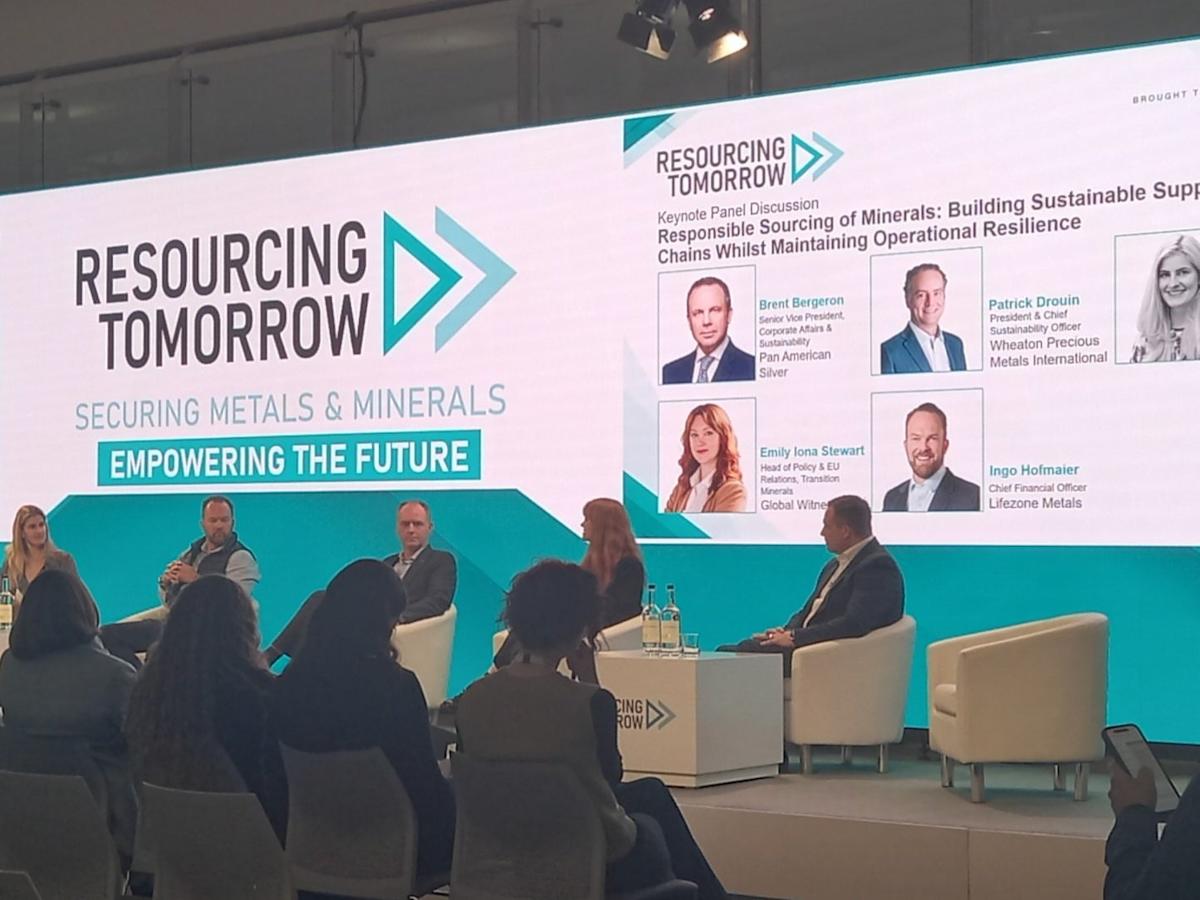
Talks on critical minerals will be the order of the day in one way or another for the thousands of guests attending the Resourcing Tomorrow mining event in London this week.
However, Brent Bergeron, Pan American Silver’s senior vice-president of corporate affairs and sustainability, expressed concerns that talks will fail to address issues around the buying and responsible production of artisanal commodities.
During the event’s discussion entitled ‘Responsible Sourcing of Minerals: Building Sustainable Supply Chains whilst Maintaining Operational Resilience’, Bergeron underscored the rapid growth of the artisanal market and the need to formalise the mostly unregulated sector through stakeholder collaboration.
According to Bergeron, the issue of artisanal mining did not arise in the first decade of his career as the company he worked for at the time had assets with no artisanal value.
However, on joining Pan American Silver six years ago, it appeared that at least 50% of their sites had the issue.
“It’s a subject, that I hope, especially listening to some of the conferences this morning with government, is not something that is going to be left aside or sidelined in the interest of critical minerals,” said Bergeron.
Artisanal and small-scale mining (ASM) has grown to become a significantly part of the broader global mining industry. The World Bank estimates it consists of at least 315 million workers worldwide, employing 45 million directly across 80 countries and an additional 270 million in related services.
The sector’s contributions to global commodity supply have grown considerably in both volume and range since the 1990s. Around 30 years ago it produced approximately 4% of the world’s gold, compared to 20% today.
According to the World Bank, the sector also supplies large shares of the world’s critical minerals, including 25% of its tantalum and an equal percentage of tin. The rising global demand for critical minerals for clean technologies such as battery storage, electric vehicles and wind farms provides the opportunity for ASM to become a more integrated part of the global economy.
Despite its scale, the artisanal sector’s largely unregulated status poses social and environmental risks such as poor health and safety and environmental degradation.
Bergeron spotlighted the artisanal gold market in Peru. “Around $8bn in gold makes its way outside the country on a yearly basis – it is not a small market – but where does it go? How does it get out? Which groups are in charge of it? These are the questions we are trying to answer.”
finance.yahoo.com
#stakeholder #collaboration #key #artisanal #sector #formalisation