


: After completing the five‑month Special Intensive Revision (SIR) process, the Election Commission of India (ECI) will publish the final electoral rolls for Uttar Pradesh on Friday (April 10).
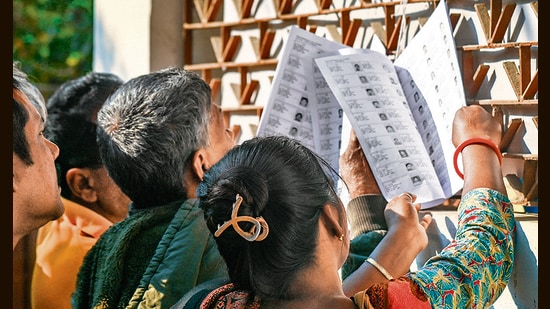
After deleting duplicate, deceased and shifted voters, adding new names, and accounting for demographic changes due to the migration of a large number of voters from urban hubs to rural areas, the updated list is expected to reshape contests in several assembly constituencies and set the pitch for the 2027 Uttar Pradesh elections.
The SIR exercise was announced on October 27 and commenced on November 4.
Political parties may have to redraw their strategy after the final rolls are published, as the SIR process likely transformed the voter lists of all 403 assembly constituencies, potentially influencing results in various seats.
Unlike West Bengal, the SIR process in Uttar Pradesh did not turn into a political flashpoint or trigger a slugfest between political parties.
Yet the parties—the ruling BJP as well as the Opposition SP, BSP and the Congress—expressed concern after the Election Commission of India (ECI) published draft electoral rolls on January 6, which deleted the names of around 28.9 million voters.
The draft rolls listed 125.5 million voters, down from 154.4 million voters in the rolls published on October 27, 2025 by the ECI after the special summary revision. The voter list in UP shrank by 8.7% (28.9 million). The number of voters is lower than the electorate size in UP during the 2014 and 2019 Lok Sabha polls in the state, and the 2017 and 2022 assembly polls.
Lucknow, Ghaziabad, Balrampur, Kanpur Nagar, and Meerut districts saw the highest deletions as a share of electors as on October 27. These districts saw 30%, 28.8%, 26%, 25.5%, and 24.7% names deleted from the rolls respectively. The lowest deletions occurred in constituencies having a large rural population, including Lalitpur, Hamirpur, Mahoba, Banda, and Jyotiba Phule Nagar, which saw 10%, 10.8%, 12.4%, 13%, 13.2% deletions respectively.
The draft rolls also witnessed the deletions of the names of more women (1.55 crore or 15.5 million) than men (1.34 crore or 13.4 million).The gender ratio declined from 877 (2025 voter list) to 824 women voters (draft electoral rolls per 1000 male voters.
The count of women voters is 5.67 crore (56.7 million) and there are 6.89 crore (68.9 million) men in the draft voter list.
As the ECI launched an intensive voter registration drive during SIR, the gender ratio is likely to improve in the final rolls.
Chief minister Yogi Adityanath drew attention to the deleted numbers during a meeting of Bharatiya Janata Party workers on December 14.
“These are not your opponent’s voters, 85 to 90% of these missing voters are ours,” he said.
The BJP asked its workers to launch a drive to add new voters to the rolls and to file objections with district election officers against the inclusion of ineligible names.
Samajwadi Party chief Akhilesh Yadav alleged that Form‑7 was misused to delete the names of many voters from certain communities and opposition supporters. Although the Election Commission rejected his claims, he formed PDA Praharis to keep vigil on the SIR process, track voter deletions, and oversee new enrolments.
Bahujan Samaj Party national president Mayawati constituted committees at the booth level in all 403 assembly constituencies to assist party supporters in enrolling new voters and monitor name deletions.
The ECI refuted the allegations of political parties and stated that due process was followed in the deletion of ineligible voters and inclusion of new voters.
After the initial trading of charges between parties, the SIR process continued smoothly in Uttar Pradesh .
Uttar Pradesh chief electoral officer (CEO) Navdeep Rinwa said the ECI took political parties into confidence during the SIR process.
“Regular meetings with representatives of the political parties were held at the state level under the chairmanship of the CEO as well as under the chairmanship of district election officers at the district level to dispose of apprehensions and issues raised by political parties,” he said.
“On the request of the political parties, the dates of the SIR process were revised four times, giving adequate time to the people as well as political parties to get the names of eligible voters enrolled,” he said.
To maintain transparency, parties were requested to appoint booth level agents at 162,000 booths in the state to work in coordination with the booth level officers appointed by the ECI. A total of 576,000 booth-level agents maintained watch on the addition of names of eligible voters and deletion of ineligible ones, he said.
ECI also outlined clear remedies for eligible voters whose names did not appear in the draft roll. A claims and objections window operated in all the districts during which any eligible voter, whose name was missing, could apply for inclusion by submitting Form-6. The voters found registered at more than one place were told to retain (their names) at only one verified location after scrutiny, Rinwa said.
He said that the disposal of Forms 6 and 7 was monitored in all districts.
Voters were told to check their names in the draft rolls through BLOs, the ECINet mobile application, the chief electoral officer’s website (ceouttarpradesh.nic.in) or the Election Commission portal voters.eci.gov.in.
Applications were also submitted offline through BLOs or voter registration centres at tehsil offices, or online through the ECINet app and ECI website. ‘Book a call with BLO’ facilitated the enrolment drive, he said.
ECI addressed SP chief’s allegations point-wise and incorporated political parties’ suggestions, he said.
Uttar Pradesh topped the country in citizen ratings on the National Grievance Service Portal (NGSP) among states where SIR was carried out.
KEY SIR NUMBERS IN UP
April 10 Final rolls publication date
5 months Duration of SIR process
403 Assembly constituencies
125.5 million voters January 6 draft rolls
28.9 million Names deleted in draft rolls
www.hindustantimes.com
#Special #intensive #revision #Final #rolls #Friday #set #pitch #reshape #contests


