


Support CleanTechnica’s work through a Substack subscription or on Stripe.
No subject divides CleanTechnica readers quite like a discussion of Tesla and its so-called Full Self Driving (Supervised) technology. Some believe FSD is a gift straight from heaven. I have an acquaintance who owns a Cybertruck (yeah, I know, right?). He swears the system is incredible, phenomenal, unbelievable, and several other superlatives not used in ordinary conversation.
Other readers have little good to say about the system, claiming it can fail to perform its job unexpectedly, primarily because it relies exclusively on cameras which can sometimes be blinded by sun, fog, sleet, snow, hail, or outwash from the wheels of a passing semi-trailer on a wet highway.
Institutionalized Obstinacy
There are lots of other advanced driver assistance technologies out there and they all rely on sensors other than cameras to perform properly. Elon, for all his attributes, is as pigheaded about “camera only” technology as RFK, Jr. is about vaccines. Such single minded insistence that he is right and the rest of the world is wrong is what concerns many people more than anything else.
For quite some time, the National Highway Traffic Safety Commission has been receiving reports from Tesla drivers about instances when their FSD system failed. Those failures led ultimately to serious injury or death. The number of such instances may not be large, but there have been enough of them that NHTSA has now moved its investigation into FSD up a notch to the “engineering analysis” phase — an indication that the agency is taking the issue seriously and believes it needs further study.
CNBC reports the probe potentially involves 3.2 million Tesla vehicles on the road in the US today. In an announcement this week, it wrote that Tesla FSD may sometimes fail, “to detect and/or warn the driver appropriately under degraded visibility conditions such as glare and airborne obscurants.” Around the hookah bar at CleanTechnica global headquarters, most of us were unfamiliar with the term “airborne obscurants,” but we think it refers to the crud that accumulates on our windshields while driving in winter conditions.
The agency website says,
“Available incident data raise concerns that Tesla’s degradation detection system, both as originally deployed and later updated, fails to detect and/or warn the driver appropriately under degraded visibility conditions such as glare and airborne obscurants. In the crashes that [the Office of Defects Investigation] has reviewed, the system did not detect common roadway conditions that impaired camera visibility and/or provide alerts when camera performance had deteriorated until immediately before the crash occurred.
“Review of Tesla’s responses revealed additional crashes that occurred in similar environments and where the system either did not detect a degraded state, and/or it did not present the driver with an alert with adequate time for the driver to react. In each of these crashes, FSD also lost track of or never detected a lead vehicle in its path.
“In upgrading [the investigation] to an Engineering Analysis, ODI will gather further information on the updated degradation detection system, including the status of updating vehicles and scope of compatible vehicles, the system’s visibility degradation detection capability, and alerts or warnings to the driver. Lastly, ODI will conduct analysis on six recent potentially related incidents.”
The probe was elevated to an “engineering analysis” after a string of complaints about collisions in which FSD was in use within 30 seconds of a crash, including one in which a Tesla driver who was using FSD struck and killed a pedestrian.
Tesla and Musk have staked their future on FSD with a fervor that worries some people. Next up is the introduction of the Cybercab, a two passenger vehicle that in theory will have no steering wheel and no pedals when it leaves the factory — although some prototypes have been spotted with a steering wheel in place. Elon has promised again and again (and again!) that the Cybercab will be the rocket that powers the next phase of explosive growth for the company.
Wall Street Is Bearish On Tesla
Wall Street — which is just another form of betting on predictions and is wrong as often as it is right — is not convinced. Business Insider reports that UBS analyst Joseph Spark and his team have lowered their outlook for first quarter deliveries. UBS maintains a Sell rating on Tesla stock with a price target of $352 — down about 8% from what the stock is trading at present.
Spark and his team predict Tesla will report 345,000 vehicle deliveries for the first quarter of 2026. While that is 2% more than Q1 of last year, it is an 18% decrease from the last quarter of 2025. “This compares to our initial 1Q26 forecast of 360k and is now -7% below Visible Alpha consensus of 371k,” the UBS team wrote.
Spark added that while EV deliveries may not be as significant for Tesla stock as they once were, they are still important. “While we expect sentiment will continue to overwhelmingly drive the stock, it is the auto business that helps fund Tesla’s cash flow and hence their investment for growth,” he said.
He added that investors may be focused on other areas such as AI and robotaxis. However, recent developments suggest the robotaxi market will be highly competitive, and investors are growing concerned that Tesla’s robotaxi efforts may not stand out.
“Recent investor feedback has been that Robotaxi and Optimus updates are slower/more muted than expected,” Spark said. “In the wake of Nvidia’s Alpamayo and other AV announcements, we also believe that there is growing sentiment that Tesla may not sustainably differentiate on robotaxis.”
Nvidia Gains New Autonomy Customers
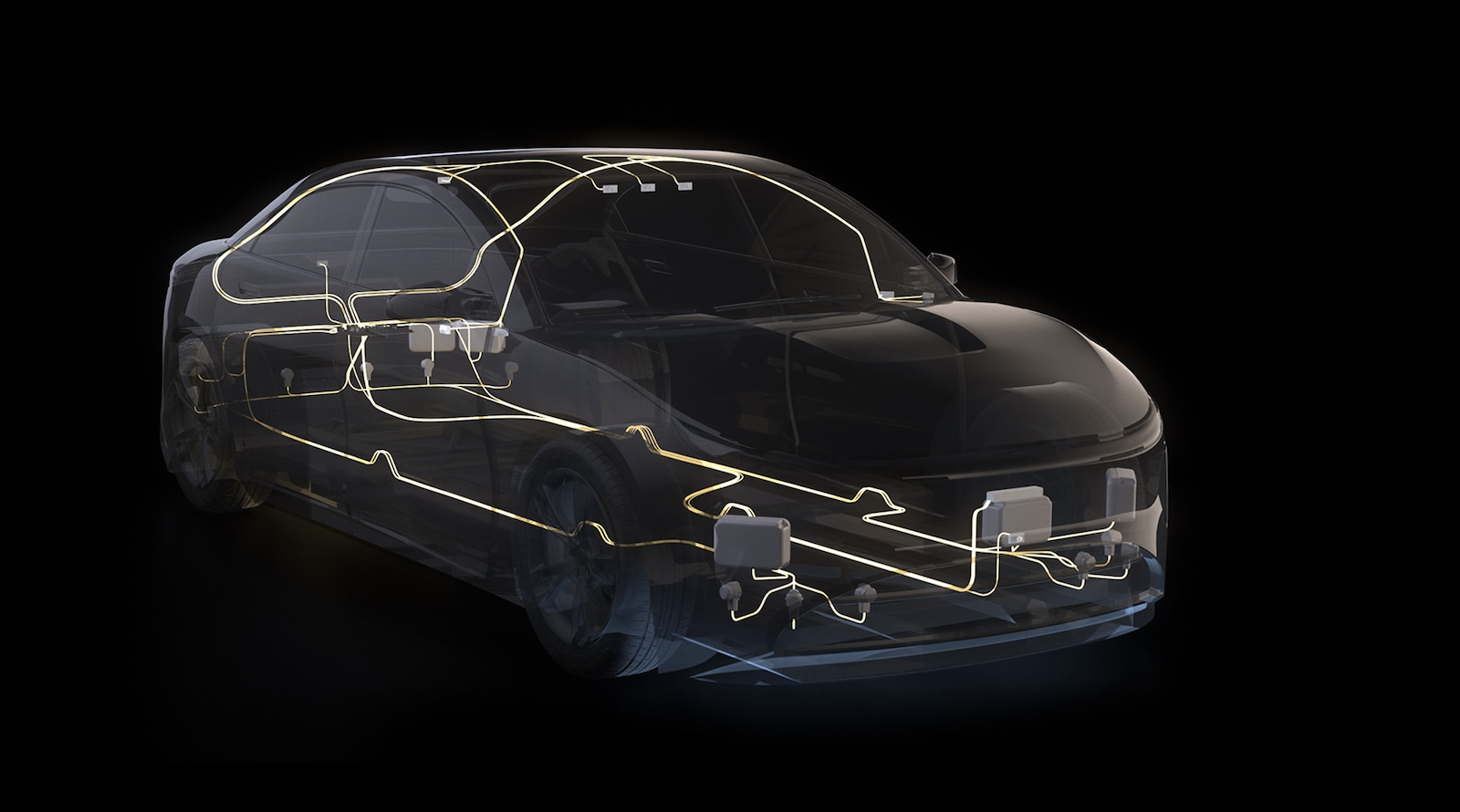
What Spark is referring to is the news this week that Nvidia has added a number of automakers to its autonomous vehicle development business. The list includes Hyundai, Nissan, and Isuzu, as well as BYD and Geely. Nvidia calls its technology the Drive Hyperion. The system helps companies develop and deploy driver-assist and autonomous driving capabilities for Level 4 autonomous vehicles that will be able to drive without human intervention under predefined areas or circumstances.
“We’ve been working on self-driving cars for a long time. The ChatGPT moment of self-driving cars has arrived,” Nvidia CEO Jensen Huang said this week. “We now know we could successfully autonomously drive cars, and today, we are announcing four new partners for Nvidia’s robotaxi-ready platform. The number of robotaxi-ready cars in the future are going to be incredible.”
According to CNBC, the new companies add to a growing list companies that have chosen Nvidia technology to power their autonomous driving vehicles. Sharp-eyed readers may recall at the beginning of the EV revolution, most automakers thought they would manufacture their own battery cells — until they found out how challenging the business is.
Today, instead of umpteen companies reinventing the wheel, automakers are finding it is a lot easier — and cheaper — to let companies which specialize in battery manufacturing like CATL and BYD do what they do best while the car companies do what they are best at — making cars and trucks.
Perhaps a similar trend in AV technology is now evident. Creating those systems takes huge amounts of time and money. Maybe the future of autonomous vehicles does not involve every car company creating its own self driving technology but letting the specialists do it instead.
Between the NHTSA investigation and Nvidia’s leap into the autonomous vehicle space, the prospects for Tesla seem a little less bright today than they did 6 months ago. The solons of Wall Street seem to agree.
Sign up for CleanTechnica’s Weekly Substack for Zach and Scott’s in-depth analyses and high level summaries, sign up for our daily newsletter, and follow us on Google News!
Have a tip for CleanTechnica? Want to advertise? Want to suggest a guest for our CleanTech Talk podcast? Contact us here.
Sign up for our daily newsletter for 15 new cleantech stories a day. Or sign up for our weekly one on top stories of the week if daily is too frequent.
CleanTechnica uses affiliate links. See our policy here.
CleanTechnica’s Comment Policy
cleantechnica.com
#NHTSA #Elevates #Tesla #FSD #Probe #Engineering #Analysis


