Support CleanTechnica’s work through a Substack subscription or on Stripe.
Or support our Kickstarter campaign!

It’s another case of out of the frying pan, into the fire for beleaguered US President Donald Trump. Commodities experts are calling his new critical minerals overseas plan BS, partly because it shovels the US into more danger zones around the world. Meanwhile, if the idea is to find alternate supply chains outside of China, innovators right here in the US have come up with a more secure and sustainable solution: harvest critical minerals — including those needed for EVs, solar cells, and the like — from the nation’s copious store of industrial, mining, and electronics waste.
One Person’s Trash …
Of course, there’s a catch. Rare earths and other critical materials are notoriously expensive to extract and refine. They are not actually rare as in rarely found, they are rare as in costly to render into a usable material.
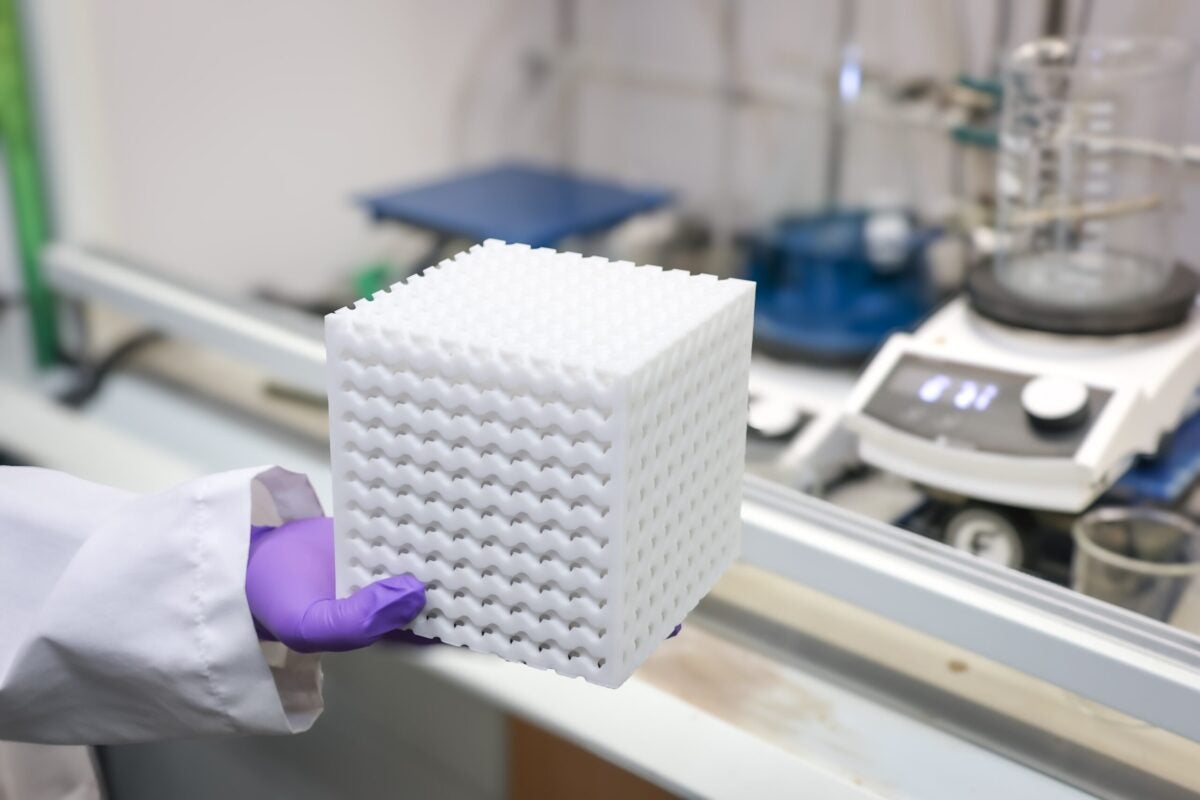
The newly launched US startup Supra Elemental Recovery is among the materials innovators to come up with a solution. Instead of extracting rare earths from virgin feedstocks through conventional refining processes, the Texas-based firm has developed a sponge-like, cartridge-style filter that can recover high-purity critical minerals from a dissolved solution of industrial waste.
“Early results indicate up to 100 times greater selectivity and speed compared to incumbent refining methods, enabling higher purity and lower costs,” Supra explained in a press statement on February 3.
That remains to be seen, but so far investors like what they see. In its February 3 launch announcement, Supra also noted that it earned $2 million in an oversubscribed pre-seed funding round to fine-tune its cartridges. Crucible Capital spearheaded the round, with the University of Texas Seed Fund, Climate Capital, Portmanteau Ventures, and Pew Protection Trust also weighing in.
A High-Tech Sponge To Soak Up Critical Minerals
Supra’s sponge is not likely to find a place next to the kitchen sink. The cartridge is a 3-D printed structure developed over a long period of R&D. The company lists advances in supramolecular chemistry, materials science, and fluid dynamics among the labwork that went into designing the new cartridge, with surpamolecular referring to structures made up of multiple molecules.
If you caught that thing about the University of Texas, that’s the key to the whole thing. UT contributed to $250,000 to Supra’s pre-seed round as part of its “Discovery to Impact” fund for technology spinoffs, of which Supra is one.
In an announcement of its own on February 4, UT noted some addition features of the cartridge and its inventors.
“Leading extraction methods struggle to achieve high purity and effectively separate different critical minerals from each other. They also involve significant machinery and high-costs, and they produce toxic chemicals harmful to the environment,” UT explains.
In contrast, the new cartridge — which is reusable — acts like a high-tech sponge, soaking up waste dissolved in water, alcohol, or other simple solvents.
“The technology combines the best aspects of solvent extraction and ion exchange methods for refining minerals into a reusable and high-performing cartridge that can be customized and scaled to meet the needs of U.S.-based manufacturers, mines and industry partners interested in recovering or sourcing high-grade critical minerals,” UT elaborates.
Katie Ullmann Durham, co-founder and CEO of Supra, also chipped her two cents into the UT announcement. “We’re ushering in a new era where we can profitably recover these elements from a wide range of domestic sources to restore America’s resource dominance,” she said.
Recycle, Reuse, Or Get Bogged Down In Conflict Zones
UT credits two of its inventors with combining their two fields in a unique way: the award-winning chemist Zachariah Page and the semiconductor and nano-manufacturing expert Jonathan Sessler, who is known as “one of the fathers of supramolecular chemistry.”
Stay tuned for updates. Next steps for the Supra team include setting up a commercial-level demonstration later this year.
In the meantime, let’s take a look at what the US is skipping if it begins mining for critical minerals in its own waste pits, instead of getting involved in more hotspots around the world.
Where to begin? Let’s start with Venezuela, which is not necessarily on President Trump’s wish list for critical minerals, but it does serve his administration as a launchpad for selling the plan to the American public, or at least to his sycophants in office and his braindead MAGA followers.
On February 4, Vice President Vance spoke before a group representing 54 trading partners of the US to make a compelling case for why the US and its partners need an alternate supply of critical minerals. He accomplished that much, but he also jumped into a steaming hot mess when he used Venezuela as an example of how the US aims to go about doing it.
“So, I remember after our very wildly successful military operation in Venezuela, the President of the United States was talking with me and Marco and some of the other senior members of the Cabinet…,” Vance said.
If you had to stop at “very wildly successful,” no-one will judge you. However, Vance did go on.
“… And he was talking just about how important it was that we ensured that the global economy had access to oil and gas, many years in the future. And that, of course, is one of the reasons why we’re interested in Venezuela, is because it has such a critical importance in this all-important resource called oil,” Vance continued.
Considering that the event was titled “Critical Minerals Ministerial,” all this talk of Venezuelan oil and wild success is by way of saying that if Trump doesn’t get what he wants, he’ll kidnap your head of state and leave your country in the same situation it was in, or far worse.
Venezuela was such a disaster that even Trump’s friends in the US oil industry pooh-poohed the idea of sending their precious staff in to somehow fix up the country’s aging oil infrastructure while armed gangs control the country. Finding buyers for all that extra oil is also going to be a tough row to hoe if it ever happens, given the saturated oil market of today.
As for why Vance didn’t lead with Trump’s critical minerals “peace deal” between Rwanda and the Democratic Republic of Congo, that’s a good question. The deal was signed in December, even as fighting continued in the eastern part of the DRC.
Le Monde was among the news organizations to suggest that the deal is not what Trump thinks it is. “Rwandan Paul Kagame and his counterpart from the Democratic Republic of Congo (DRC), Félix Tshisekedi … avoided shaking hands or even making eye contact so conspicuously that Trump allowed himself a touch of irony: ‘Look at the way they love each other!’”
Well, at least that’s on brand. Everything’s a joke to a man who thinks he can get away with everything.
Image: A new, 3-D printed, reusable sponge-like cartridge can soak up critical minerals from mining, industrial, and electronic waste (courtesy of UT).
Support CleanTechnica via Kickstarter

Sign up for CleanTechnica’s Weekly Substack for Zach and Scott’s in-depth analyses and high level summaries, sign up for our daily newsletter, and follow us on Google News!
Have a tip for CleanTechnica? Want to advertise? Want to suggest a guest for our CleanTech Talk podcast? Contact us here.
Sign up for our daily newsletter for 15 new cleantech stories a day. Or sign up for our weekly one on top stories of the week if daily is too frequent.
CleanTechnica uses affiliate links. See our policy here.
CleanTechnica’s Comment Policy
cleantechnica.com
#Solution #Critical #Minerals #Recycling #Conflict #Zones
![How CATL is changing EV battery tech in Europe [Video]](https://i1.wp.com/electrek.co/wp-content/uploads/sites/3/2025/09/CATL-12.jpg?quality=82&strip=all&w=1600&ssl=1 "How CATL is changing EV battery tech in Europe [Video]")