


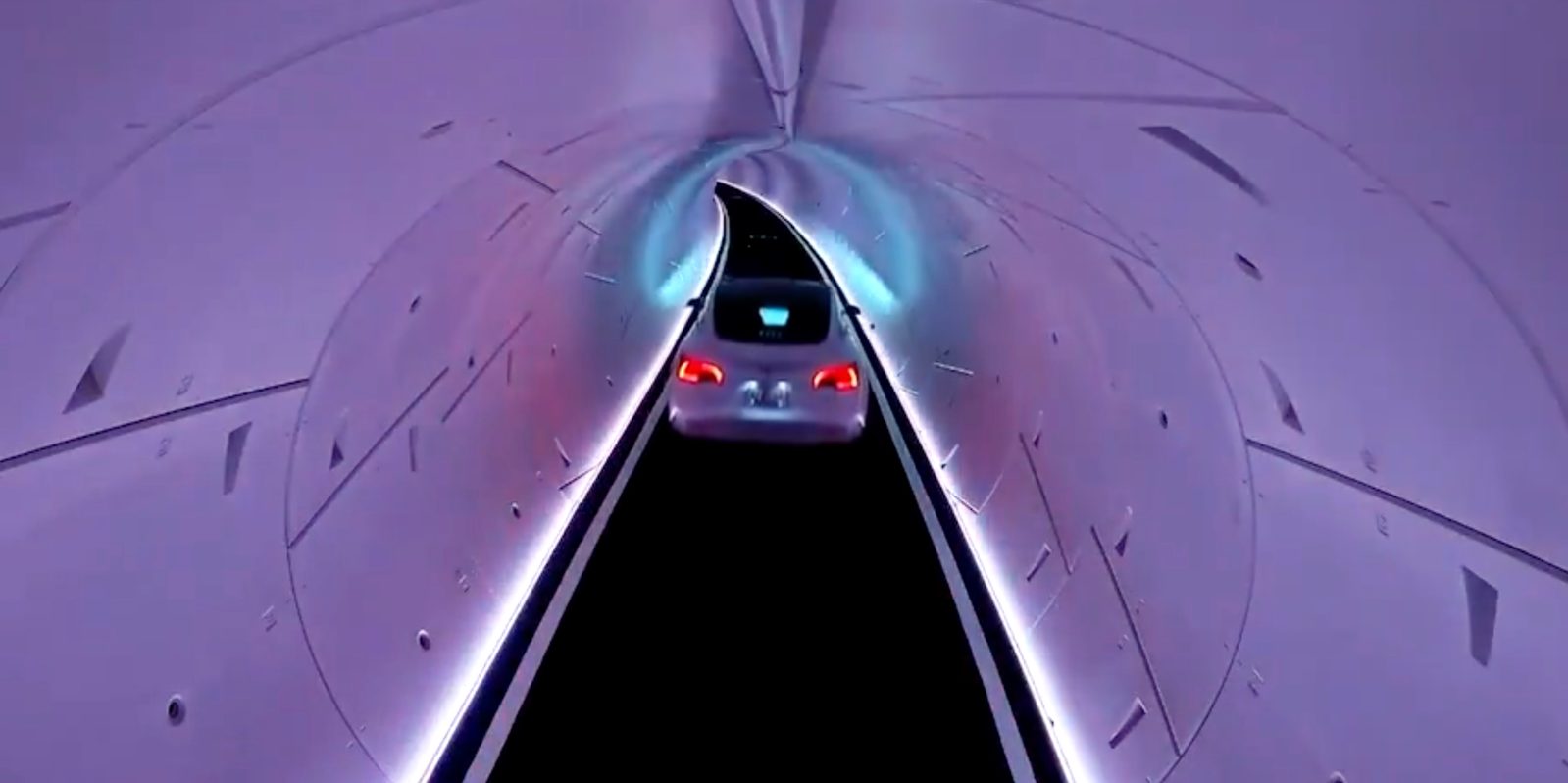
Nashville’s Metro Council voted 20-15 to formally oppose the Boring Company’s Music City Loop, a proposed 13-mile underground tunnel system that would shuttle passengers in Tesla vehicles between downtown Nashville and the airport.
The non-binding resolution signals growing resistance to a project that the state of Tennessee is pushing forward anyway, with bills in the legislature to strip Nashville of oversight authority over the tunnel.
Nashville doesn’t want it, Tennessee is forcing it
The Metro Council resolution, introduced by Councilmember Delishia Porterfield, cited the Boring Company’s “lack of transparency, inadequate community and Metropolitan Council engagement, and troubling labor and safety practices.” The vote was 20-15, with two abstentions.
The resolution can’t actually stop the project. Gov. Bill Lee’s administration already secured joint approval from the Tennessee Department of Transportation and the Federal Highway Administration for the tunnel lease and permits. The route to the airport runs almost entirely under state-controlled roads, reducing the need for city easements.
But the state legislature is going further. Senate Majority Leader Jack Johnson has sponsored multiple bills to centralize control of underground transit projects at the state level. One bill (SB 2205) would create a new 11-person “Subterranean Transportation Infrastructure Coordination Authority”, appointed entirely by the governor, lieutenant governor, and House speaker, with the power to override local government decisions. Another bill (SB 1673) would strip Nashville’s property assessor of the ability to determine the value of the Boring Company’s assets in the city, sending that authority to the state comptroller instead.
This is a remarkable level of state intervention to protect a single private company’s infrastructure project from local democratic opposition.
The Boring Company has never proven Loop can match public transit capacity
Here’s the fundamental problem with the Loop concept: Elon Musk has been promising for nearly a decade that his tunnel system would outperform traditional public transit in capacity, and he has never provided proof.
I personally asked Musk in 2018, when the Boring Company unveiled its first test tunnel in LA, if he had any simulation showing that the Loop system could match or exceed the capacity of a subway. He told me it was coming shortly. Nearly eight years later, we’re still waiting.
What we do have is the Vegas Loop — the only operational Loop system in the world — and its numbers tell a very different story than Musk’s promises. The Las Vegas Convention Center Loop, a 1.5-mile system with three stops, handles around 4,000-4,500 passengers per hour during peak times. The expanded Vegas Loop, now at five stations and 2.2 miles, moves about 30,000 passengers per day during its peak, but sits under capacity most of the time.
Compare that to actual public transit. London’s Victoria Line moves 10,000 passengers per hour. A standard rapid transit subway system handles 30,000 or more passengers per hour per direction. Even a light metro system, the lowest tier of rail transit, can handle 15,000-30,000 passengers per hour per direction, according to World Bank data.
The math is straightforward: a Tesla carries 4-5 passengers. A single subway train carries over 1,000. No amount of tunnel speed or autonomous routing changes the fact that you’re moving people in cars instead of trains.
Musk has claimed that a fully built-out Loop could hit 57,600 passengers per hour per lane by running autopods at 155 mph with 16 passing every second. The Boring Company’s own website targets 90,000 passengers per hour for the completed Vegas Loop. But these are projections for a system that doesn’t exist. The real-world numbers from what does exist, the only Loop in operation, show capacity orders of magnitude below a subway.
The Vegas Loop’s track record isn’t reassuring
Beyond capacity, the Boring Company’s operational track record in Las Vegas raises serious questions. Nevada’s occupational safety agency fined the company $400,000 in May 2025 after two firefighters suffered chemical burns during a training exercise in Loop tunnels. In October 2025, the Boring Company was fined nearly $500,000 for dumping drill fluid into the Clark County sewer system.
In 2024, the National Council for Occupational Safety and Health named the Boring Company’s Vegas work among the “Dirty Dozen” worst workplace safety offenders in the United States.
And the Nashville project itself is already showing cracks. As we reported in November, a key subcontractor, Shane Trucking and Excavating, walked off the Music City Loop job after receiving only 5% of what it was owed. The Boring Company blamed “invoicing errors.”
Transit experts have also raised a critical long-term concern: building a network of car-sized tunnels under a city effectively blocks future construction of a properly scaled subway system. The tunnels are too small for trains, and their presence makes routing a real transit line far more difficult and expensive.
The Music City Loop’s unanswered questions
The Boring Company says it will pay for construction itself as a “long-term investment” to be recouped through rider fares. But the company hasn’t disclosed how much rides will cost, what the construction budget is, or how long it will take to recoup expenses. The 13-mile system is supposed to connect downtown Nashville to the airport in 10 minutes, with the first section targeted for the first quarter of 2027.
The company’s initial Miami proposal from 2022 has gone nowhere. The Dodger Stadium tunnel announced in 2018 was never built. The Chicago O’Hare Express Loop was canceled. The pattern is consistent: bold announcements followed by quiet failures.
Nashville would be only the second city to actually get a Loop system, and the first to get one despite active opposition from local government.
Electrek’s Take
The Loop concept has always suffered from a fundamental problem that Elon Musk has never addressed: it replaces high-capacity public transit with low-capacity private vehicles in tunnels. The entire value proposition of underground transit is that you move massive numbers of people through a fixed corridor. Putting individual Teslas in tunnels instead of trains defeats the purpose.
I asked Musk directly for a simulation proving Loop’s capacity advantages in 2018. He said it was coming. Eight years later, the only data we have comes from a 2.2-mile system in Las Vegas that moves fewer passengers per hour than a single subway line. That’s not a revolution in transit, it’s a downgrade.
What makes the Nashville situation particularly concerning is the state government’s eagerness to override local opposition. The Tennessee legislature is creating new oversight authorities and stripping Nashville of tax assessment powers specifically to protect this one project. Musk’s buying of polical power is paying off.
If the Loop system is so clearly superior to public transit, why does it need this level of political protection from democratic scrutiny?
We think the answer is that it can’t survive scrutiny. Until the Boring Company publishes actual capacity data, independent safety audits, and credible financial projections, cities are right to be skeptical. Nashville’s Metro Council has it right.


FTC: We use income earning auto affiliate links. More.
electrek.co
#Nashville #opposes #Elon #Musks #Loop #tunnel #decade #proof #beats #subway


