Elon Musk, CEO of SpaceX and Tesla, attends the Viva Technology conference at the Porte de Versailles exhibition center in Paris on June 16, 2023.
Gonzalo Fuentes | Reuters
At Tesla’s factory in Fremont, California, the automaker plans to make robots instead of its older cars, as it gears up to spend $20 billion this year to fund what it views as a business transformation.
“Forget the Tesla you knew,” wrote analysts at Canaccord Genuity, in a note following Tesla’s fourth-quarter earnings report. “The Tesla of yesterday is gone. We believe Elon Musk has reached a definitive ‘burn the ships’ inflection point — a total commitment to a vision that leaves no room for retreat.” The analysts recommend buying the stock.
After capital expenditures dropped 24% last year to $8.6 billion, Tesla indicated on Wednesday that the figure will more than double in 2026 as the company shifts business away from electric vehicles, and further into artificial intelligence, with a focus on driverless technology, humanoid robots and, eventually, the chips that underpin these long-promised ambitions.
Tesla shares dropped 3.5% to close at $417.89, bringing their January drop to more than 7%.
Automotive revenue, which still accounts for about 70% of Tesla’s business, declined 10% in 2025, as the company failed to offer new EV models and faced heightened competition across the globe, especially from China’s BYD and Volkswagen and BMW in Europe. Total revenue at Tesla fell last year for the first time on record.

On the earnings call following the report, Musk said the company is ending production of its Model S sedan and Model X SUVs, which combined made up less than 3% of the company’s delivery volume last year, but helped Tesla make EVs mainstream.
Musk said the lines that were producing those models in Fremont will be converted into a factory for building Optimus robots, which have yet to hit the market. The company has touted Optimus as a bipedal, intelligent robot that will someday be capable of everything from factory work to surgery and babysitting. He admitted that Optimus is still not in usage in Tesla factories in a “material way.”
In 2024, Musk said Optimus could eventually make Tesla a $25 trillion company (the market cap sits at $1.4 trillion today) and last year said that 80% of Tesla’s value will eventually come from the robots.
Tesla didn’t specify on this week’s earnings call how much of the $20 billion in capex this year will be dedicated to Optimus. CFO Vaibhav Taneja said the money will go towards initiatives at six factories, including a refinery for making battery storage, as well as towards development of its driverless Cybercab, Semi electric truck and Optimus factory.
“On top of it, we’ll also be spending money for building our AI compute infrastructure, and we’ll continue investing in our existing factories to build more capacity and then also the related infrastructure to go along with it,” Taneja said.
‘Early stages of Optimus’
While Musk said that the company is planning to spin up a production line for Optimus that can build a million units per year, he acknowledged that, “we’re still very much at the early stages of Optimus,” and referred to it as a research and development project.
“We wouldn’t expect to have any kind of significant Optimus production volume until probably end of this year,” said Musk, who is notorious for missing self-imposed deadlines.
In addition to its Optimus pursuits, Tesla plans to expand its Robotaxi ride-hailing fleet in the U.S., and is still working to to fulfill its decade-old promise to deliver a self-driving system that makes its cars safe to use without a human driver ready to steer or brake at any time.
In 2025, Tesla launched a Robotaxi-branded ride-hailing app, and has been running a pilot service in Austin, Texas. Last week, Tesla executives said they had taken human safety supervisors out of a handful of cars in the Austin fleet to conduct driverless passenger rides. The company also started a service in the San Francisco area last year, but with a driver at the wheel.
The company said in its investor deck on Wednesday that it plans to have coverage in seven additional U.S. markets in the first half of this year. Those cities are Dallas, Houston, Phoenix, Miami, Orlando, Tampa and Las Vegas.
A Tesla Optimus robot hands out candy in front of the Nasdaq MarketSite in New York, US, on Monday, Oct. 27, 2025.
Michael Nagle | Bloomberg | Getty Images
In addition to all the technical challenges and financial commitments involved with robots and driverless cars, Tesla faces hefty competition in both areas. Alphabet’s Waymo is rapidly expanding its robotaxi service in the U.S., while Baidu’s Apollo Go is growing in China. And in robots, Apptronik and Boston Dynamics are among the U.S. players, with companies like Unitree and Agibot in China.
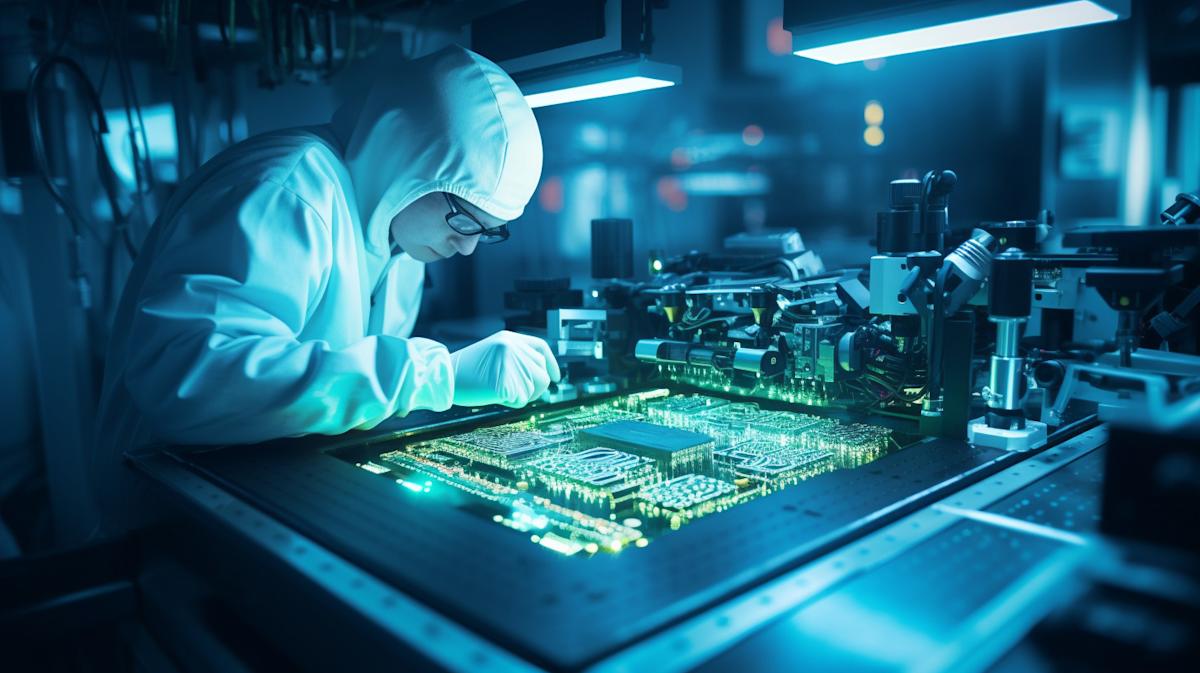
One other area where Musk said the company expects to spend big is in chips. He said key suppliers like Samsung, Taiwan Semiconductor Manufacturing Co. and Micron can’t possibly produce enough hardware to satisfy Tesla’s needs.
“In order to remove the constraint, the probable constraint in three or four years, we’re going to have to build a Tesla TeraFab, a very big fab that includes logic, memory and packaging domestically,” Musk said. “And that’s actually also going to be very important to ensure that we are protected against any geopolitical risks.”
He added that, “We’re going to be paranoid and make sure that we can continue to build batteries and robots and AI chips no matter what happens.”
The spending target for this year doesn’t include any TeraFab plans, Taneja said. Nor does it account for Musk’s vision to begin solar cell manufacturing in the U.S.
Analysts at Barclays, who recommend holding Tesla’s stock, wrote in a report on Thursday that while autos may still be the company’s core business, the end of the Model S and X “marks the symbolic baton pass” into “physical AI.”
“In case it wasn’t clear before, it’s more than abundantly clear now that Tesla is not an auto company,” the analysts wrote.

www.cnbc.com
#Musks #billion #spending #plan #signals #Tesla #yesterday