Mercedes-Benz is ready to jump both feet into the yoke future and is taking a page out of the aviation industry’s playbook all in one motion.
On Thursday, Mercedes-Benz debuted what will be an optional steer-by-wire system that will be combined with a yoke when the refreshed EQS electric flagship hatchback arrives in the U.S. later this year. It’s futuristic, and in some ways improves upon systems, and yokes, that have come before it. Whether the EQS is the right place for this is another debate.
In March, in Faro, Portugal, at the Mercedes-Benz GLC electric launch the German automaker let me slide into the driver’s seat of a pre-production refreshed EQS, which was camo-clad on the exterior, to experience the new steer-by-wire system and yoke. The short version? The system’s more polished than the Lexus steer-by-wire system and yoke, which never did end up coming to the U.S. market (so far, anyway), and yet, the EQS both does and doesn’t feel like the right place for this option.
The steer-by-wire system uses two parallel signal input paths for redundancy, just like in an airplane. If one signal path fails the secondary path immediately takes over so the driver doesn’t lose steering inputs. It’s a temporary, but important, backup and meant to ensure a driver can pull over safely in the case of an issue. Should both signal paths somehow fail the system is packaged with Mercedes rear-wheel steer option, which dials in up to 10 degrees of rear wheel steering input, and a third input will kick in to control the rear-wheel steering to enable the driver to pull over slowly.
The system runs on a variable ratio that’s speed driven, which means the faster the car goes the slower the ratio and vice versa. Unlike Tesla’s system, but just like the Lexus setup, there’s only 180 degrees of steering input. No one’s going to be stuck in a hand-over-hand situation like in a Tesla, with its horrid implementation of a yoke.
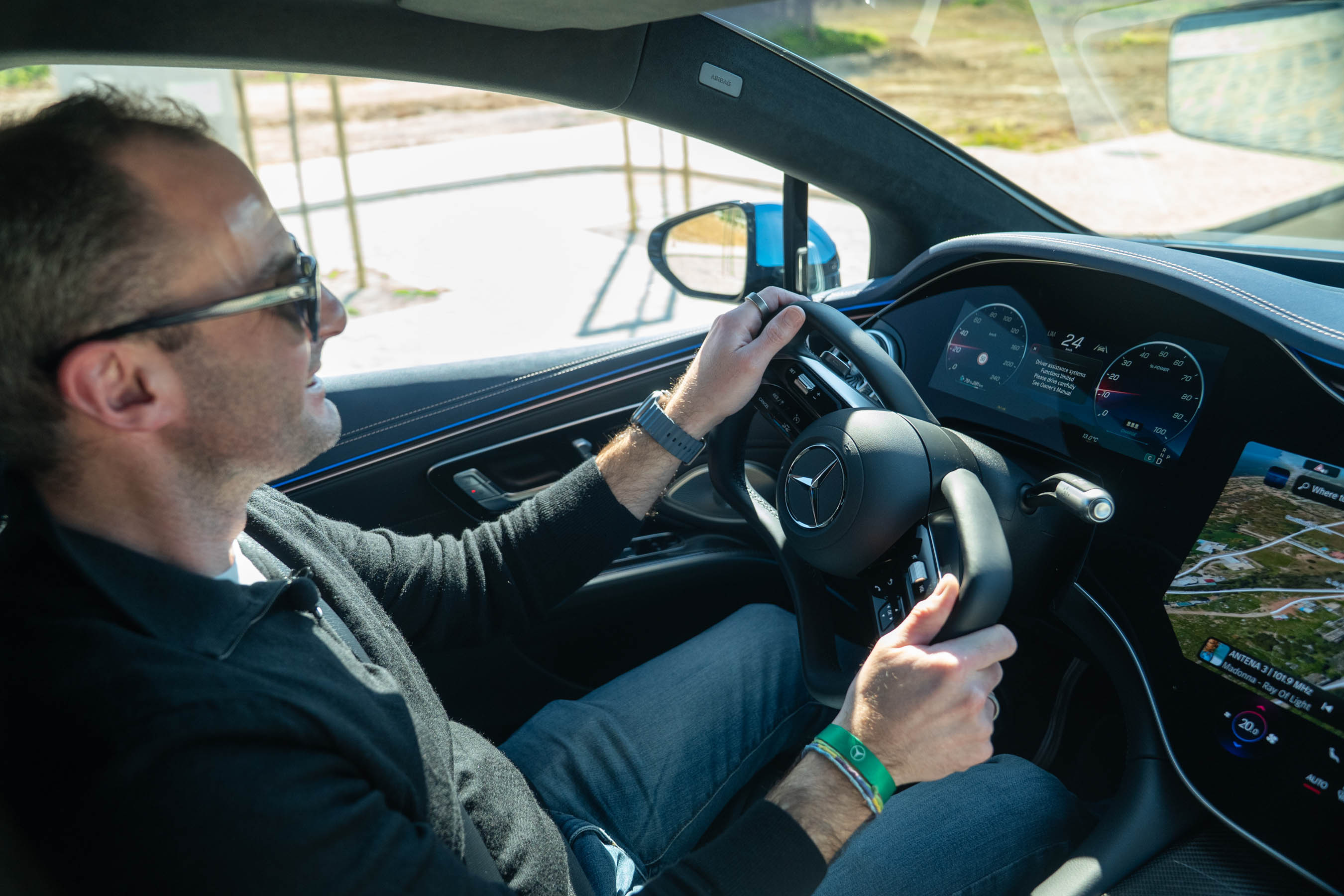
The yoke itself is different in design compared to both what Tesla CEO Elon Musk tried, and failed, to hock; and what Lexus revealed, launched, but never brought to the U.S. market. Whereas the Lexus yoke is shaped like a butterfly and Tesla’s yoke was half a rectangle, Mercedes has removed both the upper and lower portions of a traditional round steering wheel and closed off both sides of the grips. The result? A yoke that basically forces proper nine-and-three hand placement and kind of feels like it belongs in a race car. The center connecting twin spokes are a modified version of today’s steering wheel found in plenty of Mercedes products with silver hard toggles augmented by frustrating touch-based buttons. These should’ve been redesigned with the yoke.
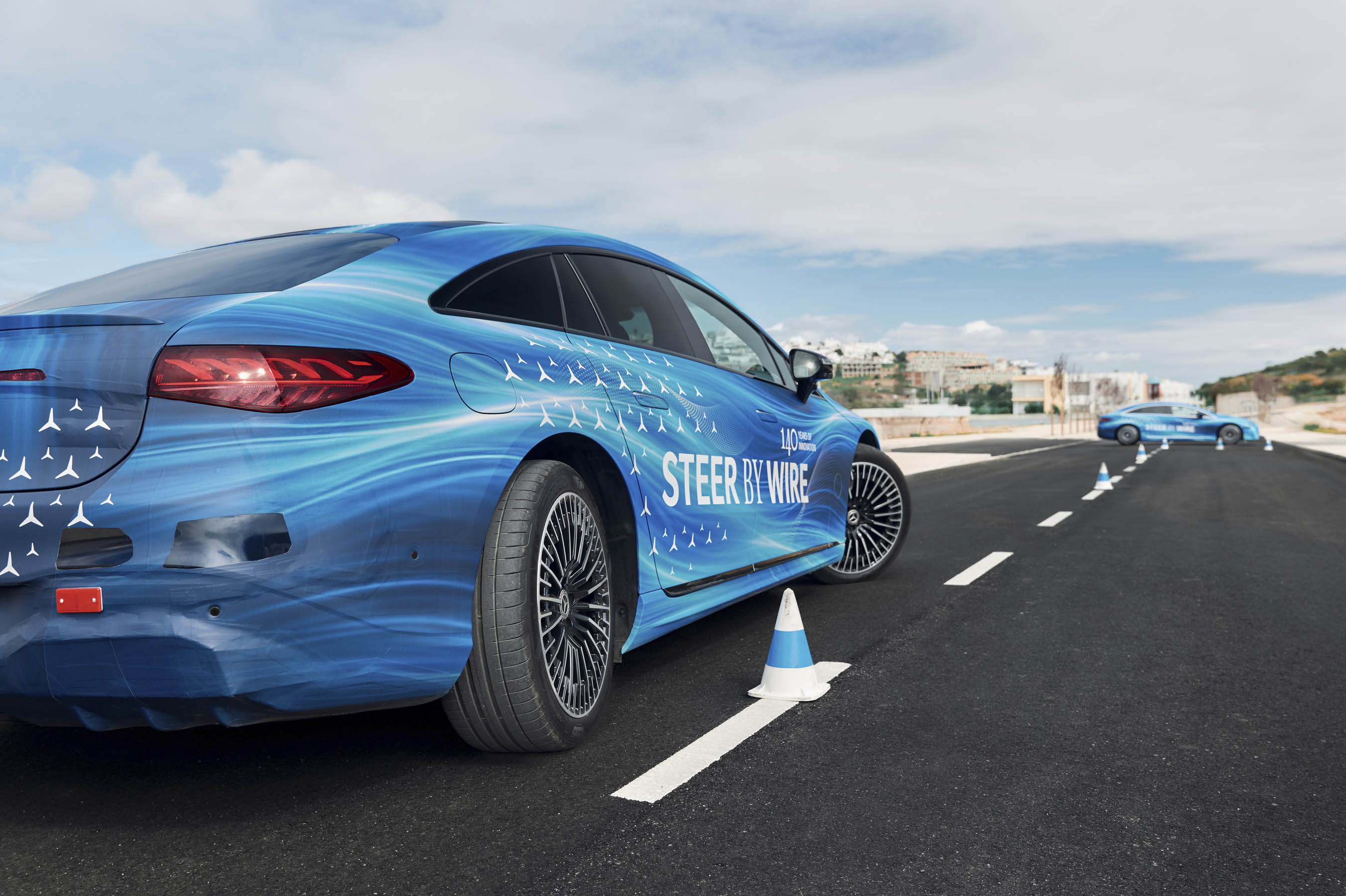
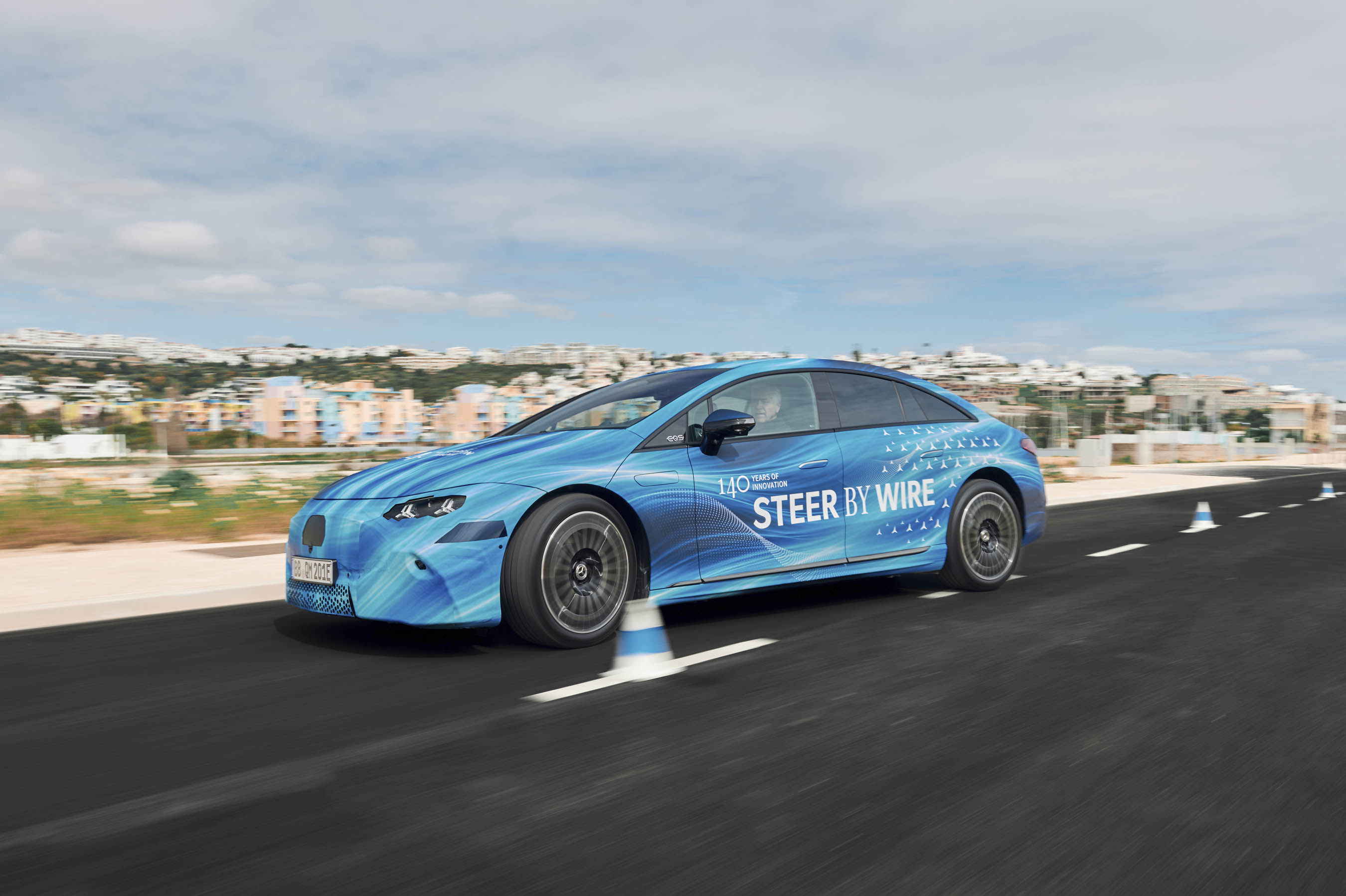
Mercedes provided three scenarios to test the steer-by-wire and yoke setup. The first was a short slalom; the second, a tight maneuver around a parked car; the third, a basic roundabout. They revealed a few early truths. First, and most importantly, the system, in my extremely short and limited exposure, felt more polished than the steer-by-wire setup Lexus let me try years ago. There was no juttering or weird feedback when quick steering inputs were given, and the system felt natural, smooth, and overall as expected. Meaningful speed was never used so it’s too early to have any sense of whether Mercedes figured out how to accurately simulate steering feel.
At 17.25 feet long and somewhere between 5,400 and 5,900 pounds (depending on the configuration) the EQS is not a small or light vehicle. The quicker ratio combined with the 10 degrees of rear steering inputs at slower speeds made small inputs deliver big motions real fast. It took me a few minutes to recalibrate my brain to correspond to this. Initial laps induced jerky handling and lots of body roll. There’s going to be a learning curve here for people for sure.
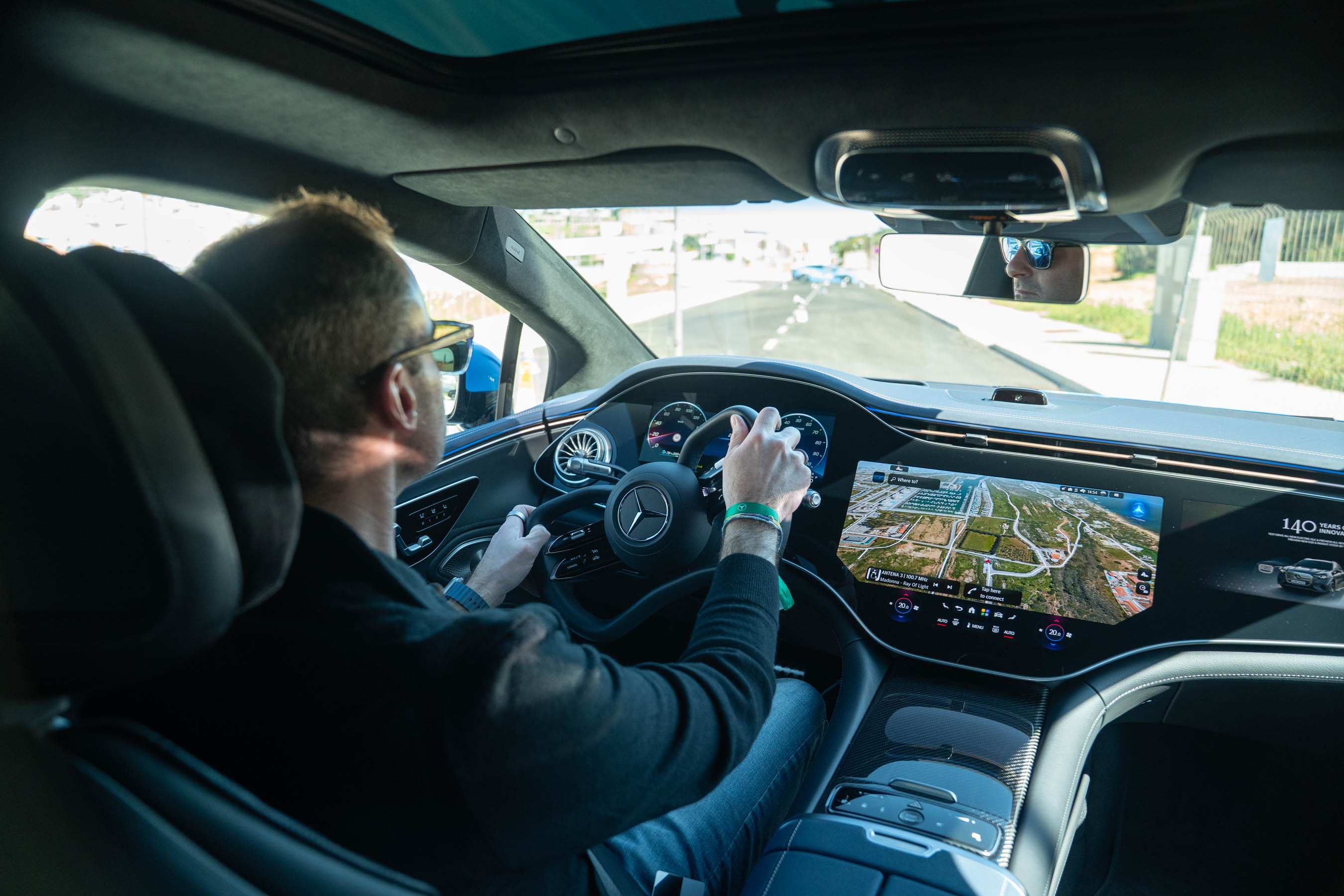
This makes me wonder if the EQS is really the best application for this technology. The EQS is, for all intents and purposes, Mercedes’ tech tour de force proving ground where it shows off what it can do. That’s true, and fair. But a 17.25-foot and over-5,000-pound hatchback might not be the place where this new steer-by-wire system and yoke shine.
Depending how the system reacts at at higher speeds with the slower ratio, how much road feel can be simulated and translated to the driver via the yoke, and how coordinated it can all feel at speed with rear-wheel steering inputs, this could be awesome in an AMG sports car on a race track or in the mountains. I can only imagine the AMG buyer that ends up with this, if done well, in a sports car feeling like an F1 hero, and maybe that’s the point? We’ll have to see as things evolve, but there’s promise here if this can be done correctly in the right application.
Got a tip about future technology? Send us a line at tips@thedrive.com
www.thedrive.com
#Mercedes #Steering #Yoke #Works