


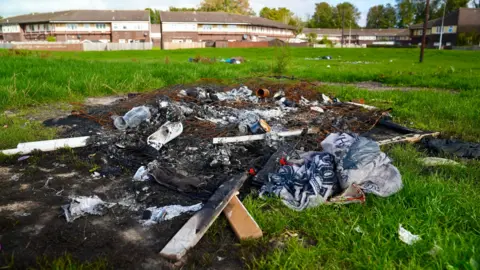
Chemicals and asbestos have been dumped outside homes, and an oven left in a tree, in a city dubbed by some as Wales’ fly-tipping capital.
Incidents across the country are at a 10-year high, but Newport has seen a 6,000% rise, with thousands in the past 12 months, according to official figures.
The issue has become so serious, BBC Wales filmed animals eating some of the fly-tipped waste, and some CCTV cameras aimed at tackling the issue have been cut down.
Newport council said it had increased efforts to “crack down” on fly-tipping, while the Welsh government said it funds Fly-tipping Action Wales to tackle the problem.

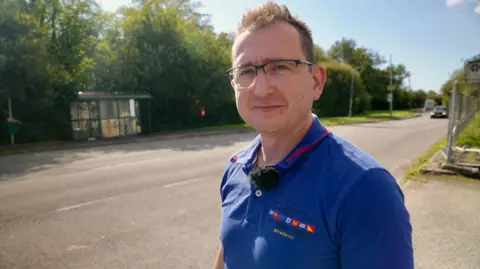
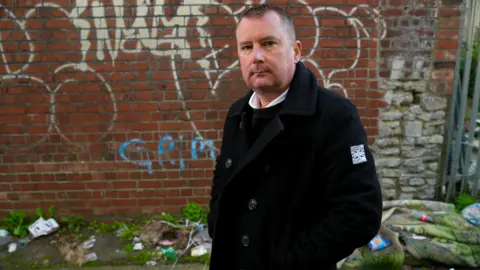
“It’s quite horrific,” said Peterstone resident Lee Colvin, 44.
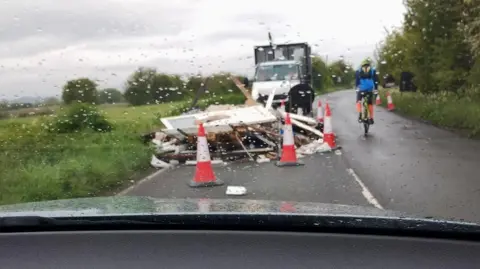
“Huge lorries come in the middle of the night and just tip the load in the middle of the road and drive off.”
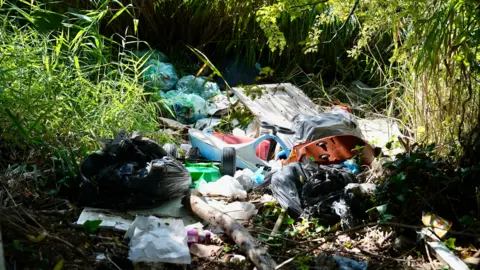
Residents in the leafy Newport village said the waste ranges from “big construction material” to black bags full of dirty nappies.
“Some people have had asbestos tipped outside their house,” Mr Colvin added.
The former science teacher and community councillor said chemicals were dumped outside his home.
“A white van pulled up, opened the back doors facing my house, and they just opened the tap,” he added.
Mr Colvin noticed there were “corrosive and irritant” chemical warning labels on the tank.
He described incidents where fly-tippers have ripped number plates off vans to conceal their identity, sped off when challenged, or even chased residents when challenged.
“We’re fighting a losing battle,” he said.
Anyone found guilty of fly-tipping can be fined up to £50,000 and face up to six months in prison.
This can be increased to five years if hazardous waste is dumped.
If convicted in the crown court, fines are unlimited and a prison sentence of up to five years can be imposed.
This is not deterring people, though.
You do not have to drive far on the Gwent Levels – an internationally significant Site of Special Scientific Interest – to find dumped waste.
Bags of discarded nappies, dumped mattresses and building waste are piled at the side of narrow, rural roads.
“Horrified” locals said they had been trapped by dumped construction rubble blocking roads.
Animals have been attracted by the fly-tipped rubbish – BBC Wales filmed an unaccompanied dog eating some of the waste on a rural road near Peterstone.
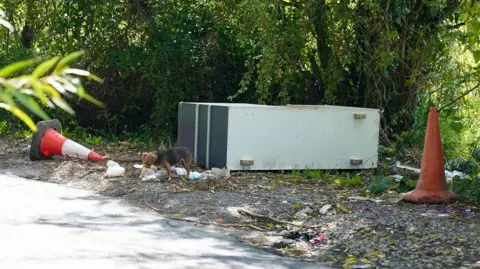
There are frequent warning signs and cameras, but some have been cut down.
“They got cut down as soon as they went up – literally just cut off at the base,” Mr Colvin said.
“It was aluminium poles, so they’d obviously come equipped.”
He said some residents have been trying to sell their homes “for quite a while”, but said prospective buyers have been put off by the fly-tipping.
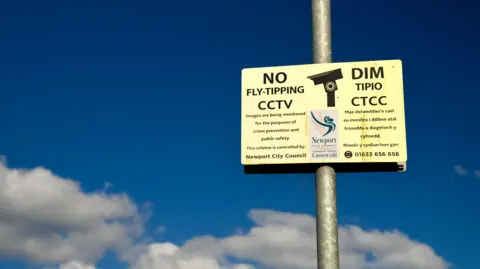
Newport council admits it faces a “complex” task, with fly-tipping linked to organised crime.
It said it wants “greater powers” to tackle the issue.
But it said trying to combat “rogue waste collectors” and “organised criminal activity”, was a problem that required “coordinated action across enforcement, intelligence sharing, and public education”.
The Welsh government said it had spent £1.2m over the last three years on Fly-tipping Action Wales, which was a “unique approach with no equivalent functions provided elsewhere in the UK”.
 Lee Colvin
‘Wales’ fly-tipping capital’
But Peterstone is the tip of this rather smelly iceberg.
- Fly-tipping in Wales is at a 10-year high with 42,171 incidents in 2023-2024, the latest StatsWales figures show
- It cost £1,936,566 to clean up all of the incidents in Wales
- Newport had 8,139 incidents in 2023-2024 – more than anywhere else
- This represents a 6,021% increase in Newport since records began in 2006-2007
The number of chemical drums being dumped is at a 10-year high, and clinical waste and asbestos have been found dumped.
Recently, Newport was dubbed “Wales’ fly-tipping capital”, when the Member of the Senedd Natasha Asghar called on the first minister to do more to tackle the issue in the city.
“Last weekend we saw an oven dumped in a tree,” said Michael Enea, a local campaigner who has been documenting fly-tipping in the city.
He described it as a “heartbreaking tidal wave of fly-tipping”.
Standing in a city centre back alley known as a dumping hotspot he said: “It’s quite demoralising – people don’t want to live in this environment.
“This lane is just rife with fly-tipping, dumped rubbish, dumped soil, dumped rubble – you have to see it to believe it.”
Mr Enea, a former Conservative Senedd election candidate, said newly-dumped rubbish appears as soon as old waste is cleared.
He blames rogue operators, reduced bin sizes, three-weekly bin collections and online tip booking.
“The council and the Welsh government, they’ve got a responsibility to try and sort this out,” he said.
Other councils operate similar systems to Newport.
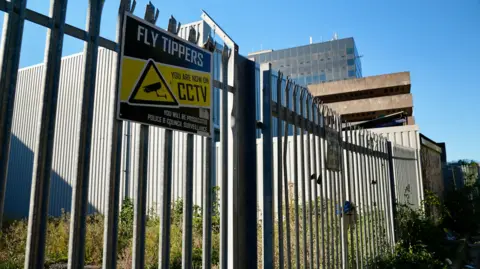
Newport City Council said it takes fly-tipping “very seriously” and has increased efforts to “crack down” on the problem.
“Every incident is properly recorded and investigated, and enforcement action is taken where evidence is found,” a spokesperson said.
It said it had allocated more money to tackling fly-tipping and enforcement actions had increased from 165 to 2,390.
The Welsh government said: “Fly-tipping is a crime and is never justified under any circumstances.
“We continue to target those who choose to break the law and pollute our environment.
“This is why we continue to fund the Fly-tipping Action Wales, a programme hosted by Natural Resources Wales and which supports local authorities with their enforcement activities, monitor fly-tipping levels and help raise awareness.”
www.bbc.com
#Flytipped #asbestos #Newport #dubbed #Wales #flytipping #capital


