


The current-gen Tundra’s twin-turbo V6 has caused Toyota a massive headache, mainly because it likes to explode. We’ve known about this for a while now, and the automaker has issued two widespread recalls affecting more than 200,000 vehicles equipped with the engine. Officially, Toyota blames manufacturing debris left inside the oiling passages, which is impossible to verify independently without getting your hands on one. That’s been a problem since the grenaded engines always get sent back as core exchanges, but someone finally got their hands on a blown V35A-FTS with just 38,000 miles.
Eric Berg, host of the I Do Cars YouTube channel, has posted hundreds of engine teardown videos since he first started uploading in 2017. I think this one might be the most significant. He claims that he tried and failed to acquire a Toyota twin-turbo 3.5-liter V6 for three years before anybody would finally sell him one, though what he cracks into here is a prime example that failed in typical fashion.

While the full hour-long video is worth a watch if you have the time and need the context, the first big problem pops up around 20 minutes in. That’s when Berg finds metal flakes where they shouldn’t be inside the oil pump idler gear. It gets worse when he undoes the lower oil pan and finds more metallic sparkles, although the upper pan didn’t reveal much. Clearly, this engine was toast, but the problem seemed localized.
Berg solves the problem roughly 38 minutes in when he lifts the bed plate and exposes an absolute mess of debris due to spun main bearings. Two of the main bearings were obviously done for, while a third cap at the back of the engine was friction-welded and had to be busted apart with a chisel. By contrast, the rod bearings were totally clean. You can see the contrast at the bottom of the photo gallery here:

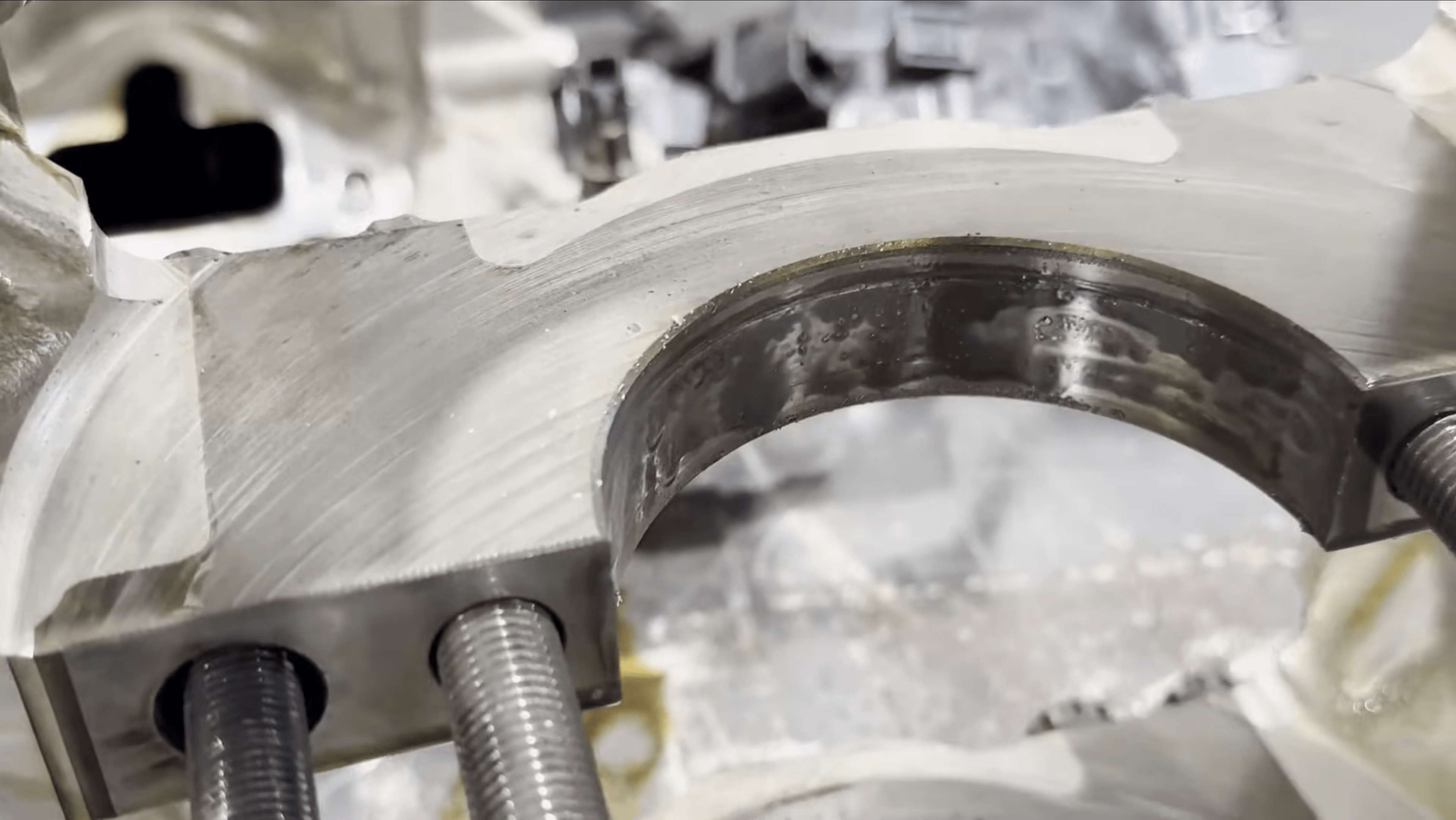

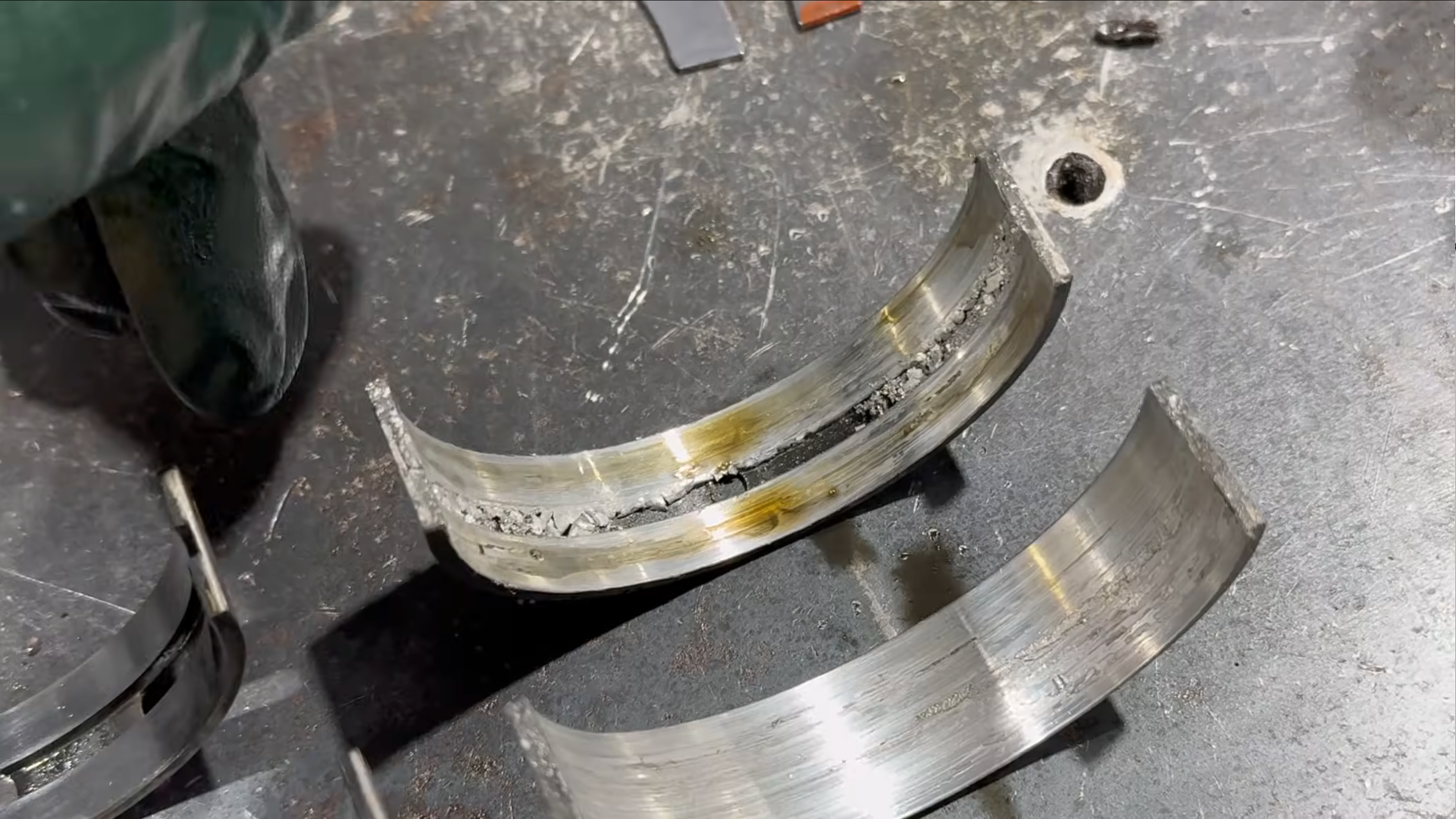

To Berg, that side-by-side shot is damning. He claims that since the main bearings and rod bearing share an oiling circuit, they should be equally damaged if leftover machining debris were the main cause of engine failure. “In fact, I don’t believe it whatsoever,” Berg quips at the end of the video. “I think it’s total BS. Because if it was debris that caused this engine failure, how does it know to target just the main bearings and not the rod bearings?”
He admits there’s a lot he doesn’t know and, quite frankly, can’t know about this specific engine. Because Berg bought it secondhand with limited records, he doesn’t know anything about its maintenance history. Likewise, any potential machining debris was mixed in with all the metal caused by the main bearing failure, and you can’t parse that out. But he speaks candidly about the Tundra V6 recall, comparing it to the Hyundai Theta II disaster in which that manufacturer also blamed machining debris for its problems, despite drivers reporting that their replacement engines also failed.
I’ve reached out to Toyota for comment on this and will update this story if the automaker responds. I’m not speculating on whether this is a design problem or a manufacturing problem. However, this storyline has been developing since 2022, and it doesn’t show any signs of stopping as we enter the new year.

Got a tip or question for the author? Contact them directly: caleb@thedrive.com
www.thedrive.com
#Engine #Teardown #Specialist #Toyotas #Explanation #Failures #Doesnt #Sense


