Support CleanTechnica’s work through a Substack subscription or on Stripe.
The Finnish technology startup Donut Lab launched a new solid-state EV battery at the Consumer Electronics Show in January, billing it as “the world’s first solid-state battery that is ready for use in OEM vehicle manufacturing.” With a full charge in five minutes and 400 Wh/kg of energy density, it seemed too good to be true. However, for any skeptics out there, Donut Lab is posting a new video series along with supporting material that explains the results of an independent assessment at the VTT Technical Research Centre of Finland.
Find the videos beginning on Monday, February 23rd at 2 pm CET at I Donut Believe. Donut Lab plans to publish the VTT reports there as well. Also check out a deep dive into the details by CleanTechnica’s Christopher Arcus here.
Solid-State EV Batteries Are Coming For Your Gasmobiles
Regardless of the recent squishiness in the US market, the vehicle electrification trend continues apace globally, and solid-state batteries are among the innovations that will help accelerate uptake. In contrast to conventional lithium-ion EV batteries with liquid electrolytes, the solid-state formula offers faster charging, longer range, enhanced safety, and more freedom from environmental and ethical complications in the automotive supply chain.
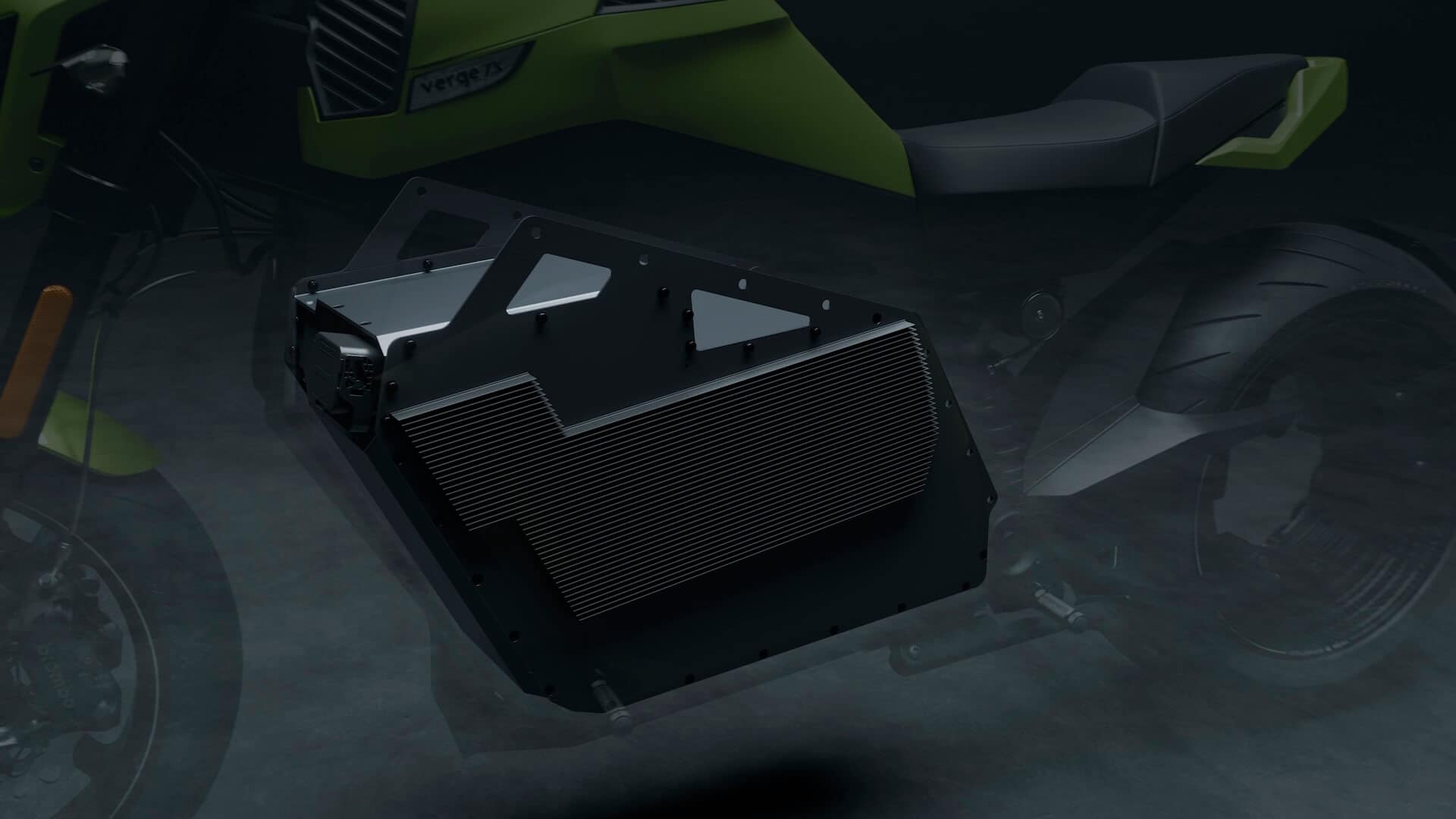
Donut Lab has already enlisted the European electric motorcycle maker Verge Motorcycles to showcase the new battery in its Verge TS Pro and Ultra two-wheelers. With the release of the VTT assessment, Donut Lab aims to prove that Verge is just the beginning.
“Unlike conventional lithium-ion batteries, the Donut Battery experiences minimal capacity fade over its lifetime, with a design life of up to 100,000 cycles, offering practical longevity that far exceeds existing technologies,” Donut Lab explained at the CES launch, while noting that the new battery avoids the fires attributed to dendrites, which are the fernlike growths that can emerge in liquid electrolytes.
“Performance has been rigorously tested across extreme conditions,” Donut Lab continues. “At –30°C, the battery retains over 99% of its capacity, and when heated to temperatures exceeding 100°C, it continues to retain over 99% capacity with no signs of ignition or degradation.”
“The Donut Lab solid-state battery is made entirely from abundant, affordable, and geopolitically safe materials, does not rely on rare or sensitive elements, and demonstrates a lower cost than lithium-ion,” they add for good measure.
Verge Motorcycles & The Solid-State EV Battery Of The Future
Verge has a footprint here in the US, so keep an eye out for the TS Pro and Ultra sporting the new battery. In a press release dated January 5, Verge said that it expects to begin deliveries to customers within the next few months.
“The company has become the first in the world to introduce solid-state battery technology into production motorcycles — marking a significant milestone not only for two-wheeled transport, but for electric vehicles more broadly,” Verge says of itself, noting that the new solid-state battery provides almost double the range per charge, while also charging much faster.
In a press statement, Verge CEO Tuomo Lehtimäki further teased the idea that two-wheelers are just the tip of the EV iceberg. “The use of solid-state battery technology to motorcycles in production is a historic breakthrough shaking up the entire automotive industry,” Lehtimäki said.
“Current battery technologies typically support only thousands of charging cycles, whereas Verge’s solid-state battery lasts for the entire lifetime of the motorcycle,” Verge also points out. “The upgraded battery pack does not affect the motorcycle’s price, making it a highly cost-effective option for customers as well.”
As described by Verge, the standard battery pack offers 217 miles of range, with ultra-fast charging enabling 186 miles in ten minutes. With an optional range-extended battery pack, riders get up to 370 miles on a single charge.
Donut Lab’s advanced motors have also surfaced on the CleanTechnica radar, and they make an appearance in the TS Pro, too. “Its next generation Donut 2.0 motor is 50% lighter than its predecessor while delivering the same power and torque (737 lb-ft), enabling significantly improved efficiency, stability, and handling,” Verge explains.
EVs Just Keep Getting Better
Whether or not Donut Lab can make the leap into four-wheeled electric vehicles remains to be seen. However, the company has already given itself a headstart with its “Donut Platform,” described as a “fully integrated EV hardware and software stack.”
“It includes our motors, battery modules, the “Brains” (our onboard control unit), and vehicle software — designed to work seamlessly together,” Lehtimäki told CleanTechnica in an interview last September.
“It supports a wide range of vehicles and enables faster, more flexible EV development,” Lehtimäki added, taking note of the platform’s modular design and emphasis on simplicity.
Lehtimäki also elaborated on the company’s in-wheel Donut Motor. “By eliminating gearboxes, driveshafts, and differentials, it reduces unsprung weight and simplifies vehicle design,” he explained.
“With a larger diameter and minimal active materials, we’re able to achieve higher torque and power density — essentially, more power and torque per kilogram — than conventional motors,” he added.
As for the future of the vehicle electrification movement here in the US, that’s still an open question. However, millions of EVs are already on the road, and a new survey from JD Power shows that the vast majority of EV drivers will consider buying or leasing another EV. That suggests consumer choice will continue to sustain EV sales over the rough patch of the Trump years.
JD Power has been asking EV drivers if they will consider getting another EV since 2021. In the latest survey, published on February 18, 96% of EV owners said yes — a new record high for that question.
While noting that EV market share dipped after the premature demise of the $7,500 federal tax credit last September, JD Power’s executive director of EVs, Brent Gruber, underscored the “steadily growing customer satisfaction among owners of new EVs.”
“Improvements in battery technology, charging infrastructure and overall vehicle performance have driven customer satisfaction to its highest level ever,” Gruber stated.
“What’s more, the vast majority of current EV owners say they will consider purchasing another EV for their next vehicle, regardless of whether they benefited from the now-expired federal tax credit,” he emphasized.
Although US automakers sharply rolled back their near-term EV plans after the federal tax credit ended, Slate Auto and several other newcomers are still moving forward with their production plans, and Ford recently affirmed its plans for producing a next-generation affordable electric pickup truck.
Photo: The new solid-state EV battery from the Finnish startup Donut Lab makes its first appearance in Verge electric motorcycles (courtesy of Verge).
Sign up for CleanTechnica’s Weekly Substack for Zach and Scott’s in-depth analyses and high level summaries, sign up for our daily newsletter, and follow us on Google News!
Have a tip for CleanTechnica? Want to advertise? Want to suggest a guest for our CleanTech Talk podcast? Contact us here.
Sign up for our daily newsletter for 15 new cleantech stories a day. Or sign up for our weekly one on top stories of the week if daily is too frequent.
CleanTechnica uses affiliate links. See our policy here.
CleanTechnica’s Comment Policy
cleantechnica.com
#Donut #Lab #Meant #Battery