Key Takeaways
Star Xu criticized CZ’s memoir and denied past allegations tied to OKCoin.
CZ rejected the claims and raised concerns about OKX’s past operations.
The dispute traces back to 2014, involving a contested Bitcoin.com contract.
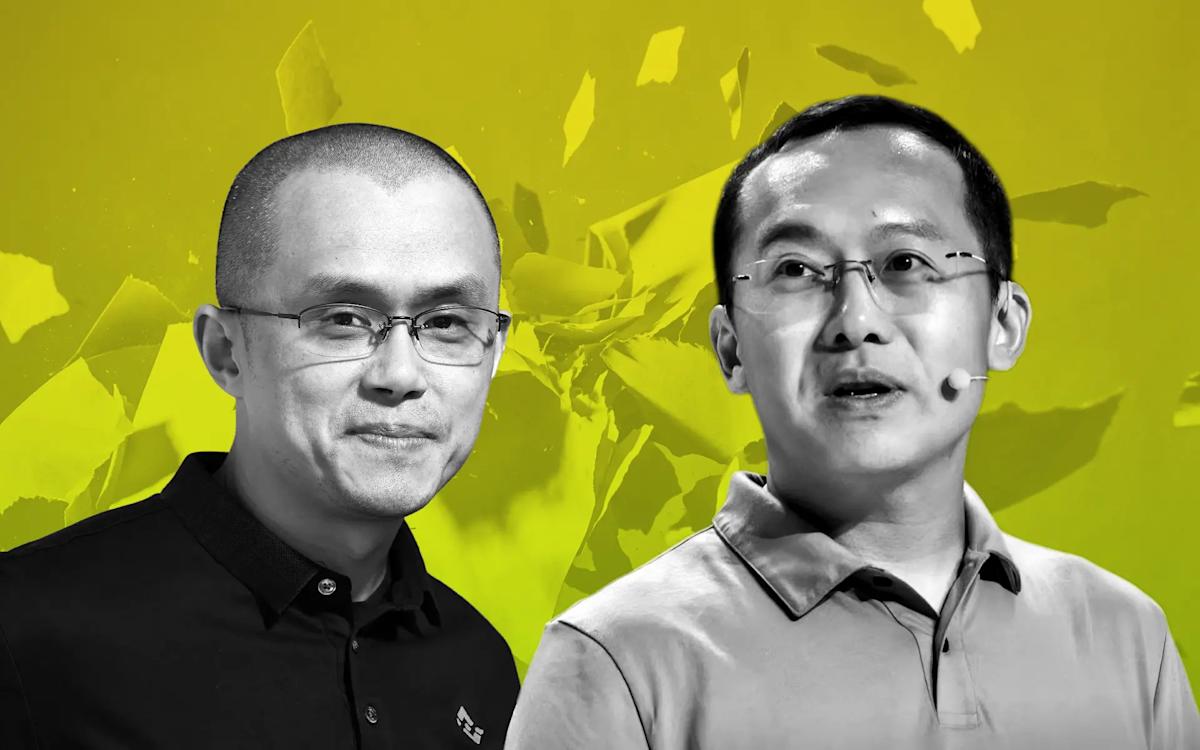
Crypto has seen its fair share of rivalries, but few have played out as long—or as publicly—as the one between OKX CEO Star Xu and Binance founder Changpeng Zhao (CZ).
What started as a fallout back in 2014 has flared up again in April 2026, this time after the release of CZ’s memoir, Freedom of Money.
Star Xu didn’t hold back. In a post on X, he called CZ a “habitual liar” and said his “nature never changes,” even after four months in a U.S. federal prison.
The clash has drawn millions of views, revived old evidence, and escalated into a $1 billion betting challenge.
Here’s a detailed breakdown of how it started, the core accusations, and where the beef stands today.
Xu has maintained that CZ was responsible for altering the Bitcoin.com contract.
In an April 2026 thread on X responding to the memoir, he resurfaced a 2015 notarized video that he said supports his claim.
The footage shows an OKCoin accountant’s QQ account being accessed in front of a notary, with chat logs allegedly linking CZ to both versions of the contract, including one containing the disputed termination clause.
Xu rejected CZ’s explanation that his account had been compromised by an employee, questioning its credibility.
He also sharply criticized CZ’s broader account of events, calling it misleading. In one widely shared post, Xu wrote:
“After spending four months in prison, he continues to make false statements to the world. All I can say is: a habitual liar never changes their nature.”
Xu further disputed several claims in the memoir, including CZ’s version of his time at OKCoin, the Roger Ver contract dispute, and other assertions about past industry events.
In Freedom of Money, CZ describes the 2014–2015 dispute as a coordinated effort by rivals to damage his reputation.
He denies any involvement in contract forgery and argues that the allegations were unfounded or based on manipulated information.
The memoir also revisits past issues at OKX’s predecessor, OKEx.
CZ points to a five-week suspension of customer withdrawals in October 2020, during a period when Xu was reportedly under investigation in China.
He claims Xu had sole control over the exchange’s wallet keys at the time, contrasting this with Huobi, which continued operations during a similar situation involving its founder, Li Lin.
CZ also references conversations with Li Lin, who he says believed Xu had reported him to authorities years earlier.
CZ presents these events as part of broader competitive tensions within the industry, including challenges Binance faced during its early fundraising efforts.
The dispute dates back to mid-2014, when CZ joined OKCoin, the predecessor to OKX, as Chief Technology Officer.
At the time, he reportedly held a 10% equity stake in the company. His tenure lasted less than a year.
In Freedom of Money, CZ says he left in early 2015 after Star Xu attempted to renegotiate that stake.
The situation escalated around a commercial agreement CZ helped arrange with early Bitcoin investor Roger Ver.
Under the deal, OKCoin would operate the Bitcoin.com domain in exchange for monthly payments.
After CZ’s departure, two versions of the contract surfaced: v7, described as the original, and v8, which included a six-month termination clause.
CZ and Ver argued the newer version had been altered.
OKCoin disputed that claim, alleging CZ had modified the document himself and shared it via his QQ account, including the contested clause.
The fallout escalated quickly. Ver filed a lawsuit against OKCoin, while CZ publicly criticized the exchange’s practices, including its reported trading volumes.
OKCoin responded with its own accusations, challenging CZ’s role at the company and his conduct during his tenure.
Although the dispute eventually faded from public attention, it remained unresolved. CZ later founded Binance in 2017, which grew into one of the largest crypto exchanges globally.
CZ’s autobiography, Freedom of Money, was released on Apr. 8, 2026, bringing the long-running dispute back into focus.
Xu said he had no intention of revisiting the issue but chose to respond after the book referenced him, describing its claims as inaccurate.
He also rejected the allegation involving Huobi founder Li Lin, calling it implausible.
Xu noted that complaints against large exchanges are common and do not determine enforcement outcomes.
The situation escalated further on April 9 when CZ posted a $1 billion wager on X tied to the disputed claims.
This was specifically after Xu questioned aspects of CZ’s personal disclosures, including marital status.
Xu responded quickly, calling the public bet inappropriate for executives of regulated companies.
He stressed that both Binance and OKX operate under multiple regulatory frameworks and that such wagers are not consistent with professional standards.
He also pressed CZ on certain personal and corporate disclosures, layering on more fuel.
As of April 10, 2026, the 24-hour window CZ set has expired with no acceptance of the billion-dollar bet.
Instead, the rapid back-and-forth has only intensified public scrutiny of both leaders’ past dealings, wallet-control history, contract evidence, and executive transparency.
The renewed focus has already sparked a fresh examination of the 2014–2015 QQ logs, the notarized video, the 2020 withdrawal freeze, and competing narratives at two of crypto’s biggest platforms.
Whether this leads to any formal regulatory review, legal action, or simply fades again is unclear — but the engagement numbers show the crypto community is still very much tuned in.
Top Trending Crypto Articles
The post Changpeng Zhao (CZ) vs Star Xu Explodes Again—$1 Billion Bet and Old Allegations Resurface appeared first on ccn.com.