


Support CleanTechnica’s work through a Substack subscription or on Stripe.
Or support our Kickstarter campaign!

In the past weeks, we have had a lot of serious coverage. The political landscape in the US has become discouraging, while the world realigns around us. Many of us could use a release from that seriousness. While the world order seemed to be unraveling last week, Caterham showed a video of its Project V prototype in dynamic testing. The focus of this car is not on addressing serious global issues. They are not seeking world dominance. It is the latest example of Caterham’s “essence” of “PURE.SIMPLE.FUN.”
“Spec sheet racers” who have never touched an actual track are not going to understand this kind of car. It does not have the most power. It is quick, but there are faster cars in a drag race.
It reminds me of a conversation I had with Richard Edwards of NZ Autocar. When we were in Guangzhou, we discussed how fundamentally good EVs had become there. Quick, comfortable, efficient, and quiet. More powerful than you can reasonably use on public roads at an affordable price. At which point, Richard stated: “And none of them are as fun to drive as a Miata.”
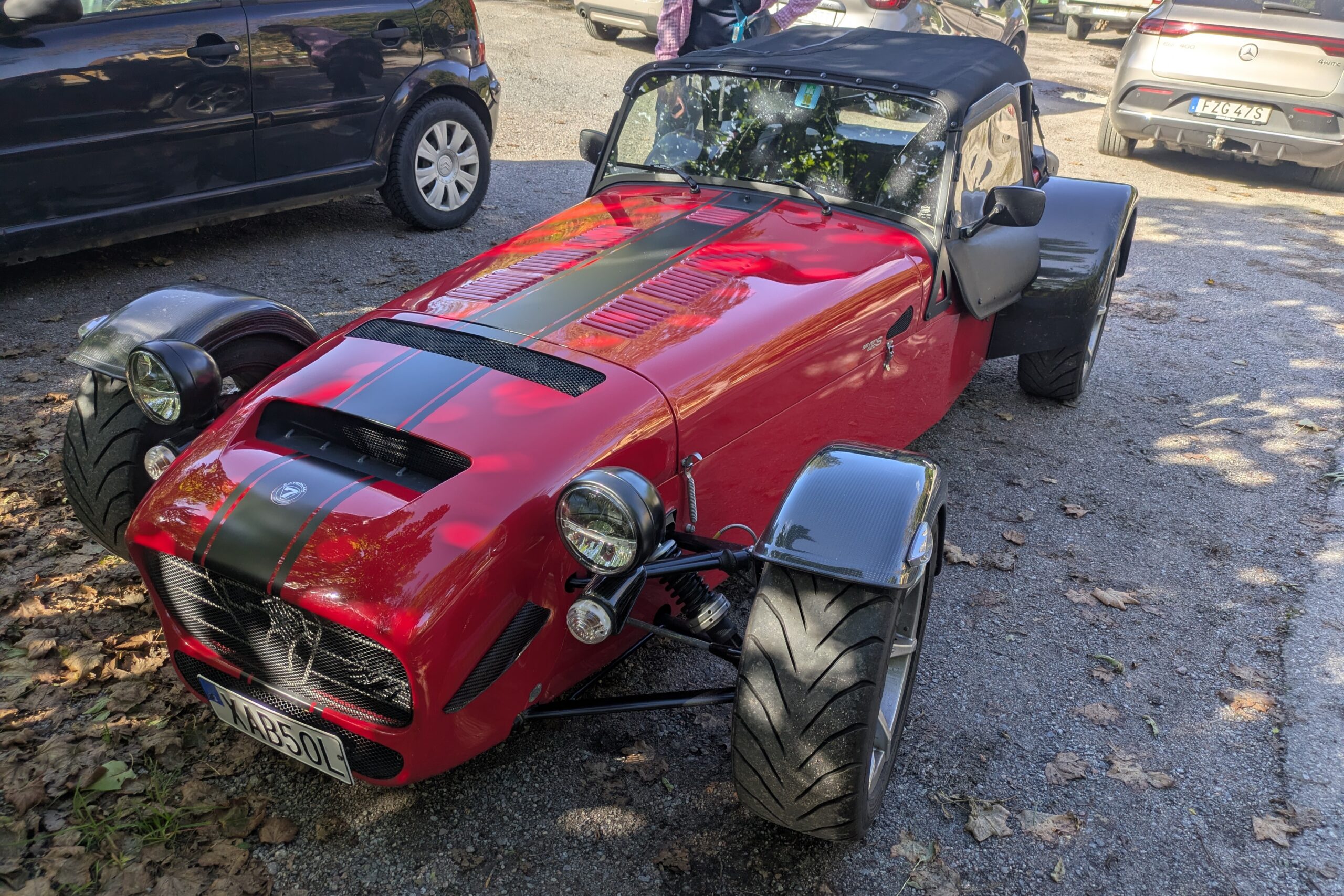
For people who have driven on a track, there is truth to that statement. A Miata also has a fun quotient that goes beyond what its spec sheet would indicate. Normal people can take it to the track or twisty back road, challenge their skills, and enjoy themselves. To take it a step further, a Caterham 7 is to a Miata what a Miata is to a Camry. An even more raw, impractical, and fun experience. Based on the Lotus 7 that was introduced in the late 1950s, it is closer to a formula car of that time than it is to a modern grocery-getter. Caterham took over the 7 in the 1970s, continuing production. The new electric Project V is intended to continue for the next 70 years.
In a way, many electric cars have become too good. The polar moment of inertia is centered in the floor by the battery, making them almost too stable. Traction control and torque vectoring can get in the way. It can be hard to make the car rotate in a controlled manner by modulating the accelerator and brakes. The Project V changes that by splitting the battery to be ahead of and behind the driver. That positions the weight in a still balanced manner, but closer to Caterham’s 7 than most EVs.
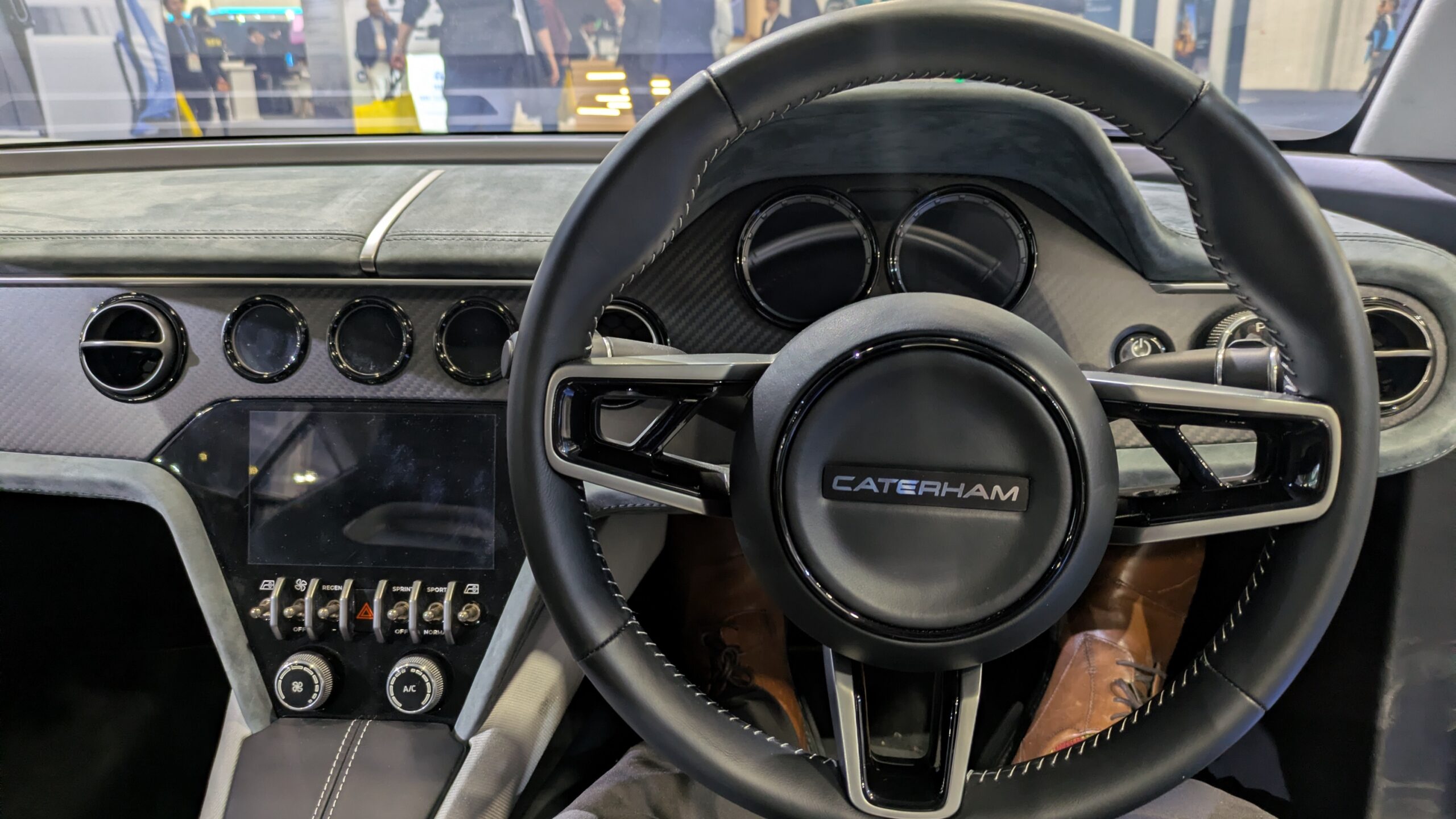
I had the opportunity to sit in the Project V prototype at CES. The seating position is low, and you can touch the ground from the driver’s seat. However, the relatively low side sills make it easy to enter compared to the contortionism needed with some exotic sports cars. Just practice your squats to get in and out. Once inside, it is surprisingly roomy, much more so than a Lotus Elise or the Elise-based Tesla Roadster. The seat was comfortable and the gauges were clearly legible at a glance. The visibility was great, especially compared to many other low-slung sports cars. Being able to see the front fender tops made it seem easy to place. At 6’ tall, I had over a fist of headroom (more than enough for a helmet) and plenty of legroom. In addition to not being pressed shoulder to shoulder with the passenger, like in the 7, you also have a rear center seat. I didn’t try to get back there, but it didn’t seem to be meant for adults.
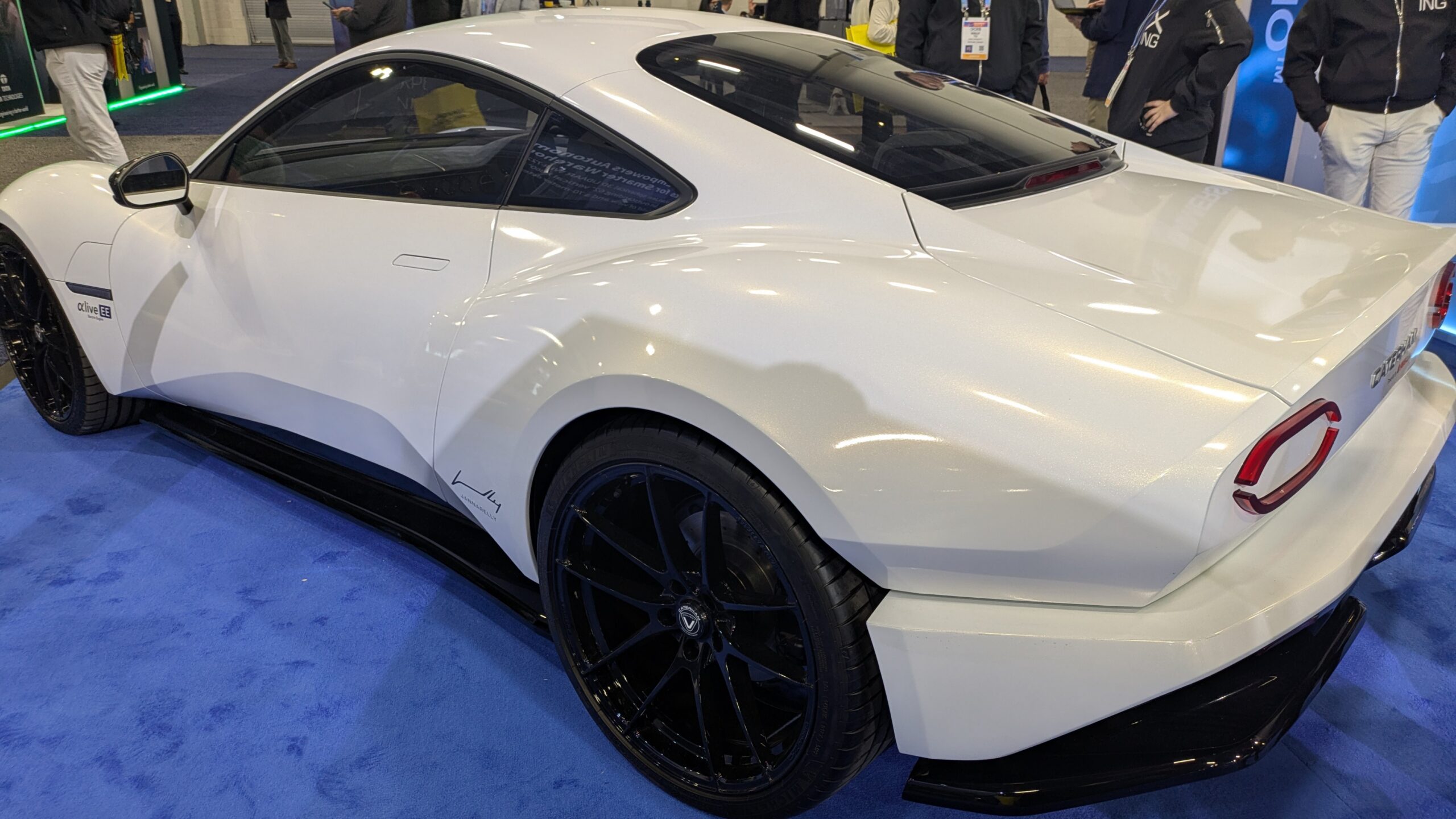
The Project V adds in some practicality and refinement, especially compared to the 7. Beyond the fixed roof and windows that roll down, there is also room for cargo at the rear. It didn’t look or feel like a kit car. In a nod to comfort, the car also has air conditioning, Apple CarPlay, and an infotainment system. However, I have a feeling that some purists will strip those out in the name of saving weight.
While the details are still being finalized, the Project V is anticipated to come in around 3000 lb. That is much heavier than the 7, but relatively light compared to most EVs. However, they are still looking to “add lightness,” as the 7’s creator Colin Chapman would say.
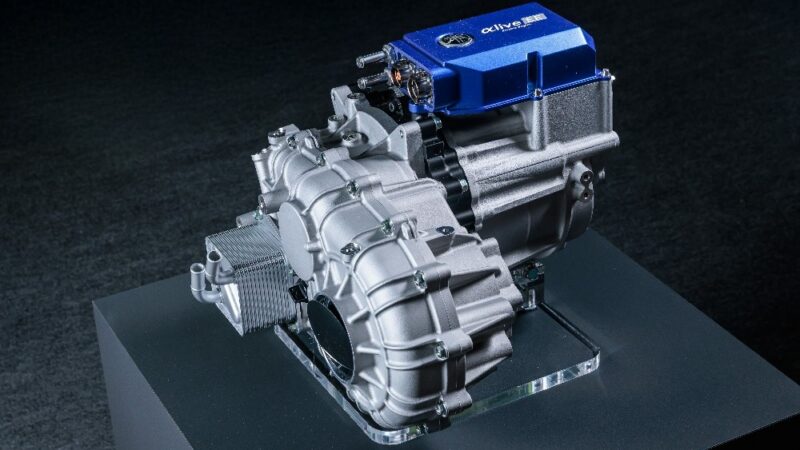
The car uses a Yamaha electric motor and drive system offering 200 kW (268 hp). This is projected to propel the car to 100 km in less than 4.5 seconds. In the current age of EVs, those numbers are not amazing. The original 7, using a Ford economy car engine, did not seem amazing on paper either. However, by using off-the shelf powertrain parts, Caterham can focus on what it does best. And, like the 7, I would expect more powertrain options in the future.
While Project V has added ABS and traction control to meet new car regulations, these systems are being optimized to be as unobtrusive as possible. The car also has modern safety requirements, like airbags. However, torque vectoring, launch control, and other electronic performance tricks are intentionally omitted.
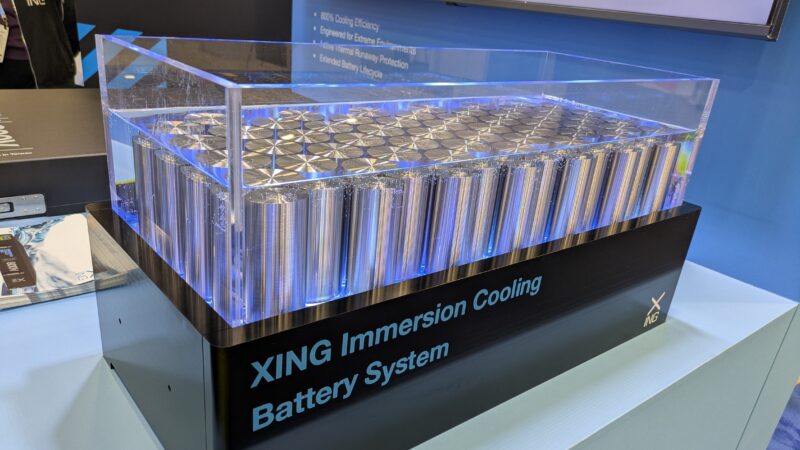
The battery is broken up into two packs for a total capacity of around 47-55 kWh and comes from the Taiwanese company Xing Mobility. The innovative packs use immersion cooling, which places the cylindrical cells directly into a recirculating bath of oil. Being immersed on all sides transfers heat more evenly than top or side cooling channels. The liquid adds some weight, but it is offset by eliminating the cooling channels and the increased power density from improved thermal management. In addition, immersion reduces the chance of thermal runaway by dissipating heat and removing oxygen from the inside of the pack. As pack temperatures are relatively low and not subjected to the potential contaminants found in internal combustion engines, the cooling fluid is expected to last the life of the vehicle. Of course, the cells and electronics need to be designed to work with immersion cooling, and the packs need to be designed to prevent leaks, but Xing seems confident in its design. The battery is claimed to provide 249 miles of range and 100 kW charge speeds, which should suit the typical use of this type of car. I certainly would not want to add battery weight to get more range.
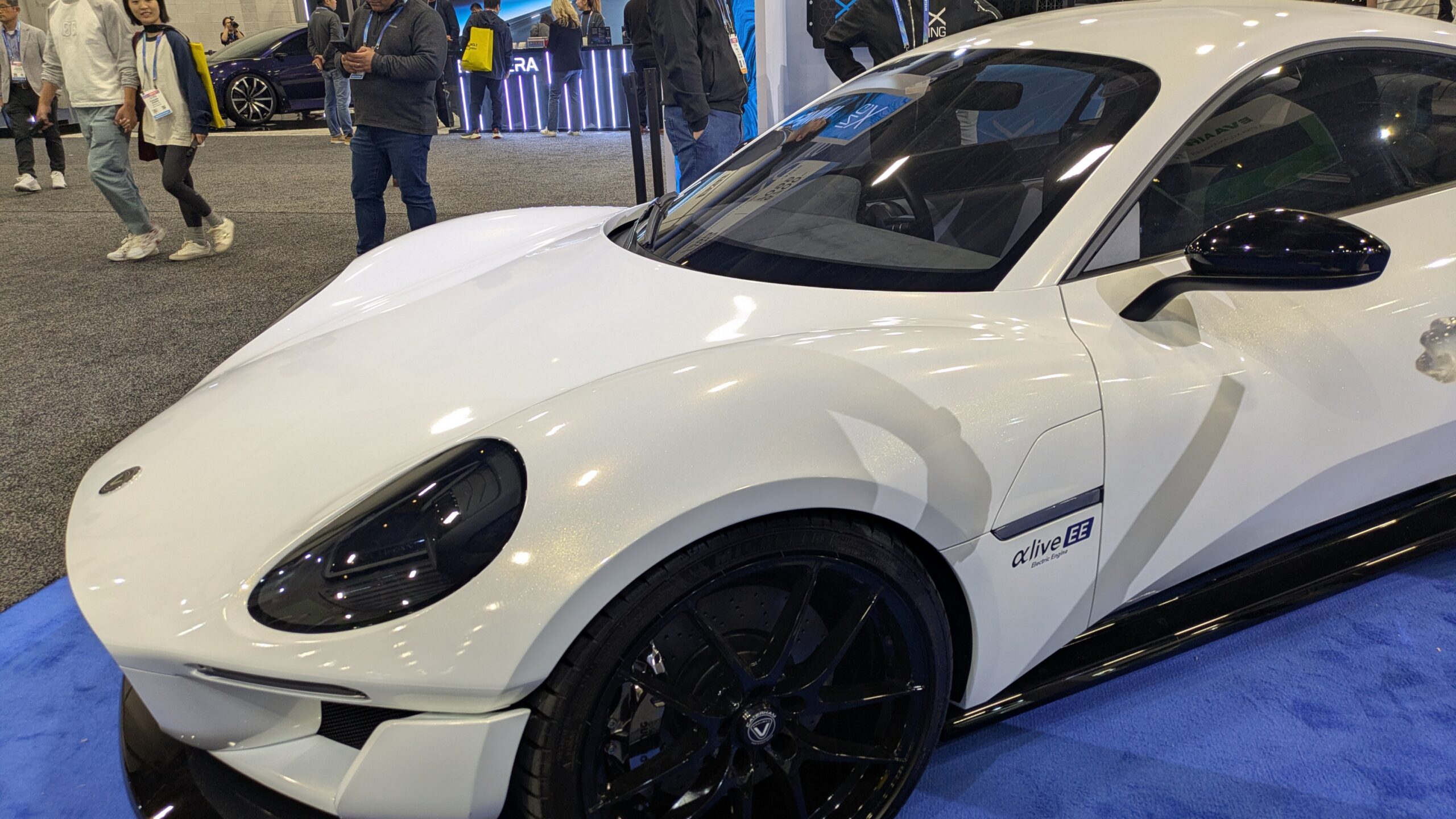
One of the more interesting aspects is Caterham’s design for reparability. Caterham figures that the vast majority of the vehicles that they have built over the last half century are still on the road. Originally offered as a kit car, the 7 is intentionally easy to work on. The tube frame can be repaired relatively easily or even replaced if need be. Panels are designed to be replaced. The 7 has been adapted to a wide range of engines and transmissions over the years. Few are likely to be completely original. Racing gear can be added for the track and removed to make the car street legal again. It is not a disposable car. This level of durability and repairability provides sustainability benefits, as Caterham’s Justin Gardiner described at CES:
Caterham claims to be taking a similar approach to the Project V, with a focused on the next 50 years. A steel tube frame is used once again. Many parts are off-the-shelf to make repairs easier. The clamshell hood is perhaps the biggest concern, but Caterham emphasized that fiberglass can usually be repaired. Despite the current battery and motor, I have a feeling that they are already thinking about how other options might fit in the future. It is also a safe assumption that the Project V will be relatively easy to modify. That is good news for those of us who enjoy tinkering on cars, which is its own kind of fun. We may even get another kit version in the future.
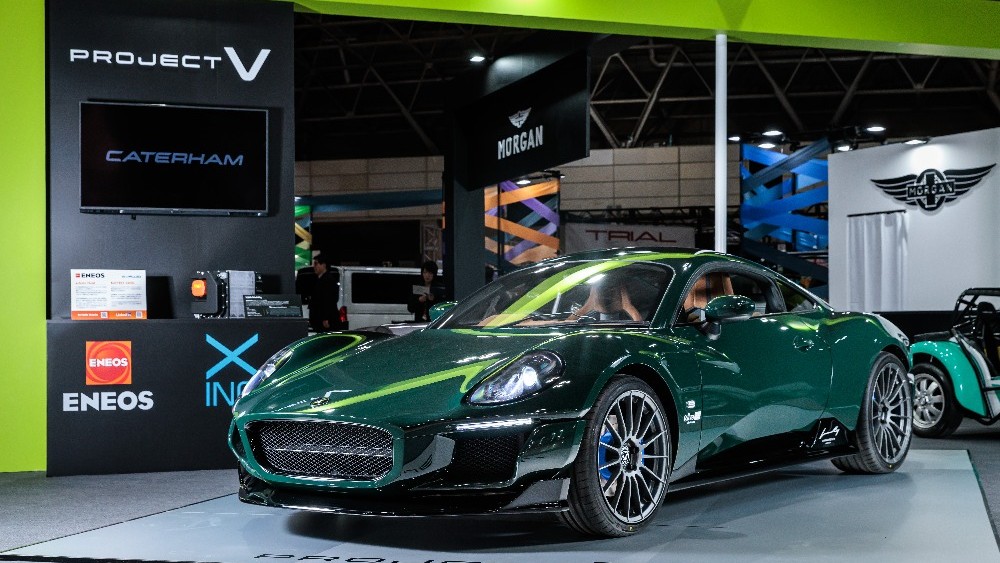
Estimated to come in around $135k, this is not a cheap car. But it is not out of line with other track-focused, low-volume cars. Being essentially a tube frame race car for the street gives it a purity compared to street cars modified for track use. Clearly, there are mass market EVs that offer more practicality, luxury, and brute acceleration for the money. While something like a 3000 hp U9 can undoubtedly set faster lap times at the hands of a professional driver, it is far beyond my personal talents (and those of most drivers, if they are honest with themselves). The Project V seems perfect for someone looking for a spirited weekend drive or to test their skills at a local autocross. If I had the financial means to dedicate to a car for fun, it would be on my list. And it is definitely on the list of cars that I would like to drive.
The Project V will not dominate the mass market sales charts, but the limited numbers help make it special. The Project V also shows how we can still have unique, interesting cars in the age of electrification. Not everything needs to make rational sense. Some cars can just be fun.
Support CleanTechnica via Kickstarter

Sign up for CleanTechnica’s Weekly Substack for Zach and Scott’s in-depth analyses and high level summaries, sign up for our daily newsletter, and follow us on Google News!
Have a tip for CleanTechnica? Want to advertise? Want to suggest a guest for our CleanTech Talk podcast? Contact us here.
Sign up for our daily newsletter for 15 new cleantech stories a day. Or sign up for our weekly one on top stories of the week if daily is too frequent.
CleanTechnica uses affiliate links. See our policy here.
CleanTechnica’s Comment Policy
cleantechnica.com
#Caterham #Project #Electrification #Fun


