


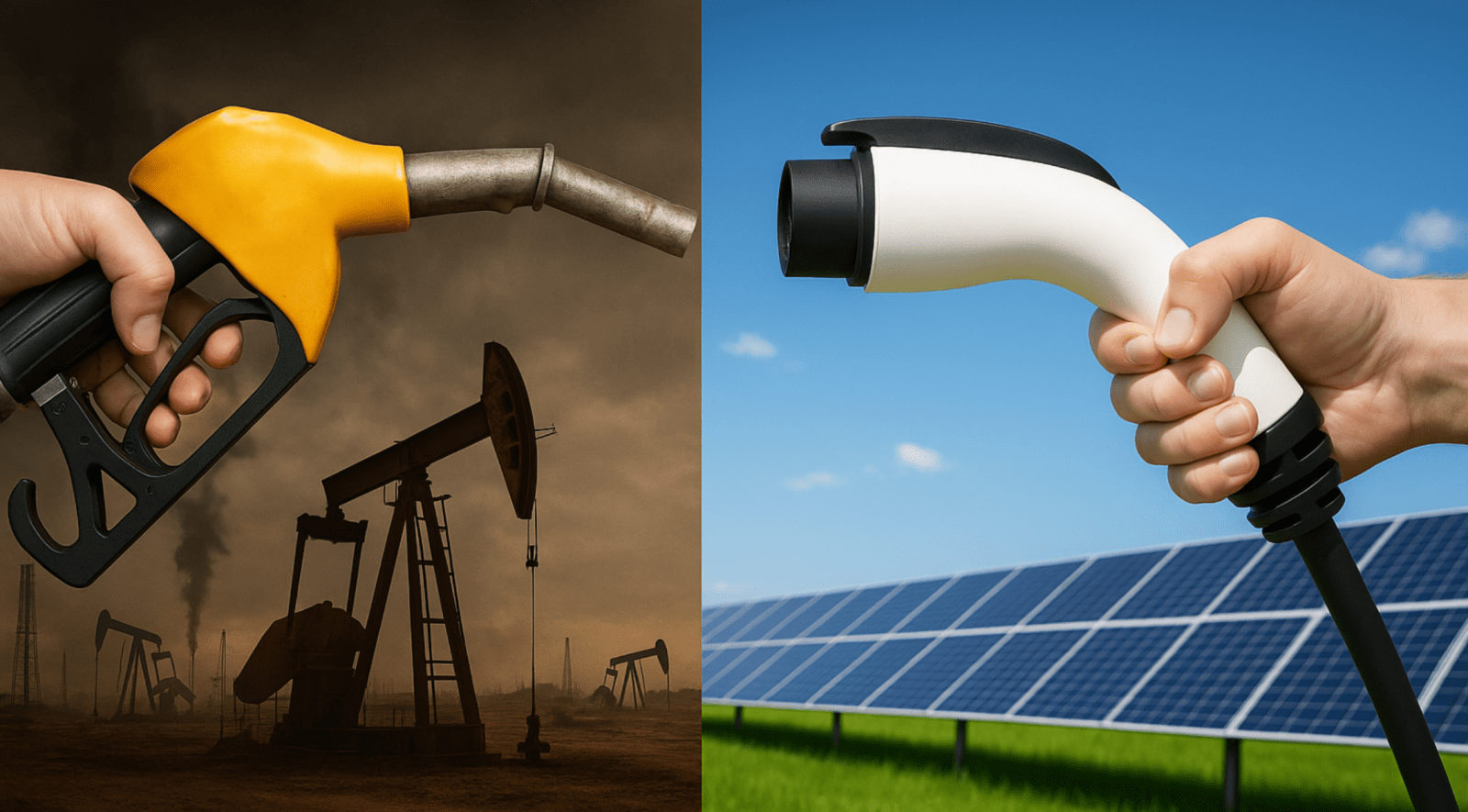
France’s Finance Minister confirmed that between 30% and 40% of Gulf refining capacity has been damaged or destroyed by Iran’s retaliatory strikes, leaving a shortage of 11 million barrels per day on global oil markets. The destruction is now pushing consumers toward electric vehicles at a pace not seen since the 2022 gas crisis.
With gas prices approaching $4 per gallon nationally and already past $5 in California, data from multiple sources shows EV interest surging across the board — from Google searches to dealership inquiries.
The scale of the destruction
France’s Finance Minister Roland Lescure revealed Wednesday that between 30% and 40% of Gulf refining capacity has been damaged or destroyed, according to France24. The resulting 11-million-barrel-per-day shortage represents the largest supply disruption in the history of the global oil market, per the IEA.
Lescure warned it could take up to three years to restore the damaged facilities and several months just to restart those that were urgently shut down. That timeline matters, this isn’t a temporary price spike that will resolve in weeks.
The IEA responded by issuing an emergency 10-point plan urging consumers to work from home, drive slower, take public transit, and avoid unnecessary air travel. The agency estimates that working from home three additional days per week could reduce individual drivers’ oil consumption by 20%. All 10 measures combined could cut global oil demand by 2.7 million barrels per day — still far short of the 11-million-barrel gap.
The pain at the pump is already severe. AAA data shows the national average hit $3.98 per gallon on March 25, up from $3.11 just weeks earlier — the highest level since 2022. California is at $5.83 per gallon. CNN reported that Americans are cutting back on fresh food, skipping meals, and canceling trips to afford the higher costs.
EV interest spikes across every metric
The consumer response has been swift. Edmunds data shows electrified vehicle consideration hit 23.8% of all shopper research activity for the week of March 9-15 — the highest weekly level of 2026. Online car shoppers were 17% more likely to research an EV than the week before, with most of the increase driven by battery electric vehicles specifically, not just hybrids.
EV search traffic jumped 20% in the first week after the Iran strikes, according to CarEdge. In Australia, Google searches for “electric vehicles” surged 278% between February 27 and March 23.
The used EV market is where the consumer math gets most compelling. Average used EV prices have dropped 35% since 2022 to around $34,600, and roughly 400,000 EV lease returns are expected to flood the market in 2026. February alone saw nearly 31,000 used EVs sold in the US, up 29% year-over-year.
BYD and the global picture
Globally, Chinese EV makers are the biggest beneficiaries. As we reported last week, BYD is seeing a flood of new buyers — one Manila dealership booked a month’s worth of orders in just two weeks, with customers explicitly replacing gas vehicles due to oil price hikes. BYD delivered 4.1 million vehicles in 2025 and is on track to push past 5 million this year.
Both the UK and Germany have signaled that the energy crisis is accelerating their green transitions. Italy’s Prime Minister traveled to Algeria for emergency energy talks. The structural argument is hard to ignore — an Ember analysis found that global EV adoption already avoids 1.7 million barrels per day of oil consumption, equivalent to about 70% of what Iran was exporting through the Strait of Hormuz.
As we wrote earlier this month, electric cars don’t need oil to run. They power themselves from whatever electricity source a country has access to domestically — whether that’s solar, wind, hydro, or nuclear. Every EV on the road is one less vehicle exposed to the whims of global oil markets.
Electrek’s Take
This is the strongest real-world case for EVs we’ve seen since Russia’s invasion of Ukraine spiked gas prices in 2022, but the scale is larger. A three-year recovery timeline for Gulf infrastructure means this isn’t a temporary shock. Consumers who switch to EVs now won’t need to worry about the next oil crisis, or the one after that.
The data is encouraging. EV consideration at 23.8%, search spikes of 20-278% depending on the market, and a flood of affordable used EVs hitting the market all point in the same direction. The IEA is literally telling people to stay home and drive slower, that’s a wartime-style energy advisory in 2026. Meanwhile, an EV owner just plugs in at home and goes about their day.
The challenge is the gap between interest and purchase. New EV prices remain high (average transaction: $48,766), the federal $7,500 tax credit has ended, and interest rates are at 7%. Used EVs are the bridge — they’re cheaper than ever, the supply is growing, and the fuel savings are immediate. If gas stays above $4 for months, as the current supply destruction suggests it will, the ownership math will push millions of buyers over the edge. We’ve been saying for years that EVs are the #1 route to energy independence. Events are proving that case more powerfully than any argument ever could.


FTC: We use income earning auto affiliate links. More.
electrek.co
#Car #owners #turn #EVs #Gulf #energy #capacity #destroyed


