


Support CleanTechnica’s work through a Substack subscription or on Stripe.
Or support our Kickstarter campaign!

Several accounts on Chinese social media app Xiaohongshu (RedNote) have revealed images of the next generation of BYD “Flash Chargers” (aka “megawatt chargers”). According to the label on the plastic wrap surrounding the charge gun, the 1000V DC chargers offer up to 1200 kW of charging power, presumably for each gun. Other labels indicate 1500 kW and 2100 kW, which could be for the pile with two charge guns or some other system-level output. We will need to wait for confirmation. Of note, BYD’s current flash chargers introduced last March offer 1360 kW per pile, accessible via both charge guns used simultaneously. So, this is likely a bit of a performance upgrade.
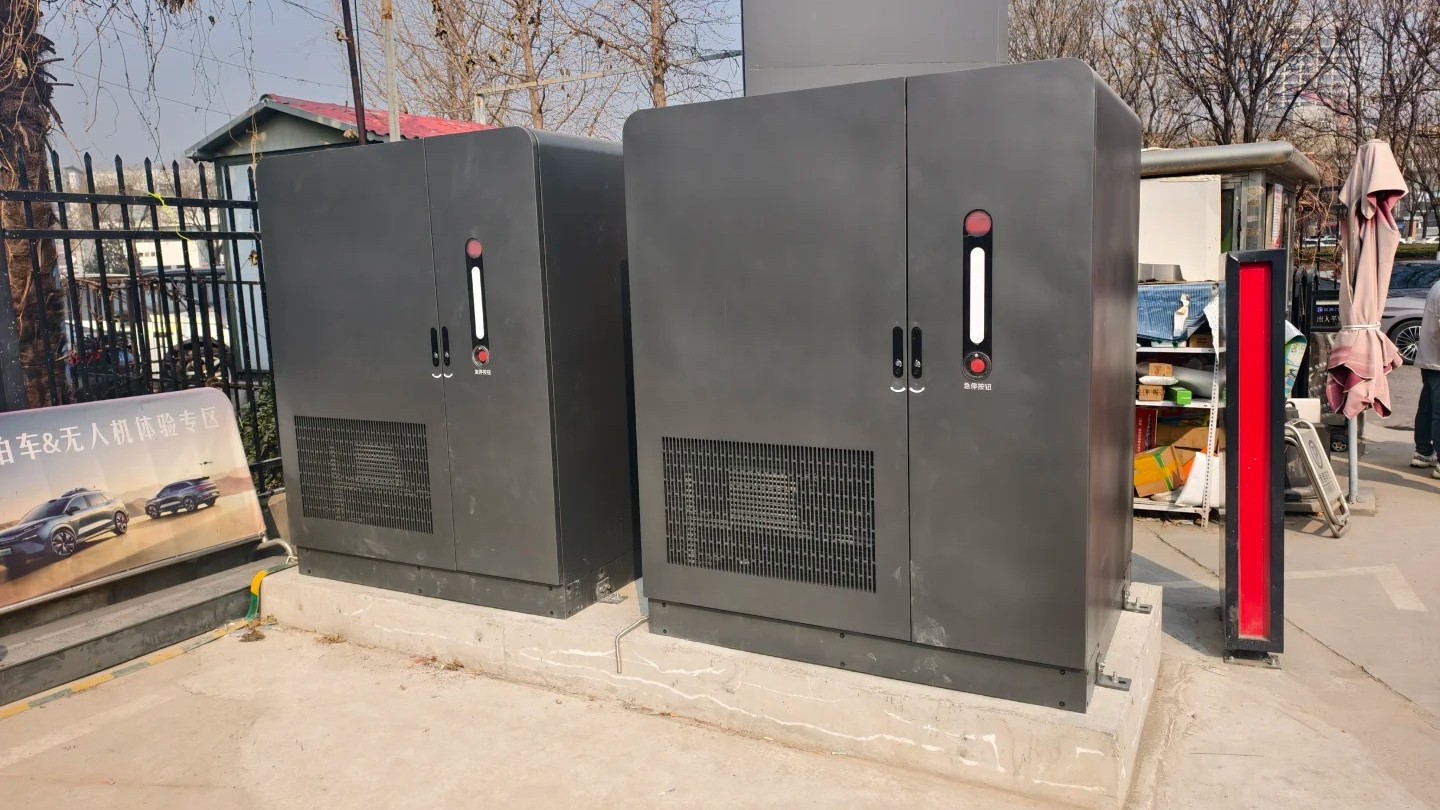
Like the previous silver-painted flash chargers, the new system also has a power cabinet and buffer battery cabinets. These batteries take peak load off the grid, easing installation. They also reduce the impact of load limits that would otherwise throttle back charge speeds to maintain grid stability. The new charcoal cabinets look a bit more refined with rounded corners, reminiscent of some NAD Electronics audio equipment. However, the most noticeable difference is in the design of the charging pile.
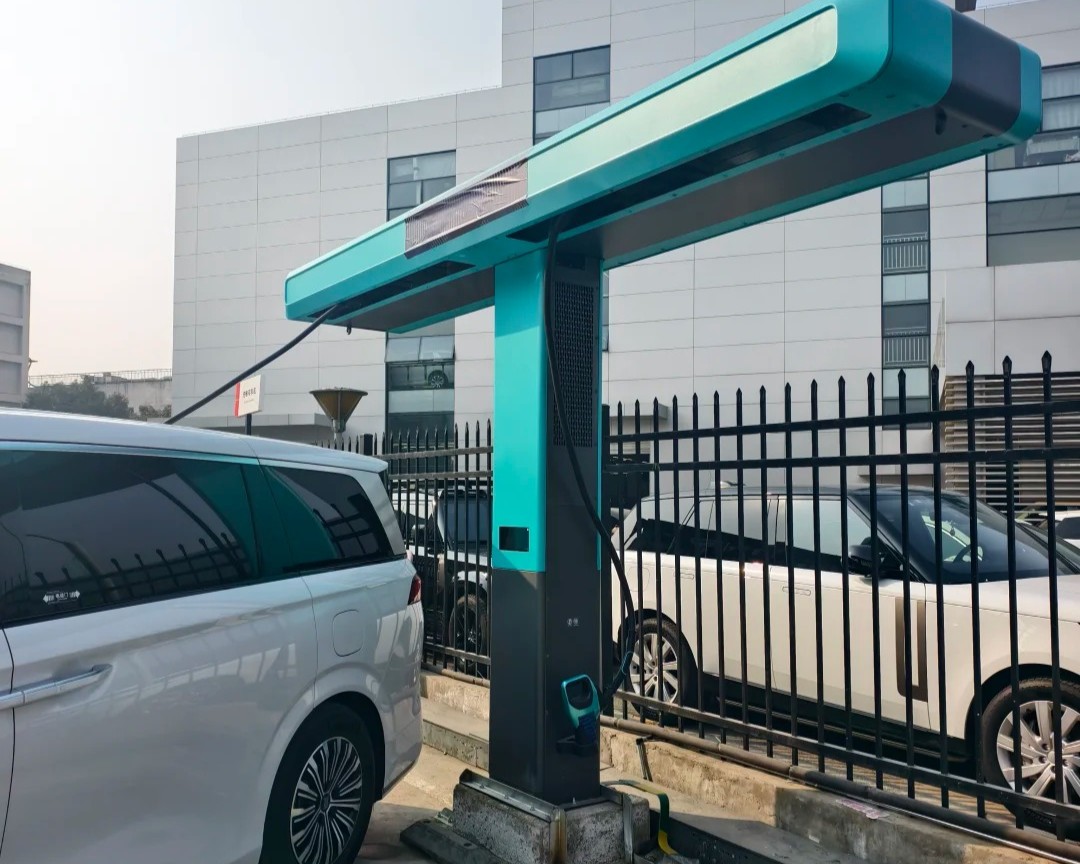
The T-shaped charging pile has a number of benefits. The top portion lets the charging cables slide within it to extend to either side of the cars in front of it, and potentially even to a car in the next space over. Walkaround videos give a bit of perspective. The design provides the cable the extension it needs but also prevents it from dragging on the ground. That avoids tripping and potential damage to the expensive, cooled cable.
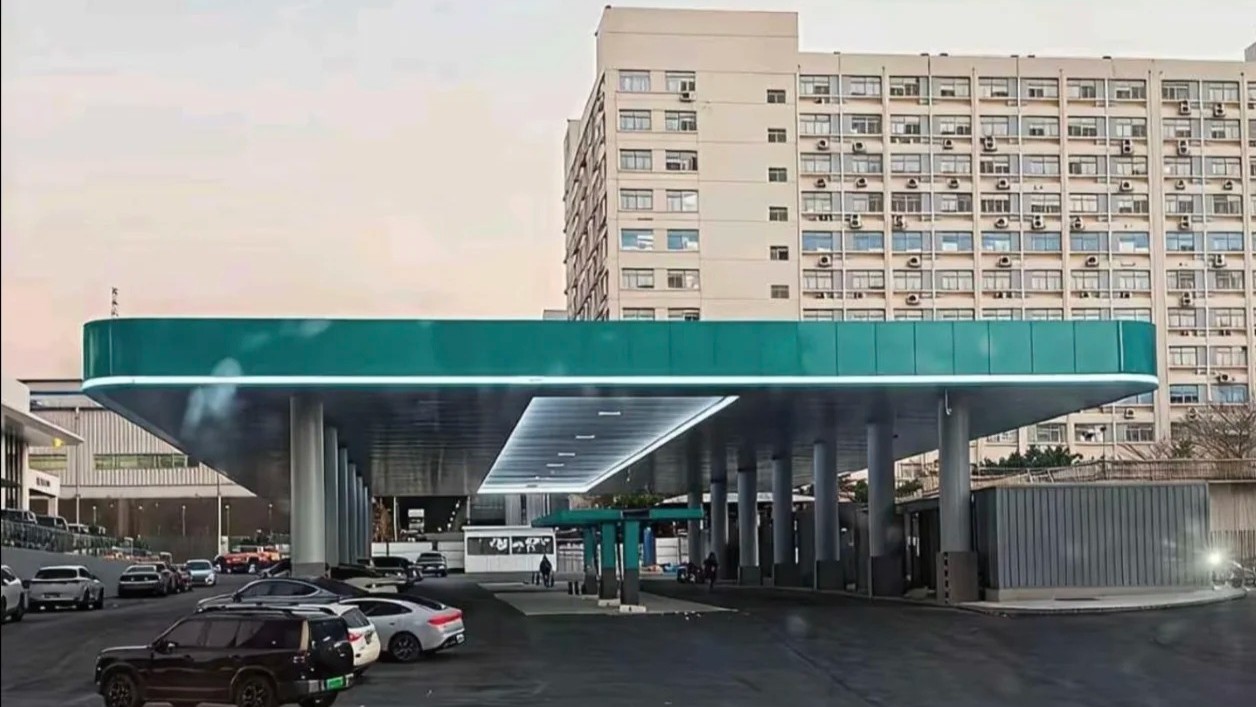
However, the design also allows the charging cable to be used on the other side of a vehicle pulling up alongside the charger, similar to many fuel pumps. As charging times approach the time it takes to fill a gas car, the charger usage pattern can similarly change to be more of a quick stop, rather than parking. Seeing the chargers under a canopy like many filling stations adds to the usage similarity.

In addition to the functional benefits, the aesthetics make a difference. The tall chargers standing above cars being charged make them visible at a distance. In addition, the turquoise (aka blue-green, Tiffany blue) color stands out. Seeing some other chargers, turquoise seems to be a color code being used for fast charging in China, somewhat similar to different fuel pumps using different handle colors. Of note, a similar color is also being used by multiple manufacturers to indicate when intelligent driving systems are engaged.

Of course, in order to charge that fast, you need a car capable of it. BYD’s Tang L and Han L currently can add 400 km of range in 5 minutes with 10 C charging. BYD has also recently teased the Ocean 8 Sedan (Seal 08) and Ocean 8 SUV (Sealion 08), which are expected to be on the same 1000V architecture.

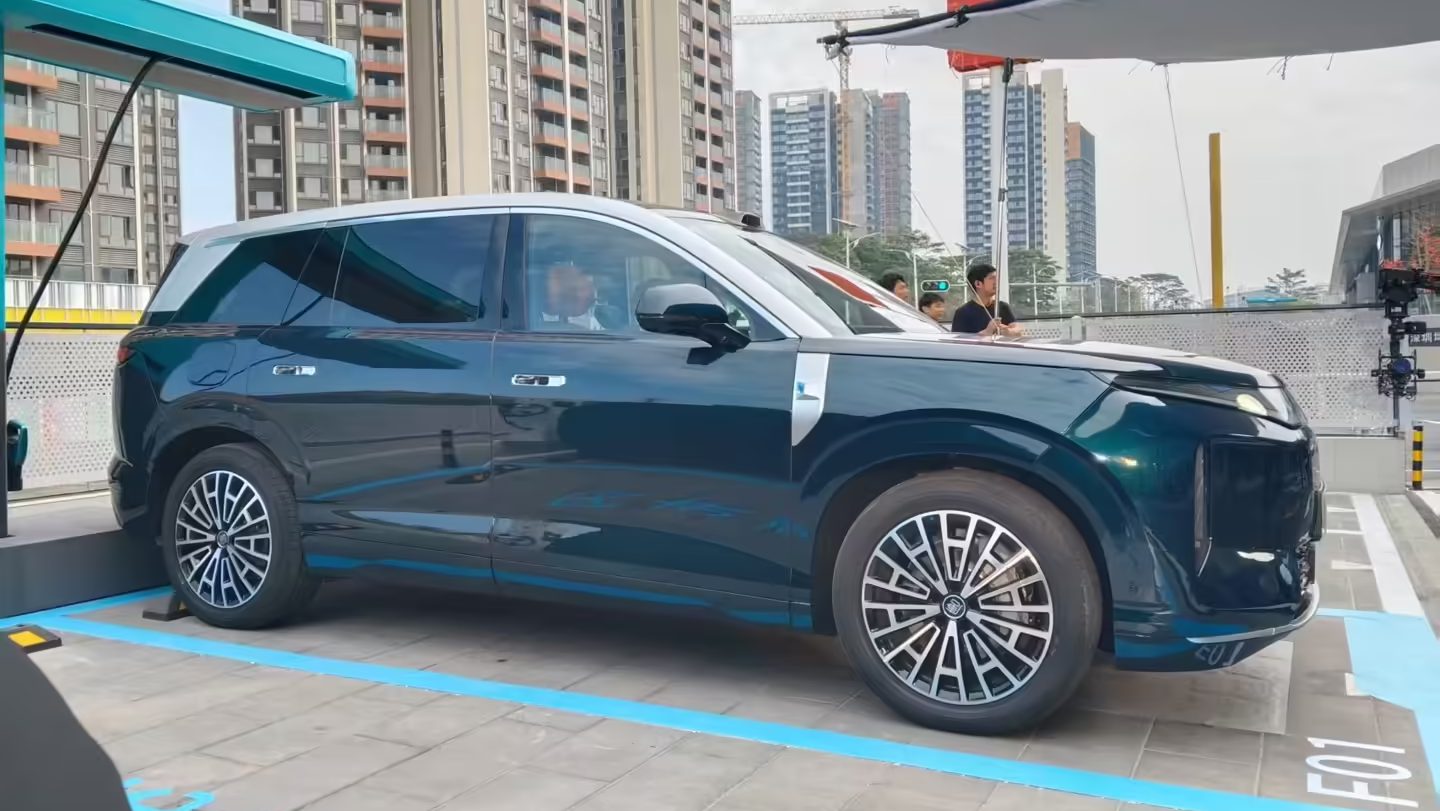
In addition, BYD has the larger Tang 9, which was seen in spy shots recently. This vehicle actually had the next-generation flash charger behind it in the shots, but most of us didn’t notice because we were looking at the car. BYD’s premium brands (Yang Wang, Fang Cheng Bao, Denza) are also expected to roll out 1000V architecture across most of their ranges this year, with several of the new flash chargers seen at dealerships for those brands.
Beyond BEVs, rumors on the next-generation DM-i 6.0 indicate up to 400 km of range and flash charging on those PHEV models. In addition, while they might not be able to accept a full megawatt of power, some of the upgraded EVs that have recently shown up in regulatory filings are expected to charge much faster. We will have to wait to see more. Some customers are also likely waiting for the next release, based on recent sales data.
The Charging Landscape is Growing and Evolving
China already has over 20 million chargers and is planning on 28 million by 2027. While the tens of thousands of flash chargers BYD is in the process of installing now would be massive in the US, it is a small sliver of the total in China. However, if used along major arteries, they could significantly speed up long-distance travel. In addition, at places like airports, they could quickly get cars back on the road (DiDi has a flash charging partnership with BYD). In addition, BYD can scale up quickly.
However, I can see some potential challenges moving forward. These chargers are backwards compatible with other EVs that charge much slower. If people charging at 100 kW start taking up space at chargers capable of over 10× that speed, it could lead to underutilization. It will be interesting to see what solution they come up with (charge by the minute and kWh). We wouldn’t want cars charging slowly to make “slothing” the new “ICEing.”
While most of these chargers are likely to be installed in China in the near term, BYD is also bringing megawatt flash charging to Europe. This could present further challenges. Not only are there fewer BYD vehicles that can charge at 10C currently in Europe, but there are also fewer other vehicles that can charge over 5C. Will the rollout be limited to a few locations for BYD and its partners to start? Or will it be more widespread, stimulating sales of faster-charging vehicles?
Overall, BYD seems to be iterating quickly on its chargers. Power is not the only aspect that seems to be improving, as a lot of thought is going into the design to enable smooth, high-frequency charger usage. Vehicles are also iterating quickly to take better advantage of the new chargers. In combination, a new flash charging ecosystem is emerging at “China speed.” While we will be isolated from it in the US, 5-minute charging could quickly become standard for “high speed” globally, while the DC charging that we used to call “fast” becomes standard for everyday use. That could quickly change how people use EVs, especially people living in apartments. That change in usage can change the perception of EVs in the marketplace, making the edge cases used to justify continued ICE sales insignificant.
Support CleanTechnica via Kickstarter

Sign up for CleanTechnica’s Weekly Substack for Zach and Scott’s in-depth analyses and high level summaries, sign up for our daily newsletter, and follow us on Google News!
Have a tip for CleanTechnica? Want to advertise? Want to suggest a guest for our CleanTech Talk podcast? Contact us here.
Sign up for our daily newsletter for 15 new cleantech stories a day. Or sign up for our weekly one on top stories of the week if daily is too frequent.
CleanTechnica uses affiliate links. See our policy here.
CleanTechnica’s Comment Policy
cleantechnica.com
#BYDs #Turquois #TShaped #SecondGeneration #Flash #Chargers #Dealers #Ahead #Launch


