


Hi, I’m Byron, and I believe ADAS is a four-letter word.
No, that’s not a language your phone can translate. ADAS is short for “Advanced Driver Assistance Systems,” which is an inherently meaningless catch-all term that refers to any software-based safety system that provides a digital safety margin in between you and the world around you. Lane keeping assist, automatic emergency braking, adaptive cruise control—even Tesla’s so-called Full Self-Driving—are all examples of ADAS. And, generally speaking, I hate each and every one of them.
It’s not that they’re necessarily bad, at least objectively—though there’s an argument to be made to the contrary on a behavioral level. I simply take issue with their proclivity for going outside the chain of command and intervening when they’re neither needed nor wanted. There are few things more frustrating than fighting against an electronic nanny that is trying unnecessarily to save me from myself.
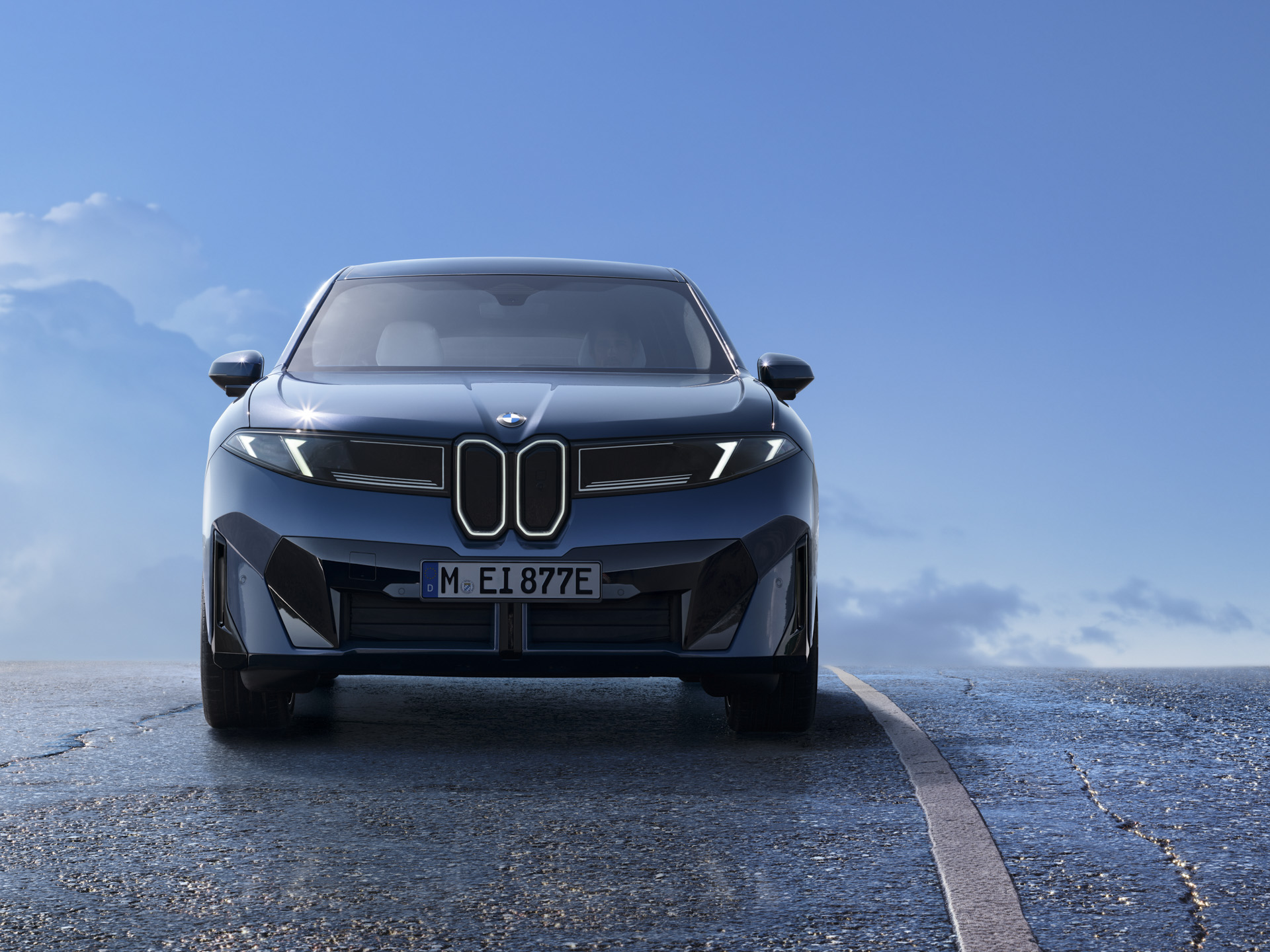
Picture this:
You’re driving along on a two-lane country road. You enter a small town. Near its small business district, you come upon a delivery truck blocking your travel lane. There’s nobody coming the other way, so you gently guide your car toward the oncoming lane to execute a pass.
BEEP BEEP BEEP! BEEP BEEP BEEP!
That’s your lane departure warning, of course. And now the lane keeping assist is trying to nudge the wheel back toward the right, even though there’s a parked truck in the way. You jerk the wheel to the left again, overriding the system. Then you complete the pass and move on with your day. Or, if you’re like me, you spend five minutes digging through menus to figure out how the hell you forgot to turn that crap off.
But there’s somebody new in town, clad in blue and white. It’s BMW! And its “superbrain” architecture is the hero I need right now. Its superpower? Granting its new ADAS suite the unique ability to not do anything at all. No, I don’t mean you can turn it off; that functionality is already pretty much universal. And while I’m certain BMW has improved its object detection capabilities and made its system less prone to false positives, that’s not it either.

I’m talking about a system that can basically read your mind—or at least your eyes—well enough to know when it should make like a reformed back-seat driver and, well, STFU.
Let’s run that scenario again, only this time, we’re in a BMW Neue Klasse of some sort.
We approach the truck, systems fully engaged, and we go to make the same maneuver, only this time, nothing happens. Why? Because BMW has trained its software suite to recognize the signs of intent.
When you look for traffic in the oncoming lane, BMW’s eye sensor—the same one that can already track driver attention and even suss out the early signs of drowsiness—detects your glance. When you pair that look with a matching steering input, the system knows you’re doing something on purpose. Unless it detects an obvious immediate safety threat in your new path, it won’t sound any alarms or intervene to correct your steering wheel input.
Instead? Silent compliance. Or, as I like to call it, the dream.
BMW’s new logic also helps smooth transitions between hands-on and hands-free driving modes, essentially eliminating the need to turn them on or off at all; the car will simply respond to inputs by surrendering control to the driver. It also only scratches the surface of what BMW’s new electrical architecture can achieve; expect more smart integration of systems like this down the line.
Got a tip? Let us know at tips@thedrive.com.
www.thedrive.com
#BMWs #Driving #Aids #Read #Mind


