


AGRA The bustling lanes of Noori Darwaza, historically renowned as the capital of Agra’s ₹500-crore petha industry, are falling silent. Shortage of commercial liquefied petroleum gas (LPG), sparked by the US-Iran conflict in West Asia, has left hundreds of manufacturers without a viable fuel source, bringing the production of India’s iconic confection to a near halt.
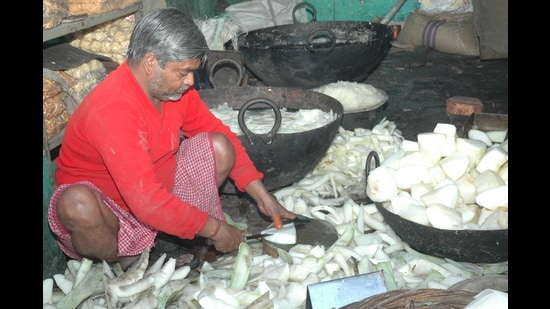
Legend has it that this market earned its fame centuries ago when Mughal empress Noor Jahan stopped to admire and taste the sweet. Today, the market is a pale shadow of its golden past.
According to Rajesh Agarwal, president of the Shaheed Bhagat Singh Kuteer Petha Association, the majority of the city’s 500 petha-making units have either suspended operations or are limping along on dwindling cylinder reserves, with only a handful of major brands managing to weather the storm.
“There seems to be no way out for the survival of the petha industry,” he said, lamenting the plight of the petha industry, otherwise listed in the ambitious ‘One District, One Product’ scheme of the UP government.
“We are yet to comprehend as to how the petha industry missed out on supply of eco-friendly gas offered after orders by Supreme Court in 1996 (MC Mehta Vs Union of India) and petha industry had to give up coke and coal and rely on commercial gas, which is beyond reach these days” he added.
In a 1996 judgment, the Supreme Court expressed concern over impact of industrial pollution on Taj Mahal and use of coal/coke by industries within the Taj Trapezium Zone (TTZ), which included Agra, Mathura, Firozabad and part of Bharatpur.
Industries in TTZ were asked either to shut down, move to eco-friendly fuel supplied by GAIL (gas) or relocate beyond the region.
Till 1996, petha industry was relying heavily on coke/coal as fuel, but the district administration raided units continuing to use coke/coal as fuel. The glass industry in Firozabad chose to shift to eco-friendly gas offered by GAIL while Agra’s foundry units mostly closed down, but the petha industry slowly shifted to commercial gas cylinders as fuel, supply which was curtailed after the West Asia conflict.
Local authorities maintain that fuel distribution is continuing, albeit under strict rationing. District supply officer (DSO) Anand Singh clarified that consumers with valid commercial connections are receiving 20% of their average consumption from the past three months. However, the unorganised nature of the trade means many small-scale units lack official connections entirely and cannot access even this limited supply.
He said there is no blanket restriction on supply of commercial gas provided consumers have valid connections.
A recent crackdown on illegal fuel use has further squeezed the industry. On March 14, the DSO led a raid in Noori Darwaza, seizing 42 domestic gas cylinders and lodging an FIR. While some manufacturers have attempted to relocate to rural areas where coal and coke are easier to use covertly, strict administrative vigilance has made operations difficult and left many city workers facing unemployment.
“There seems to be no way out for the survival of petha industry. Petha is made of raw fruit and farmers growing it are unable to find buyers with more petha units closing or reducing production,” added Agarwal.
Compounding the industry’s woes is a sharp decline in tourist footfall during the peak October-to-March season, which locals attribute to global fuel uncertainties discouraging travel.
Rahul Goyal, a dealer in petha business, highlighted that cash flow in petha trade is drying up as the raw fruit (ash gourd) is lying unused with low production in units. The fruit selling at ₹10 per kg is half the price now, making it tough for farmers growing it.
“Most of the petha units are operating on a small scale and do not have gas connections. Even those having connections are finding it tough with curtailed supply of commercial gas. Looking for alternatives is the only viable option,” he added.
.
www.hindustantimes.com
#Agras #500crore #petha #trade #dries #gas #crunch


