


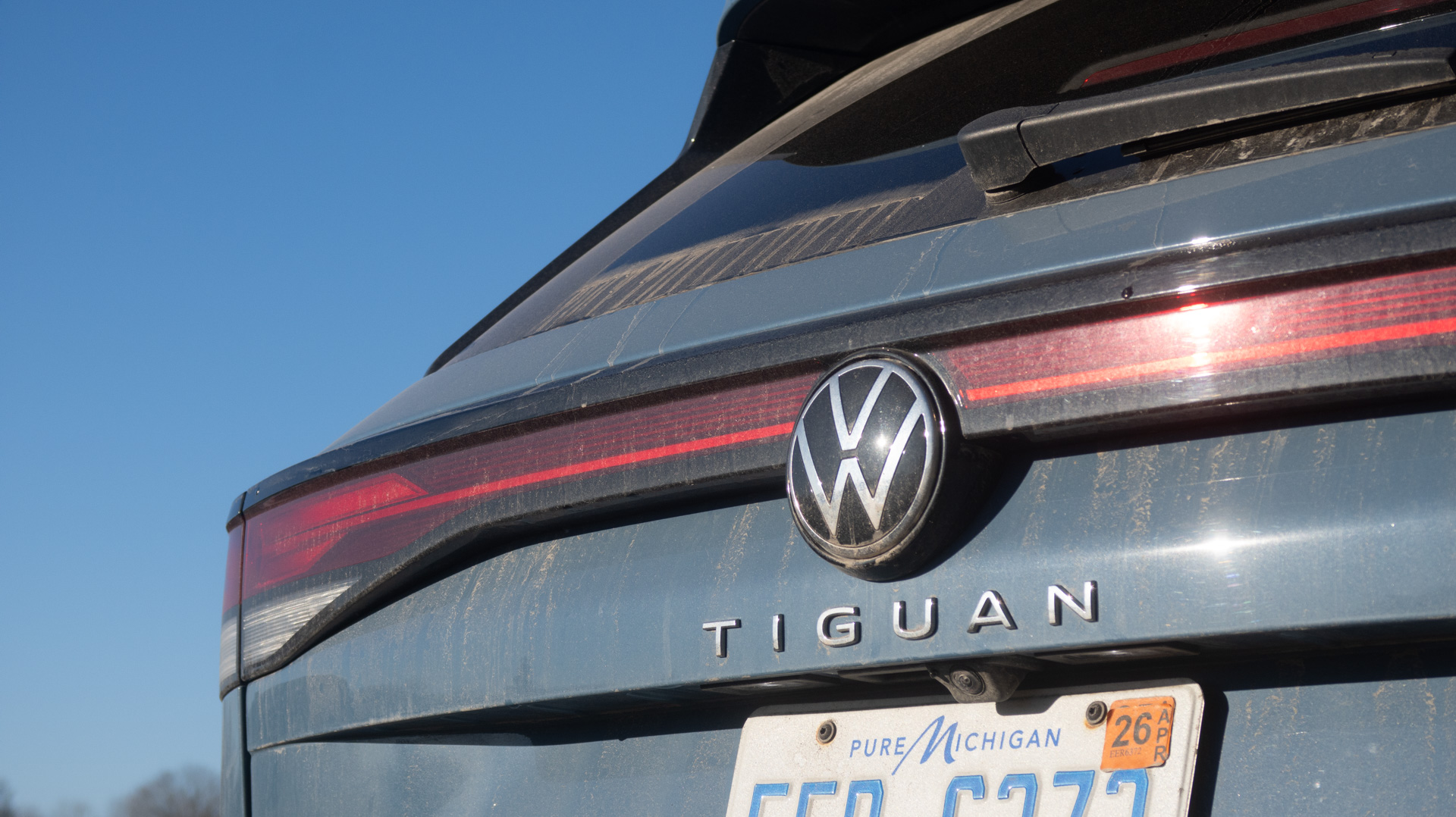
The 2026 Volkswagen Tiguan SE has a pretty compelling combination of practical proportions and user-friendliness. On a long ride across New England, where I braved everything from sunshine to snowstorms, I really grew to enjoy this modestly appointed machine.
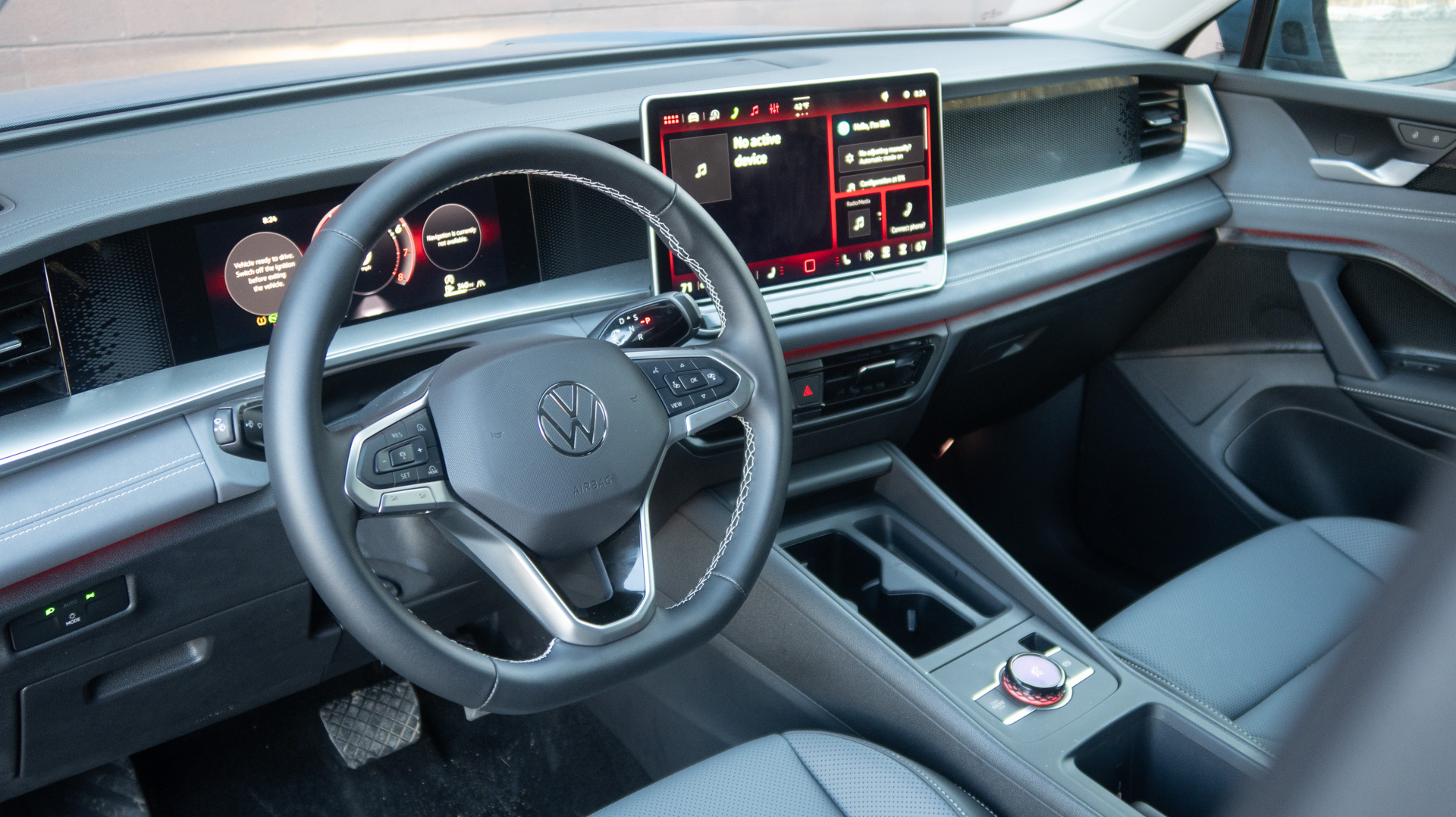
There’s an inkling that’s been percolating in my brain lately: Top-trim models are no longer the best. The Tiguan brought this to mind after just reading our original review of a high-spec SEL model. Take a look at the cockpit of this SE model versus the high-feature SEL. I think this vehicle actually looks better with simple plastic than leather and wood textures.
The Tiguan SE is an honest car; aesthetically cohesive and capable. Not an exceptional vehicle in any particular direction, but a nice package at a reasonable price.
The Basics
VW got the name “Tiguan” from a public name-the-car contest (seriously) almost 20 years ago now. It’s a mashup of “tiger” and “iguana,” as substantiated by The New York Times and an ancient Consumer Guide review. I love the absurdity of that, though it’s where the whimsy ends.
The Tiguan is a quintessential modern-day people’s car: a small-ish SUV with room for four-plus-cargo (or two-plus-Home Depot run). Powertrain is, you guessed it, a two-liter turbo four with all-wheel drive. VW says you can get 30 mpg on the highway, which is about what I observed. This is essentially your Euro alternative to the Toyota RAV4, Honda CR-V, Mazda CX-5, and Hyundai Tucson.
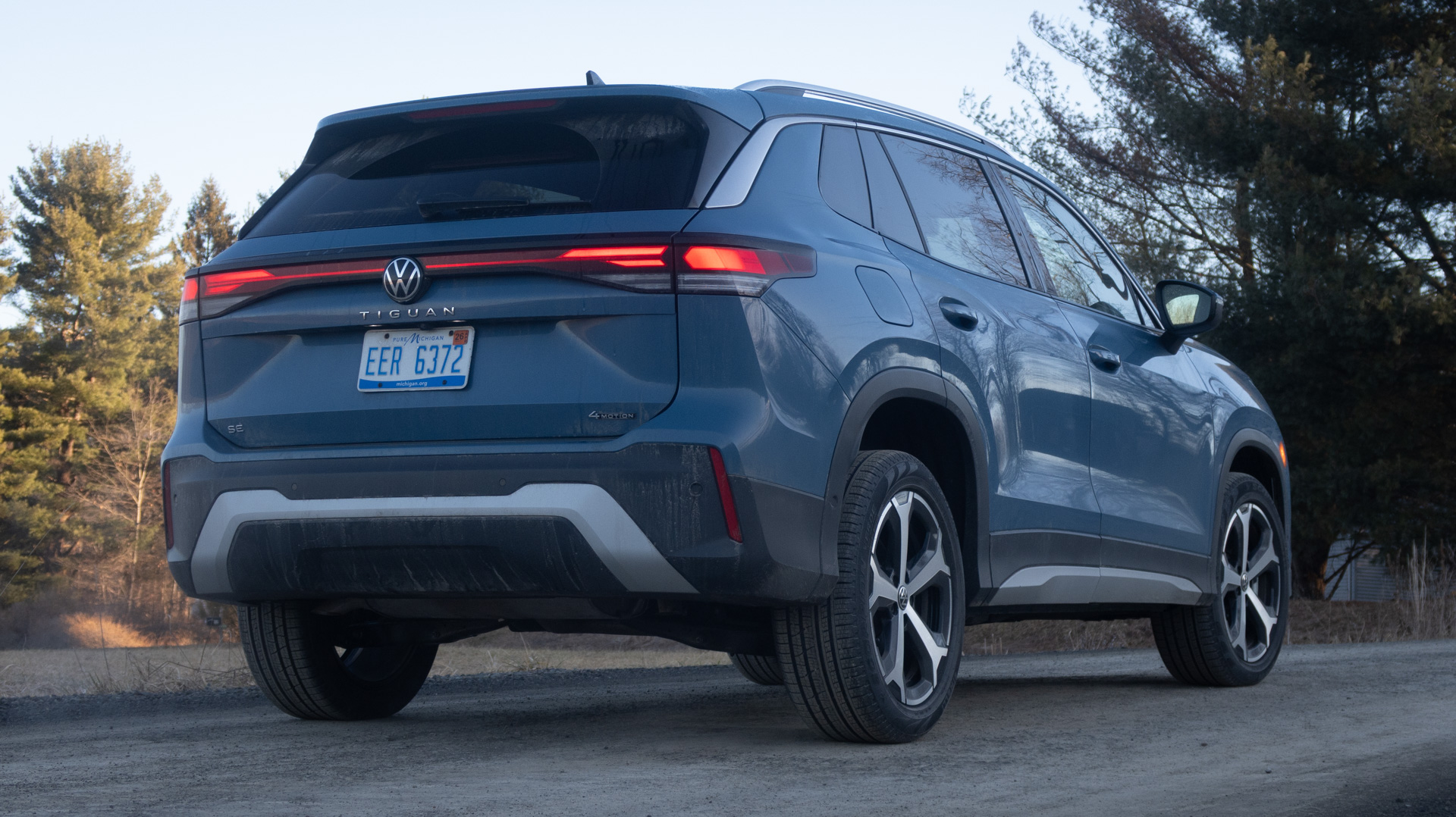
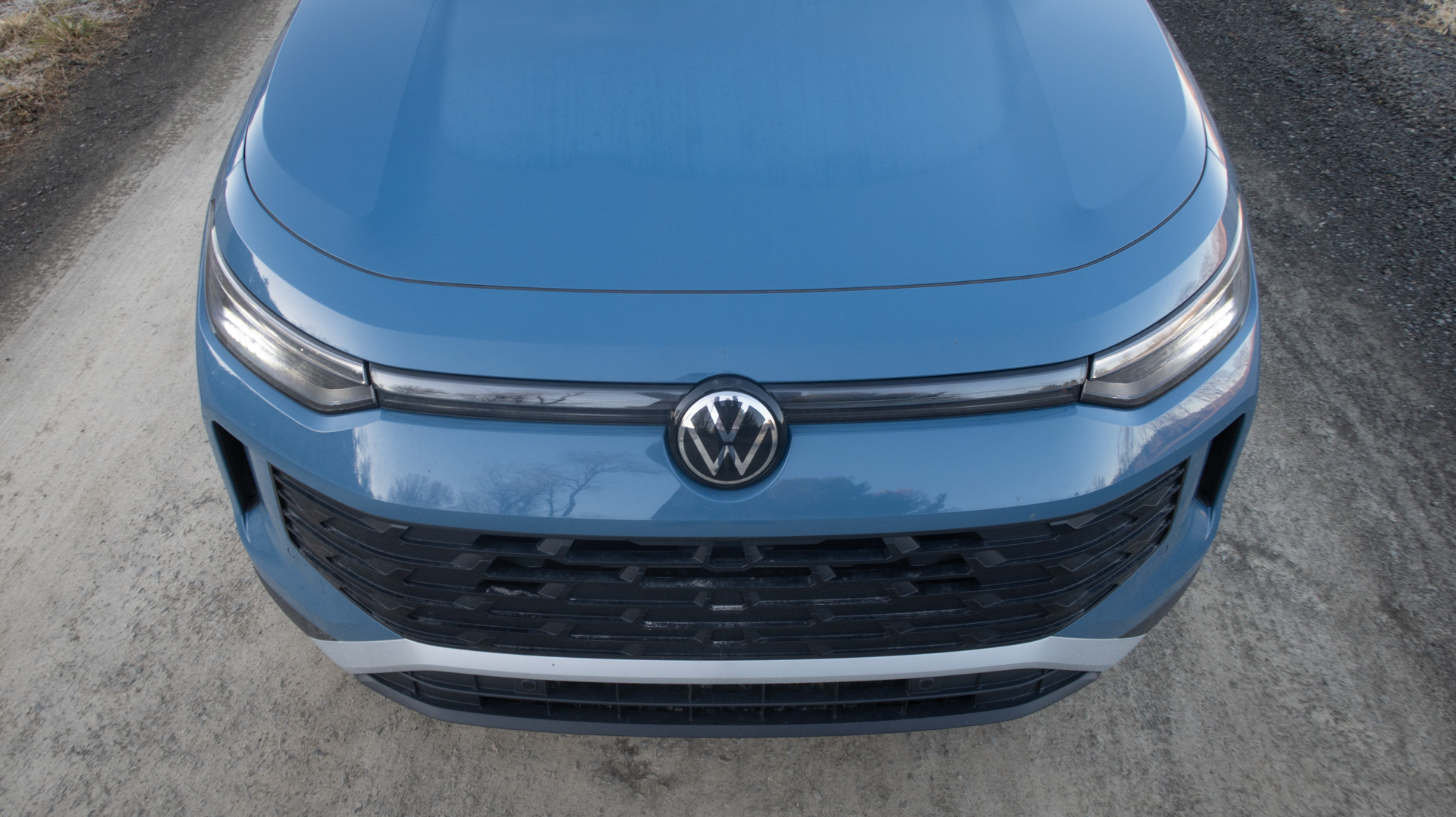
The design, inside and out, is clean without falling into the lifeless chasm of minimalism—it’s quite German. It is not a car of flash or gimmicks. You do get a wide selection of ambient lighting modes, though.
Driving the Tiguan
After driving this all the way from my little ranch in New York’s Hudson Valley to Stowe, Vermont, and back again, I’m struggling to find things to complain about in terms of the Tiguan’s driving dynamics. Steering is fine, acceleration is fine, braking is fine, the traction control system guided me deftly over some nasty frozen roads. Fuel economy could be better. The car’s very easy to see out of and behaves as you expect it to—there’s not much more to ask from a family SUV like this.
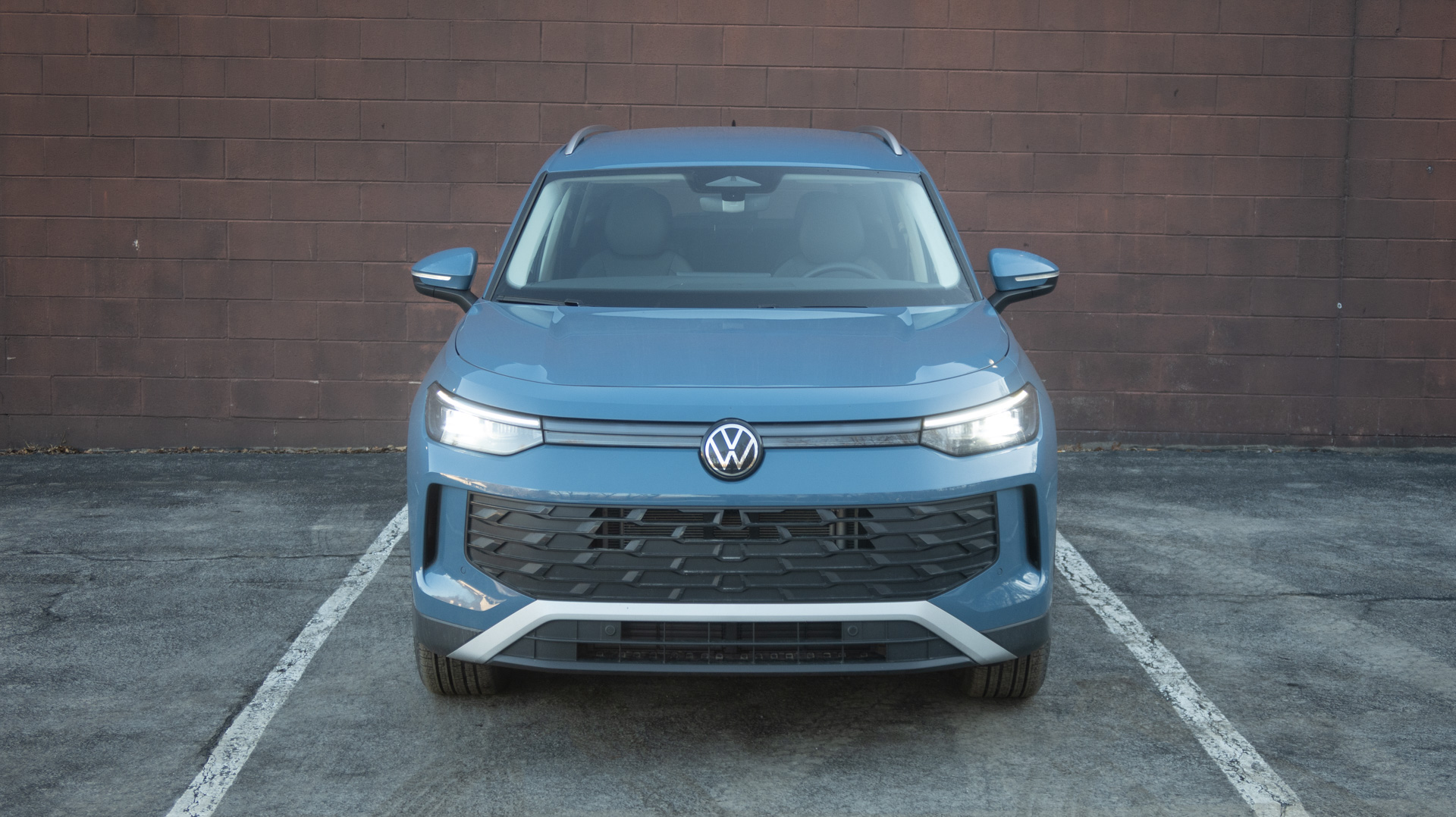
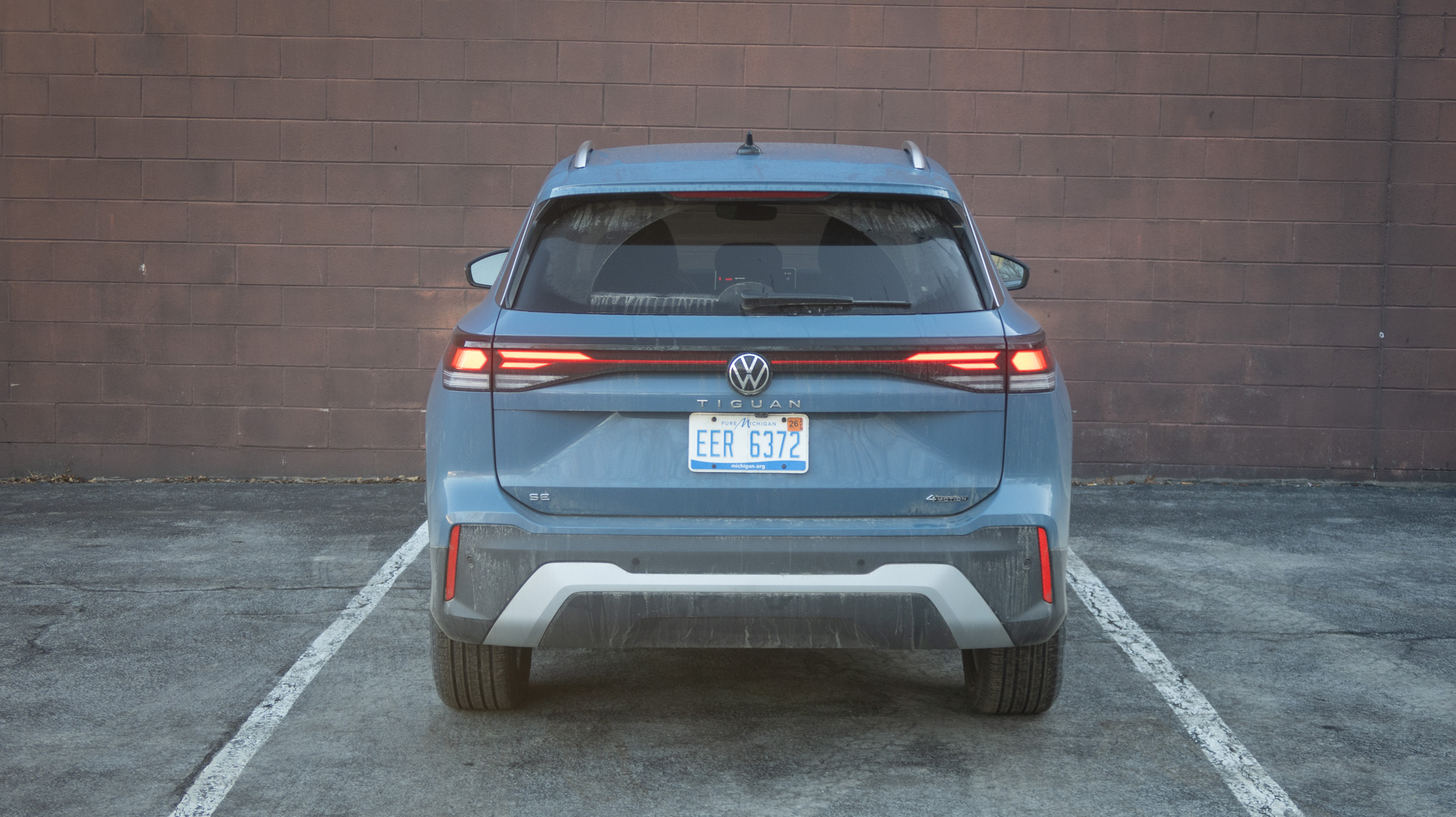
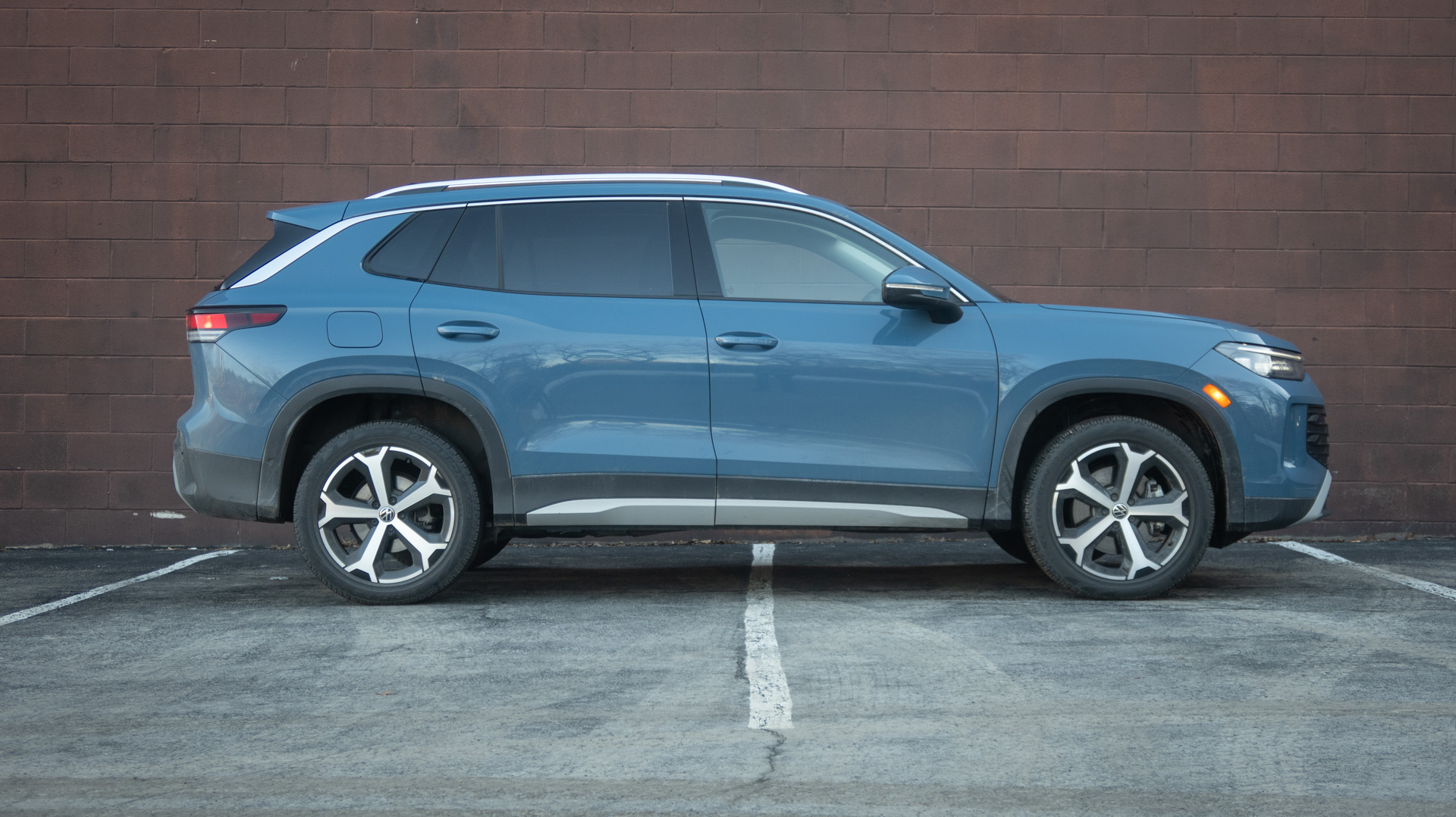
I was pleasantly surprised by how well the car balances daily drivable softness with confidence-inspiring responsiveness. It trends towards taut and secure rather than plush and floaty; steering reacts quickly for a compact SUV like this. I like it. Acceleration is a little less urgent; the car’s not disconcertingly slow, but it takes a noticeable beat to take off when you want to scoot from a stop. The brake pedal travel is a little long, too. Not necessarily a bad thing. In fact, as you get used to it, it becomes easy to stop with limo-smoothness.
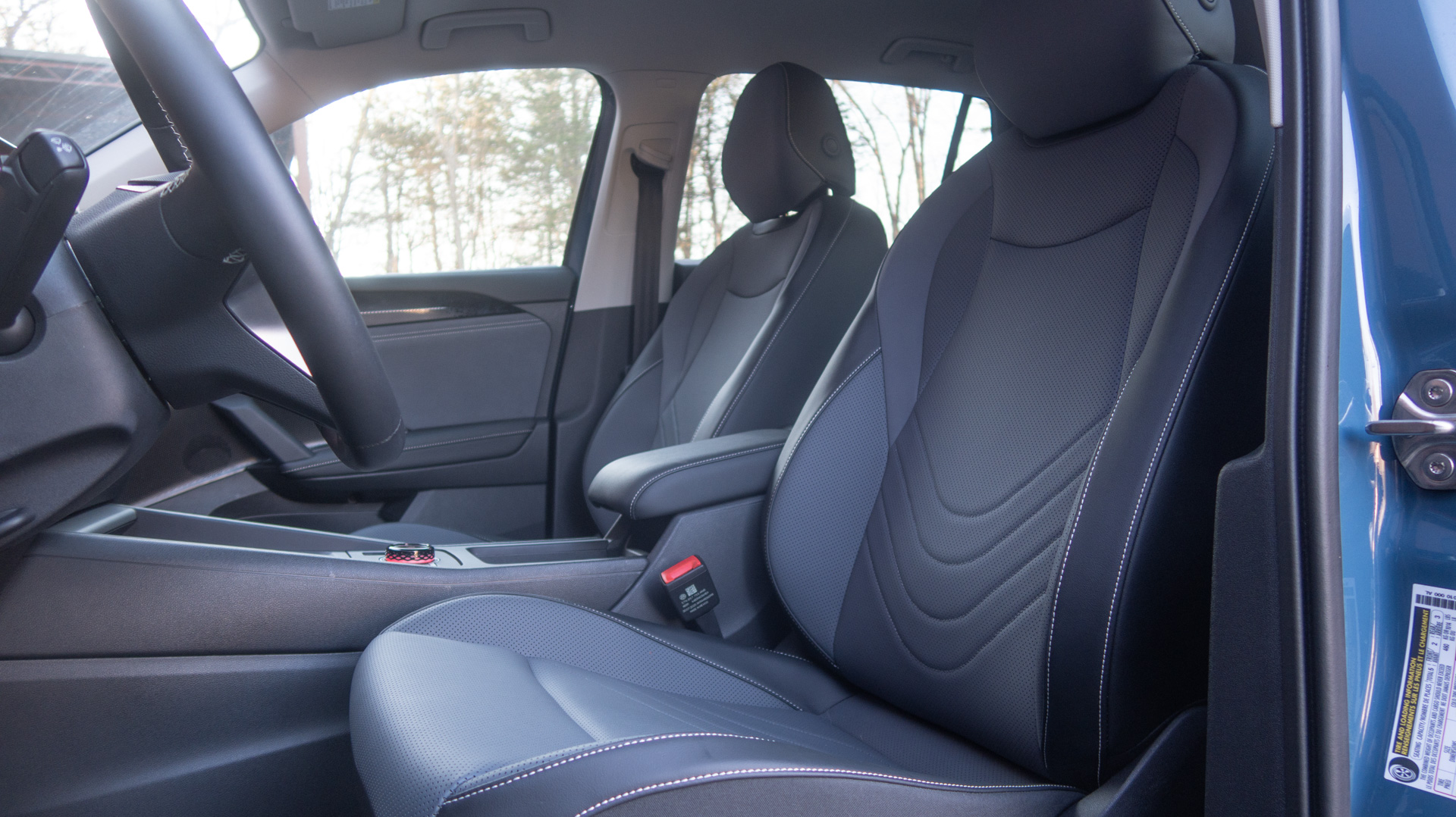
The seats are a bit firmer and more aggressively bolstered than those in other vehicles I’ve driven in this segment—whether that’s a pro or a con depends on your body type. I enjoyed it.
The shifter, a little twist-style stalk coming off the steering column, took some getting used to, but it does free up space in the center console. The area between driver and passenger has a good selection of storage options, and one multifunction knob that you can toggle between volume control and menu control. It works better than you might think, though, again, does require some personal calibration.
Highs and Lows
The design and on-road behavior are both really well optimized for what this car should be: mass-appeal, inoffensive, easy. It looks good, but certainly does not demand attention. It drives predictably and competently. Various interior lighting and display configuration modes provide a good little catalog of on-the-fly personalization options.
Take a swipe through the interior details here:
The biggest low for me, easily, is the oversized, caricature-like central display screen and awful slider control directly below it. A screen this size provides no practical value to the user; it just makes more negative space between buttons. The sooner consumers understand this and automakers accept it, the better.
But around-town gas mileage is really where the Tiguan kind of withers under close scrutiny. I’ll come back to that.
Features, Options, and Competition
The front-drive Tiguan S starts at about $31,000. This SE model I tested starts around $34,000 with front-wheel drive, and my all-wheel-drive (4Motion) test car rang up just over $37,000 with destination and one lone option: Monterey Blue paint for $455. Stepping up from the S model gets you nicer wheels, a power liftgate, a power driver’s seat, and interior ambient lighting. SE R-Line adds a panoramic sunroof, heads-up display, and 20-inch wheels (starts around $37,000 with front-wheel drive), and the top of the range is the SEL R-Line Turbo (from $43,000), which has a more powerful engine, nicer seats, a better stereo, and a bunch of interior climate features like rear heated seats.
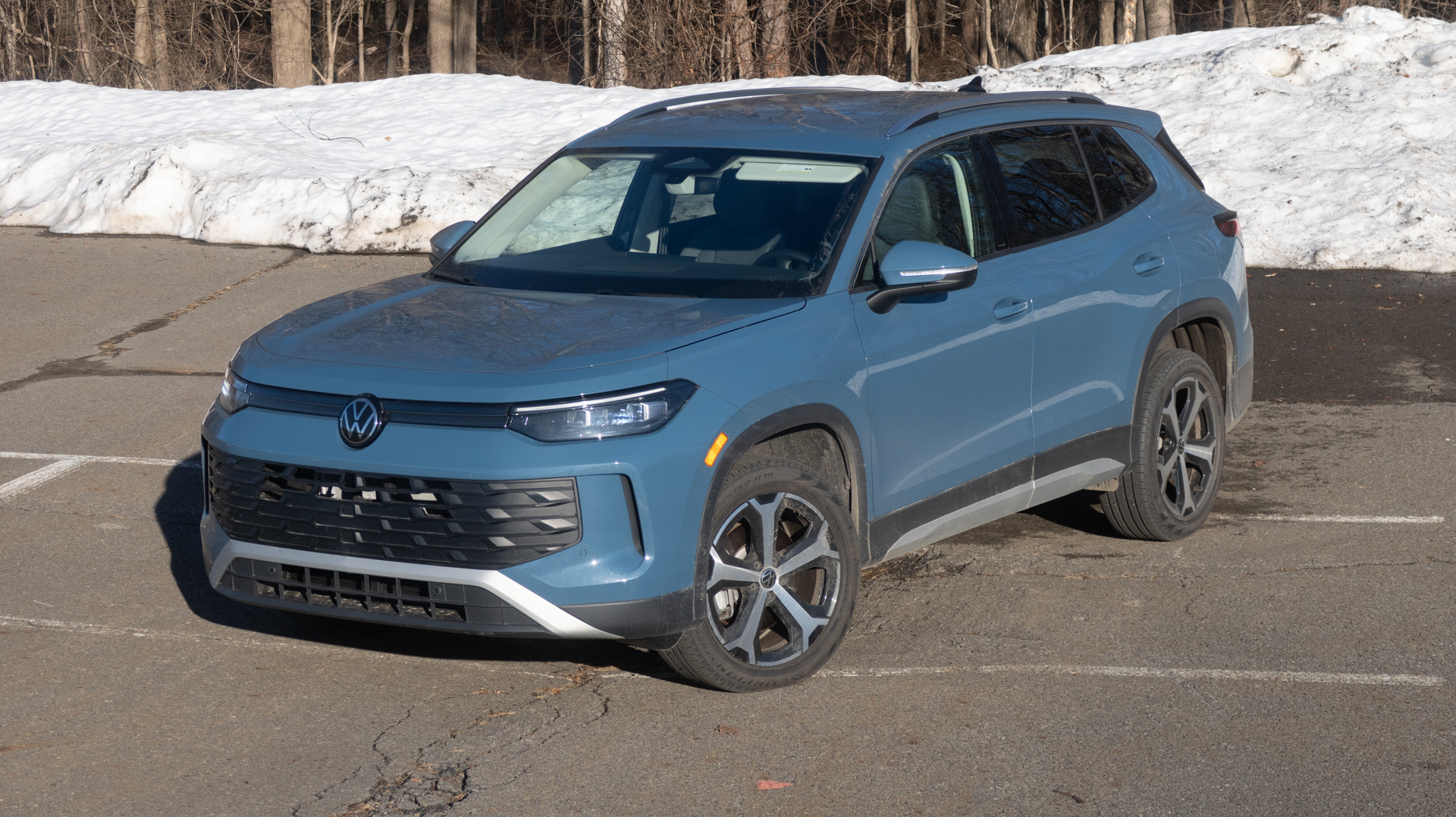
I would not call our SE generously equipped, but the standard loadout does include 10 airbags, adaptive LED headlights, heated front seats, plenty of USB charging ports, Volkswagen Digital Cockpit Pro (the gauge cluster with a lot of customizability), and VW’s “IQ.DRIVE” suite of driver assistance features, including adaptive cruise, front collision mitigation, and other similar systems.
The Tiguan competes in essentially the hottest North American market car category outside pickup trucks: small daily-driver SUVs. As we mentioned, the Toyota RAV4 and Honda CR-V own a lot of the space here. The VW felt a tiny bit firmer, not just in the seat but also in ride and steering, than its rivals that I’ve driven.
Fuel Economy
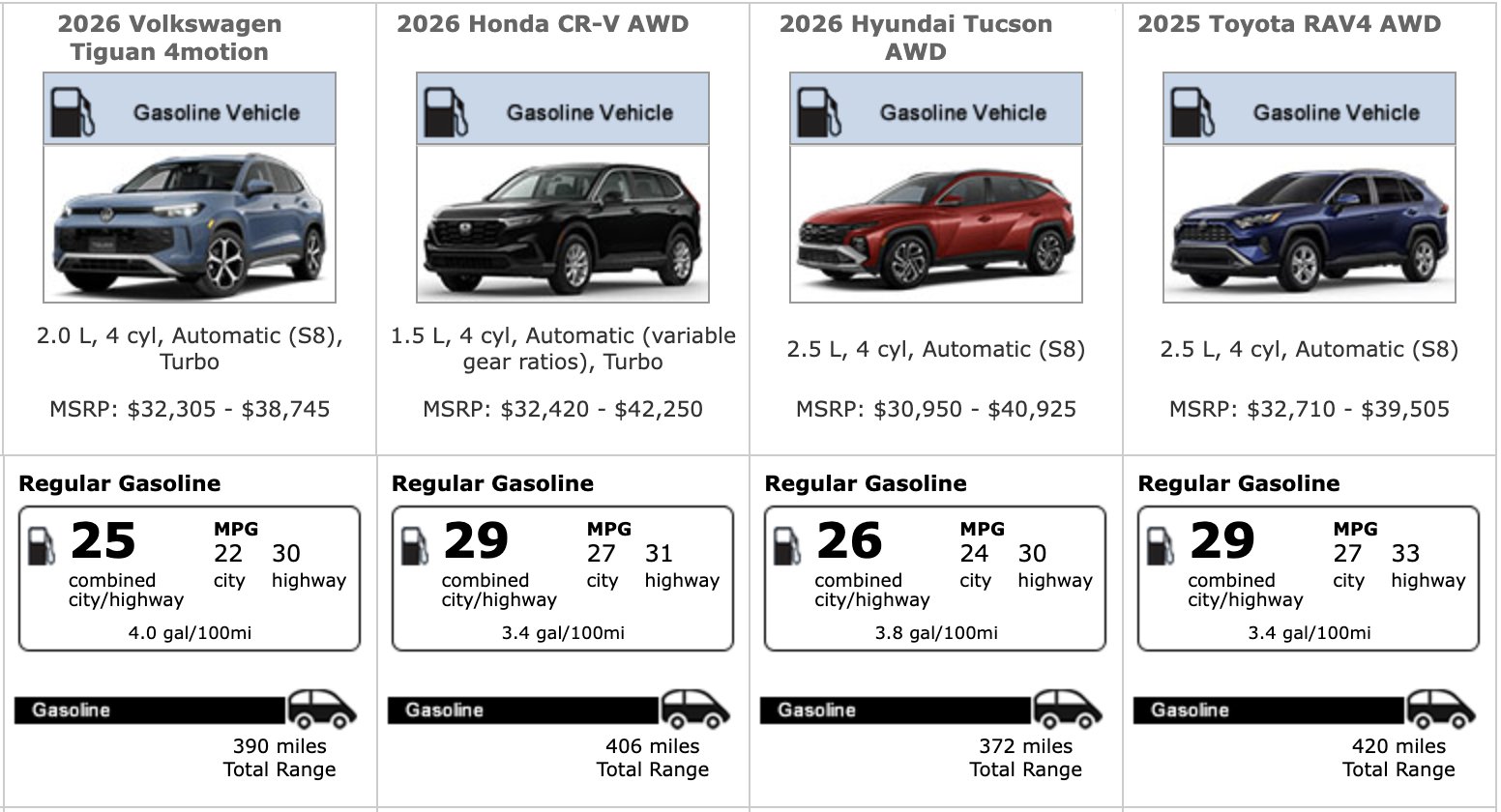
A Tiguan hybrid is inbound, but this version just runs a good ol’ four-cylinder turbo. It’s not as efficient as its rivals, even their non-hybrid variants. The delta is small in highway economy, but all of the Tiguan’s Asian rivals do a much better job of saving fuel in town, yielding better combined-driving mpg ratings.
In fact, I’d say city fuel economy is Tiguan’s biggest downside. You’re most likely buying one of these to shuttle your family, pets, and possessions around town—so going for a VW that gets 22 mpg city against a Honda that gets 27 mpg could be a bit of a head-scratcher. With a little napkin math—assuming 7,000 miles of annual city driving and gas at $4.50 a gallon—it would cost you about an extra $265 a year to use the VW for the same journeys. If three hundred bucks is going to make or break your year, you’re not in a position to buy a brand new car. That said, it’s nothing. And the number only swells the longer you own the vehicle.
Value and Verdict
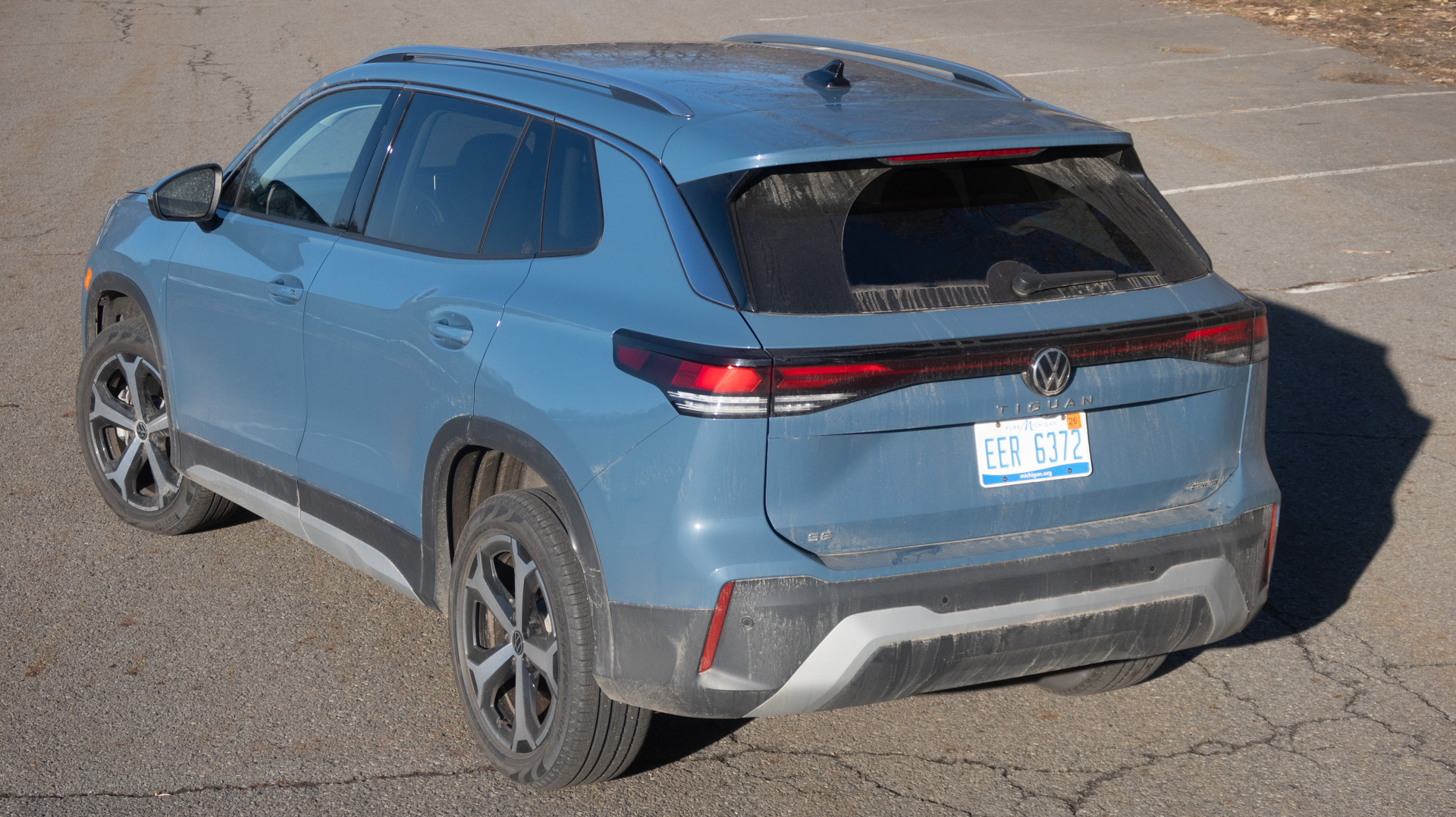
Based purely on specs, the Tiguan does not present a particularly compelling case against its lower-ownership-cost rivals. However, it looks good and feels good, and when it comes to cars, that can count for a lot. Of course, you want the most bang for your buck, especially in this category of vehicles built around practicality and value. But the Tiguan’s cockpit is comfortable and welcoming. The vehicle looks tight from every exterior angle. The interior lighting modes are fun.
All this to say, if you told me you wanted this over the Japanese and Korean options based on vibes alone, I get it. Even though this car is not exceptionally expressive or extreme, it does aesthetically differentiate itself in a pleasing way. I enjoyed my time in the Tiguan.
Volkswagen provided The Drive with a seven-day loan of this vehicle for the purpose of writing this review.
2026 Volkswagen Tiguan SE 4Motion Specs
| Base Price (As Tested) | $35,105 ($37,035) |
| Powertrain | 2.0-liter turbocharged inline-four | all-wheel drive | 8-speed automatic transmission |
| Horsepower | 201 hp |
| EPA MPG | 22 city | 30 highway | 25 combined |
| Curb Weight | 3,801 pounds |
| Cargo Space | 33.8 cu ft behind second row 69.8 cu ft behind first row |
| EPA MPG | 22 city | 30 highway | 25 combined |
| Score | 7/10 |
www.thedrive.com
#Daily #Full #Good #Vibes


