Support CleanTechnica’s work through a Substack subscription or on Stripe.
Finally, the wait is over. After 20 years of fits and starts, the US automaker Aptera has finally reached a critical milestone. Aptera has a long way to go before it can catch up to industry leader Tesla, but the startup has 50,000 reservations in hand for its solar-powered EVs, and its first five validation vehicles have just rolled off the assembly line.
Aptera’s EVs Almost Didn’t Make It
For those of you following the Aptera saga on and off, yes, the company has encountered more than one hitch along the way, and for a while there it seemed dead in the water. However, persistence pays off.
Aptera launched in 2006, just three years after Tesla entered the scene, but the two companies traveled in vastly different directions.
In 2009, the US Department of Energy tapped Tesla for a $465 million loan guarantee, aimed at driving down the cost of mass-produced electric cars. Tesla paid off the loan in 2013 to much acclaim, and the rest is history.
Aptera was also in line for an Energy Department loan guarantee just two years later, negotiated in 2011. However, the company reportedly failed to engage enough funds from private investors to make the Energy Department’s $150 million offer stick, and it went into liquidation shortly after.
Among the reasons for the sputtering-out was Aptera’s foundational vehicle, a futuristic, battery-electric car that could recharge itself from onboard solar panels. EV batteries and solar panels were much more expensive in the early 2000’s than they are now, and combining them in one vehicle was a tricky business. Other solar-electric automotive innovators also found out the hard way. The solar-powered Scion from the German firm Sono Motors, for example, was full of promise as recently as 2022, only to halt production the following year.
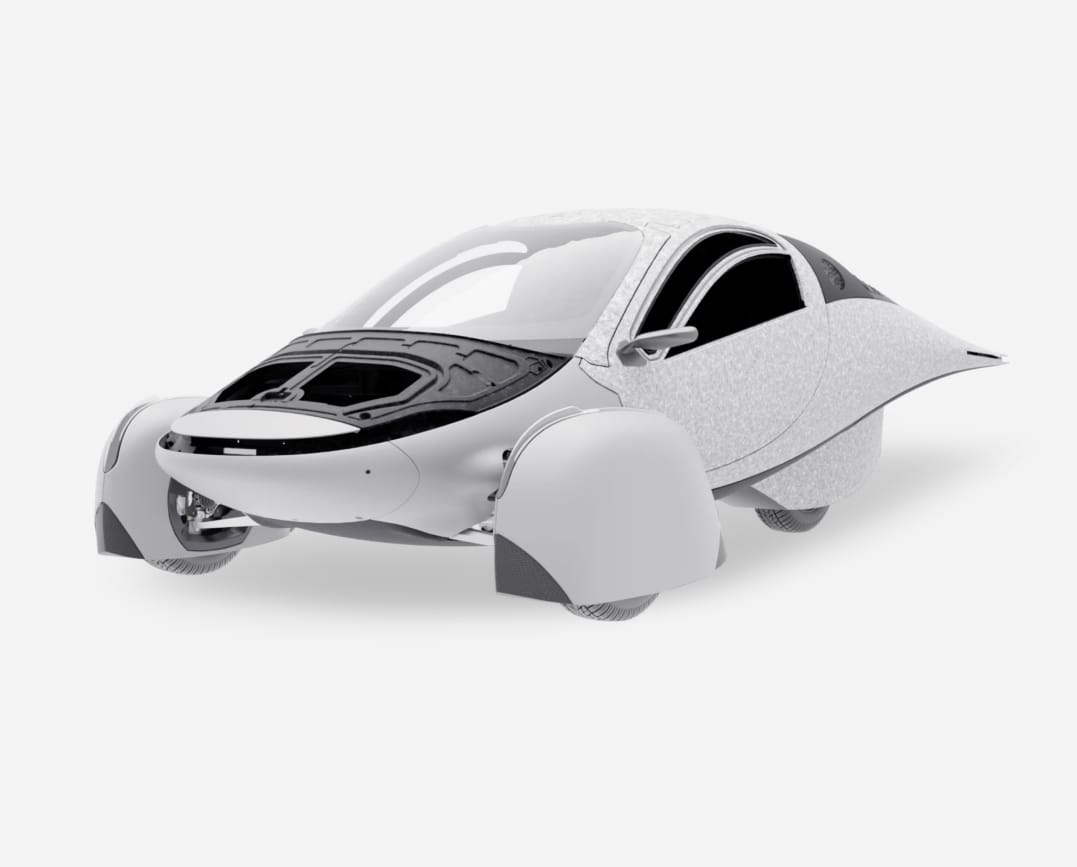
In addition to the cost factor, Aptera’s new EV was not actually a car. It was an autocycle, meaning a three-wheeled vehicle but not a three-wheeled motorcycle. In the US, autocycles are regulated as their own thing. The driver doesn’t need a motorcycle license, just an ordinary driver’s license. The driver also does not straddle the seat or use handlebars, as in a motorcycle. An autocycle seat is sat in just like a standard car seat, and the driver uses a steering wheel. To gild the three-wheeled lily, autocycles can fit the driver and passenger side-by-side in the same carriage.
Autocycles were fairly common in some markets through the mid-20th century, but the bloom was way off the rose by the early 2000’s, particularly in the US.
The Return Of Aptera: EVs Are A Public Benefit
Aptera 2.0 was a different matter. It took about nine years or so, but Aptera rose from the ashes in 2020 in the form of Aptera Motors Corp., headquartered in Carlsbad, California, with co-CEOs Chris Anthony and Steve Fambro at the helm.
This time around, Aptera was ready to meet the moment, and the autocycle moment was beginning to meet Aptera. In 2024, CleanTechnica noted that the “trippy earthbound space ship” styling of its autocycle was not so trippy any more, considering the emerging interest of other automakers in autocycles with a futuristic flair, Yamaha being one example (here’s another). With the new reboot, Aptera aims to capture autocycle-curious EV buyers who desire a two-in-one vehicle that can be showy and utilitarian as well, suitable for commuting, errand-running, and longer trips.
After that, it was off to the races. In March of 2025, the company released a YouTube video putting its three-wheeler on the road from Arizona to California. “What makes this video important is that the trip was done on one battery in the production-intent build of the vehicle…. While minor changes are still possible, they probably wouldn’t be something the average person nor the enthusiast would be aware of without being told about them. Aptera is that far along in the process,” observed CleanTechnica’s Jennifer Sensiba.
In October of last year, Aptera also announced its transition to the status of a Public Benefit Corporation under Delaware law. “Public Benefit Corporations are a distinct class of companies recognized under Delaware law that balance financial performance with public benefits such as social and environmental responsibility,” the company explained.
“As a PBC, Aptera’s performance is measured not only by economic results, but also by how effectively it promotes its stated public benefit: advancing solar mobility to reduce energy dependence and environmental impact,” the company elaborated.
In March of this year, Aptera recapped its progress towards producing a small batch of vehicles for further validation on a down-scaled production line consisting of 14 work stations. “Vehicles produced on the low-volume validation line are allocated to specific testing programs, including thermal validation, brake performance, and some destructive testing,” Aptera noted.
In the latest development, on May 12, Aptera celebrated the first five vehicles to roll off the low-volume line.
“Each vehicle has been built on Aptera’s low-volume validation assembly line in Carlsbad, California, where trained technicians move through 14 stations using processes designed to scale. Running multiple vehicles through the line in sequence validates not only the vehicle itself, but the system required to build it consistently,” Aptera explained.
First There Were Five…
With the US economy spiraling downwards, it’s difficult to make the case for a pricey, weird-looking, semi-utilitarian EV. After all, Tesla CEO Elon Musk tried something similar with the Cybertruck, only to see his pet project devolve into an Edsel-worthy sales performance. And no, selling cars to yourself does not count.
The sorry state of the US economy regardless, US President Donald Trump made the case for EVs stronger than ever before after February 28 of this year, when he launched a war against Iran leading to a quick spiral-up in global fuel markets. It remains to be seen if a bump in online interest translates into a significant EV sales bump, particularly here in the moribund market of the US, but Aptera’s focus on a somewhat quirky segment of the upscale market could provide it with foothold.
In addition, Aptera is focusing its small-batch deliveries on bringing down production costs. “With each successive build, the team has improved cycle times, refined workflows, and discovered improvements to carry onto future vehicle builds,” Aptera explains.
The first five EVs are just for starters. “The validation fleet will continue to expand and move through a comprehensive testing program covering road performance, durability, safety verification, software and firmware integration, and real-world solar energy collection,” Aptera explains.
“What we are building here is not just vehicles, but the system to build them well,” co-CEO Fambro emphasized in a press statement. “Each cycle through the line improves precision, efficiency, and repeatability.”
“This is how we plan to meet our customers’ expectations when they finally get their hands on their own Aptera vehicle,” Fambro added for good measure.
Here’s hoping those 50,000 reservations materialize into full-on sales. If all goes according to plan, the to-be-met expectations cover up to 40 miles of solar-powered driving per day, with the solar fuel being free of charge, naturally. That’s more than enough for average daily use. With the battery fully charged, Aptera puts the range at 400 miles.
Interested? The target price is $40,000 and reservations are a modest $100.
Photo: EVs with built-in solar panels have been a tough sell, but the US startup Aptera aims to succeed where others have failed (cropped, courtesy of Aptera).
Sign up for CleanTechnica’s Weekly Substack for Zach and Scott’s in-depth analyses and high level summaries, sign up for our daily newsletter, and follow us on Google News!
Have a tip for CleanTechnica? Want to advertise? Want to suggest a guest for our CleanTech Talk podcast? Contact us here.
Sign up for our daily newsletter for 15 new cleantech stories a day. Or sign up for our weekly one on top stories of the week if daily is too frequent.
CleanTechnica uses affiliate links. See our policy here.
CleanTechnica’s Comment Policy
cleantechnica.com
#SolarPowered #EVs #Finally