Quick Read
Chevron (CVX) CEO warned of potential “supply outages” in Europe, Asia, and Australia tied to the Iran conflict, which could raise global oil prices and push U.S. gasoline prices higher despite domestic production strength; a $0.50 per gallon increase over two weeks costs a typical two-car household an extra $60 monthly and threatens consumer spending that accounts for 68% of GDP.
Rising energy costs act as an economic tax on consumers and businesses at a time when households are already stretched by food inflation, rent, and higher borrowing costs, potentially weakening consumer sentiment and spending despite strong labor market data.
The analyst who called NVIDIA in 2010 just named his top 10 AI stocks. Get them here FREE.
The stock market keeps acting like nothing can go wrong. The S&P 500 recently pushed to fresh highs, unemployment held at 4.3%, and President Donald Trump pointed to strong jobs data and rising markets as proof “our country is doing well.”
On paper, that argument holds up. But there’s a growing problem hiding underneath the headline numbers: energy costs. And when oil prices start climbing because of geopolitical disruptions, consumers usually feel it before Wall Street does. That’s why comments from Chevron (NYSE:CVX) CEO Mike Wirth this week deserve far more attention than they’re getting.
Chevron’s Warning Was About More Than Oil
Speaking at the Milken Institute, Wirth warned that parts of Europe, Asia, and Australia are beginning to face potential “supply outages” tied to the Iran conflict. He noted the U.S. likely won’t experience physical shortages because domestic production remains strong, but he also stressed an uncomfortable reality: oil is a global market.
The analyst who called NVIDIA in 2010 just named his top 10 stocks. Get them here FREE.
That means Americans don’t get insulated from higher prices just because the U.S. pumps a lot of crude. If refiners in Asia or Europe scramble for replacement supply, global benchmark prices rise for everyone. U.S. gasoline, diesel, jet fuel, and petrochemical costs usually follow. And those increases can ripple through the entire economy in weeks.
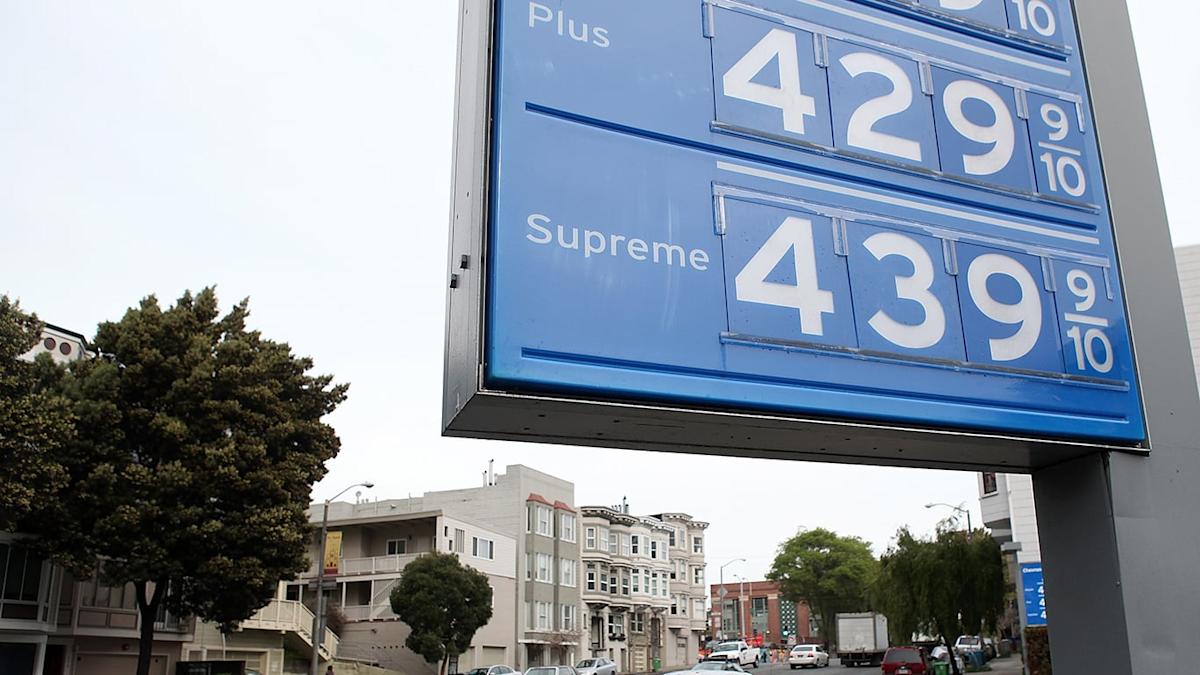
According to AAA, the national average gasoline price hit $4.55 per gallon on May 7 after climbing $0.25 per gallon for two straight weeks. A $0.50 per gallon increase over 14 days may not sound catastrophic, but it adds up quickly for households already stretched by food inflation, rent, and higher borrowing costs.
Here’s what the numbers tell us for a typical two-car household:
Expense Category | Monthly Impact |
Gasoline (120 gallons/month) | +$60 from a $0.50 increase |
Groceries | Already elevated from food inflation |
Utilities | Rapidly rising on data center growth |
Credit card interest | Near multi-decade highs |
Auto insurance | Rising faster than wage growth |
That combination matters because consumer spending accounts for roughly 68% of U.S. GDP, according to the U.S. Bureau of Economic Analysis.
Higher Oil Prices: Economic Sneak Attack
Most investors think higher oil prices mainly benefit energy companies like Chevron or Exxon Mobil (NYSE:XOM). Granted, their profits often rise alongside crude prices, but for the broader economy, sustained energy inflation acts more like a tax.
Transportation companies pay more for fuel. Airlines raise fares. Farmers face higher diesel and fertilizer costs. Manufacturers absorb rising shipping expenses. Eventually, those costs show up in grocery aisles and retail shelves.
Surprisingly, even sectors with little direct exposure to oil can feel the pinch. Restaurants, hotels, and entertainment businesses all rely on discretionary consumer spending. When households spend an extra $60 or $100 per month filling the tank, that money usually comes from somewhere else.
Let’s compare today’s setup with previous oil spikes:
Period | Average Gas Price | Economic Effect |
Summer 2008 | $4.11 | Consumer spending weakened before recession |
June 2022 | $5.01 | Inflation peaked at 9.1% |
May 2026 | $4.55 | Consumer pressure building again |
Source: AAA, U.S. Bureau of Labor Statistics.
That doesn’t mean a recession is guaranteed. Far from it. The labor market still added 115,000 jobs in the latest report, well above expectations for 65,000. March payrolls were revised higher to 185,000. Those are healthy numbers.
But energy shocks tend to work with a delay. Consumers initially absorb higher costs through savings or credit cards. After several months, spending patterns shift. Credit card balances rose by $44 billion during the fourth quarter, according to the Federal Reserve. They now total $1.28 trillion outstanding, up 5.5% since last year.
Regardless of how you look at it, that’s the risk Wirth was pointing toward.
Why Global ‘Supply Outages’ Could Hurt Trump’s Economy
The key issue isn’t whether Americans will literally run out of gasoline. Wirth explicitly suggested the U.S. probably won’t. The danger is that shortages overseas tighten global supply enough to keep oil elevated for an extended period. That matters politically and economically.
Trump has leaned heavily on market performance and economic resilience as evidence his policies are working. If consumers start seeing persistent $4.50 to $5 gasoline while food inflation stays elevated, sentiment can deteriorate quickly — even with record stock indexes.
The University of Michigan’s consumer sentiment surveys have repeatedly shown inflation expectations rise sharply when gasoline prices jump. Consumers don’t experience inflation through CPI reports. They experience it at the pump and grocery store.
In short, Chevron’s warning wasn’t just an energy story. It was a consumer spending story.
Key Takeaway
When all is said and done, investors should pay close attention to oil markets over the next several months. Not because of an impending supply outage, but because global supply disruptions rarely stay contained overseas.
That said, this isn’t automatically bearish for stocks. Energy producers, pipeline operators, and refiners often generate stronger cash flow during periods of elevated crude prices. Companies like Chevron and Exxon Mobil could benefit if Brent crude remains elevated.
But for the broader economy, persistent energy inflation could squeeze consumers at exactly the moment markets are pricing in near-perfect economic conditions. And regardless of how strong payroll growth looks today, higher fuel costs have a long history of slowing economies down over time.
The analyst who called NVIDIA in 2010 just named his top 10 AI stocks
This analyst’s 2025 picks are up 106% on average. He just named his top 10 stocks to buy in 2026. Get them here FREE.