


At a time when governance is increasingly assessed through metrics of efficiency, compliance, and economic output, the gross domestic product (GDP), a more fundamental question is beginning to shape India’s policy discourse: Can development be both rule-based and value-anchored?
This question acquired renewed urgency during a recent deliberation at the Punjab Lok Bhavan in Chandigarh, attended by leading public figures, including BL Santhosh, national general secretary ( organization) of the BJP. The discussion reflected a growing recognition that institutional strength, while necessary, is not sufficient; governance must also be guided by a coherent moral vision. It is in this context that integral humanism warrants serious and sustained engagement.
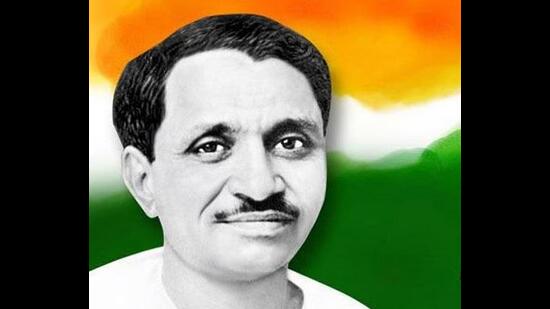
Articulated in the 20th century by Deendayal Upadhyaya, integral humanism sought to transcend ideological polarities of its time by placing the human being—rather than the state or the market—at the centre of development. It proposed that progress must be holistic, integrating material advancement with ethical responsibility and social cohesion. Its intellectual roots lie in India’s civilizational traditions, reflected in texts such as the Bhagavad Gita and the Upanishads, which conceive of human life as a balanced pursuit of economic well-being, moral duty, and spiritual fulfillment. These traditions did not reject material prosperity; they sought to discipline it within a broader framework of purpose.
Challenges and consequences
The contemporary relevance of integral humanism, however, cannot be established through civilisational continuity alone. The world within which it must operate has been fundamentally reshaped by globalisation, technological change, and the expansion of market economies. These processes have delivered significant gains. India has experienced sustained poverty reduction, rising life expectancy, and expanded access to education, healthcare, and digital connectivity. At the same time, they have generated new stresses—persistent inequality, ecological degradation, and increasing pressures on social cohesion. The central policy challenge lies in reconciling these gains with their unintended consequences.
This tension is closely linked to the dominant ideologies that have shaped modern development. Capitalism has been a powerful engine of innovation and wealth creation, enabling unprecedented economic expansion and technological progress. Yet, when insufficiently regulated, it has contributed to inequality and the commodification of essential aspects of life. Communism, conceived as a corrective to these imbalances, emphasised redistribution and collective welfare, but often did so through centralised control that constrained individual freedom and institutional adaptability. Consumerism, emerging as a cultural extension of both systems, has intensified the focus on material acquisition, frequently detaching aspiration from sustainability. Together, these forces have expanded human possibilities while simultaneously deepening structural imbalances.
What emerges is not a simple indictment of any one system, but a recognition of a shared limitation: The absence of an integrating principle that aligns economic activity with human purpose. Growth has too often been treated as an end in itself, rather than as a means to enhance human well-being and happiness. The consequences are increasingly visible—not only in environmental strain and unequal access to opportunity, but also in the erosion of community bonds and the narrowing of public discourse.
These are not isolated challenges; they reflect a deeper fragmentation in the way development is conceived. It is precisely this fragmentation that integral humanism seeks to address. Its central proposition—that human development must remain integrated across physical, intellectual, and ethical dimensions—offers a framework for rethinking policy priorities. Importantly, this does not require rejecting modern institutions or global engagement.
Rather, it calls for their reorientation within a normative framework that places human dignity, social balance, and ecological sustainability at its core. The task is not to dismantle existing systems, but to align them with a more comprehensive understanding of progress.
Toward balanced framework
The question, then, is how such alignment can be operationalised. There are early indications of a shift in this direction. The National Education Policy 2020 emphasises holistic and multidisciplinary learning, seeking to integrate ethical reasoning and environmental awareness with academic instruction. Similarly, policy initiatives focused on renewable energy, local enterprise, and digital inclusion reflect an emerging recognition that development must be both inclusive and sustainable. These efforts, while still evolving, suggest a gradual movement toward a more balanced framework.
Yet, the process of integrating integral humanism into contemporary policy must be approached with analytical clarity. Two risks are particularly salient. The first is the tendency to romanticise the past. India’s intellectual traditions offer valuable insights, but they also emerged within social contexts marked by hierarchy and exclusion. Any contemporary application must, therefore, be firmly anchored in constitutional principles of equality, justice, and individual rights. The second risk lies in framing the effort as a rejection of global knowledge systems. Scientific advancement, technological innovation, and democratic governance are cumulative human achievements. India’s own progress underscores the importance of engaging with these systems rather than disengaging from them.
A more durable approach lies in synthesis. Integral humanism should be understood not as a prescriptive doctrine, but as a guiding framework that informs the direction of policy. In education, this would involve cultivating individuals who are both technically competent and ethically grounded. In economic policy, it would require balancing growth with sustainability and ensuring that development outcomes are broadly shared. In governance, it would call for strengthening institutional integrity, while fostering a culture of public service that is responsive, accountable, and guided by long-term societal interest.
Aligned with purpose
The deliberations at the Punjab Lok Bhavan acquire significance in this broader context. The emphasis on rule-based governance with value-based action is not a departure from institutional rigour; it is an effort to deepen it. Rules provide the necessary structure for governance, but values ensure that this structure remains aligned with public purpose. Without such alignment, even the most efficient systems risk becoming procedural and detached from the realities they are meant to address.
India’s historical experience offers a foundation for this transition. Its institutional evolution has been marked by an ability to absorb diverse influences and adapt them to local contexts. Sustaining integral humanism in a changing world will require drawing upon this capacity for adaptive synthesis. It calls for a framework that is rooted in enduring values while remaining responsive to contemporary challenges.
Sustaining integral humanism is not about recovering a lost past, but about correcting an imbalanced present. It is about ensuring that economic systems serve societal goals, that technological progress enhances human capability, and that governance remains anchored in ethical responsibility. India does not face a binary choice between modernity and tradition; it faces the more demanding task of aligning the two. If this alignment can be achieved, integral humanism can evolve as a practical framework for a more balanced and humane model of development—one that speaks not only to India’s aspirations, but to a wider global search for sustainable and equitable progress. sureshkumarnangia@gmail.com
www.hindustantimes.com
#Guest #Column #Sustaining #integral #humanism #changing #world


