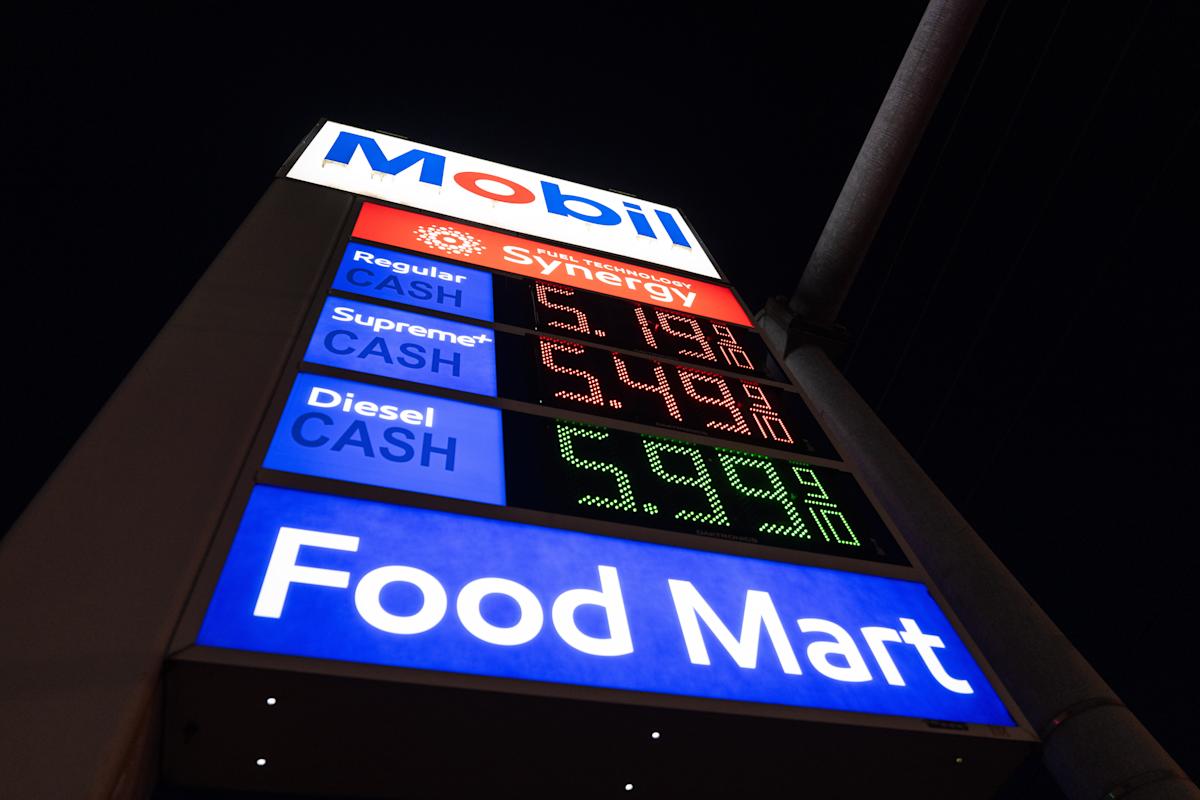
The latest source of inflation pain for consumers is gas prices. With a national average of $4.30 per gallon, filling up is costing the most in nearly four years, according to AAA, putting renewed focus on whether lawmakers should act.
Whenever fuel prices spike, as they did in 2008, 2022, and now, calls for a federal gas tax holiday tend to follow. However, when then-presidential candidates John McCain and Hillary Clinton supported a gas tax holiday in 2008, and former President Biden called for a 90-day suspension of federal gasoline taxes in 2022, Congress rejected the idea in both cases.
Will it be different this time? President Trump has said such relief “is in our pocket if we think it’s necessary,” while suggesting states should make the first move. In March, Senators Mark Kelly (D-Ariz.) and Richard Blumenthal (D-Conn.) introduced legislation to suspend the federal gas tax through Oct. 1, 2026. The bill has been sent to the Senate Finance Committee for consideration, and a similar bill is moving through the House.
Several states are also considering, or have implemented, temporary waivers of their portion of fuel tax revenue.
If enacted, will a gas tax holiday significantly lower gas prices?
Read more: When will gas prices go down? When drivers could finally see relief.
How much is the federal gas tax, and what does it pay for?
The federal fuel tax is 18.4 cents per gallon on gasoline and 24.4 cents per gallon on diesel. These taxes represent more than 90% of the revenue supporting the federal Highway Trust Fund.
The HTF pays for the construction and maintenance of the interstate highway system and other federal highways, as well as federal mass transit projects.
How much do state taxes add to a gallon of gas?
In 2023, state taxes on gasoline ranged from 8.95 cents in Alaska to 62.9 cents in California (where gas just hit $6 per gallon), according to the Urban-Brookings Tax Policy Center. The 50-state average is 28.6 cents per gallon.
That revenue goes primarily to the construction and maintenance of state and local highways, roads, and streets.
Like federal fuel taxes, state gas taxes have been declining as vehicles become more fuel efficient. That’s already putting pressure on highway improvement budgets.
Read more: 5 ways oil prices over $100 a barrel could hit your wallet
Where are gas tax holidays currently in effect?
While the federal gas tax holiday is still under consideration, a few states have already taken action.
Indiana was the first. On April 8, the state suspended its gas use tax collected by distributors for one month. “The Gas Use Tax is collected at the distributor level. It is not a retail level tax that is charged at the pump,” the Indiana Department of Revenue said in a notice announcing the tax holiday. “By suspending the collection of tax at the distributor level, the price will go down accordingly once the fuel is sold at the pump.”
Georgia suspended its 33-cent-per-gallon fuel tax from March 20 to May 19.
Utah followed, but will only reduce its 38-cent-per-gallon gas tax by 6 cents beginning July 1.
However, research shows that the tax waivers do not result in a cent-for-cent discount to consumers. In 2022, gas tax holidays in three states gave consumers less than 100% savings, according to a Penn Wharton analysis:
And the cost savings didn’t last during the entire length of the gas tax holiday, the study said, adding, “Suppliers can capture part of the economic benefit of the tax reduction if pump prices do not fall by the full amount of the suspended tax.”
Read more: What’s the Strategic Petroleum Reserve, and can it help lower gas prices?
The case for a gas tax holiday
Higher gas prices are squeezing household budgets. Supporters of a gas tax holiday, such as Sen. Doug Mastriano (R-Pa.), say that it would “provide immediate breathing room to families already stretched thin.”
In South Carolina, Alabama, and California, advocates are working to pass state legislation for gas tax holidays. Outside of the U.S., Canadian Prime Minister Mark Carney recently announced a pause in the collection of the federal gas tax until Sept 7.
“Cutting the tax on gasoline and diesel … is a responsible measure that will reduce operating costs for truckers and businesses in the food, agriculture, housing, construction, and delivery sectors,” a statement from the prime minister’s office said.
The case against a gas tax holiday
Critics argue that suspending gas tax collections would drastically increase the federal deficit — by $12 billion for a five-month tax holiday, according to the Bipartisan Policy Center — and have little positive impact on consumers.
The Committee for a Responsible Federal Budget, a bipartisan nonprofit think tank, says that a gas tax holiday would “cost billions per month” and only “marginally” reduce consumer costs.
“Meanwhile, producers would respond by increasing pre-tax prices and the stimulative effect of the holiday would put upward pressure on inflation or interest rates, eating into some of those savings,” the CRFB added.
Adam Hoffer of the Tax Foundation adds another concern: “Pausing fuel taxes makes funding roads and highways more difficult while doing nothing to address the underlying issues driving prices upward.”
finance.yahoo.com
#gas #tax #holiday #prices #drivers