


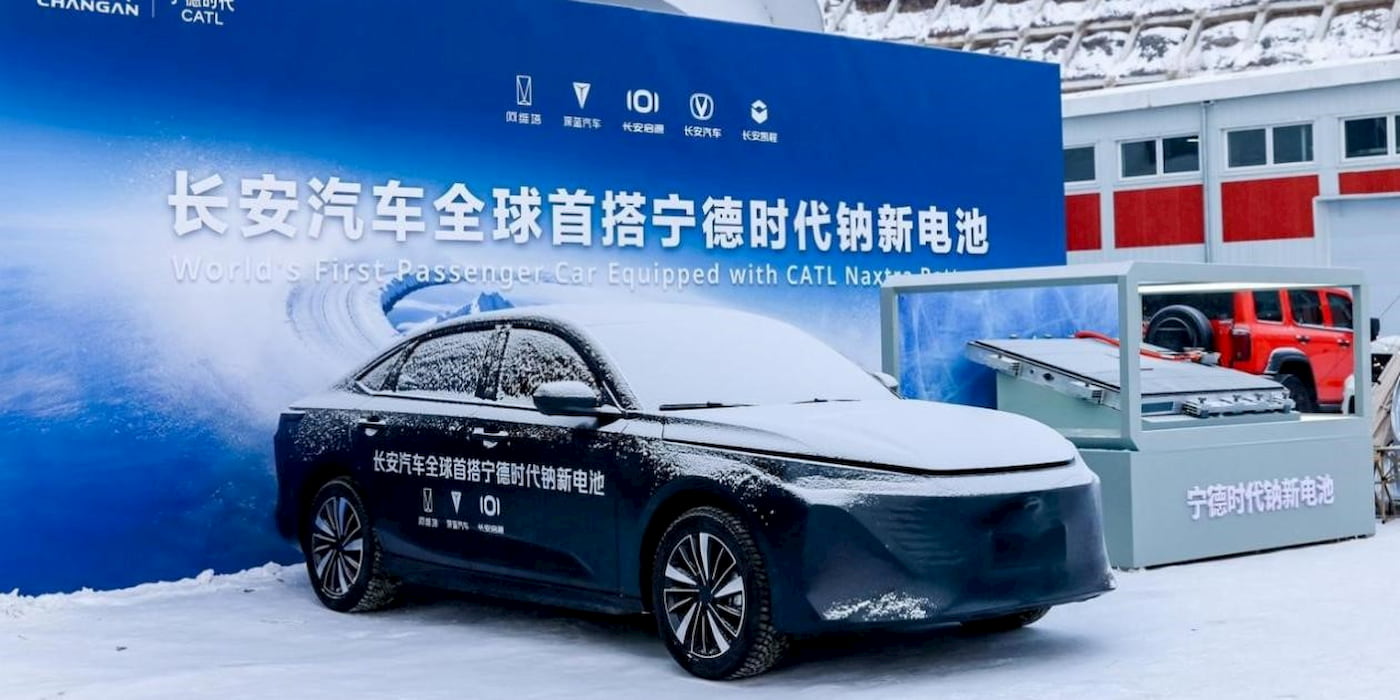
CATL’s new sodium-ion batteries will begin launching in passenger EVs later this year, offering a more efficient and sustainable solution.
CATL is bringing sodium-ion batteries to EVs in 2026
During its Tech Day Event this week, CATL revealed its latest battery innovations as it looks to maintain its dominant lead on the global EV battery market.
The battery giant showcased major breakthroughs, including its third-generation Shenxing Ultra-fast charging battery, capable of a full recharge (10% to 98%) in just 6 minutes and 27 seconds, beating rival BYD’s Blade Battery 2.0 that offers 9-minute charging.
CATL confirmed during the event that its sodium-ion batteries will begin rolling out in passenger EVs by the end of 2026.
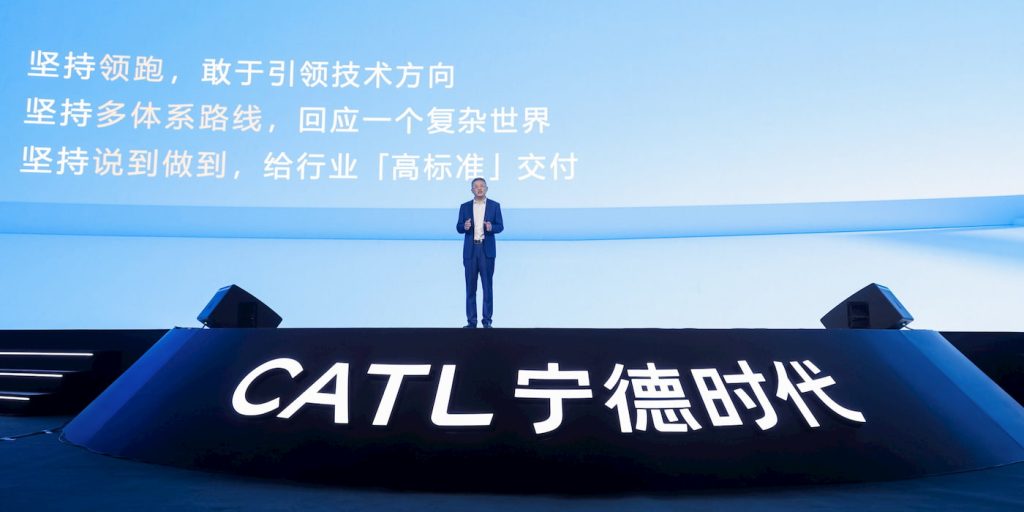
CATL’s chief scientist, Wu Kai, said during the event that LFP is “nearing its theoretical energy density limit,” making it critical to focus on fast charging solutions. He added that “Sodium-ion batteries offer broad potential for extreme temperatures and energy storage applications.”
The Naxtra sodium-ion battery “marks CATL’s transition from laboratory breakthrough to large-scale manufacturing,” the company said.
After overcoming “hundreds of engineering challenges,” the battery giant has achieved GWh-level industrialization.
CATL said it had overcome four key barriers this year: extreme water control, gas generation in hard carbon, aluminum foil adhesion, and self-forming anode systems, paving the way for full-scale mass production by the end of 2026.


Earlier this year, CATL launched the sodium-ion batteries for light commercial vehicles. The 45 kWh sodium-ion battery pack can charge at temperatures as low as -30°C (-20°F), and at -40°C (-40°F), it still retains 90% of its usable capacity.
CATL’s sodium-ion batteries will begin rolling out in passenger EVs by the end of the year, starting with the Changan Nevo A06. CATL and Changan unveiled the new EV in February, deeming it the world’s first mass produced EV with a sodium-ion battery.
The sodium-ion batteries achieve an energy density of about 175 Wh/kg, but CATL aims to bring it on par with lithium iron phosphate within the next three years, enabling up to around 600 km (372 miles) of CLTC driving range.
Sodium-ion batteries perform better in cold weather and also offer a sustainable alternative to lithium with the abundance of sodium.


FTC: We use income earning auto affiliate links. More.
electrek.co
#CATL #launching #sodiumion #batteries #EVs


