Only one rotary engine has ever won the 24 Hours of Le Mans, and it’s a literal screamer that revs to 9,000 rpm and shoots flames out of its exhaust. Thankfully, Mazda doesn’t want this engine and the cars it powered to become dusty museum pieces. The automaker’s motorsports division recently released a video on its YouTube channel showing how the big four-rotor engines are maintained.
After several years of trying, Mazda finally won Le Mans with the 787B in 1991, the same year the FD RX-7 road car started production. But instead of the familiar two-rotor 13B that powers the RX-7, the 787B has a four-rotor unit known as the R26B. Estimated to make about 700 horsepower in race trim, this engine has similar rotors to the ones used in Mazda road cars of the period, but nearly everything else is different. It even has three spark plugs instead of two for improve fuel efficiency.
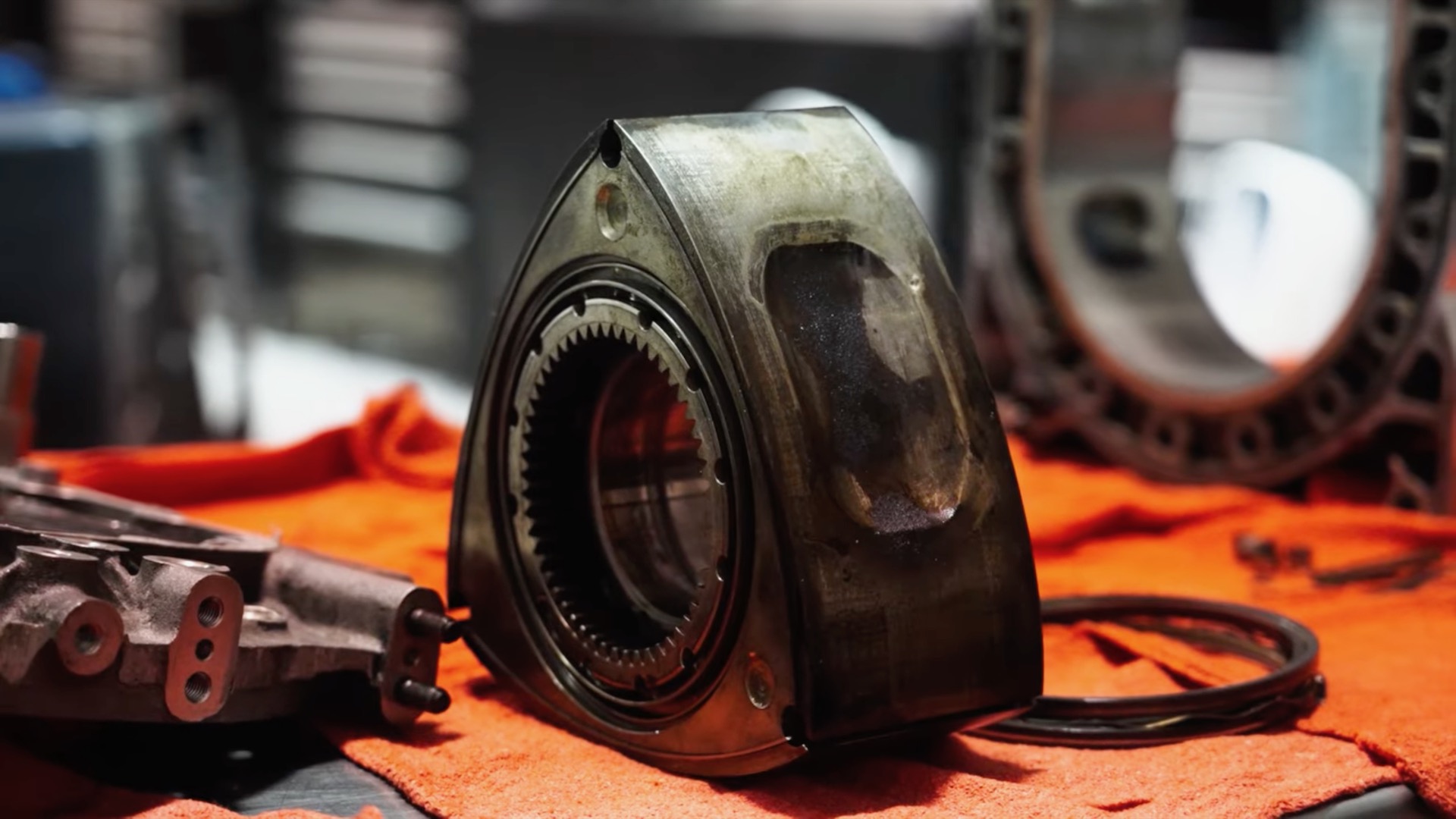
That makes finding replacement parts a major hurdle, but the durability of these engines means that any that survived a racing career should hold up pretty well in retirement. Major components are holding up pretty well, according to Mazda. That’s thanks to tricks like ceramic apex seals and heavier-duty tension springs that help prevent the “chatter” caused by the steel apex seals used in road cars bouncing against the rotary housing at high rpm.
Those seals—located at each point of the triangular rotor to maintain compression—are a known weak point of rotary engines. But mechanics also pay close attention to the inner surface of the housing, which can shrink when overheating and break the seal. During a rebuild, the inner surface’s thickness is compared to the outer surface (which is exposed to less heat) to ensure it’s in spec.
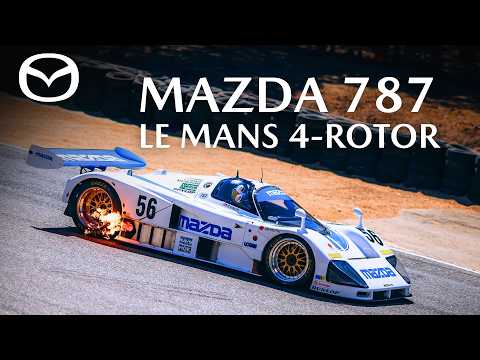
Inside the Mazda 787: Rebuilding a 4-Rotor Le Mans Prototype
After Mazda’s breakthrough 1991 win, rule changes ensured the rotary engine became uncompetitive. Mazda would remain the only Japanese manufacturer to win Le Mans until Toyota’s first win in 2018. Mazda returned to top-level sports car racing in IMSA, initially with a diesel engine and then a gasoline turbo-four that made it a bit of an underdog before calling it quits after the 2021 season.
While the MX-5 Cup is still a ton of fun, the lack of a current Mazda factory sports-car racing program makes keeping the vintage racers active all the more important. They’re an important reminder of what Mazda can do when it tries, and of an era that likely won’t be repeated. Despite persistent rumors, a new Mazda rotary sports car probably won’t happen in the current business environment, let alone a new rotary-powered Le Mans contender.
www.thedrive.com
#Mazda #SixMinute #Mini #Doc #Mans #FourRotor #Rebuild