


In a decisive shift from enforcement-heavy traffic management to long-term structural reform, director general of police Rajeev Krishna has rolled out an expanded decongestion blueprint under the City Road Traffic Control (CRTC) framework.
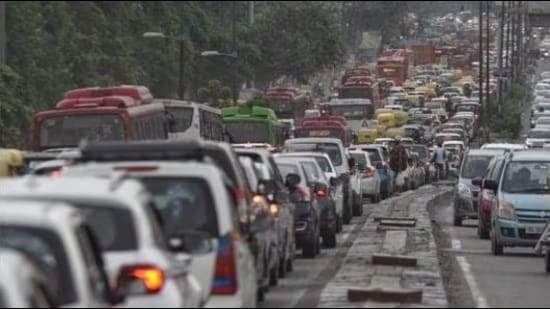
He has proposed peripheral holding zones, staggered institutional timings and relocation of high-traffic commercial hubs to ease chronic congestion across urban and pilgrimage centres.
The system is backed by an AI-based traffic analytics platform that generates real-time and historical data on travel time, congestion points and route performance through dashboard-based monitoring accessible to nodal officers via smartphones.
A key feature of the initiative is the “one route, one route marshal” model, under which each identified stretch is assigned a dedicated traffic officer responsible for flow management, bottleneck resolution and inter-agency coordination. A total of 172 route marshals have been deployed.
The pilot project covers all seven police commissionerates and 13 other major districts, including Agra, Ayodhya, Ghaziabad, Gautam Buddh Nagar, Kanpur, Lucknow, Meerut, Prayagraj and Varanasi, among others—together accounting for 172 congestion-prone routes.
The latest measures build on Uttar Pradesh’s broader congestion mitigation strategy launched earlier this month on April 7, signalling a transition from real-time traffic enforcement to systemic, infrastructure-led interventions.
“At the core of the plan is the creation of peripheral holding zones at high-footfall destinations such as Ayodhya, Mathura, Varanasi, Prayagraj, Chitrakoot, Kushinagar and Agra. These zones will function as regulated entry points where incoming private and commercial vehicles, particularly buses carrying pilgrims and tourists, will be halted near city limits,” explained a detailed circular issued by the DGP in the matter.
The circular further explained that visitors will then be transported to inner-city religious and tourist sites through designated public transport systems, reducing vehicular load on congested corridors and sensitive heritage areas. Officials said the move aims to prevent sudden surges in traffic during festivals, peak pilgrimage seasons and tourist rush periods.
Authorities also directed that predefined routes and holding zone details be widely shared with tour operators, tourist guides, hotels and Dharamsalas to ensure incoming travellers are informed in advance, minimising last-mile congestion and confusion.
Staggered timings
The framework proposes staggering closing timings of government offices, private establishments and educational institutions in 15-minute intervals. Officials noted that synchronised dispersal currently leads to sharp spikes in traffic during peak hours. By distributing traffic flow over a wider time window, authorities expect to reduce peak-hour pressure on arterial roads and improve average travel speeds in urban cores.
Mandis, transport nagars to move out
The plan also calls for relocating transport nagars and wholesale mandis—major generators of heavy vehicle movement—outside city limits. In coordination with the urban development department, these facilities will align with upcoming master plans and shift towards outer ring roads and peripheral corridors.
Officials said this would not only decongest inner-city roads but also improve freight efficiency by linking bulk goods movement directly with highway networks. The current placement of mandis and transport hubs within dense urban areas has been identified as a major contributor to congestion, with heavy vehicles competing for limited road space.
“Filtering vehicular inflow at the periphery, rationalising peak-hour demand and removing structural bottlenecks like inner-city mandis are essential for sustainable traffic management,” a senior officer said.
While emphasising systemic fixes, the plan also carries an enforcement component. Field officers have been warned of strict accountability for persistent congestion, with directives to ensure effective on-ground implementation.
The structural measures come days after the DGP Krishna launched an AI-backed pilot decongestion programme across 172 identified routes in 20 districts, targeting a 20% reduction in peak-hour travel time in the first phase.
The initiative—titled the City-Reducing Traffic Congestion (C-RTC) scheme—was rolled out under the direction of chief minister Yogi Adityanath, with a focus on ensuring smoother and time-bound movement in urban areas.
www.hindustantimes.com
#Decongesting #traffic #Peripheral #holding #zones #staggered #timings #mandi #shift #top #action #points


