Global business relies on stability to operate, and oil prices are the cornerstone of that stability. But oil supply shocks caused by the Iran war, which just concluded its fourth week, have upended that stability, sending the global economy into a tailspin, France 24 reported.
Goldman Sachs analysts spent their last note trying to estimate the impact of higher oil prices on the U.S. labor market, and they came to three conclusions about where the U.S. labor market is headed.
At first, the stated U.S. rationale for the attack was to stop Iran’s nuclear ambitions. However, many pointed out that the Trump administration said last year that the U.S. and Israel had already “obliterated” Iran’s nuclear capacity.
Israeli officials at the time did not agree with the “obliterated” adjective, but the Israel Atomic Energy Commission and IDF Chief of Staff Lt. Gen. Eyal Zamir both agreed that the attacks set Iran’s nuclear ambitions “back by years, I repeat, years.”
Well, just seven months later, they are back bombing Iran, but this time the objective is less clear and has constantly shifted, The Washington Post reported.
Once again, “stability” is the name of the game in the global economy.
But since we don’t currently have that, we have to rely on Goldman Sachs analysts to tell us what will happen to U.S. labor next, based on their expertise.
Brent crude futures rose toward $111 per barrel on Friday, March 27, near the highest level since June 2022, on reports that the U.S. is considering sending up to 10,000 additional ground troops to the region, per Axios, potentially embroiling the U.S. in a much longer conflict in the Middle East.
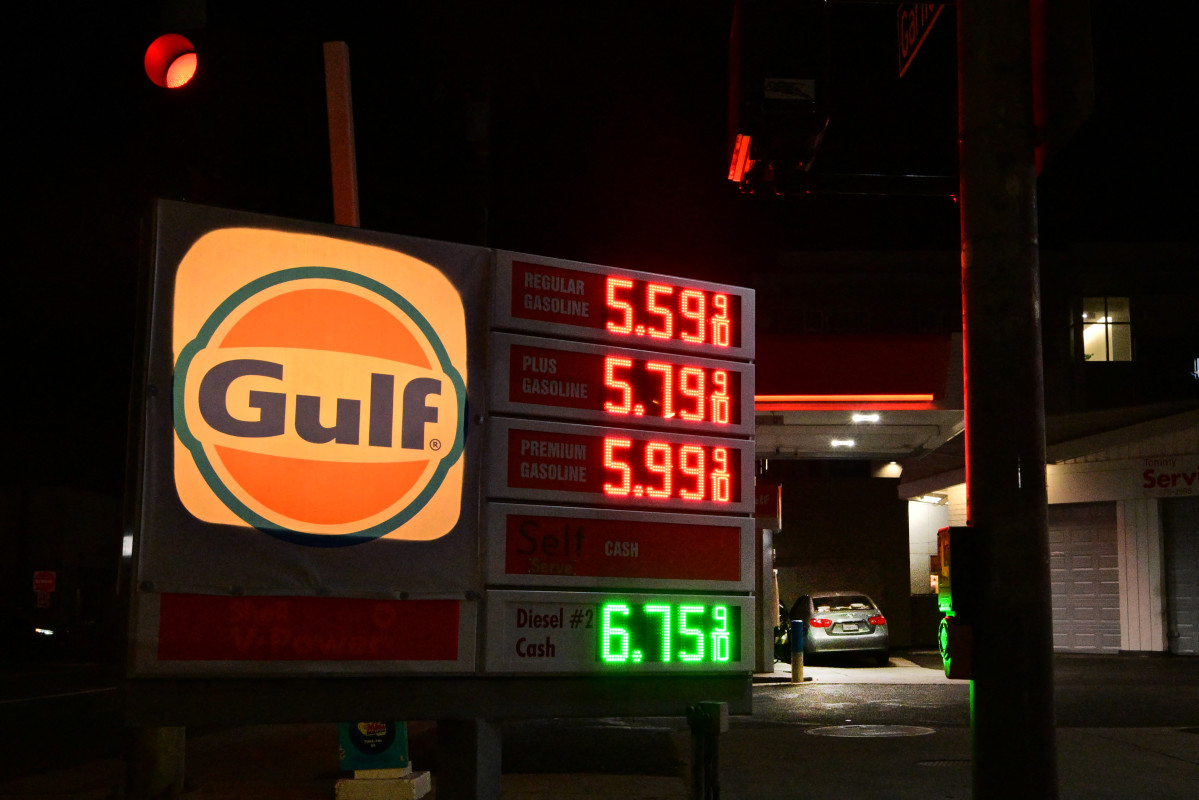
The last time gas prices were this high was following Russia’s invasion of Ukraine in 2022, when Brent crude prices reached $123.64 per barrel.
The impact of higher gas prices on the labor market is more muted than it was 50 years ago.
Job loss estimates from different sources generally align with the Federal Reserve‘s basic model.
Traditional job gains in certain industries from increased prices will be more subtle this time.
“First, we find that while higher oil prices still tend to reduce job growth and raise unemployment, the impact is roughly one-third as large as in 1975-1999, likely reflecting the lower oil intensity of U.S. GDP and surge in domestic shale production,” Goldman analysts said.
The second conclusion the team came to was that other data sources agree with the Federal Reserve’s FRB/US report’s conclusion. “These estimates suggest that the oil price shock implied by our strategists’ baseline oil price forecast would raise the unemployment rate by 0.1pp, which is one of the reasons that we expect the unemployment rate to rise 0.2pp in total to 4.6% by 2026Q3,” Goldman said.

finance.yahoo.com
#Goldman #Sachs #draws #major #conclusions #oil #supply #shocks