


Support CleanTechnica’s work through a Substack subscription or on Stripe.
There are over two million semi trailers hauling cargo from suppliers to customers in Europe. The vast majority of them are towed behind diesel-powered tractors that leave noxious fumes in their wake. Many companies, like Mercedes, Volvo, and Scania, are developing battery-powered tractors. Even Tesla says it will get in on the fun — someday, God willing and the creek don’t rise.
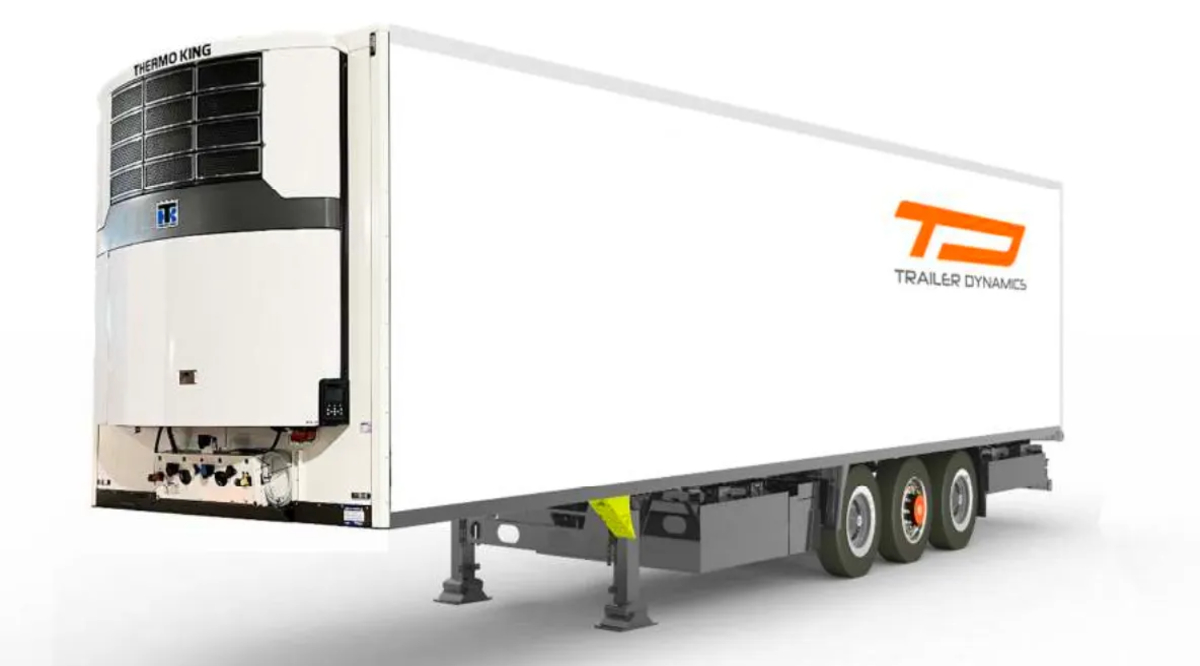
Trailer Dynamics in Germany has a different idea. Instead of electrifying the tractor, electrify the semi trailer. That way, electrons can help deliver cargo with fewer pollutants regardless of what tractor they are connected to. If it happens to be a battery electric unit, so much the better. The combination will have greater range and require less time for charging en route than with a battery-electric tractor alone.
If, on the other hand, the tractor is powered by a diesel engine — there are millions of such vehicles plying the highways and byways of Europe — the eTrailer can reduce fuel costs considerably. In an interview with Electrive, managing director Michael Nimtsch said the benefits of a self-powered, battery-electric semi trailer go beyond reducing CO₂ emissions. While decarbonization is a key advantage, the technology also promises significant efficiency gains, which is music to the ears of fleet managers.
The original idea for the company was to offset some of the rolling resistance of the trailer to reduce fuel consumption and increase the range of the tractor. The actual savings are highly dependent on variables such as route topography, driver behavior, and payload.
With a light load on flat roads, the efficiency gain is around 30 percent. For heavier loads on routes that involve hills and lots of stop and go driving, the eTrailer can reduce fuel consumption by up to 50 percent, he said. When coupled to a battery-electric tractor, range is effectively doubled from around 400 km to over 800 km.
How much does all this electrified goodness cost? The eTrailer is offered with three battery pack sizes — 180, 367, and 550 kWh. Prices start at €140,000 and go up to €220,000 with the largest battery. A conventional cargo semi trailer costs between €30,000 and €80,000.
“Electric mobility in heavy duty transport is still more expensive than diesel. For this reason, we currently offer our eTrailers almost exclusively through rental or leasing models. To support this approach, we cooperate with all major leasing and rental providers,” Nimtsch said.
The eTrailer from Trailer Dynamics features an electric axle with two motors and transmissions, with each wheel being individually controlled. In addition, there are the batteries and the drivetrain control, which is managed via the trailer kingpin. Motors and batteries can be sourced externally, but the secret sauce is in combining them sensibly, safely, and functionally to produce the desired improvements in efficiency.
By analyzing data such as traffic conditions, weather, and charging availability, the system can anticipate how the vehicle will behave along the route. Evaluating this data can help both the driver and fleet management operate the vehicle more efficiently, the company claims.
Sensors incorporated into the kingpin measure various forces and convert them into digital signals which are transmitted to the vehicle control unit, which controls the electric axle in the trailer in real time and in a functionally safe manner.
“The system must be able to determine the source of a given force. Was it just a pothole or a curb? Or is it a request for support? Developing this, calibrating it and solving it through algorithms is what we have safely demonstrated in the eTrailer over the past few years,” Nimitsch said. He was careful to point out the system is only legally allowed to support the tractor. It is never allowed to ‘push’ the vehicle forward independently.
The battery pack and electric motors add from 2 to 5 tons to the weight of the trailer, which affects the payload, but the EU is working on regulatory exemptions for electrically powered commercial vehicles to compensate for this loss of payload. “From our perspective, it ultimately makes little difference whether the additional weight stems from the electric truck itself or from the eTrailer. Electrification increases the weight of the overall vehicle combination,” Nimtsch said.
The company is targeting full production by 2028. Critics suggest that focusing on electrifying semi trailers could slow down the transition to electric tractors, but Nimtsch disagrees. “Yes, we hear that again and again, especially from politicians. What do I say in response? First, one must simply acknowledge reality. We have over two million registered semi-trailer tractors in Europe, of which over 95 percent are diesel, and they will remain so for the next 20 years. The current reality is a diesel reality. We can continue to let these vehicles operate as dirty as before, or use the eTrailer to decarbonize this existing diesel fleet.
“Secondly, we are not preventing the battery-electric vehicle. We are improving it by increasing its range and thus making emissions-free freight transport possible for long distances.
“The eTrailer will come; we are certain of that. The process will unfold as it does with all new technologies. First, the new technological approach is gradually adopted and will more or less become the standard. The actual value creation, the actual transport, takes place in the trailer, not in the semi-trailer tractor. The electrified semi-trailer will increasingly come into focus,” Nimtsch assured the interviewer.
Don’t Raise The Bridge, Lower The River
There is another company in Europe that is working to improve the efficiency of road freight. As mentioned above, the EU has increased the permissible combined gross weight of a tractor and semi trailer from 40 tons to 42 tons to compensate for the extra weight of the traction battery in battery electric tractors.
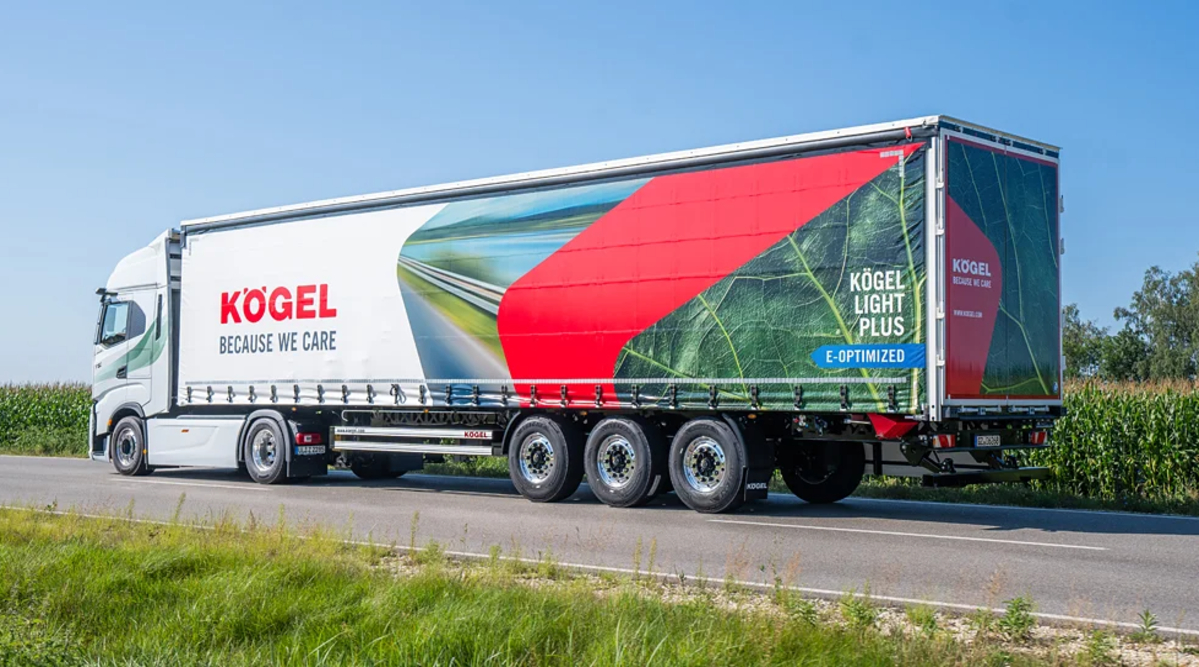
That’s all well and good, but EU regulations still limit the load on the drive axle to 11.5 tons. Unless the extra weight is distributed properly, the likelihood of that weight limit being exceeded increases significantly. To address that concern, German trailer manufacturer has just introduced its “e-optimised Kögel Light Plus.”
What’s the plus? The wheelbase between the kingpin and the first trailer axle has been shortened by 30 centimeters to reduce the load on the tractor’s drive axle and keep it from exceeding the 11.5 ton limit.
“In practice, this regulation can lead to the permissible rear axle loads on the tractor unit being exceeded, especially if the additional battery weight is primarily on the drive axle and cannot be distributed evenly across the train,” Kögel explains.
“If a transport company uses an e-truck with a standard trailer, the maximum payload with a uniform load is around 20 tons. When using the e-optimized Kögel Light Plus, up to 4 tons more payload can be achieved — depending on the type of e-tractor,” the company said in a press release. The new trailer model means the maximum permissible gross combination weight of 42 tons can be fully realized.
“With the e-optimised Light Plus, Kögel offers a practical, technically sophisticated solution for the central challenges of electric heavy-duty transport,” the company said. Transport operators benefit from higher payloads, legally compliant axle load distribution, and maximum efficiency when using emissions-free tractors. “Kögel is thus making a concrete contribution to increasing efficiency and to the successful transformation towards sustainable logistics.”
Efforts to lower emissions from freight operations are important, but making those operations more profitable is what will bring these new ideas to market successfully. Is spending double for a new electrified semi-trailer a good investment? It may be when the savings are computed over 20 years or more. Efficiency can often pay for itself in the long run.
Sign up for CleanTechnica’s Weekly Substack for Zach and Scott’s in-depth analyses and high level summaries, sign up for our daily newsletter, and follow us on Google News!
Have a tip for CleanTechnica? Want to advertise? Want to suggest a guest for our CleanTech Talk podcast? Contact us here.
Sign up for our daily newsletter for 15 new cleantech stories a day. Or sign up for our weekly one on top stories of the week if daily is too frequent.
CleanTechnica uses affiliate links. See our policy here.
CleanTechnica’s Comment Policy
cleantechnica.com
#Electrified #Lightweight #Semi #Trailers #Key #BatteryPowered #Freight


